Filters

88 filtered results

Clear all filters
Favorites
With answer key
Interactive

88 filtered results

Difficulty Level

Grade


Check out this FREE Trial Lesson on Addition for age 5-8!

Match Exactly the Same

Favorites
With answer key
Interactive
  • 5-8
  • Visual Learning
  • Addition
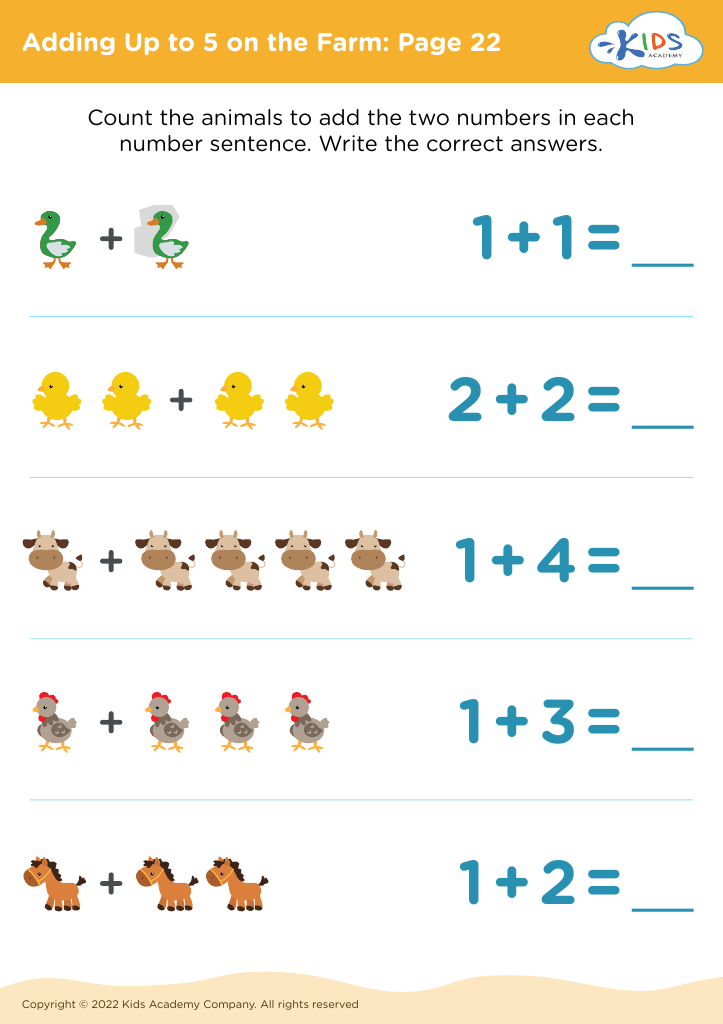
Adding Up to 5 on the Farm: Page 22
Worksheet
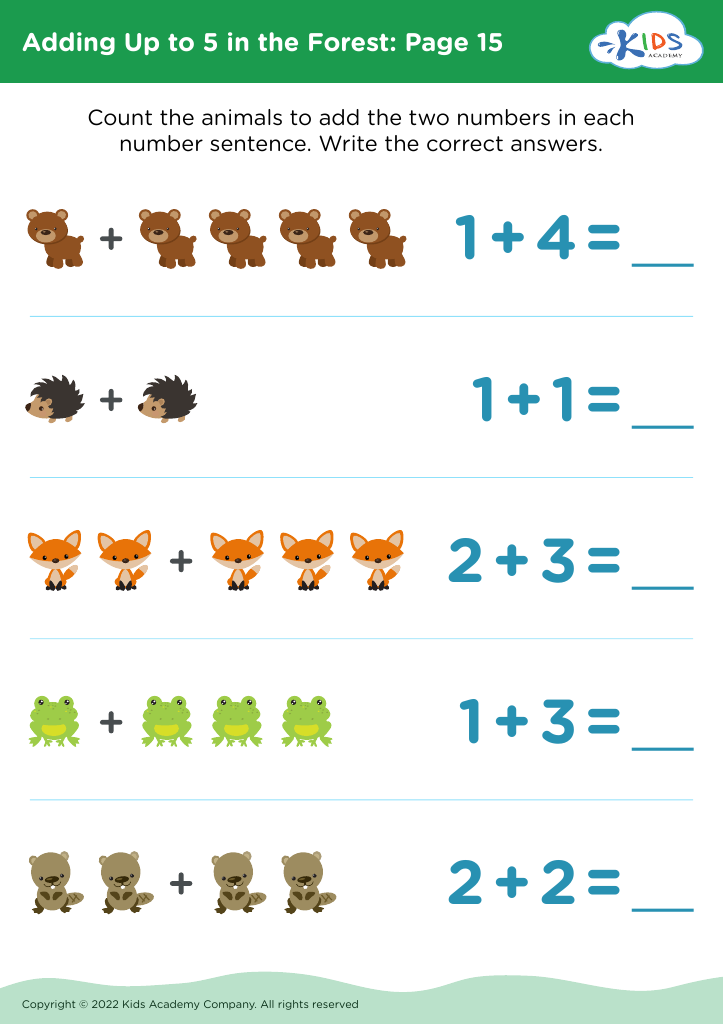
Adding Up to 5 in the Forest: Page 15
Worksheet
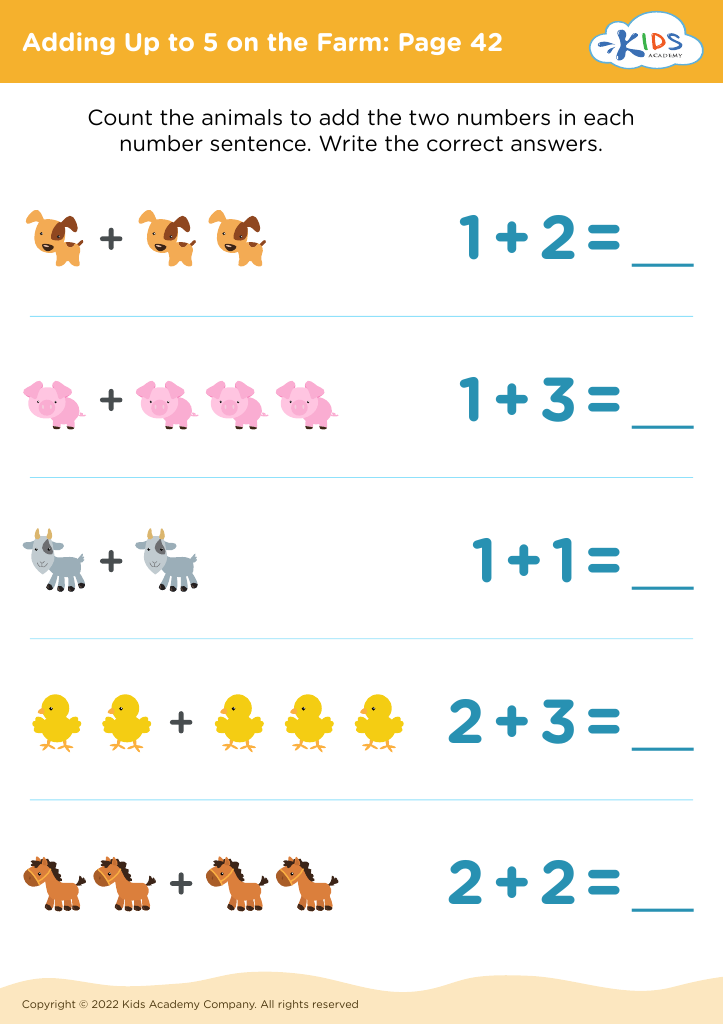
Adding Up to 5 on the Farm: Page 42
Worksheet
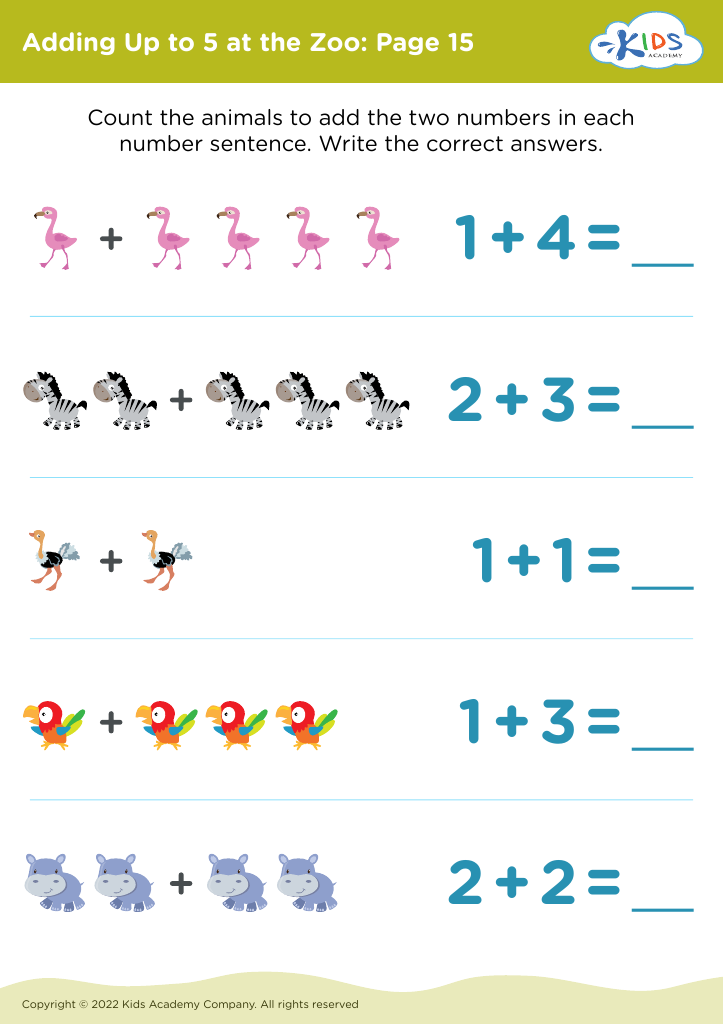
Adding Up to 5 at the Zoo: Page 15
Worksheet
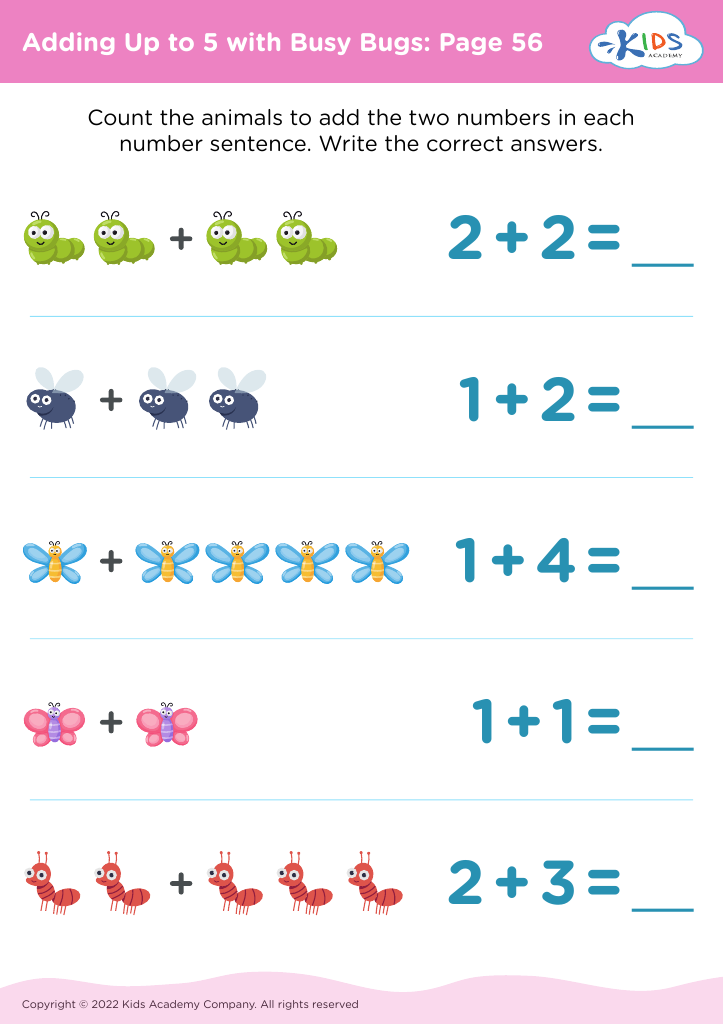
Adding Up to 5 with Busy Bugs: Page 56
Worksheet
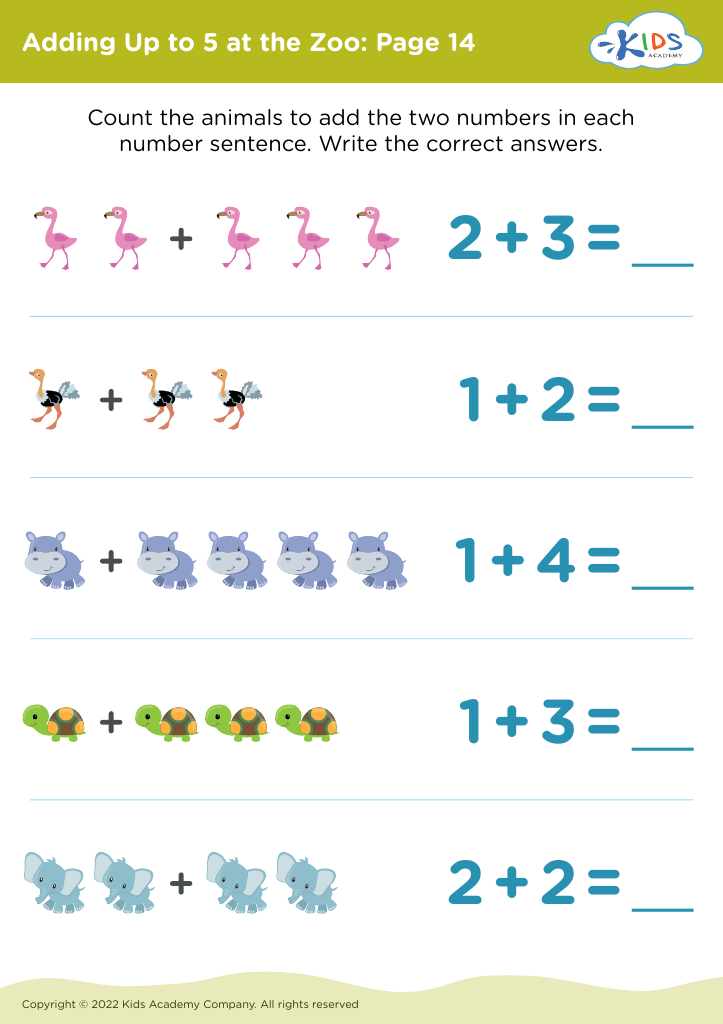
Adding Up to 5 at the Zoo: Page 14
Worksheet
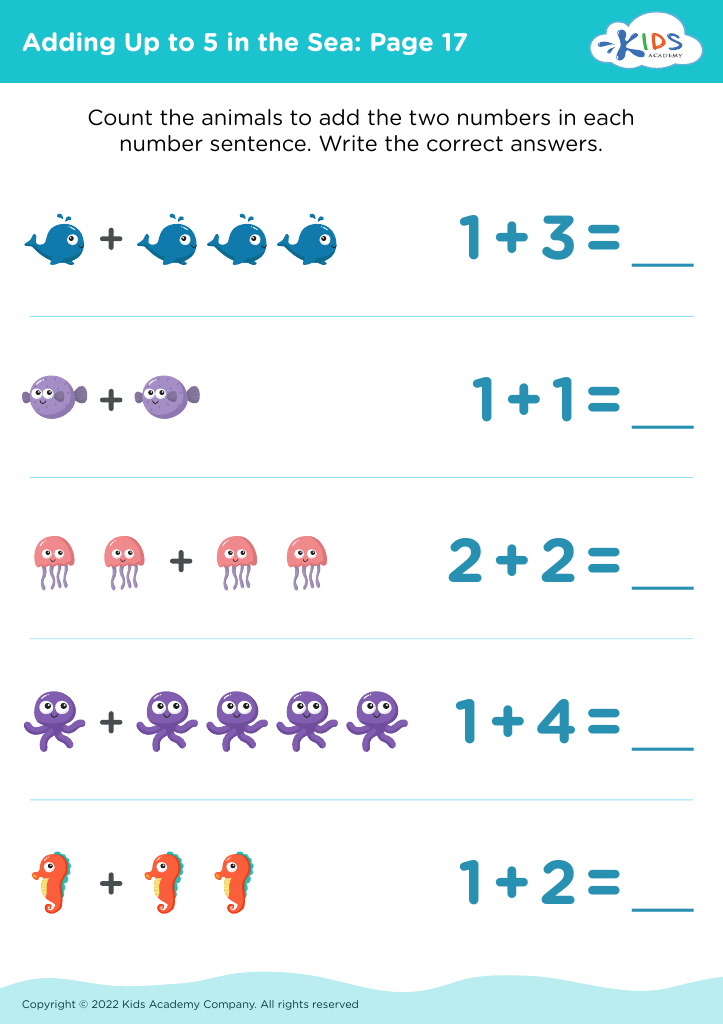
Adding Up to 5 in the Sea: Page 17
Worksheet
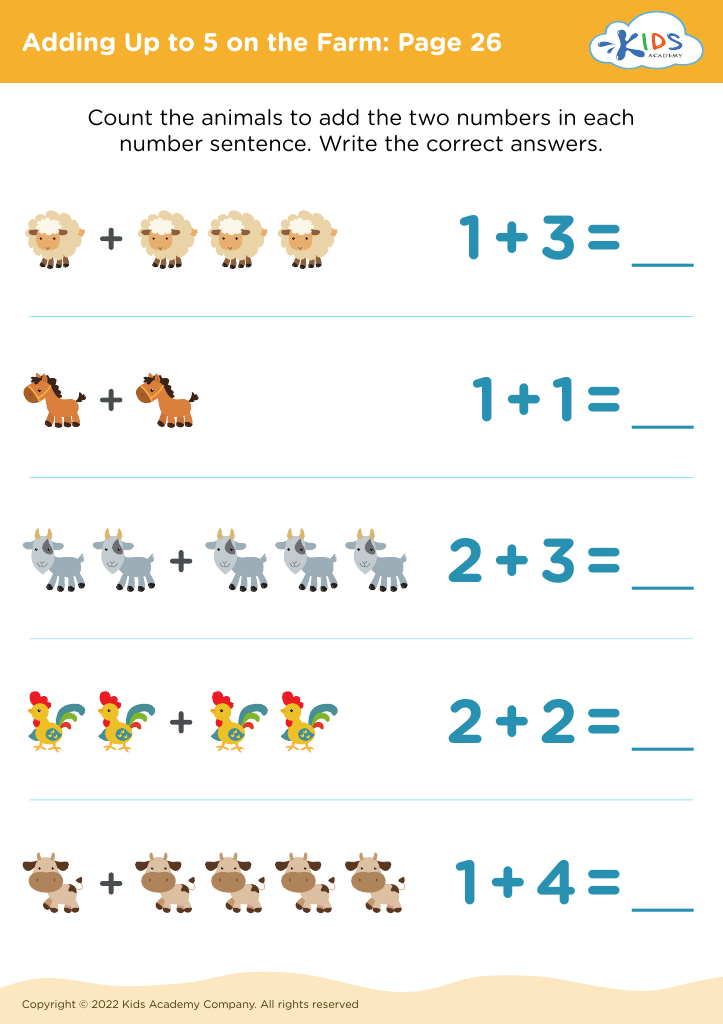
Adding Up to 5 on the Farm: Page 26
Worksheet
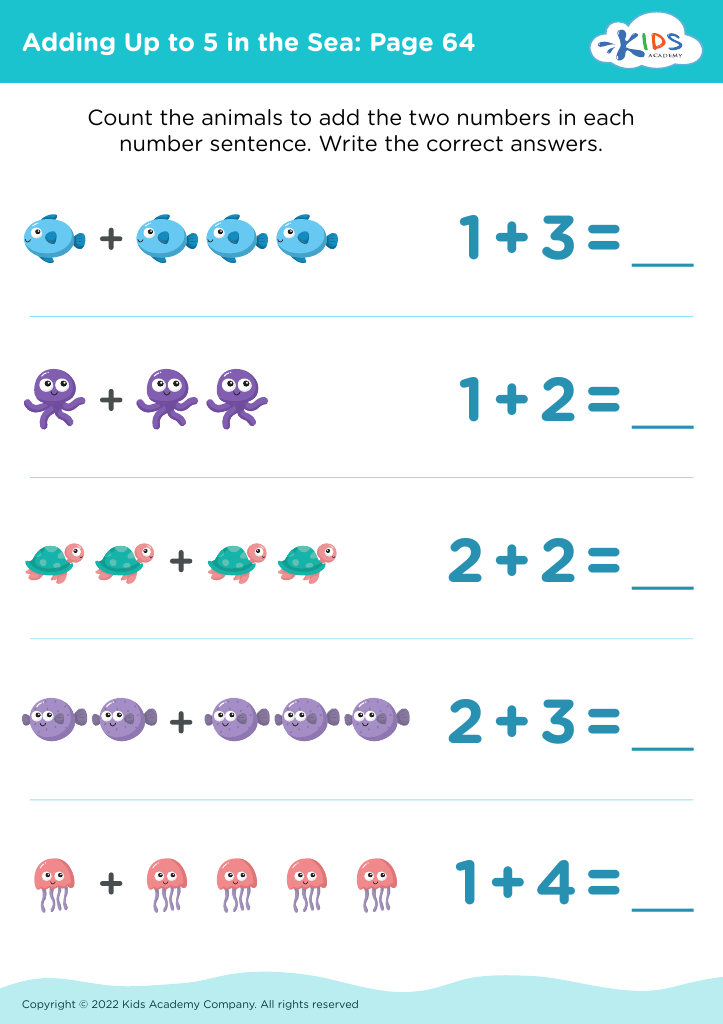
Adding Up to 5 in the Sea: Page 64
Worksheet
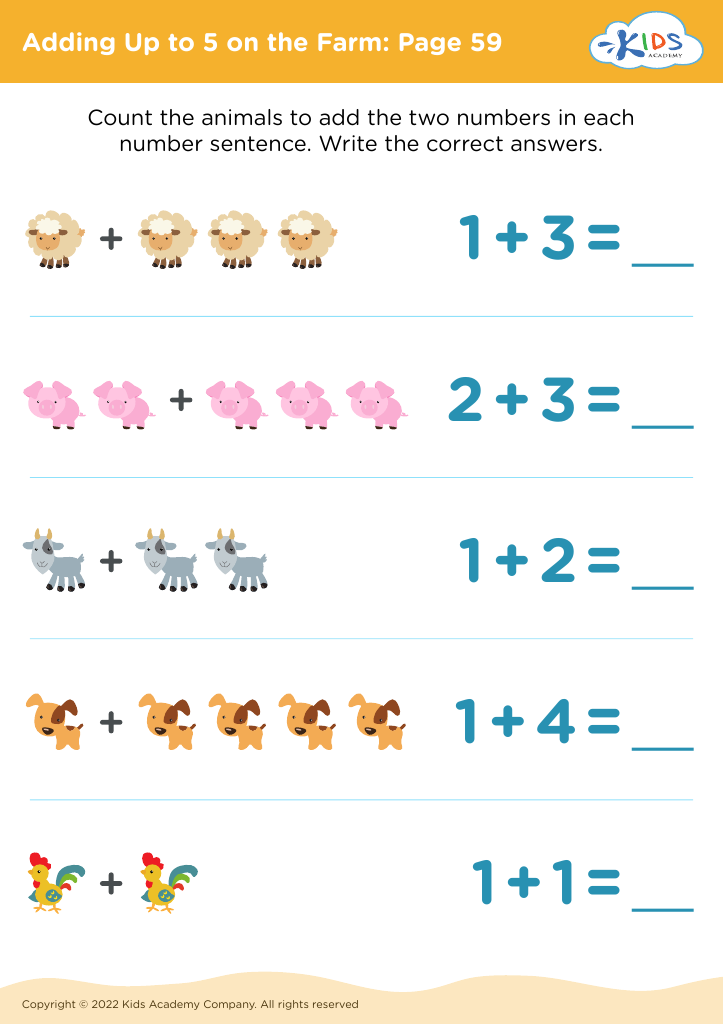
Adding Up to 5 on the Farm: Page 59
Worksheet
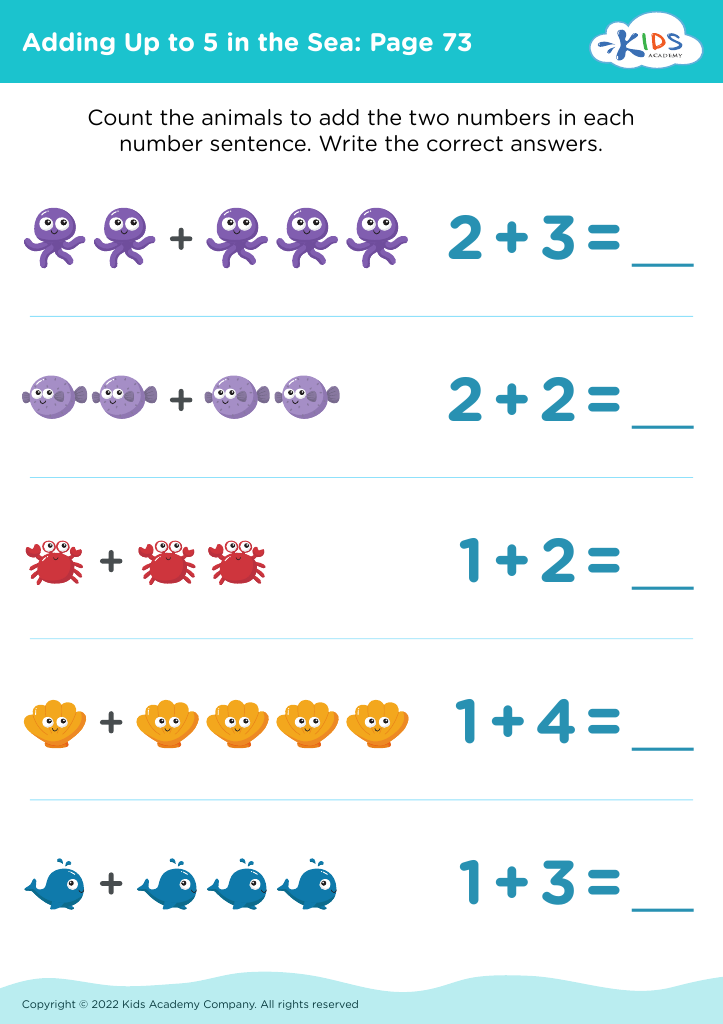
Adding Up to 5 in the Sea: Page 73
Worksheet
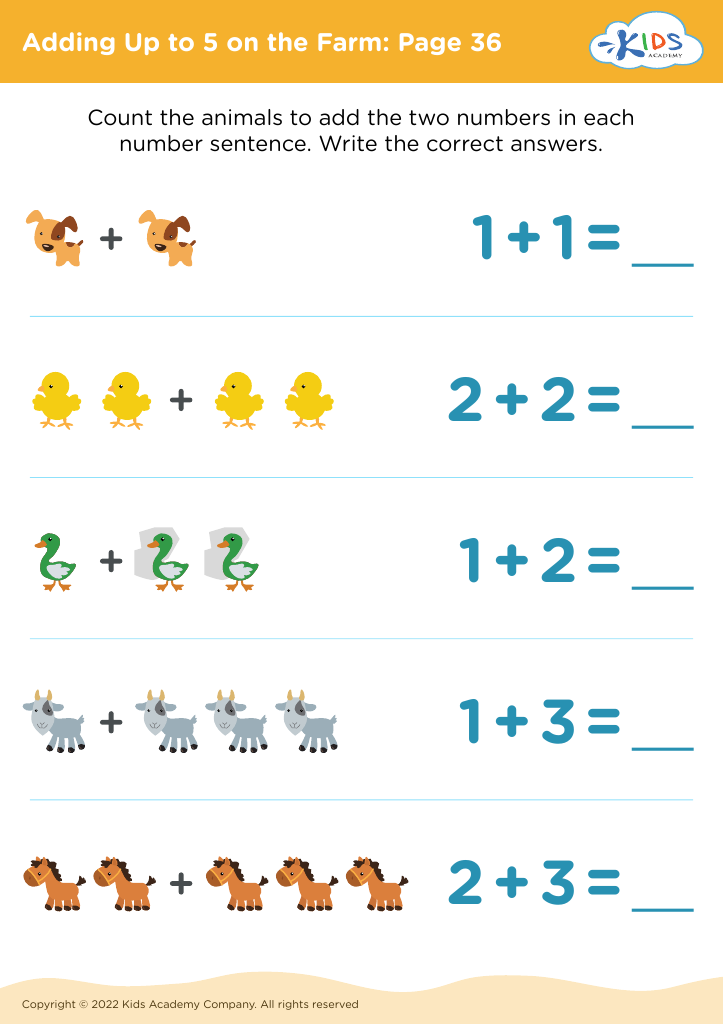
Adding Up to 5 on the Farm: Page 36
Worksheet
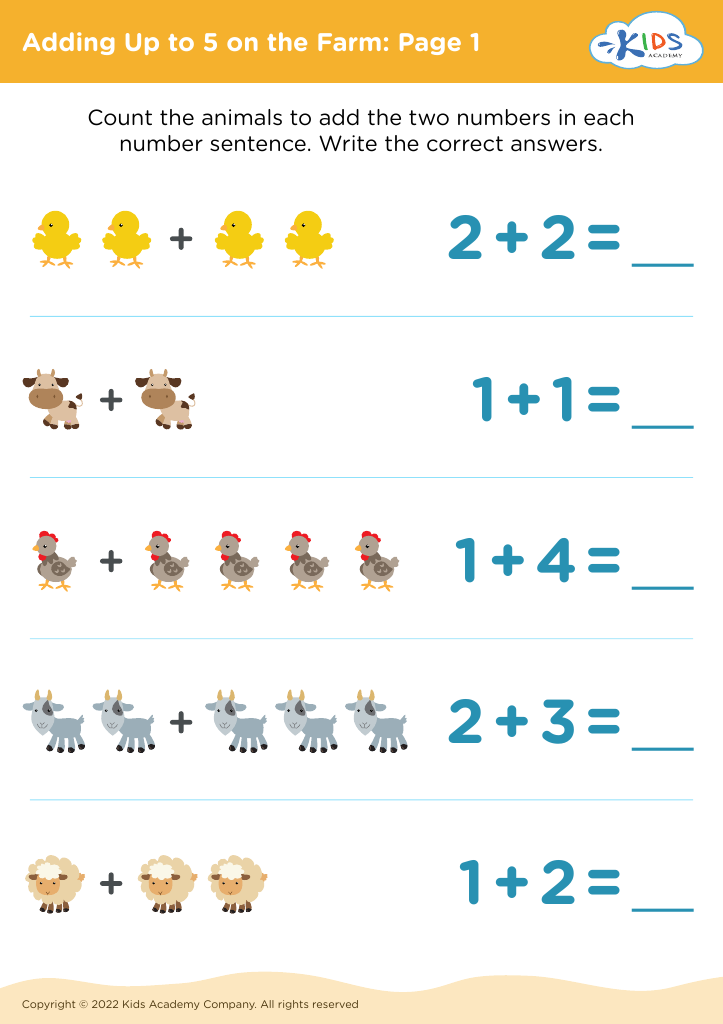
Adding Up to 5 on the Farm: Page 1
Worksheet
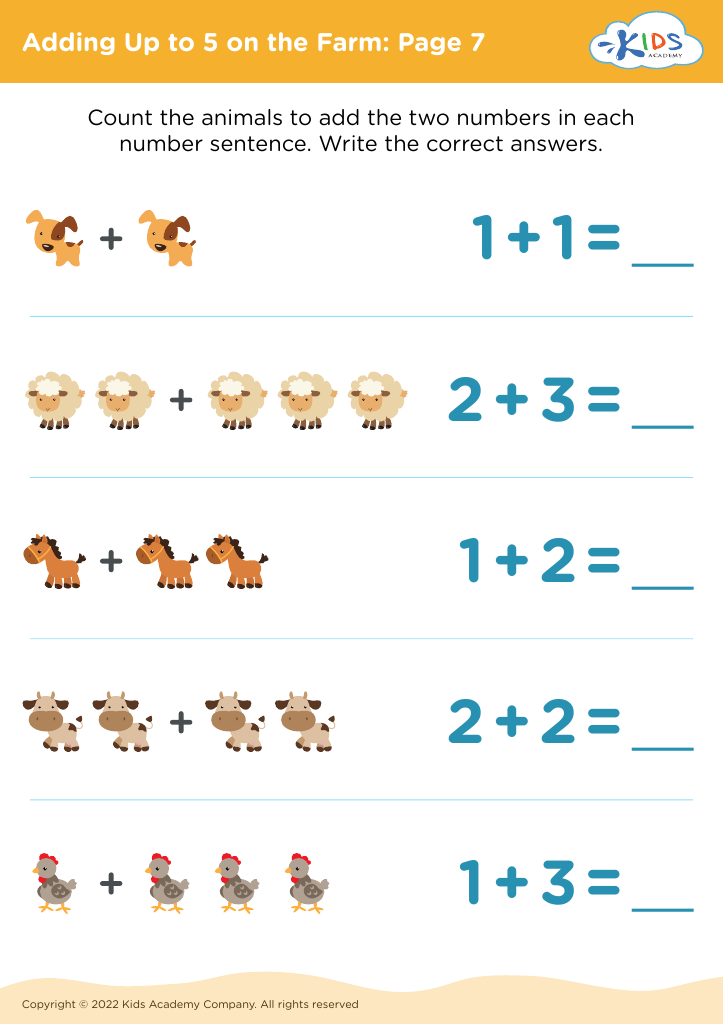
Adding Up to 5 on the Farm: Page 7
Worksheet
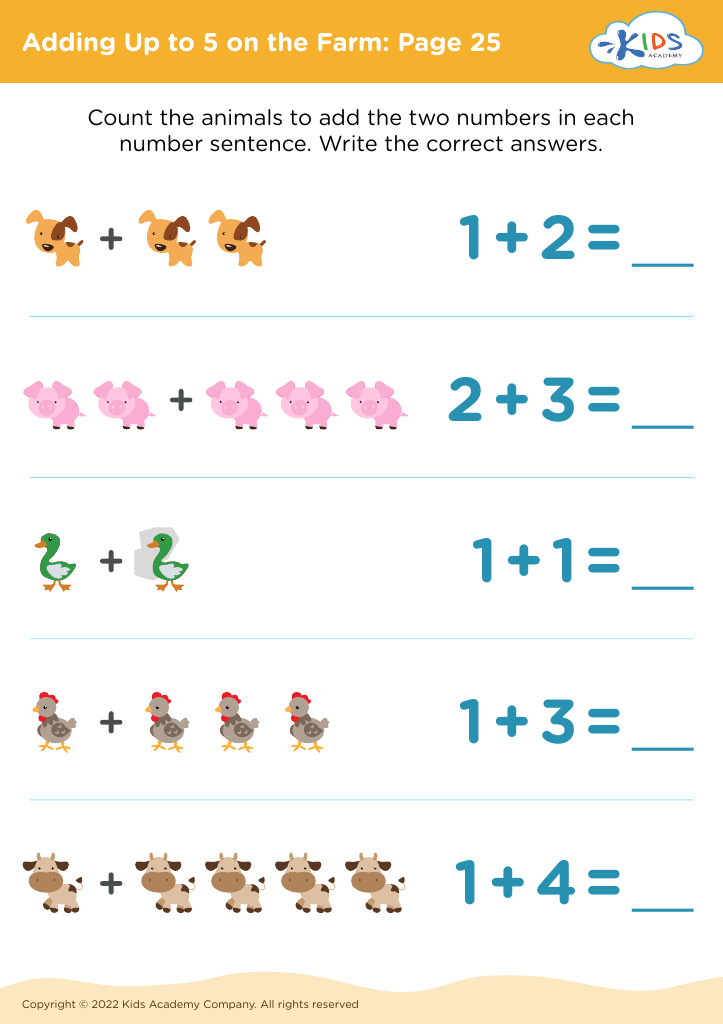
Adding Up to 5 on the Farm: Page 25
Worksheet
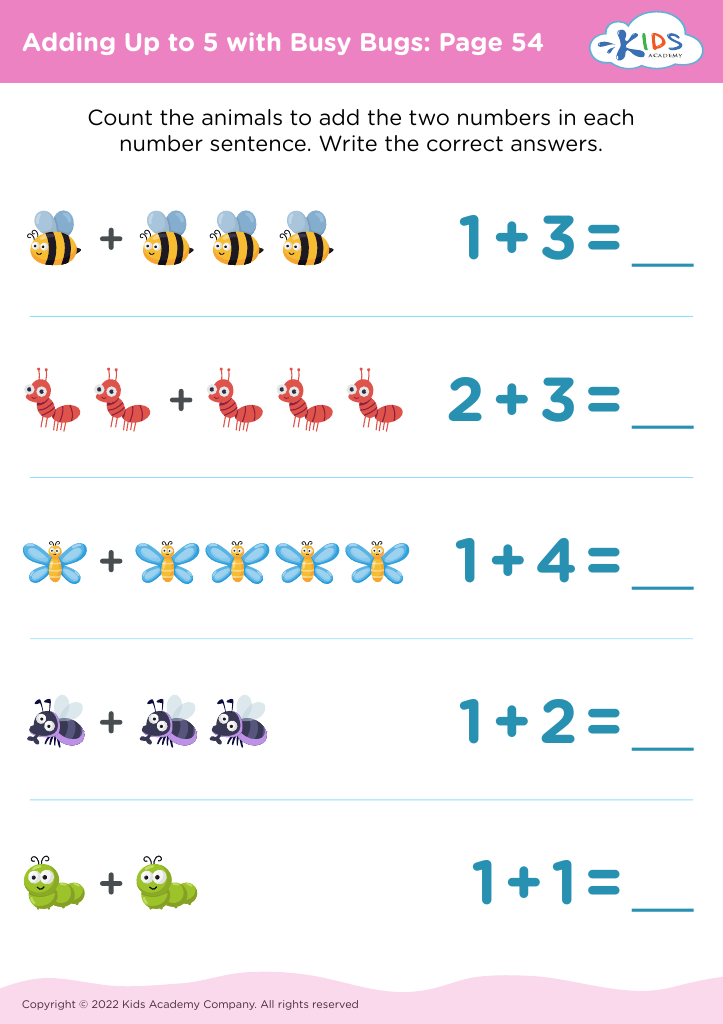
Adding Up to 5 with Busy Bugs: Page 54
Worksheet
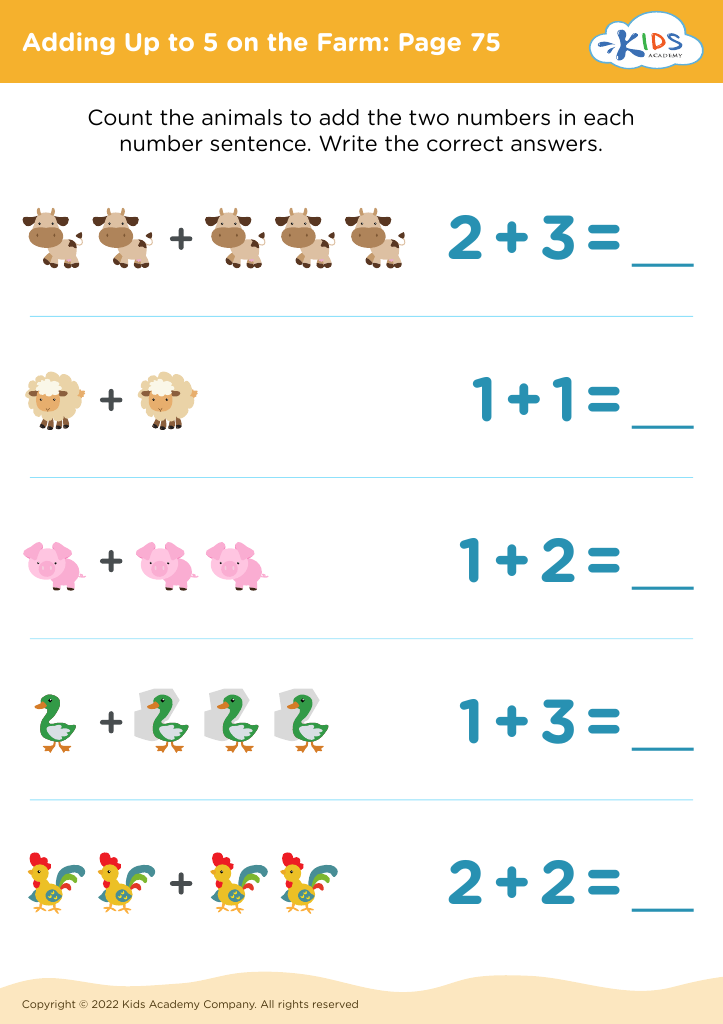
Adding Up to 5 on the Farm: Page 75
Worksheet
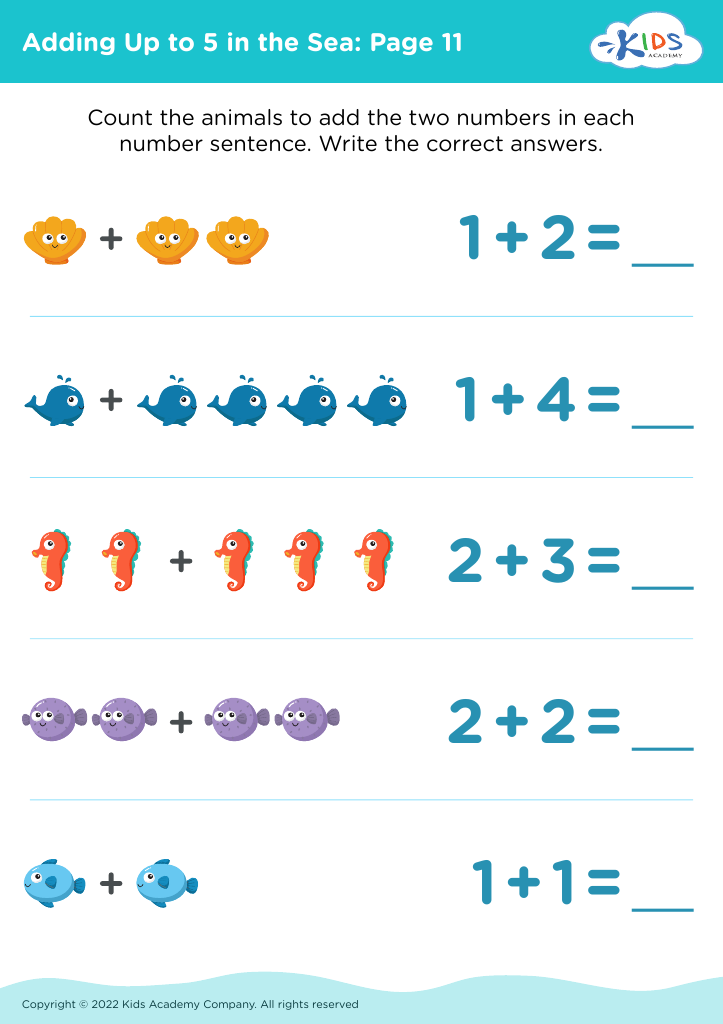
Adding Up to 5 in the Sea: Page 11
Worksheet
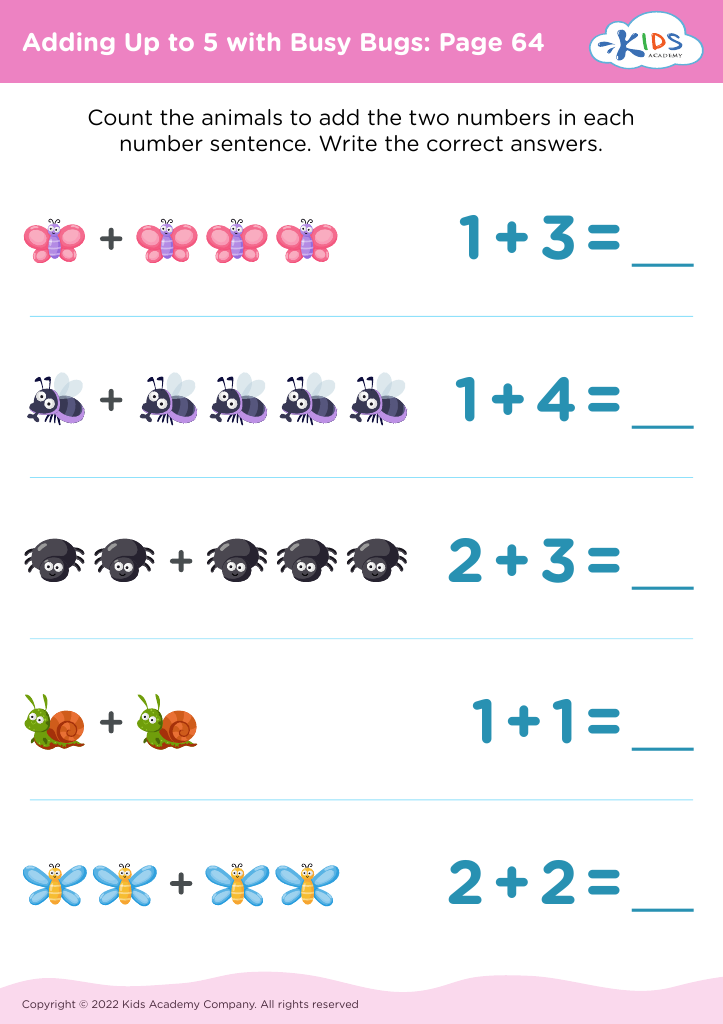
Adding Up to 5 with Busy Bugs: Page 64
Worksheet
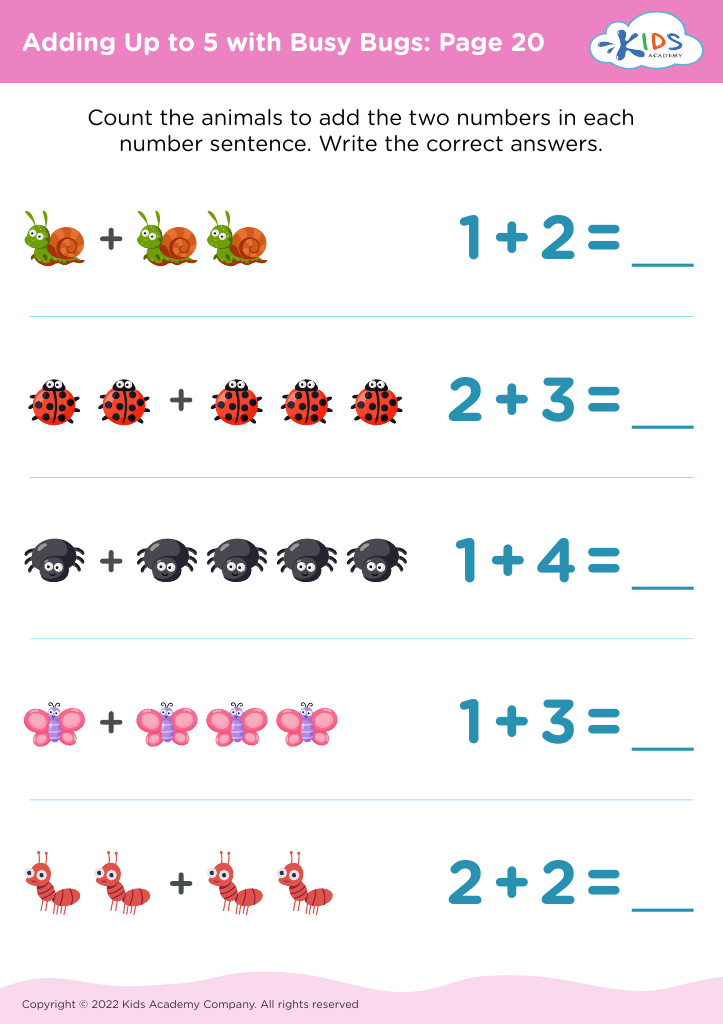
Adding Up to 5 with Busy Bugs: Page 20
Worksheet
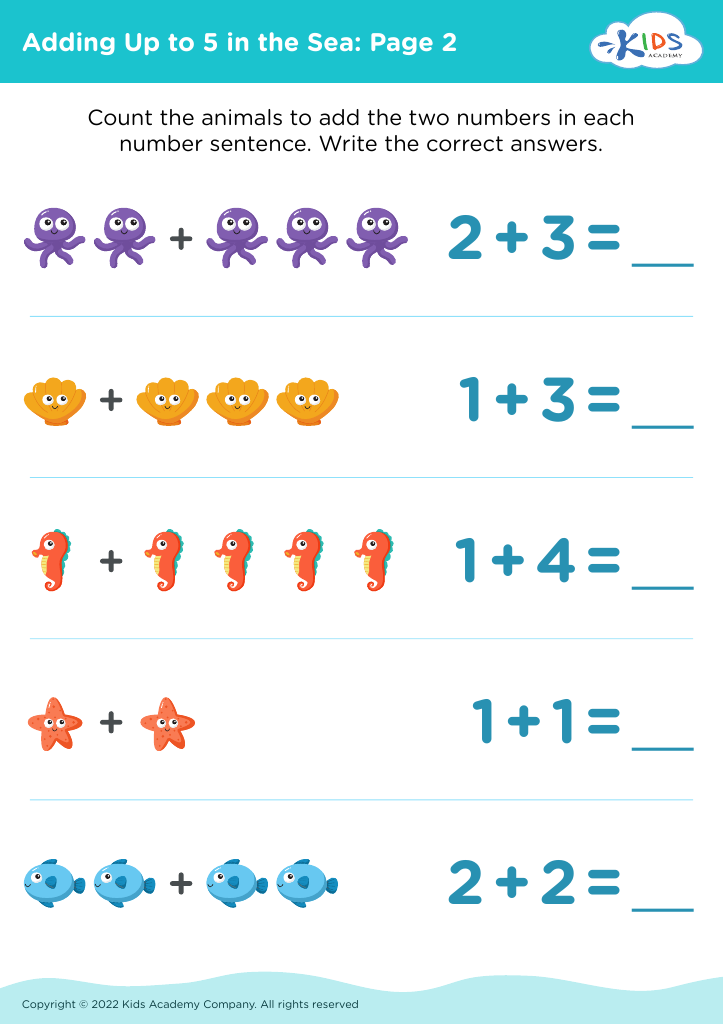
Adding Up to 5 in the Sea: Page 2

Adding Up to 5 in the Sea: Page 2

Adding Up to 5 in the Sea: Page 2
Worksheet
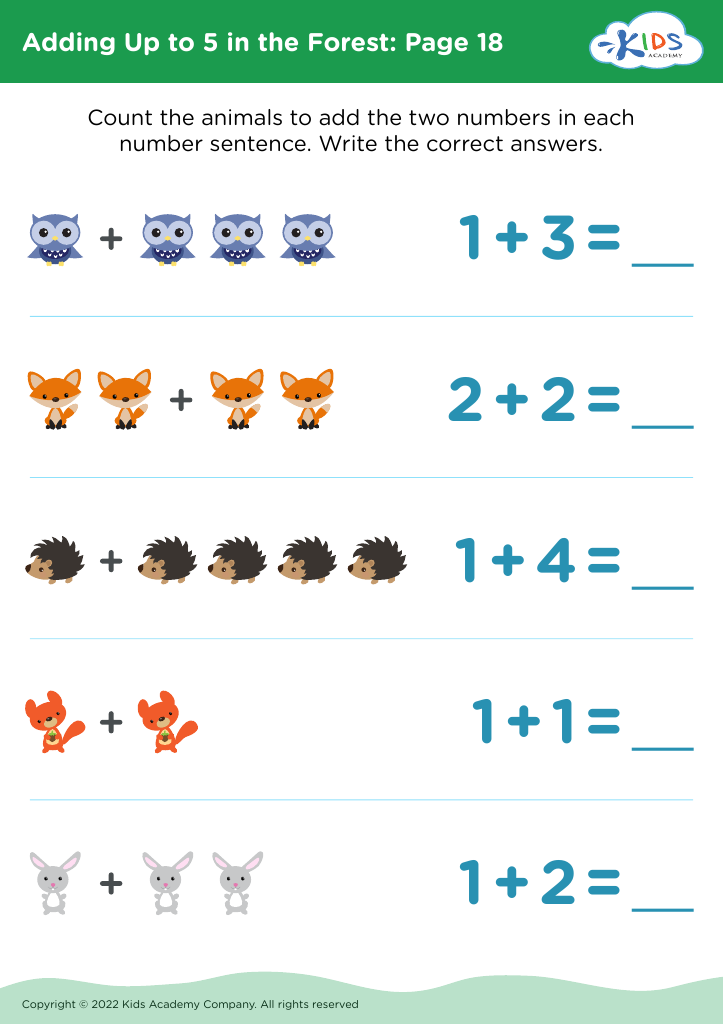
Adding Up to 5 in the Forest: Page 18
Worksheet
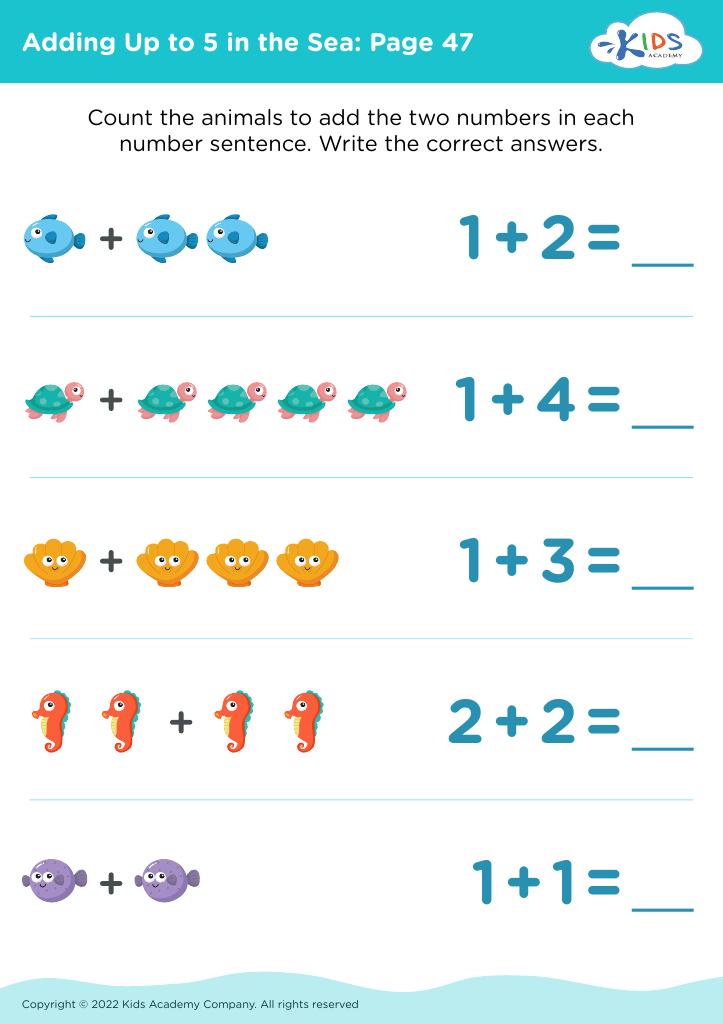
Adding Up to 5 in the Sea: Page 47
Worksheet
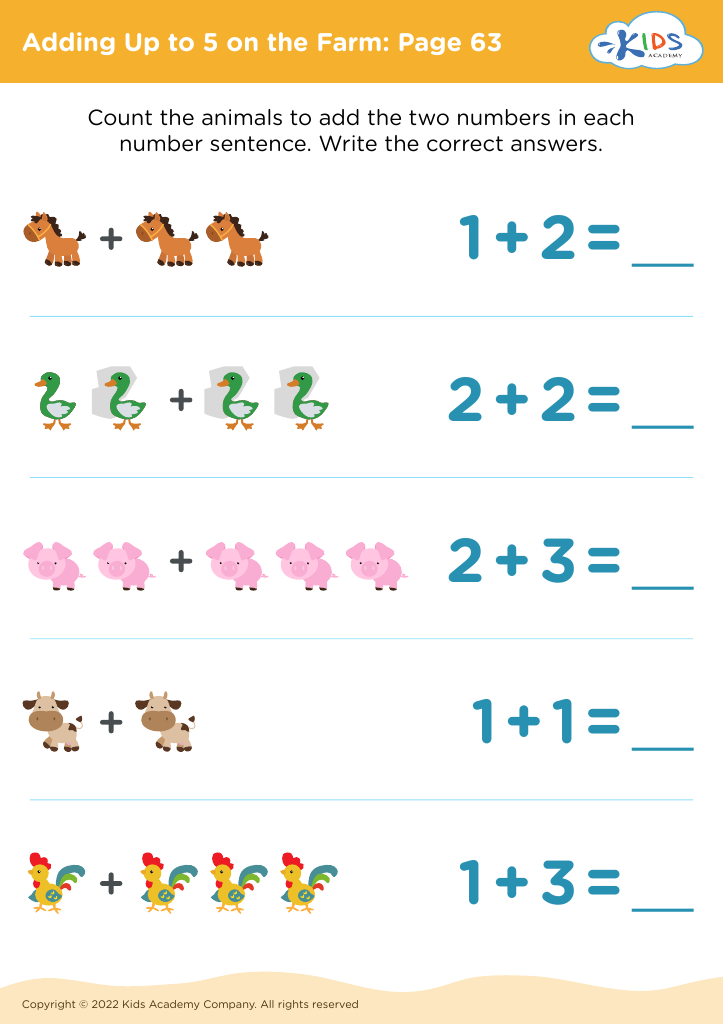
Adding Up to 5 on the Farm: Page 63
Worksheet


Visual learning is a critical component of education, especially for children aged 5-8, as it directly enhances comprehension and retention. At this developmental stage, children are more receptive to visual cues, making visual learning strategies highly effective. Incorporating visual aids, like images, diagrams, and manipulatives, helps children grasp abstract concepts such as addition simply and engagingly.

Parents and teachers should care about visual learning in addition because it creates a strong foundation for mathematical understanding. As young learners often rely on visual information to make connections between numbers and quantities, visual tools can transform intimidating concepts into manageable tasks. This promotes confidence and encourages exploration.

Moreover, visual learning accommodates diverse learning styles within the classroom. Not every child learns the same way; some may thrive with auditory instruction, while others may excel with visuals. By integrating visual aids in addition, educators can address varied needs, fostering an inclusive environment.

Additionally, with early math skills being pivotal for academic success, promoting visual learning in addition 能 help build essential problem-solving and critical thinking skills. Ultimately, by investing in visual learning methods, parents and educators empower children to become independent thinkers and confident learners, setting them up for lifelong academic achievement.