
Visual perception Addition Worksheets for Ages 5-8
16 filtered results
Difficulty Level
Grade
Age
-
From - To
Subject
Activity
Standards
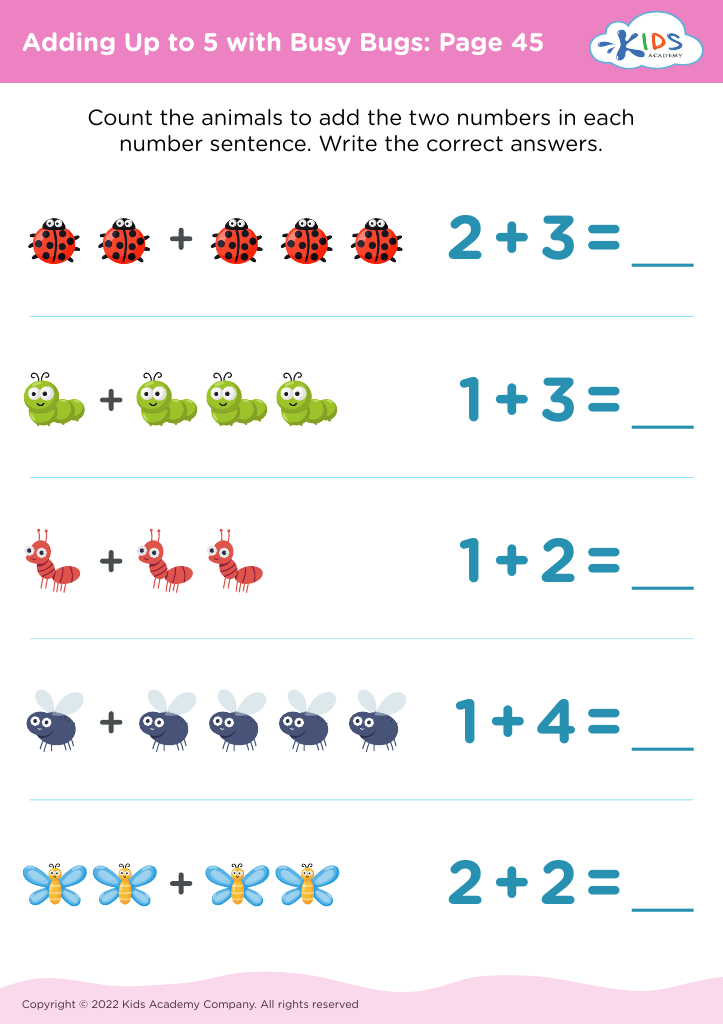
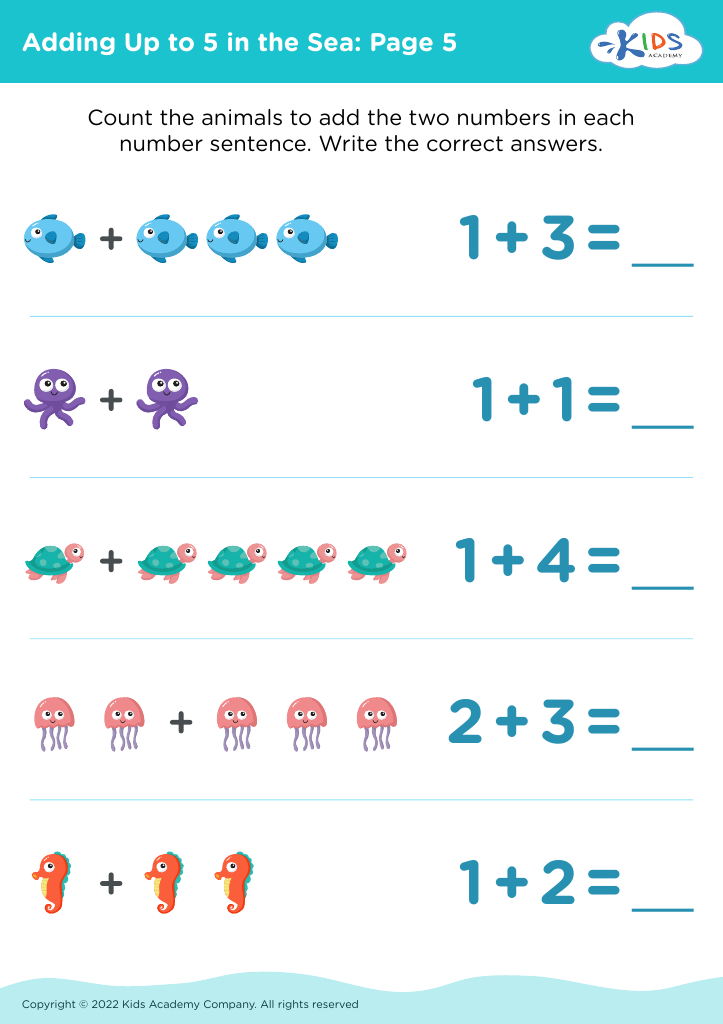
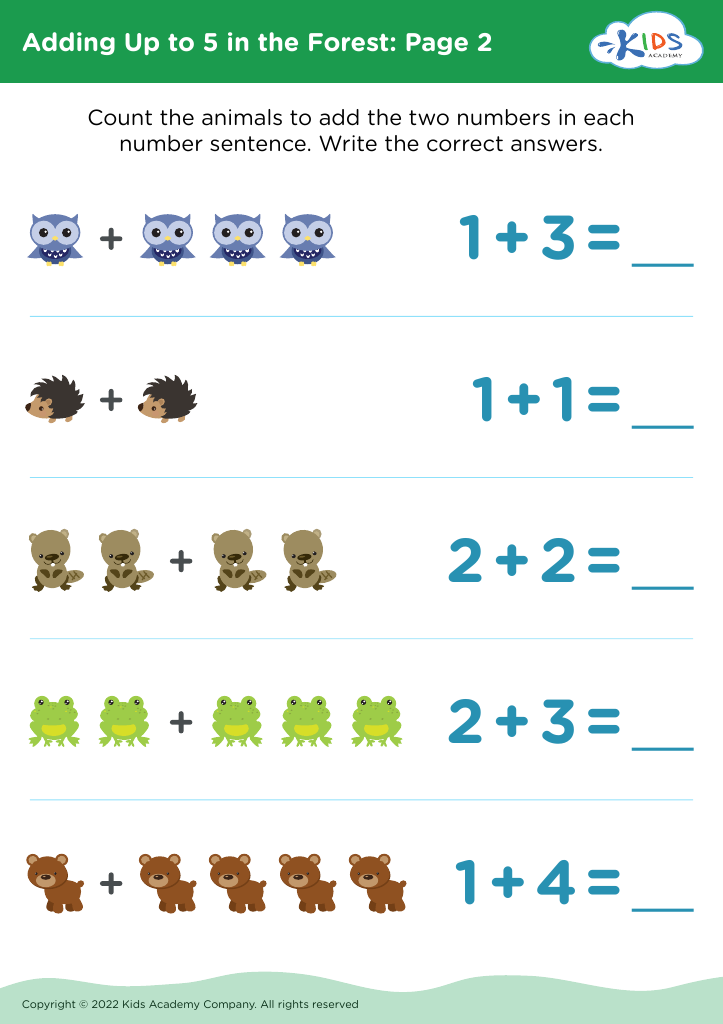
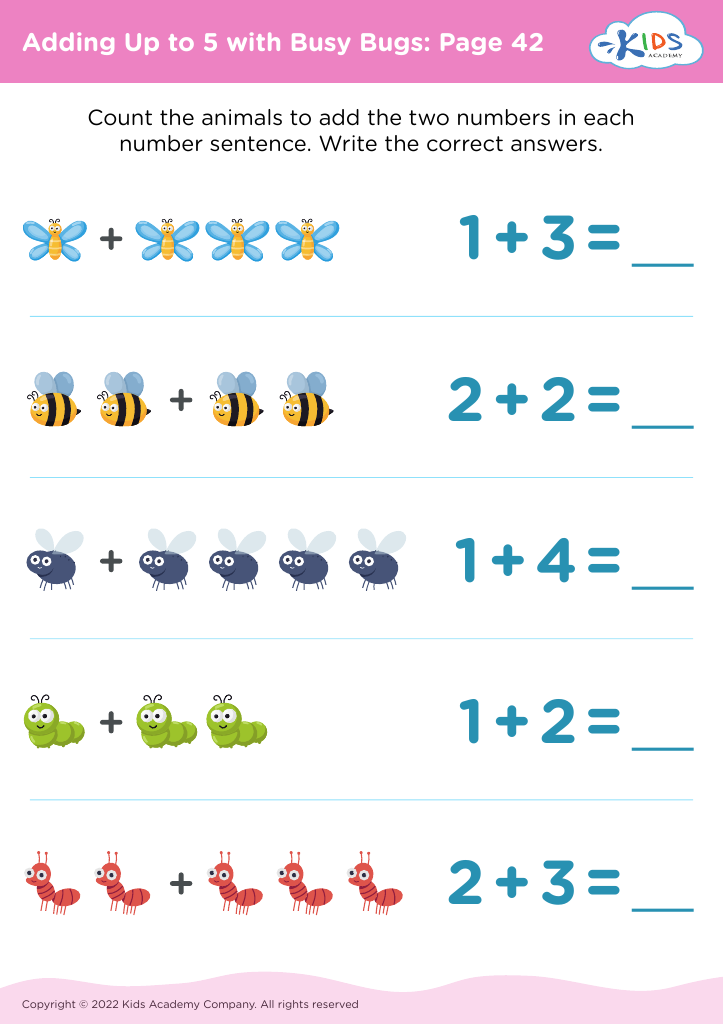
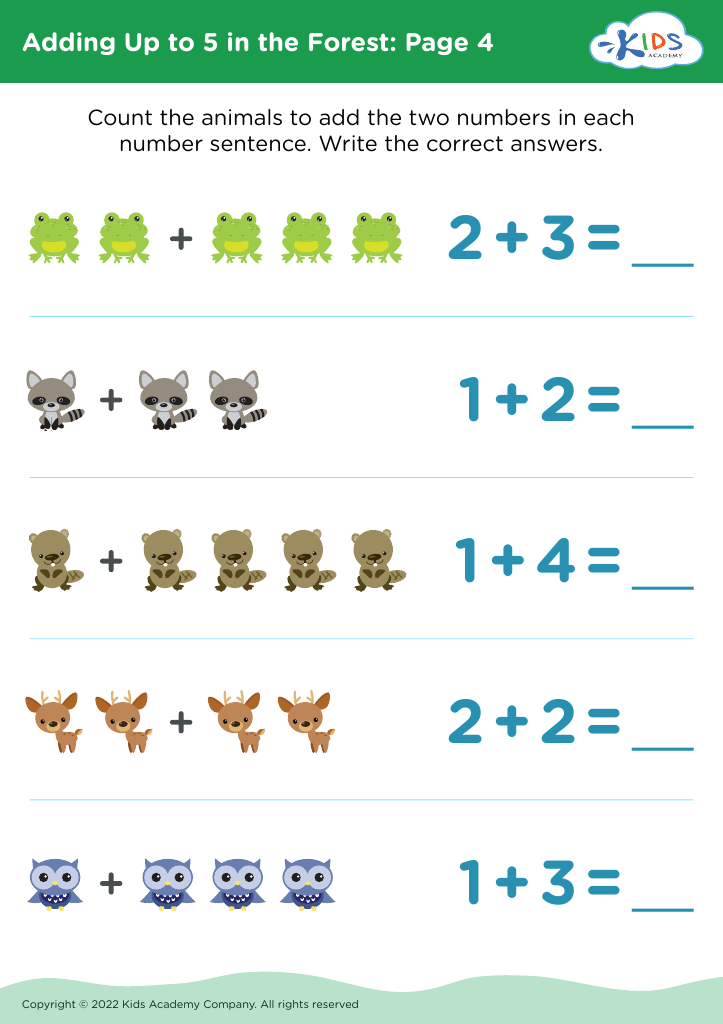
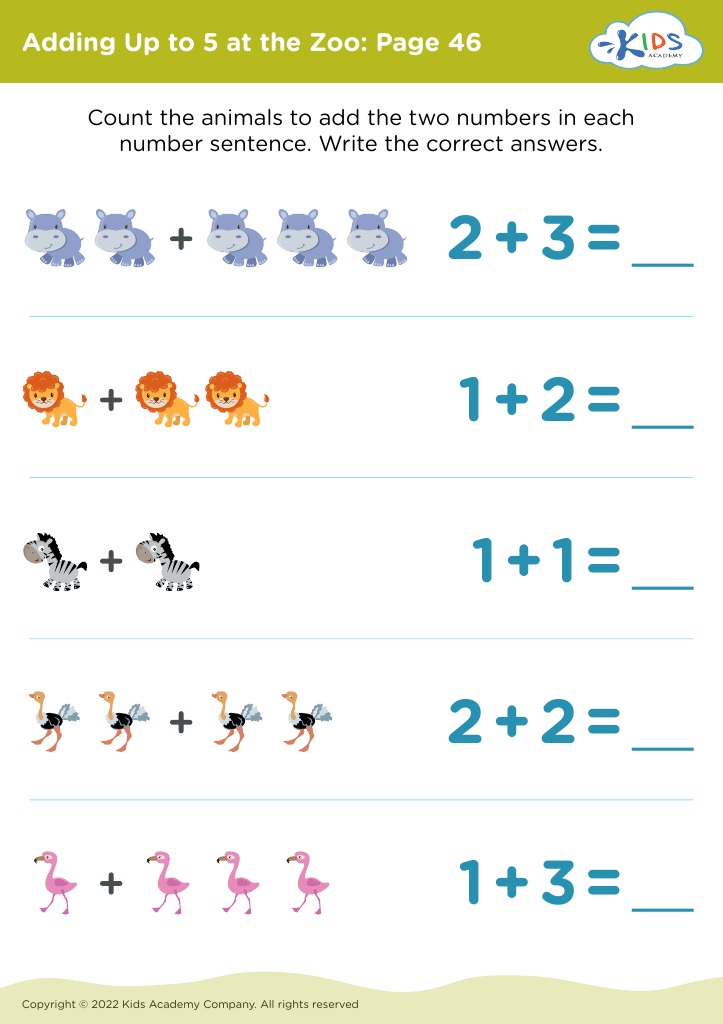
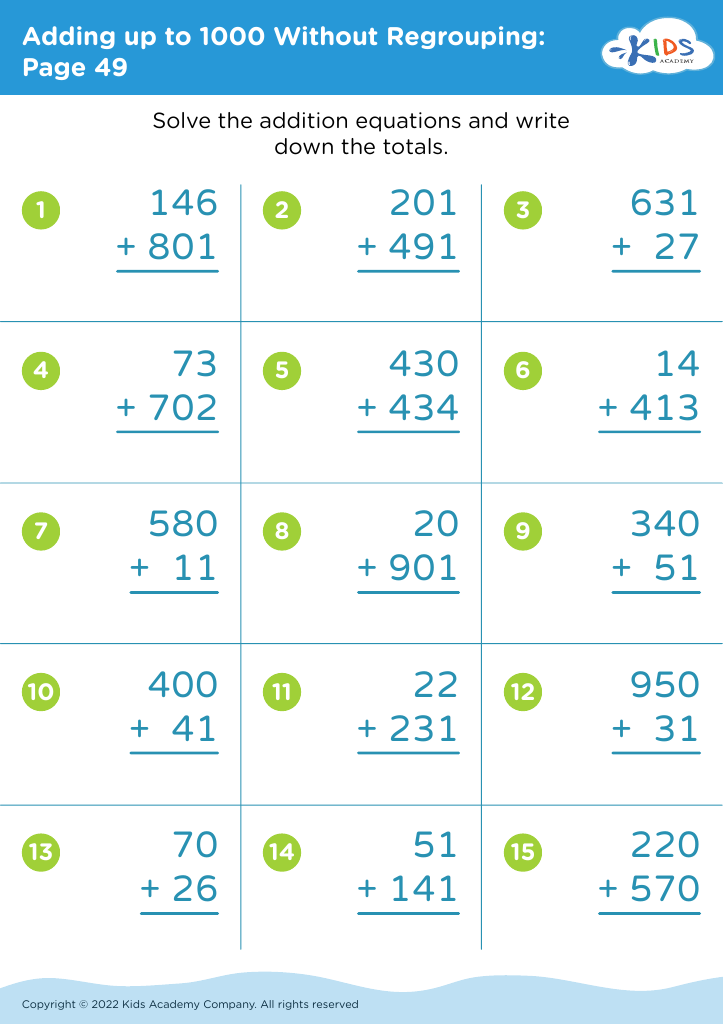
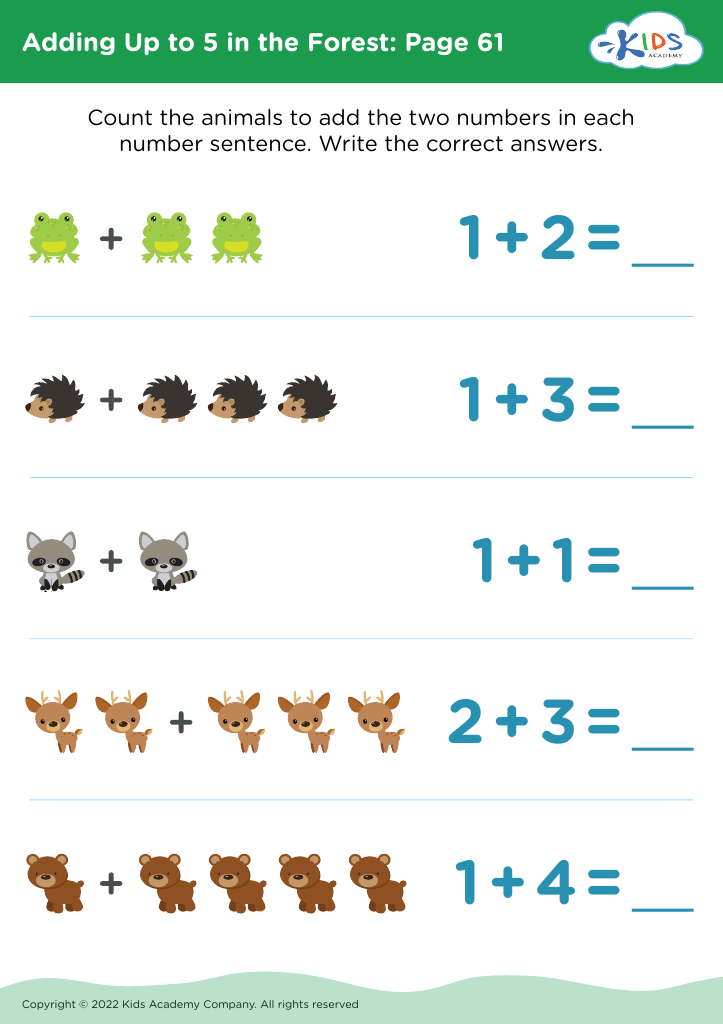
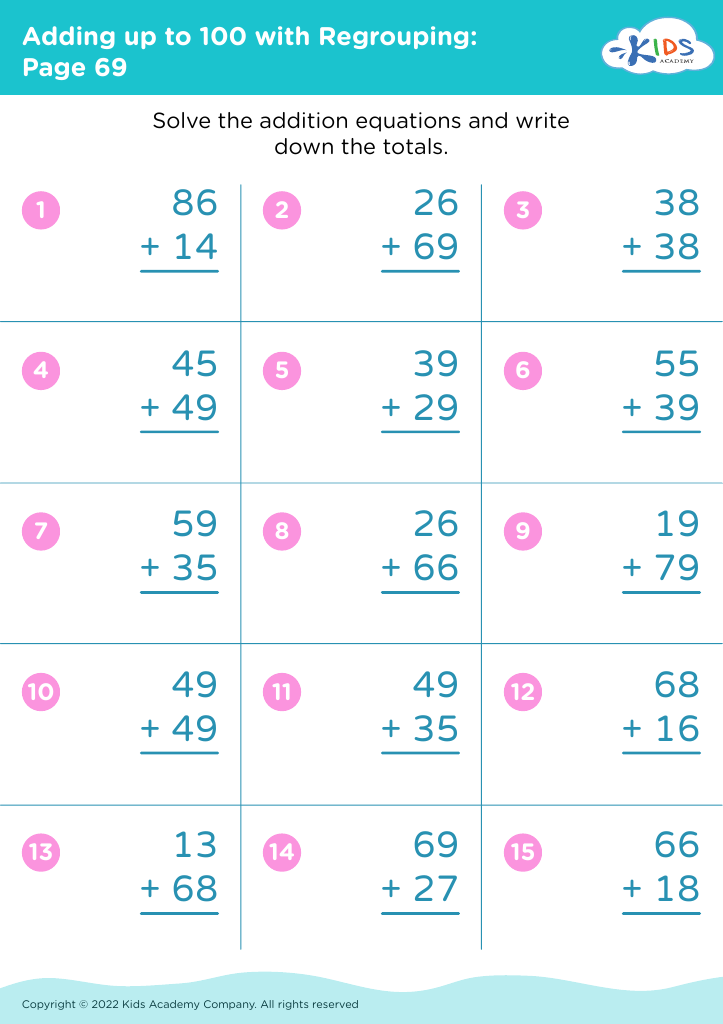
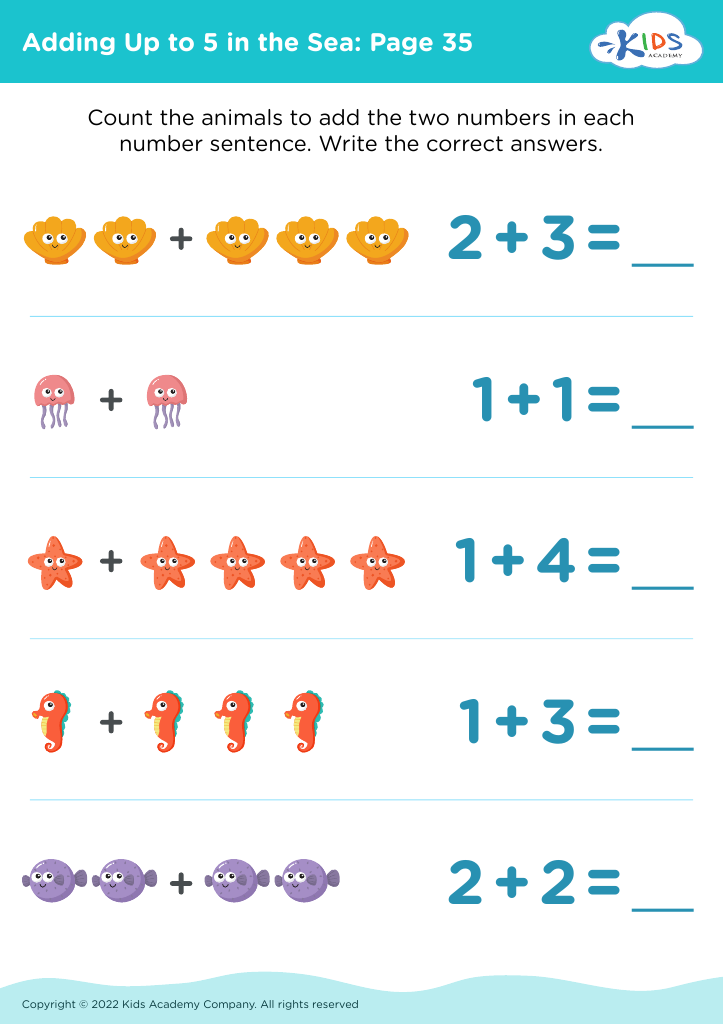
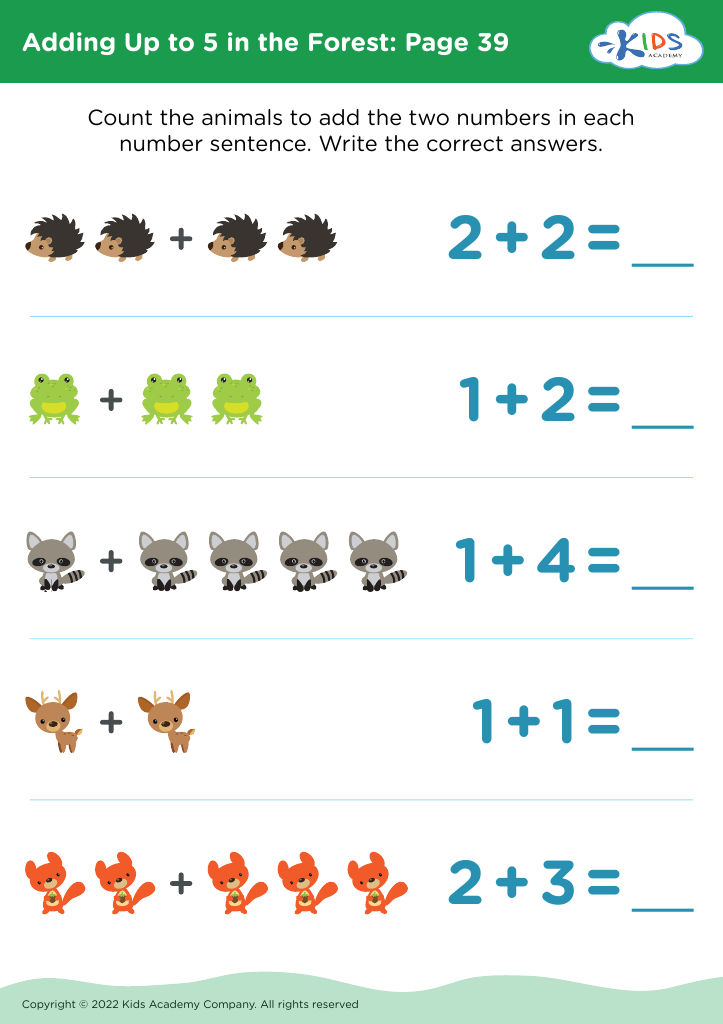
Enhance mathematical skills and visual perception in young learners with our "Visual Perception Addition Worksheets for Ages 5-8." These engaging, printable worksheets are expertly designed to strengthen fundamental addition skills while simultaneously sharpening visual and cognitive abilities. Perfect for home or classroom use, these activities transform learning into a fun and interactive experience. Each worksheet features vibrant visuals and thoughtfully crafted problems that inspire kids to confidently tackle addition challenges. Seamlessly integrate these educational resources into your teaching toolkit, and watch your students' enjoyment and proficiency in mathematics flourish! Suitable for kids aged 5-8.
Favorites
With answer key
Interactive
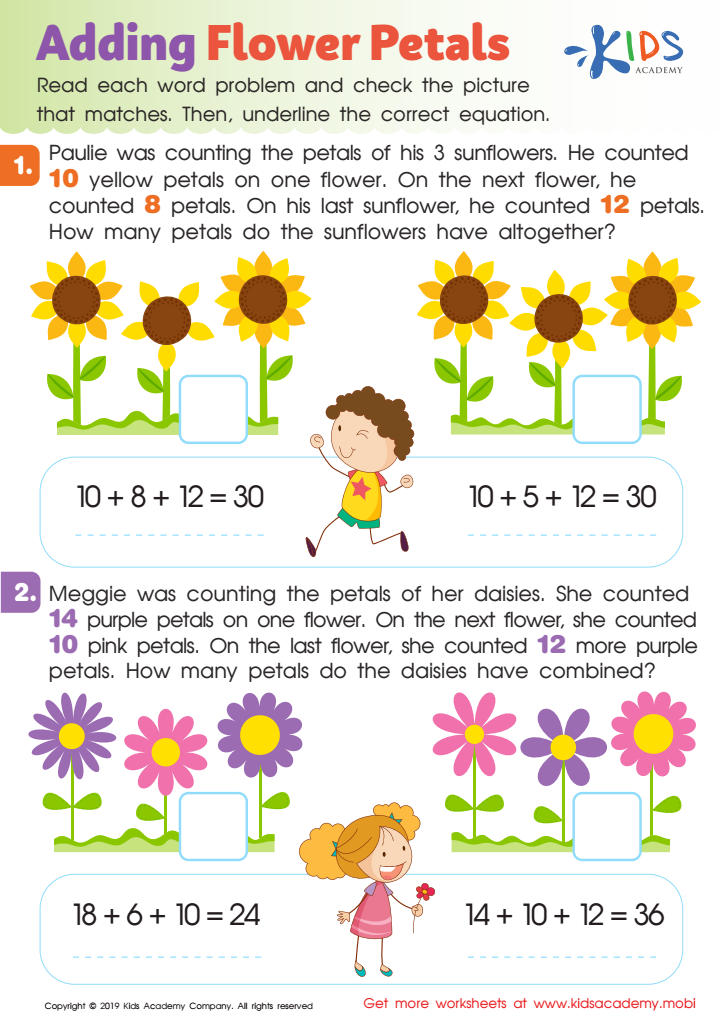
Adding Flower Petals Worksheet
This free worksheet helps little mathematicians learn to understand word problems. They'll read each one and match it to the corresponding picture. Important info is highlighted, teaching kids to look for key info when solving problems. Then they'll underline the correct number equation that matches the picture. A great way to practice problem-solving skills!
 Assign to My Students
Adding Flower Petals Worksheet
Worksheet
Join Kids Academy for Free
Who is primarily going to use this learning content?








Visual perception is crucial for children aged 5-8 as it underpins much of their early learning experience. Visual perception refers to the brain’s ability to interpret and understand what the eyes see. For children in this age bracket, honing visual perception skills through activities like visual perception addition (using visual aids to teach math concepts) can significantly impact their cognitive, motor, and academic development.
Firstly, visual perception is directly linked to reading and writing abilities. Strong visual perception enables children to differentiate between letters and numbers, identify words, and comprehend written instructions, thus supporting literacy development. For example, identifying differences in shape, size, and orientation aids letter recognition, which is a foundation of reading.
Secondly, visual perception is essential in mathematics. Kids who enhance their visual-spatial skills can better understand addition and subtraction, recognize patterns, and solve puzzles, thereby building a strong mathematical foundation.
Additionally, visual perception contributes to everyday activities and social interactions, such as getting dressed, navigating spaces, and engaging in play, all of which are important for a child's independence and confidence.
Teachers and parents should integrate visual-perceptual activities into learning to support these crucial skills. Activities such as puzzles, matching games, and engaging visual math exercises can make learning enjoyable and effective, fostering a productive and enthusiastic approach to education in young learners.








