Understanding area Area and Perimeter Worksheets for Ages 5-8
3 filtered results
-
From - To
Introduce your young learners to the fundamentals of geometry with our engaging Area and Perimeter Worksheets, specially designed for ages 5-8. These educational resources guide children through understanding the concepts of area and perimeter with colorful and interactive exercises. Your kids will enjoy measuring, comparing, and calculating areas and perimeters while enhancing their problem-solving and critical-thinking skills. Our worksheets provide a solid foundation in math, seamlessly blending fun with learning. Perfect for classroom activities or extra practice at home, these worksheets ensure your child not only learns but truly understands key mathematical principles.
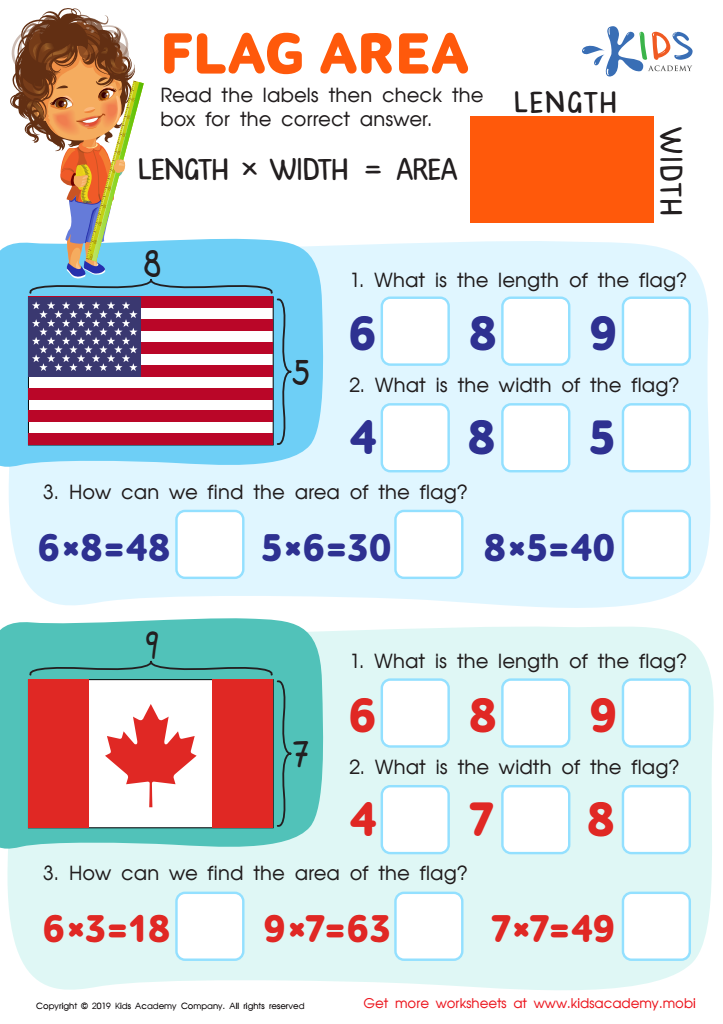
Flag Area Worksheet
 Assign to My Students
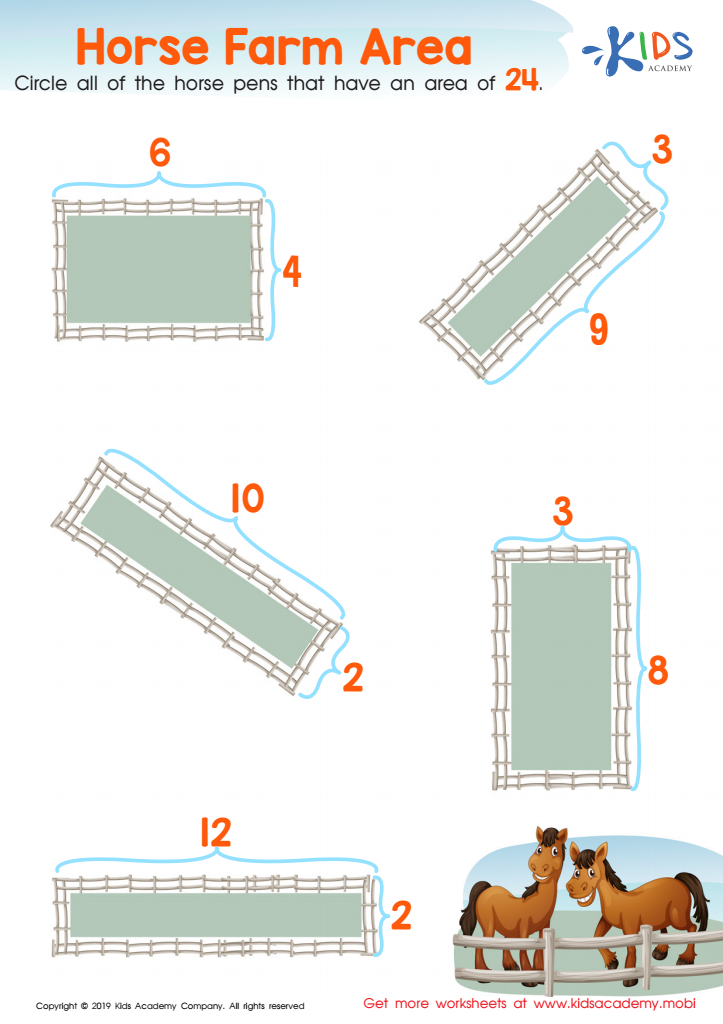
Horse Farm Area Worksheet
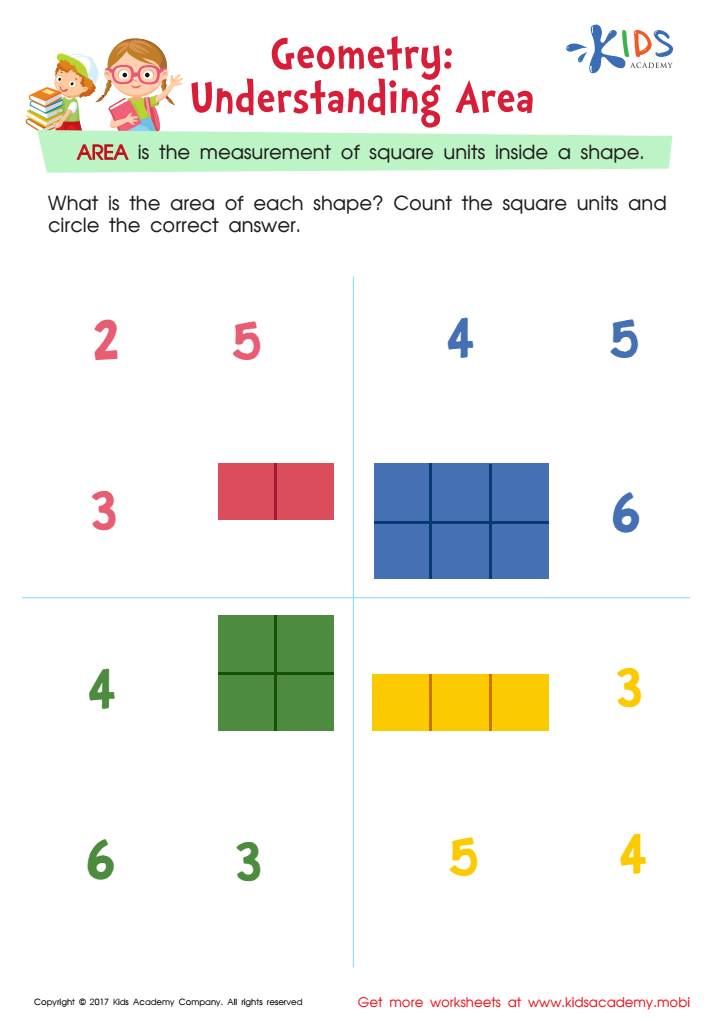
Understanding Area Worksheet








Understanding area and perimeter is crucial for young children as it lays the foundation for future mathematical concepts and everyday problem-solving skills. For ages 5-8, these concepts are introduced in a simple, hands-on way that fosters both cognitive and spatial reasoning. When children grasp the idea of area, they comprehend that it represents the amount of space inside a shape, which can aid in tasks such as understanding space allocation, like how much room is needed to fit a bed inside a bedroom. Similarly, understanding perimeter helps kids measure the distance around an object, a skill applicable in scenarios like fencing a yard or framing a picture.
Early comprehension of these concepts also boosts confidence when faced with more complex math problems in later grades. It encourages logical thinking and enhances their ability to approach problems methodically. Parents and teachers can foster curiosity and engagement through interactive activities, such as measuring objects around the house or classroom, engaging in craft projects that involve specific areas and perimeters, or playing educational games. By making these foundational concepts appealing and accessible, adults can ensure that children build a solid mathematical base that will benefit their overall academic journey.