Basic Math Skills Comparison Worksheets for Ages 5-8
3 filtered results
-
From - To
Explore our Basic Math Skills Comparison Worksheets designed for children ages 5-8. These engaging worksheets are perfect to help young learners enhance their foundational math skills. From comparing numbers, shapes, and sizes to practicing greater-than and less-than concepts, each activity fosters critical thinking and problem-solving abilities. Our worksheets are tailored to meet age-appropriate learning standards, making math fun and accessible. Ideal for classroom use or homeschool practice, they provide a variety of exercises to keep children motivated and challenged. Support your child’s early math journey with our expertly crafted comparison worksheets at Kids Academy!
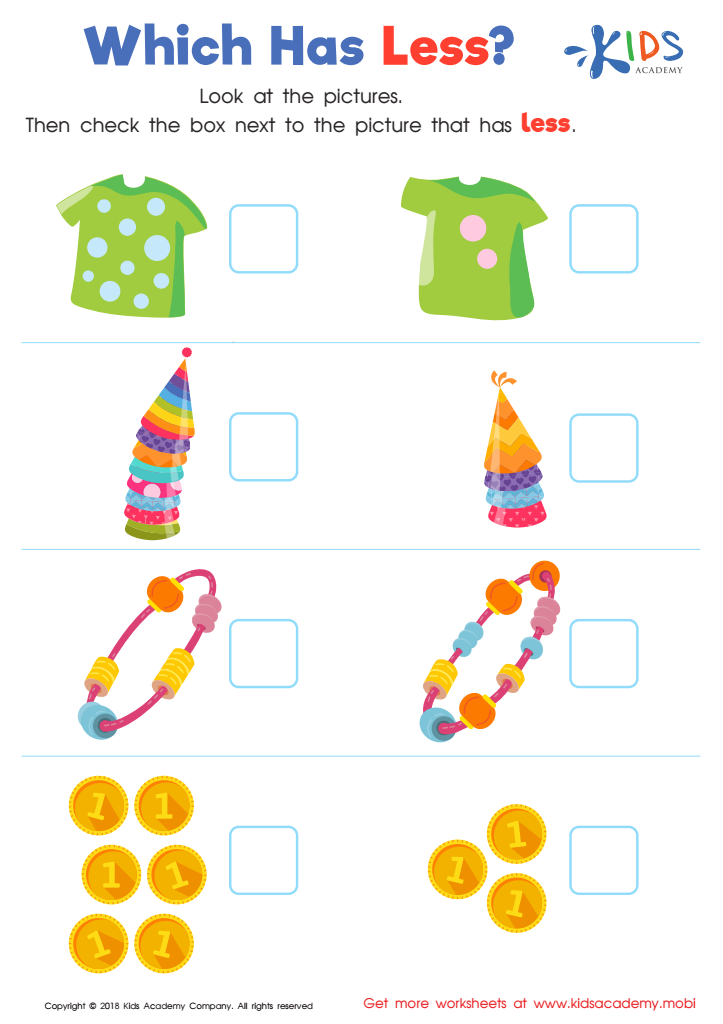
Which Has Less? Worksheet
 Assign to My Students
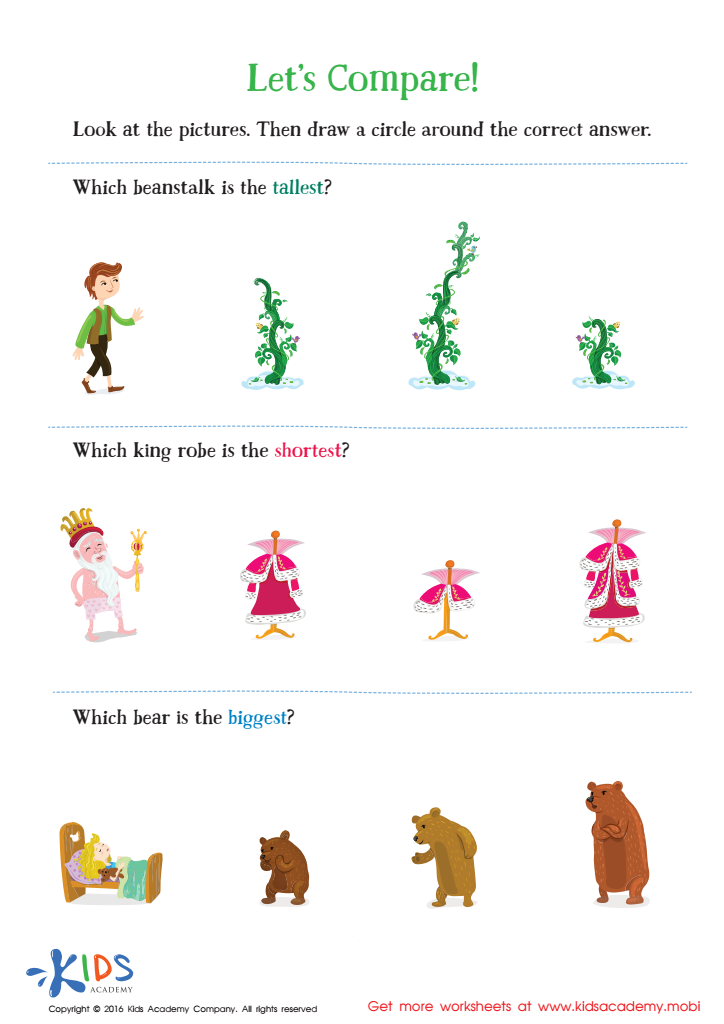
Fairy Tale Worksheet: Let's Compare
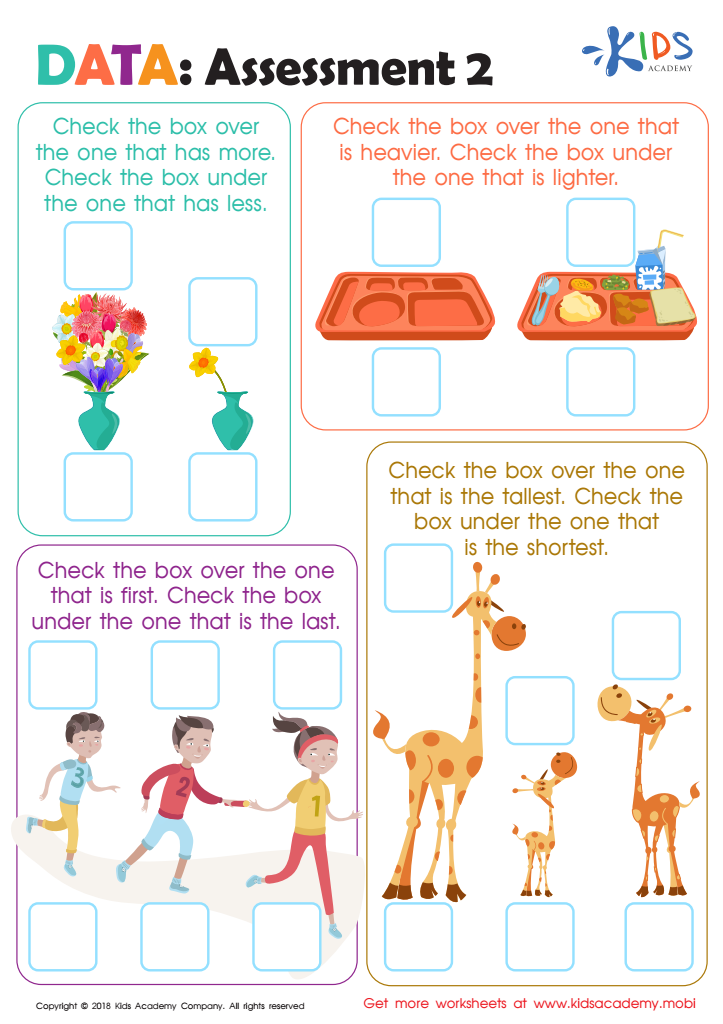
Data: Assessment 2 Worksheet







Parents and teachers should care about basic math skills comparison for children aged 5-8 because it forms the foundation for future academic success and overall cognitive development. At this critical stage, children's brains are highly receptive and capable of absorbing fundamental concepts in mathematics, such as counting, addition, subtraction, and understanding shapes and patterns. Tracking and comparing their math skills ensure they are on the right developmental track.
Monitoring math skills allows for early identification of any learning difficulties. Addressing these issues sooner rather than later provides opportunities for targeted interventions, which can prevent long-term academic struggles and boost a child's confidence and enthusiasm for learning.
Furthermore, numeracy skills are not only vital for academic subjects but are also crucial for everyday tasks, problem-solving, and logical thinking. By ensuring that children develop strong basic math skills, parents and teachers lay the groundwork for advanced mathematical learning in later years, foster critical thinking, and prepare children for a world that increasingly relies on STEM (Science, Technology, Engineering, and Mathematics) proficiencies.
Finally, demonstrating an active interest and involvement in a child's learning journey can significantly boost their motivation and academic self-esteem. Consequently, parents and teachers who care about and support their children's math skills development can greatly enhance their overall educational and emotional well-being.








