Basic Math Skills Fractions of Shapes Worksheets for Ages 5-8
8 filtered results
-
From - To
Discover our engaging "Basic Math Skills: Fractions of Shapes" worksheets designed specifically for children ages 5-8. These worksheets provide a fun and interactive way for young learners to understand fractions by exploring shapes. Through colorful visuals and hands-on activities, kids will learn to identify and create fractions using various geometric shapes, enhancing their comprehension in an enjoyable manner. Perfect for reinforcing classroom lessons or as valuable at-home practice, these resources foster critical thinking and problem-solving skills. Help your child build a solid math foundation while having fun with shapes and fractions! Suitable for parents and educators alike, download today!
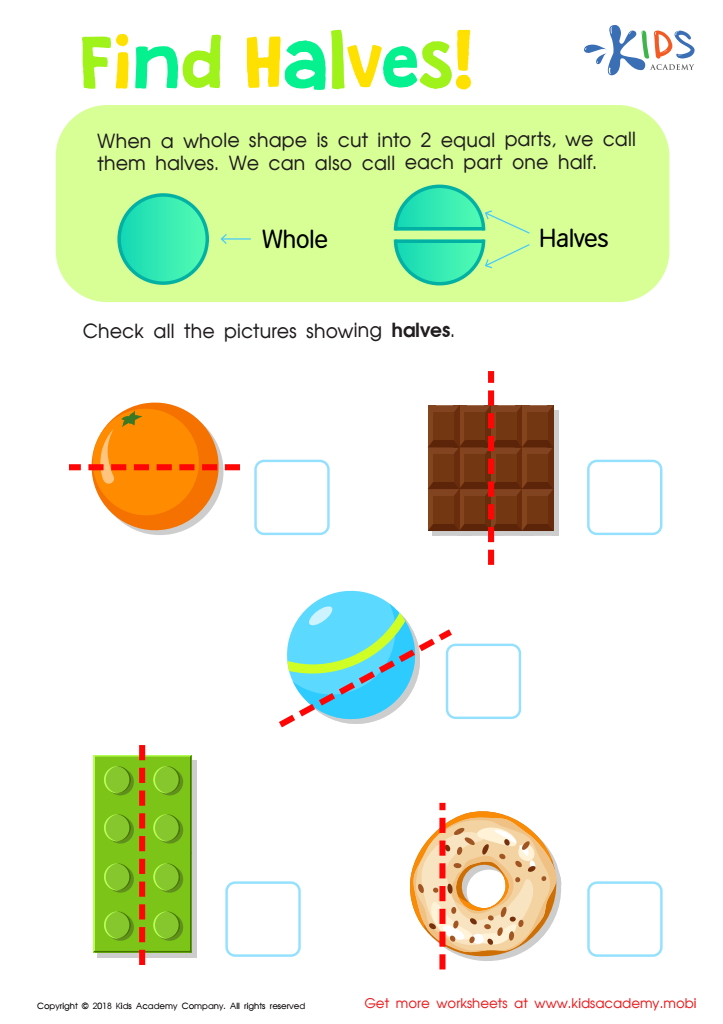
Find Halves Worksheet
 Assign to My Students
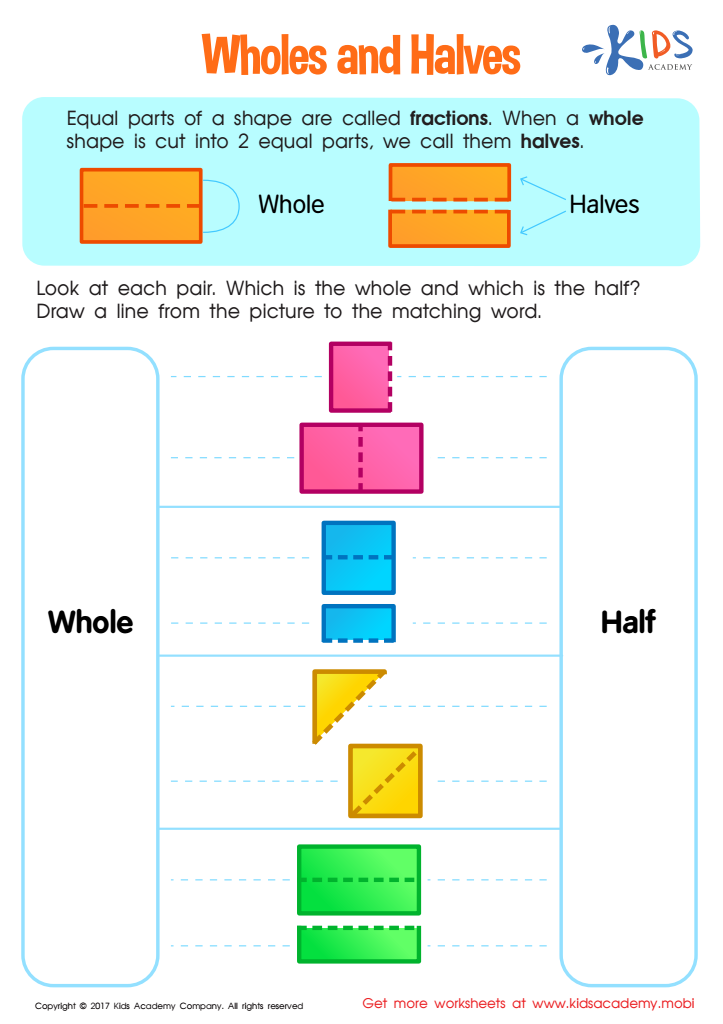
Wholes and Halves Worksheet
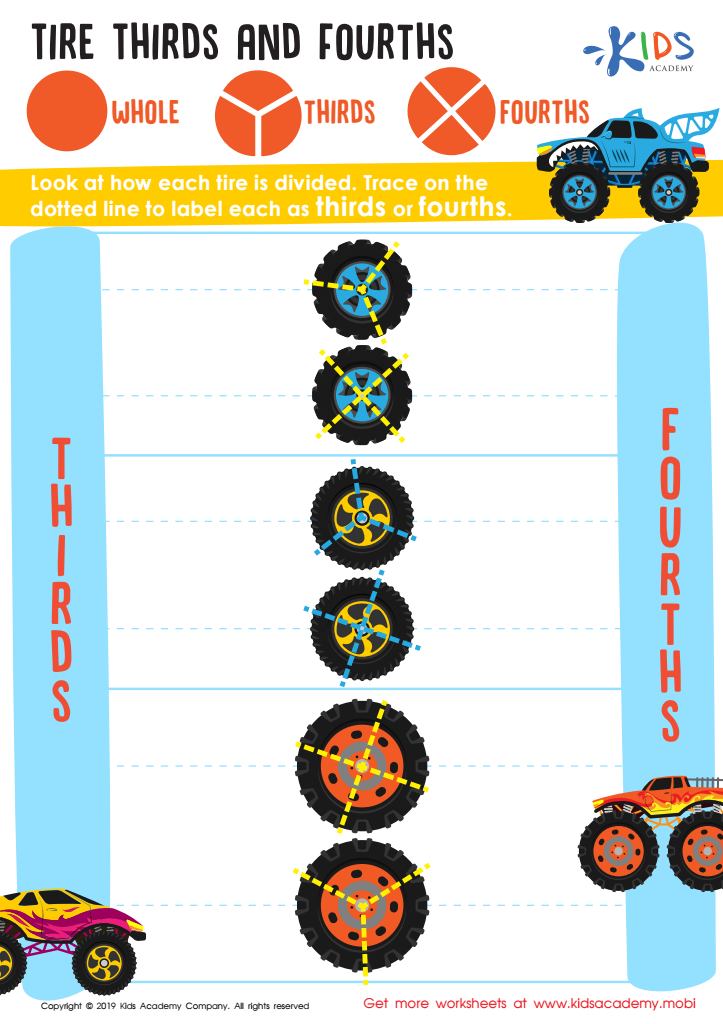
Tire Thirds and Fourths Worksheet
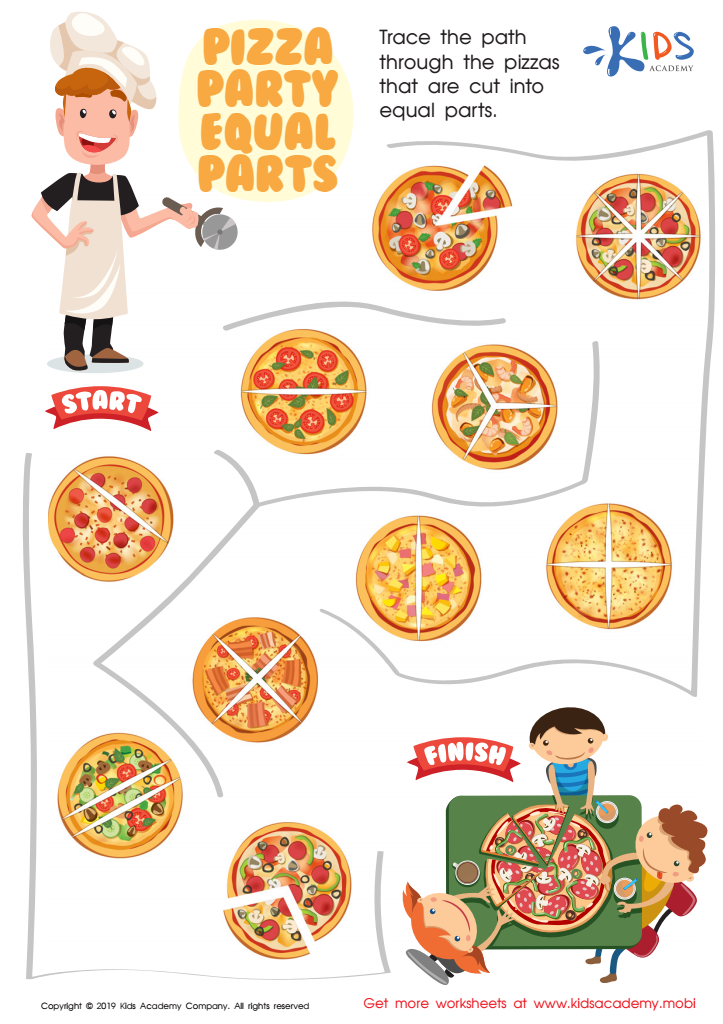
Pizza Party Equal Parts Worksheet
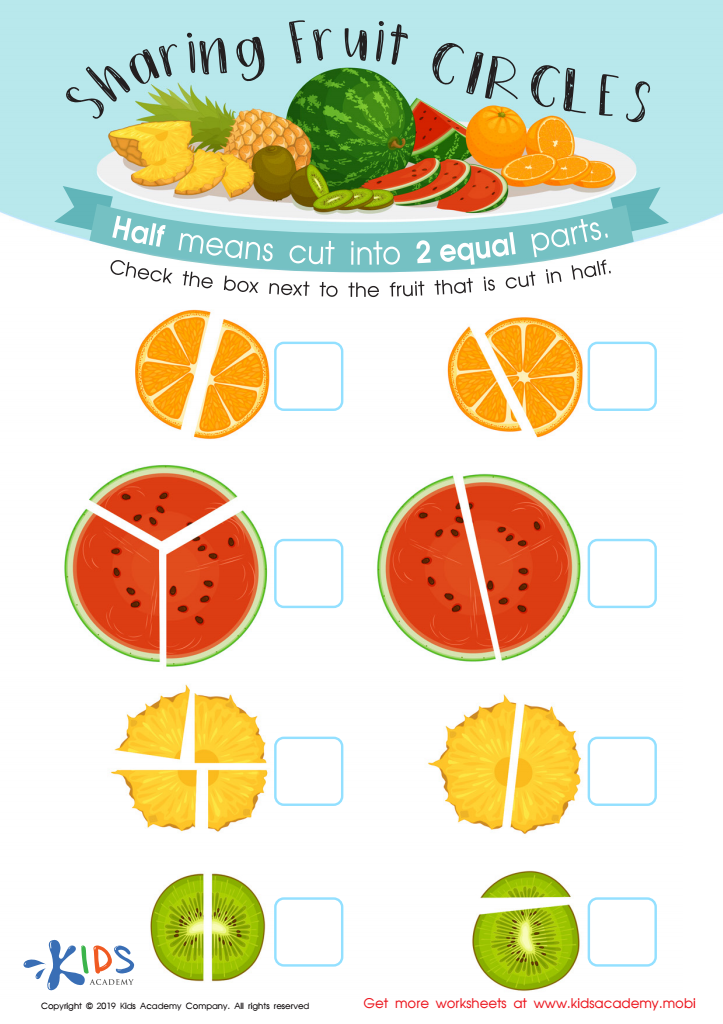
Sharing Fruit Circles Worksheet
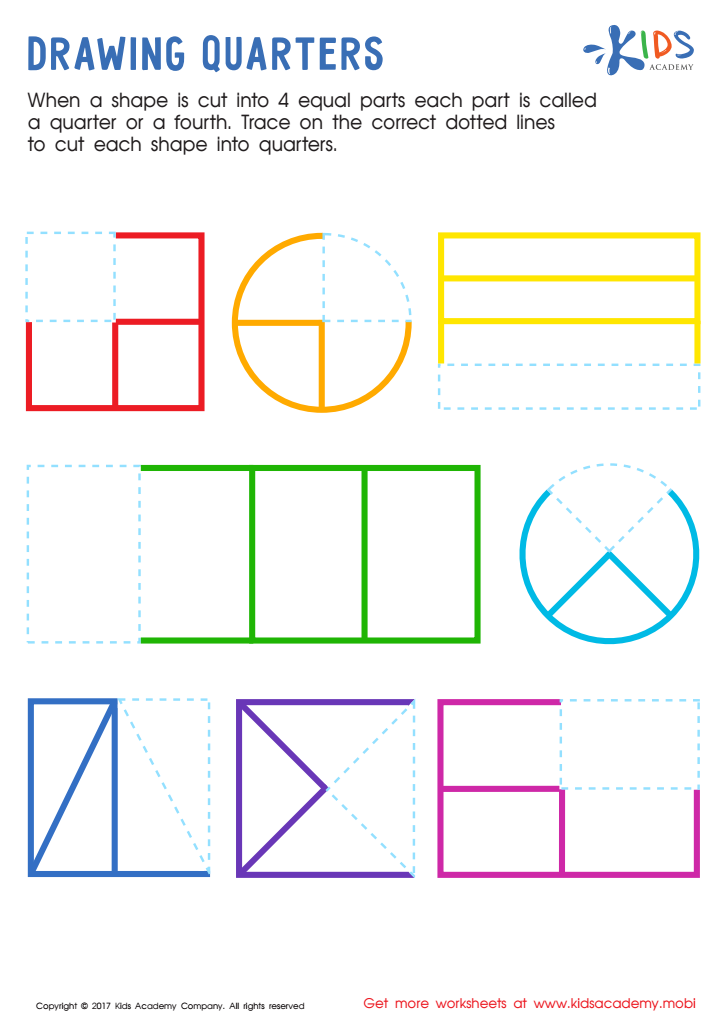
Drawing Quarters Worksheet
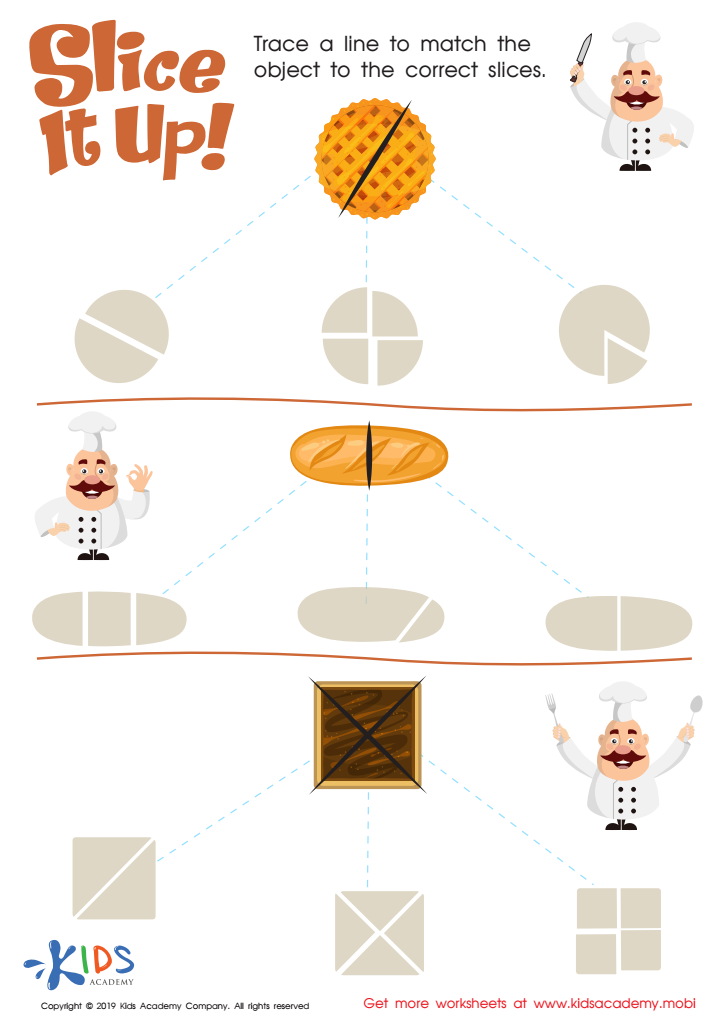
Slice It Up Worksheet
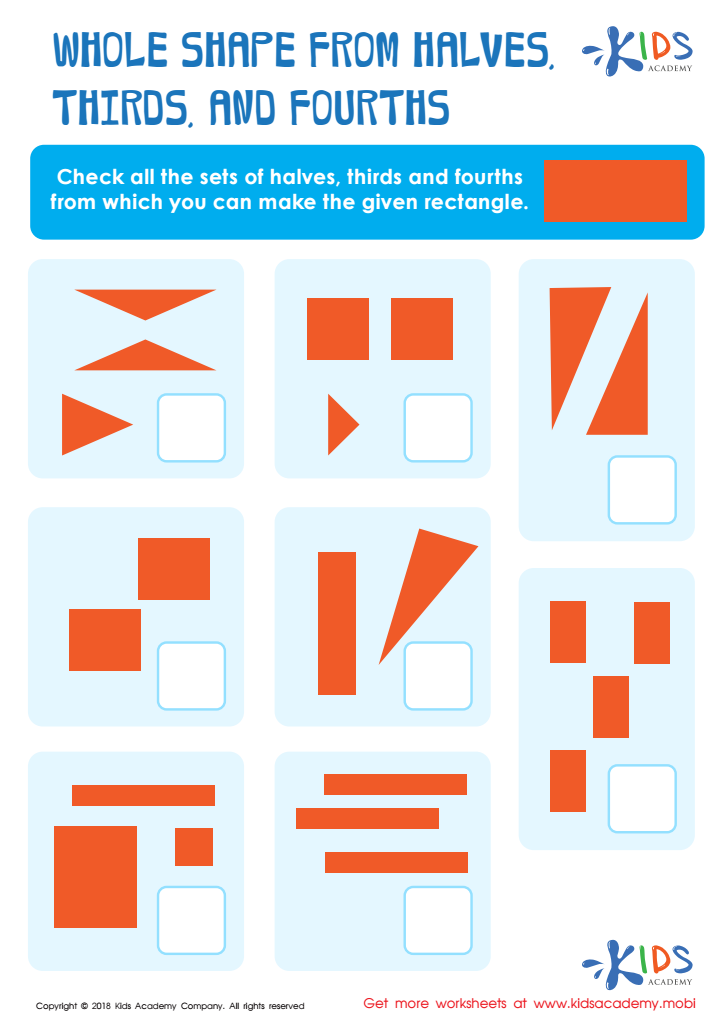
Whole Shape from Halves, Thirds and Fourths Worksheet







Basic math skills, particularly understanding fractions of shapes, are essential for children aged 5-8. At this developmental stage, children are beginning to think abstractly and can benefit significantly from visual and hands-on learning experiences. Fractions help children make sense of the world around them, as they recognize parts of a whole in everyday situations, such as sharing food, dividing toys, or measuring ingredients during cooking.
Fostering early fraction skills enhances crucial cognitive abilities, such as problem-solving and critical thinking. By introducing these concepts through interactive methods, such as using pizza slices or pie charts, parents and teachers can make learning engaging and relatable. Additionally, understanding fractions builds a solid mathematical foundation for future concepts, preparing children for more complex topics in higher grades.
Moreover, these foundational math skills are linked to other subjects, such as art and science, helping students develop a holistic view of learning. When parents and teachers prioritize basic fractions of shapes, they not only support academic growth but also nurture a child's confidence and enthusiasm for math, sparking a lifelong appreciation for learning. Investing in these skills at an early age sets the stage for successful and meaningful math experiences in the future.