Fraction comparison Geometry Worksheets for Ages 5-8
4 filtered results
-
From - To
Unlock your child's math potential with our engaging "Fraction Comparison Geometry Worksheets for Ages 5-8" from Kids Academy. Designed to make learning fun and effective, these worksheets help young learners master fraction concepts through visual and interactive activities. Your child will enhance their understanding of geometry and fraction comparisons, building a solid foundation for future math skills. Perfect for classroom use or at-home practice, these worksheets cater to different learning styles, ensuring every youngster can grasp the basics with confidence. Jumpstart your child's math journey today and make learning fractions a joyful experience!
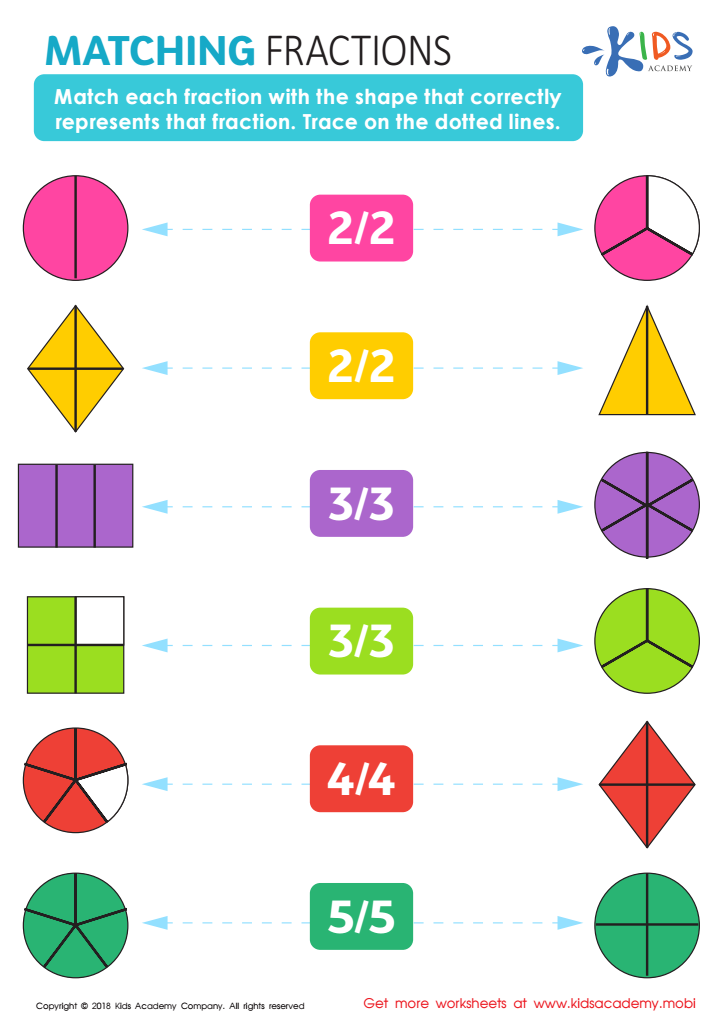
Matching Fractions Worksheet
 Assign to My Students











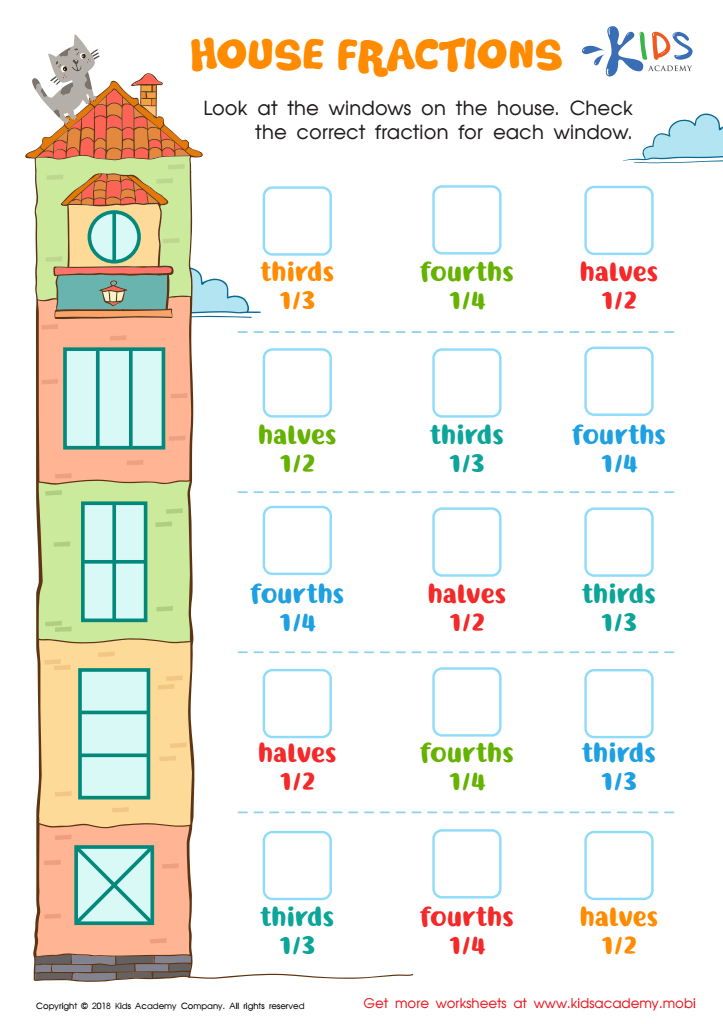
House Fractions Worksheet
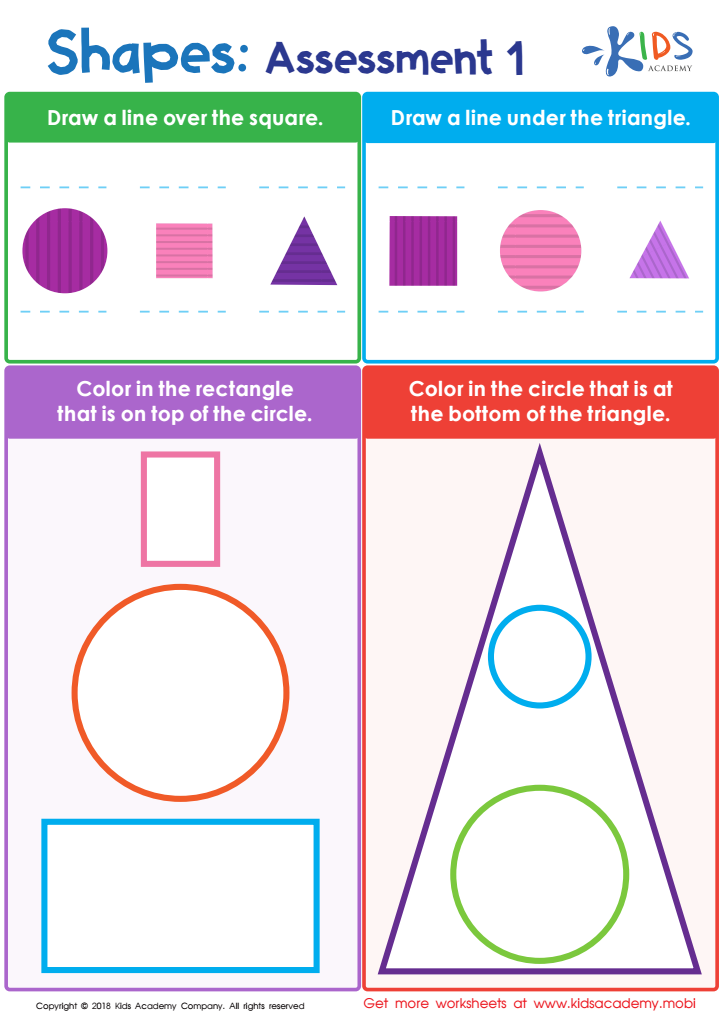
Shapes: Assessment 1 Worksheet
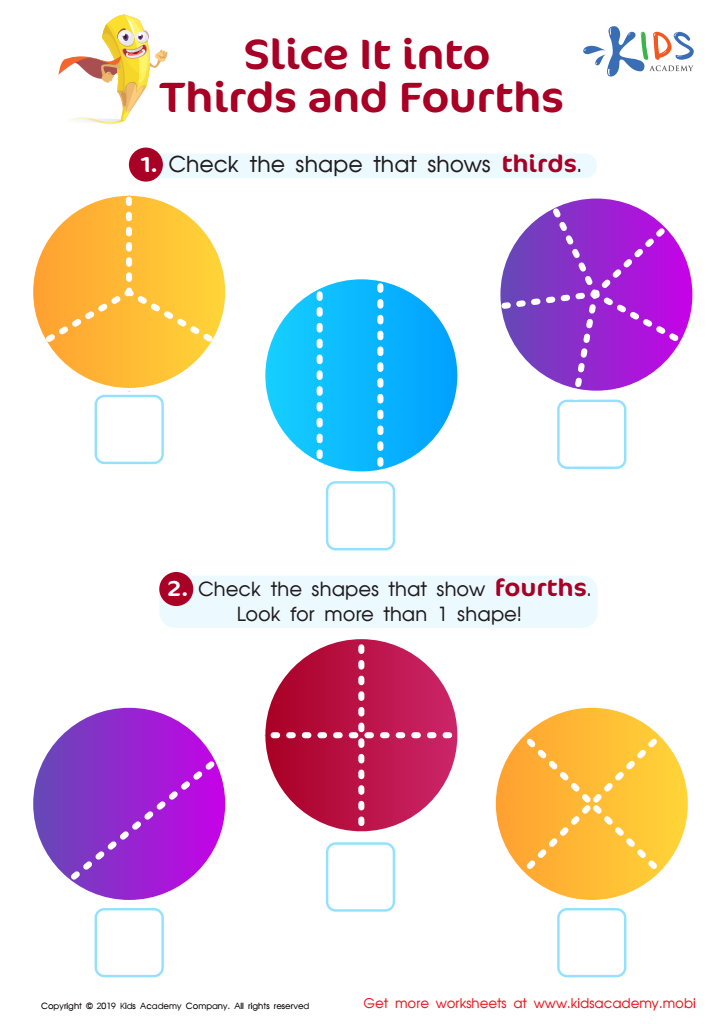
Slice in Thirds Fourths Worksheet








Parents and teachers should care about teaching fraction comparison and basic geometry concepts to children aged 5-8 because these foundational mathematical skills are critical for their cognitive development and future academic success. Understanding fractions helps children grasp the idea of parts of a whole, which is essential not only in math but in everyday situations such as sharing, cooking, and budgeting. Introducing geometry cultivates spatial reasoning, which is fundamental to developing problem-solving skills and logical thinking.
Early exposure to these concepts set the stage for more complex mathematical topics they will encounter in later grades. When children learn to compare fractions, they start to develop number sense and an appreciation for numerical relationships, which are crucial for advanced arithmetic and algebra. Geometry, on the other hand, enhances a child's ability to visualize and manipulate shapes and forms, leading to better comprehension in science, technology, engineering, and mathematics (STEM) subjects.
Moreover, learning fractions and geometry in a fun, engaging way can stimulate a child's interest in mathematics, reducing math anxiety. Activities like cutting fruit into fractions or playing with geometric shapes can make learning enjoyable, thereby fostering a positive attitude towards math that can carry through their educational journey. Early intervention in these areas ensures that children develop a solid mathematical foundation, making challenging concepts more approachable as they progress in their education.








