Addition Practice Numbers Worksheets for Ages 5-8 - Page 2
32 filtered results
-
From - To
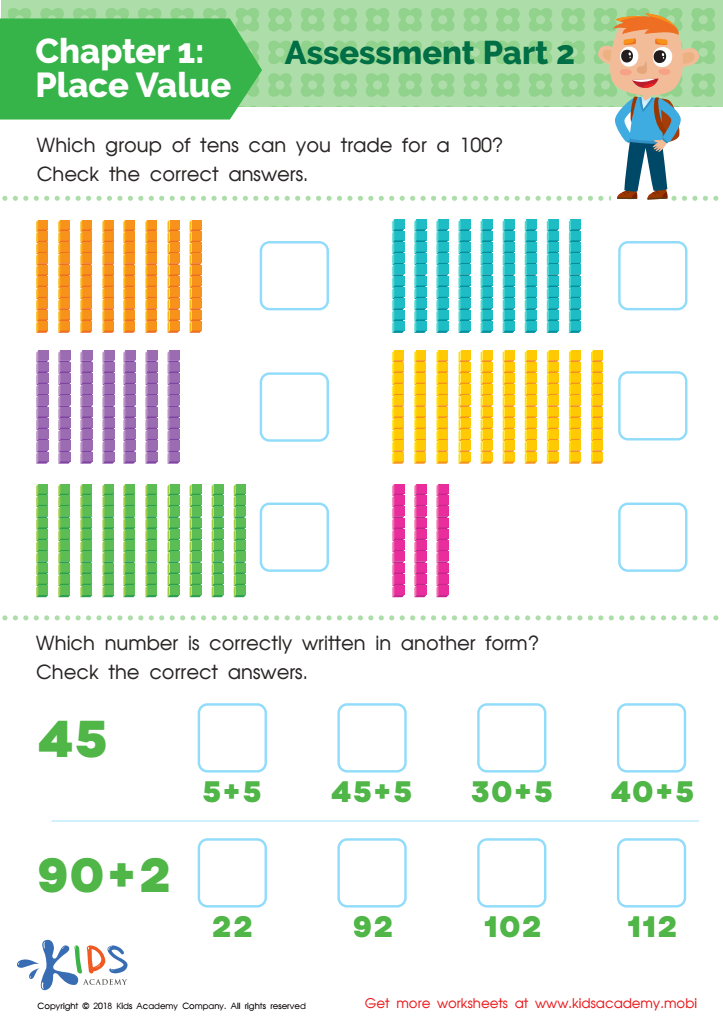
Place Value: Chapter 2 Worksheet
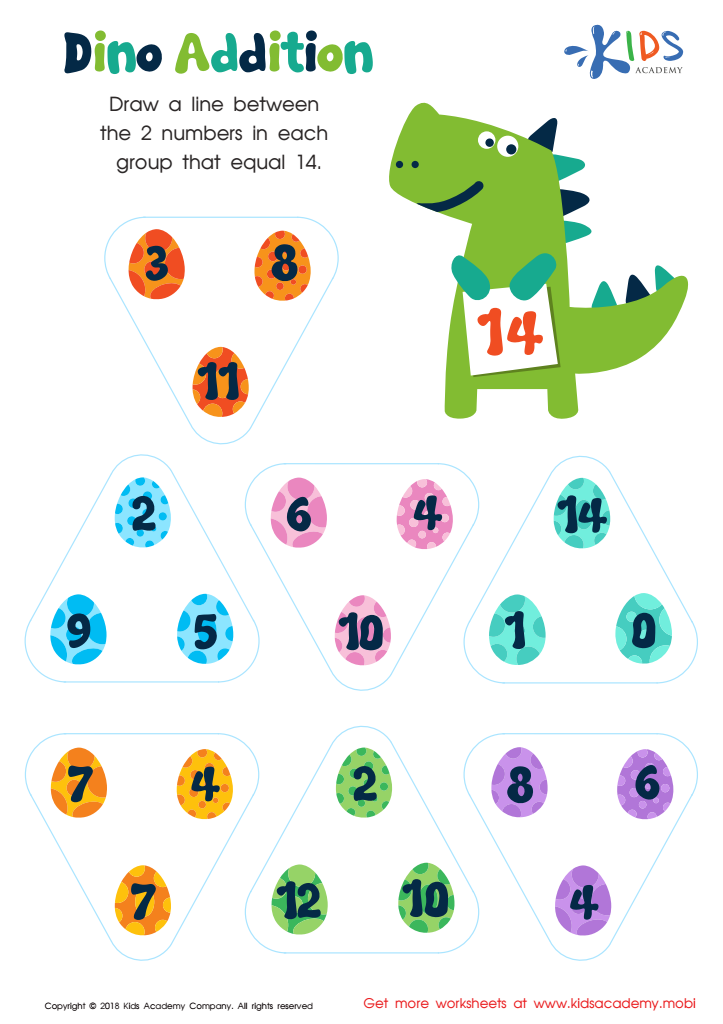
Dino Addition Worksheet
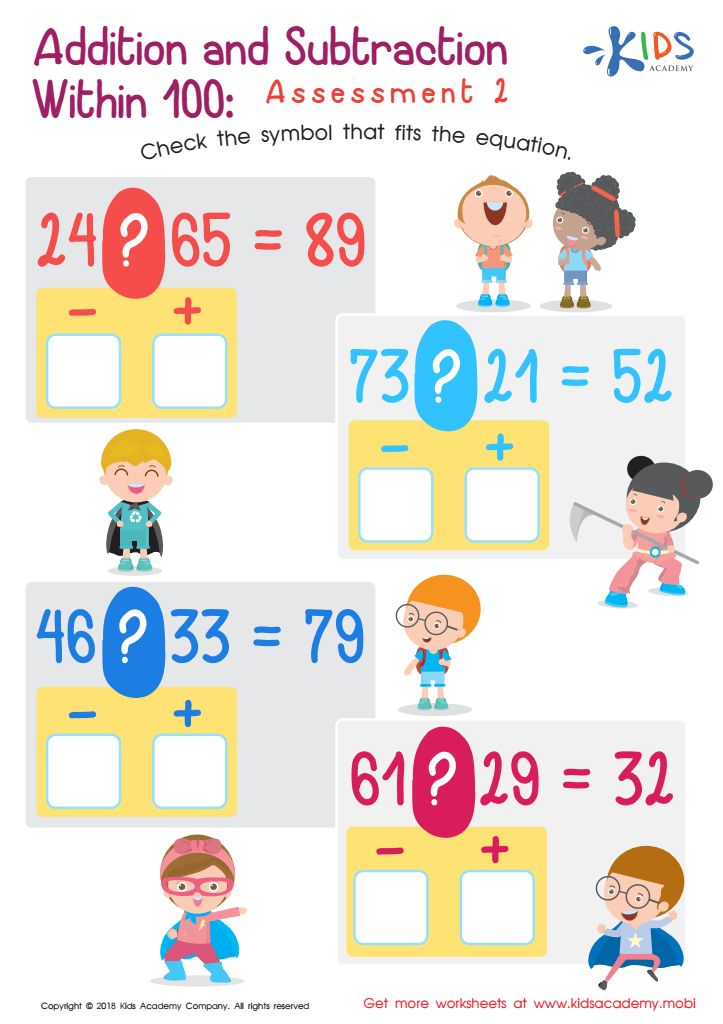
Addition and Subtraction Within 1: Assessment 2 Worksheet
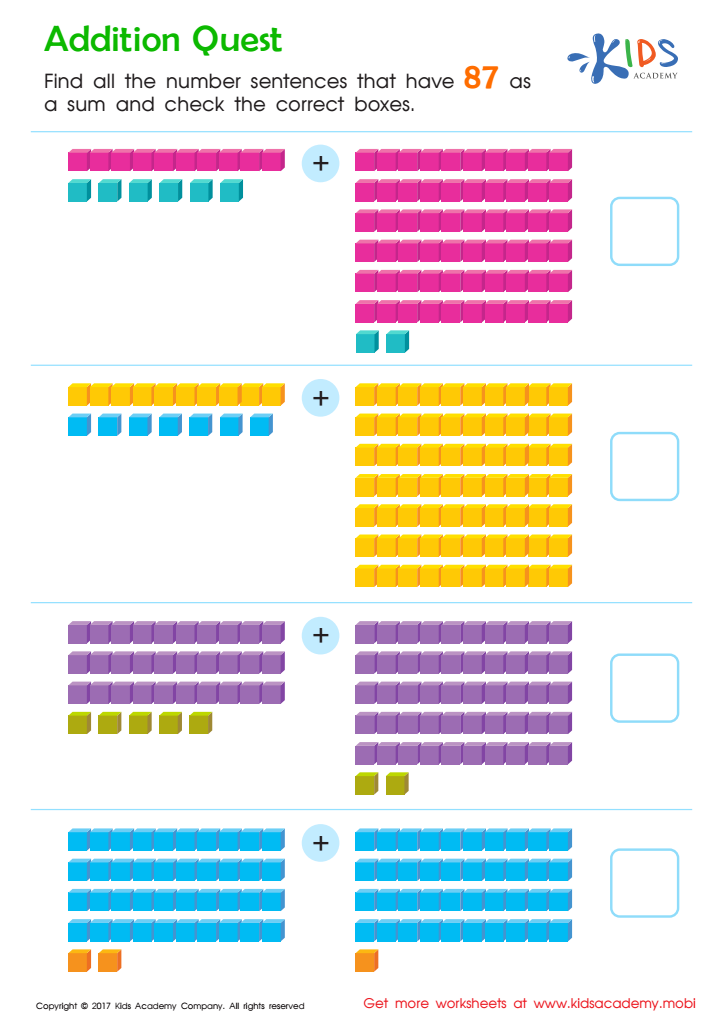
Addition Quest Worksheet: Part 1
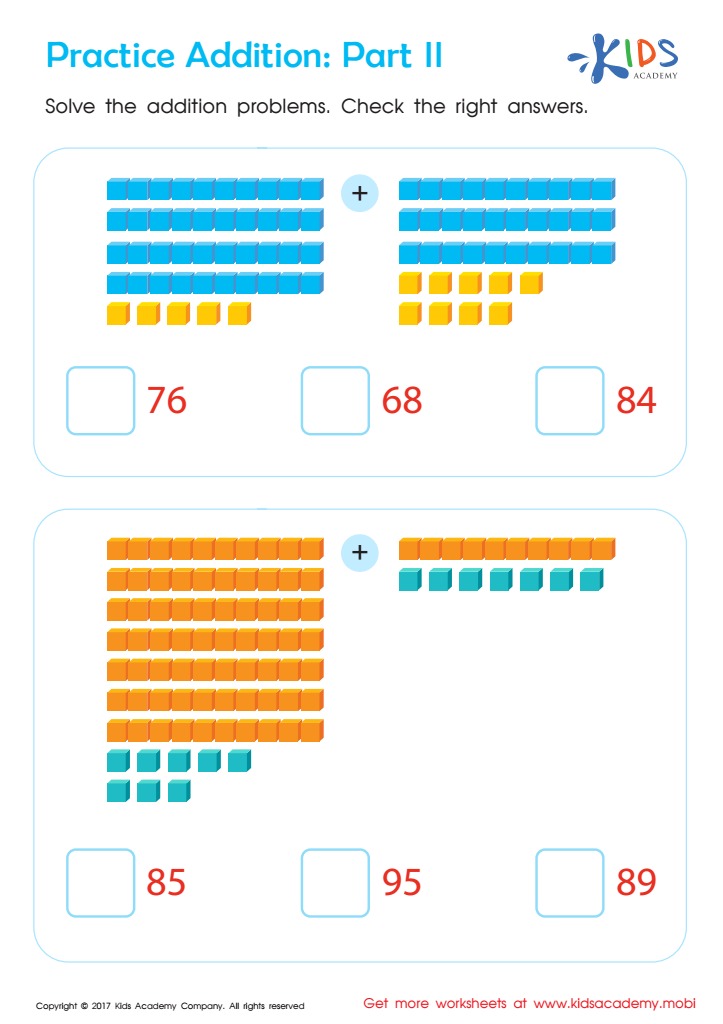
Practice Addition: Part 2 Worksheet
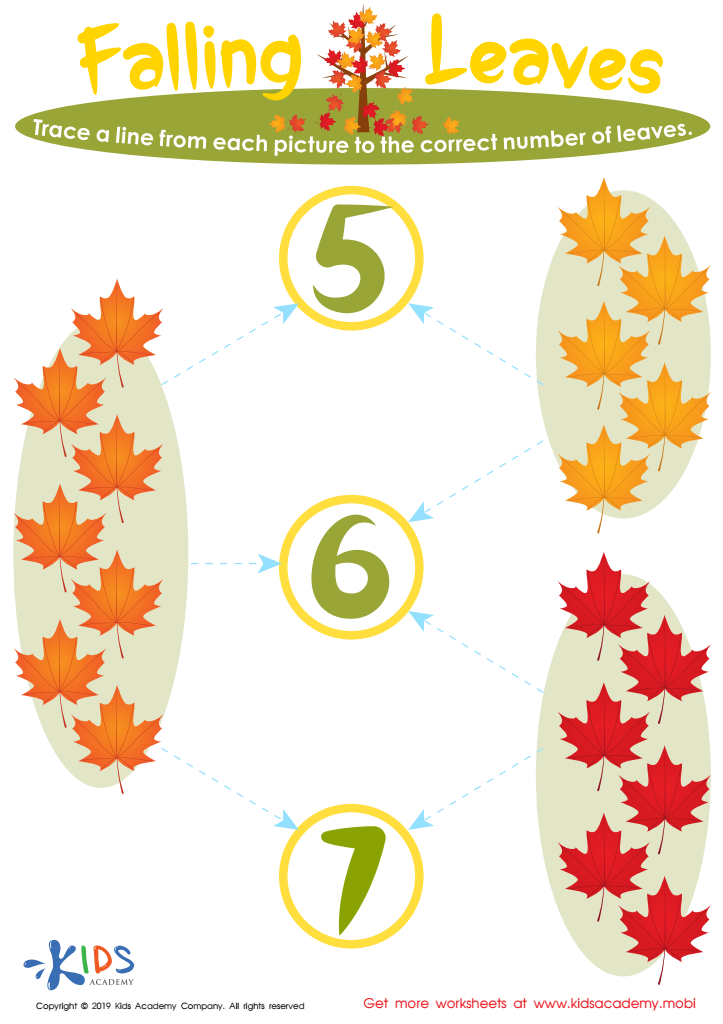
Falling Leaves Worksheet
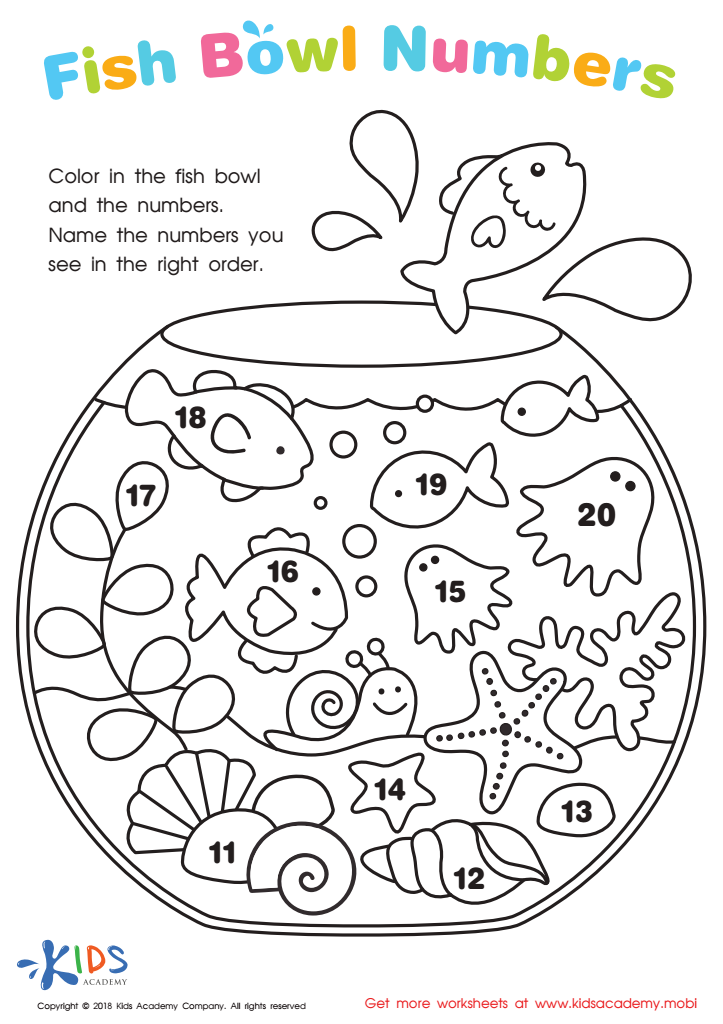
Fish Bowl Numbers Worksheet
 Assign to My Students
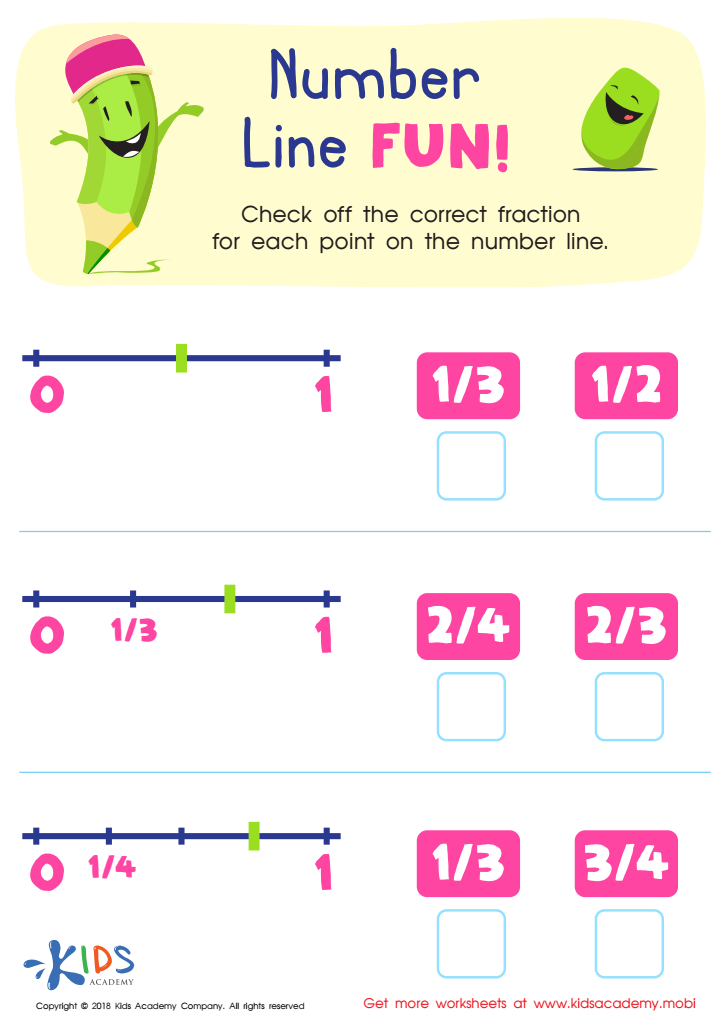
Number Line Fun Worksheet


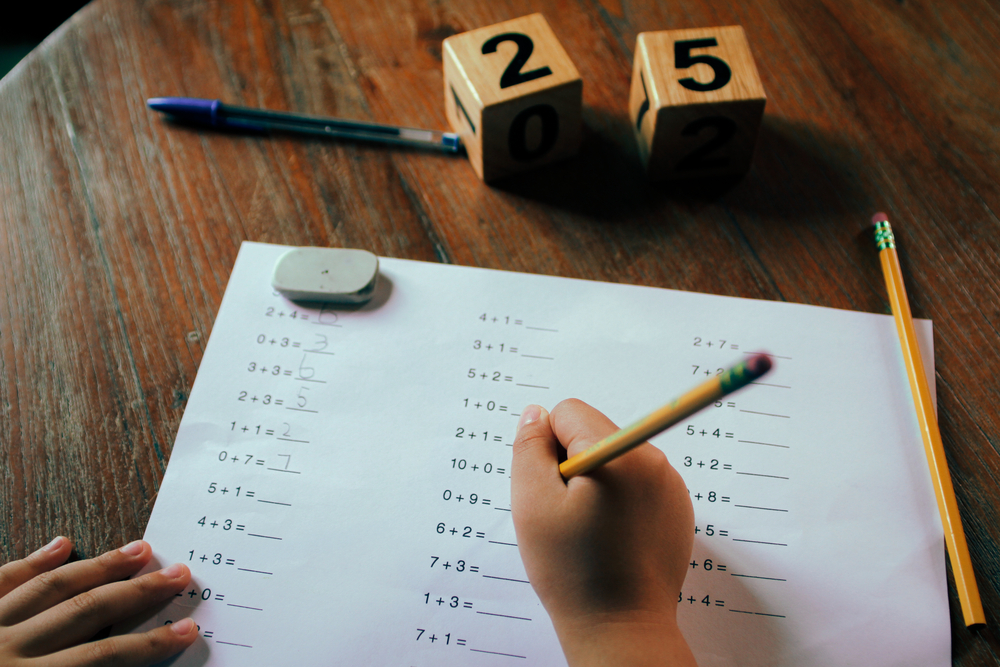





Addition practice for children aged 5-8 is crucial as it lays a solid mathematical foundation that supports their academic journey. This developmental stage is critical for cognitive growth, and understanding basic addition helps children make sense of numbers in their everyday lives. Parents and teachers should care about this practice because it enhances problem-solving skills and boosts confidence.
Engagement with addition not only solidifies numerical concepts but also promotes reasoning and analytical thinking. Children begin to develop their ability to compare numbers, identify patterns, and explore relationships, all of which are key intellectual skills.
Additionally, practicing addition can encourage a positive attitude towards math; when children grasp these basics, they become more willing to tackle more complex math problems in the future. Furthermore, frequent practice through games, worksheets, or interactive activities can make learning fun. This enjoyment can instill a lifelong love for learning and mathematics.
In conclusion, fostering addition skills through regular practice equips children with essential tools not only for their current education but also for their future academic endeavors and everyday problem-solving abilities. Thus, it’s essential for parents and teachers to establish engaging and supportive environments for this critical aspect of learning.








