Enhancing problem-solving abilities Numbers Worksheets for Ages 5-8
3 filtered results
-
From - To
Unlock your child's potential with our "Enhancing Problem-Solving Abilities Numbers Worksheets" designed specifically for ages 5-8! These engaging and interactive worksheets focus on teaching essential mathematical concepts through fun problem-solving activities. Your young learner will develop critical thinking skills by tackling puzzles, identifying patterns, and applying basic math principles. Each worksheet is thoughtfully crafted to ensure a balanced mix of challenge and enjoyment, making learning a delightful experience. Perfect for reinforcing classroom learning or supplementing home study, our resources aim to build confidence and a strong foundation in math. Start your child's journey towards math mastery today!
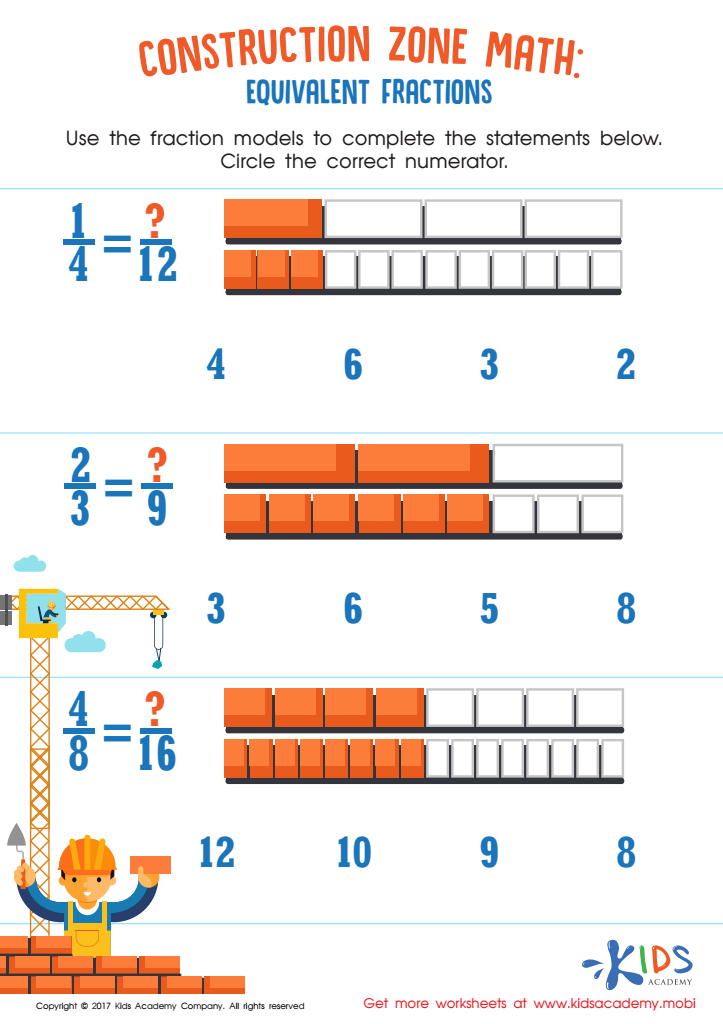
Equivalent Fractions Worksheet
 Assign to My Students
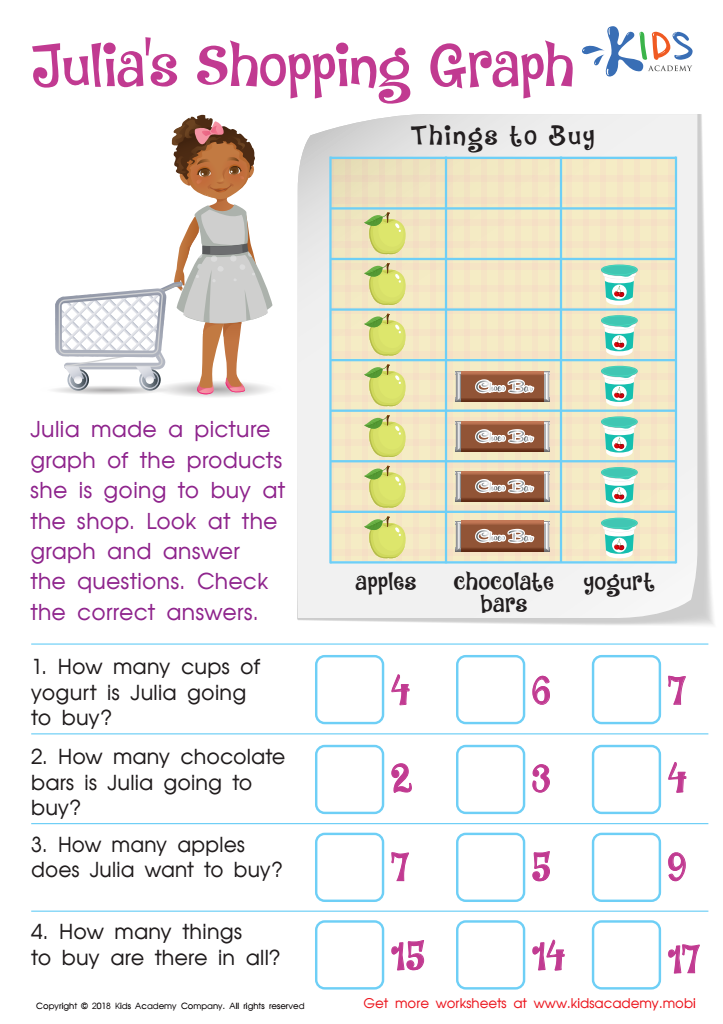
Julia's Shopping Graph Worksheet
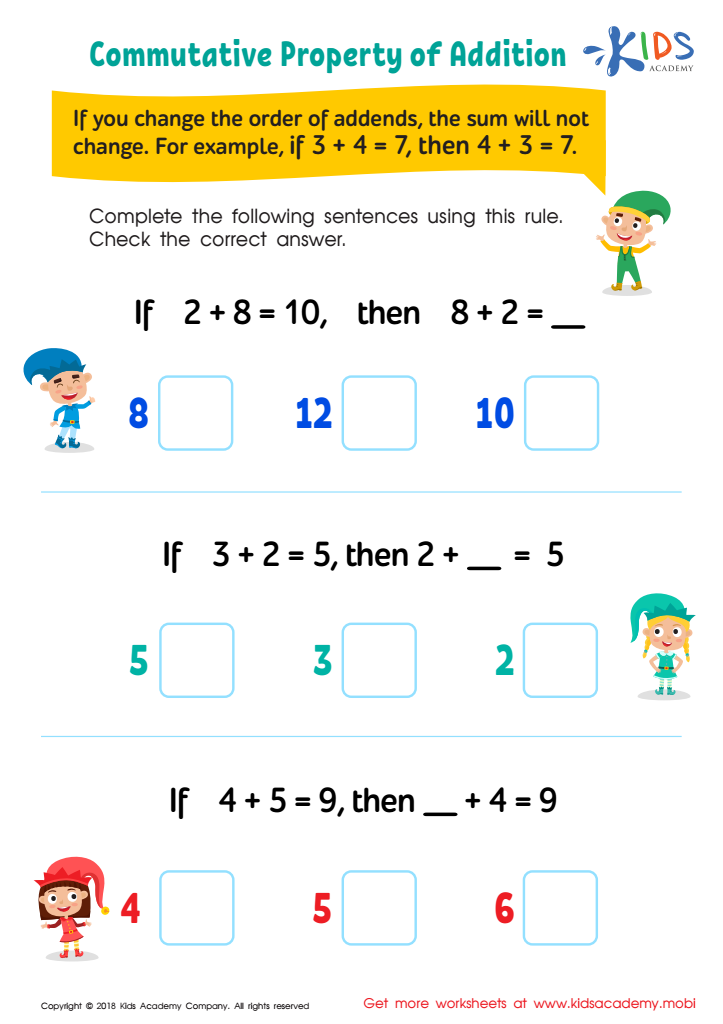
Commutative Property of Addition Worksheet








Enhancing problem-solving abilities in children aged 5-8 is crucial for their overall development and future success. At this age, children are forming essential cognitive skills, and cultivating problem-solving skills provides them with the tools to tackle challenges effectively. When parents and teachers prioritize these abilities, they help children become independent thinkers who can navigate various situations confidently.
Problem solving in early years often involves numbers and basic mathematical concepts, which help children understand relationships, patterns, and logic. This foundation is not only vital for academic achievement in math and other subjects but also fosters critical thinking and creativity. Children learn to approach problems from different angles, enhancing their adaptability to new situations.
Moreover, strong problem-solving skills are directly linked to emotion regulation and resilience. Kids who can identify solutions are less likely to feel overwhelmed by obstacles; instead, they learn to view challenges as opportunities for growth. Engaging in problem-solving activities also promotes teamwork and communication when children work collaboratively to solve puzzles or math challenges.
By investing time and effort into enhancing children's problem-solving abilities in numbers, parents and teachers are equipping them with indispensable life skills that contribute to their long-term success, both academically and personally.








