
Math skills improvement Numbers Worksheets for Ages 5-8
3 filtered results
Difficulty Level
Grade
Age
-
From - To
Subject
Activity
Standards
Enhance your child's math skills with our engaging Numbers Worksheets designed for ages 5-8! Ideal for young learners, these worksheets focus on fundamental number concepts, including counting, number recognition, addition, subtraction, and more. Each activity is crafted to make learning fun and interactive, helping children build a strong math foundation. Our worksheets are perfect for reinforcing classroom lessons, supporting homeschool curriculums, or providing additional practice at home. With colorful designs and age-appropriate challenges, your child will enjoy discovering the world of numbers while strengthening their overall math skills. Download now and watch their confidence grow!
Favorites
With answer key
Interactive
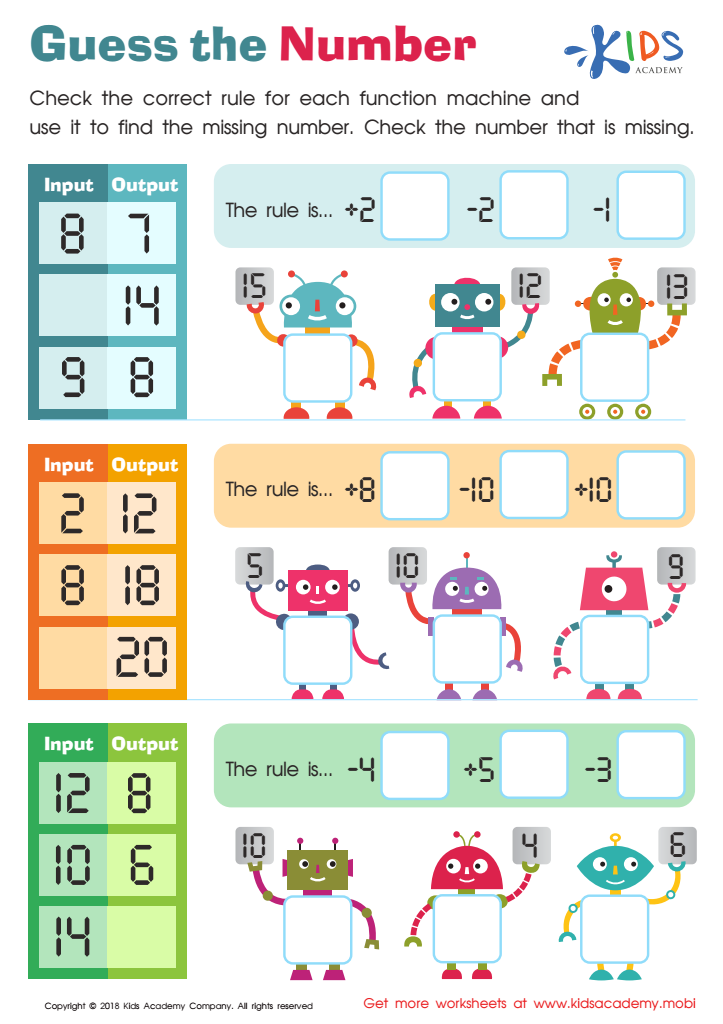
Guess the Number Worksheet
Kids need a solid number sense to succeed in math. This fun, robot-illustrated worksheet will help them identify patterns between numbers. They will examine the function machine, find the rule, and use it to solve for the missing number. It's a great way to learn!
Guess the Number Worksheet
Worksheet
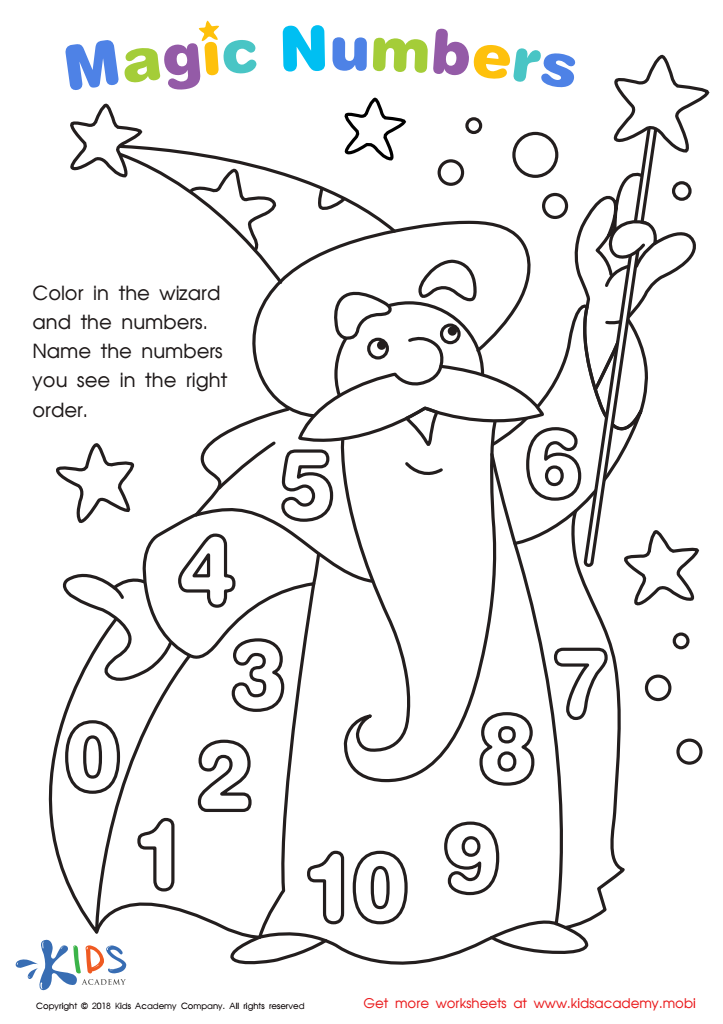
Magic Numbers Worksheet
Does your child have an interest in magic? Here's something they'll love - a coloring sheet featuring a wizard! Ask them to name the numbers from smallest to highest, then let them pick colors to color in the wizard and the numbers. It's sure to excite them!
Download (PDF)
 Assign to My Students
Assign to My Students
Magic Numbers Worksheet
Worksheet
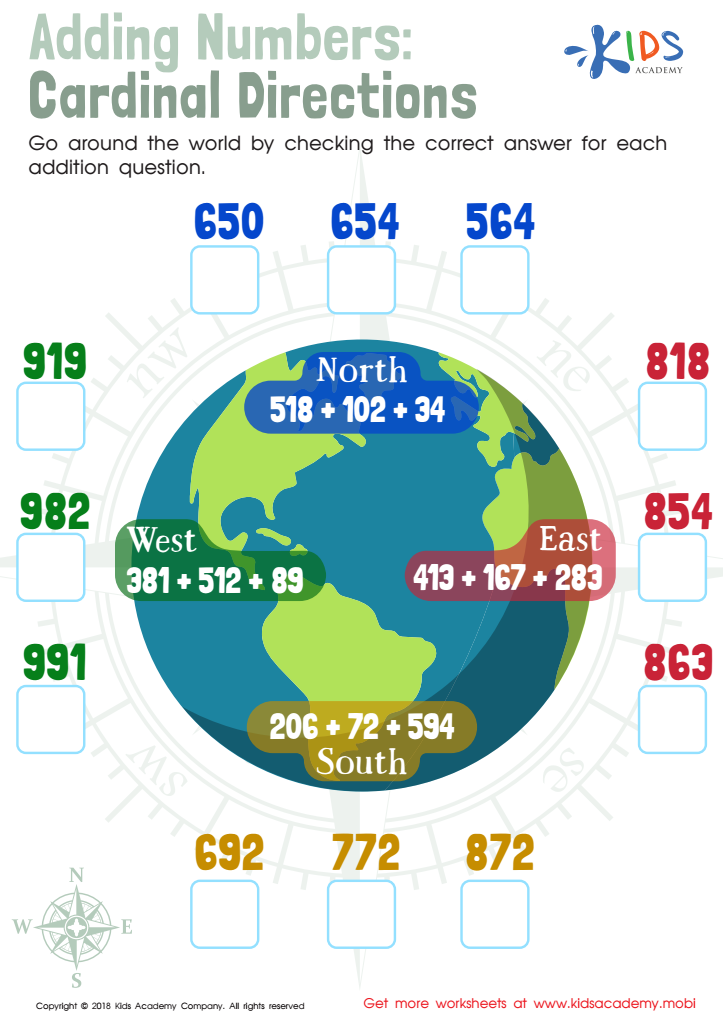
Adding Numbers: Cardinal Directions Worksheet
Are your students familiar with cardinal points? Teach them there are four: North, South, East, West. Used to navigate and mark places, use this worksheet to have your kids go round the world by checking the correct answer for each addition question in the pdf.
Adding Numbers: Cardinal Directions Worksheet
Worksheet
Join Kids Academy for Free
Who is primarily going to use this learning content?





Parents and teachers should care deeply about math skills improvement for children ages 5-8 because these early years are critical for cognitive and academic development. At this age, children are particularly receptive to learning foundational concepts that will form the basis for all future math understanding. Developing strong math skills early on helps boost problem-solving abilities, logical thinking, and critical thinking, which are essential for a child's overall intellectual growth.
Moreover, proficiency in math in early childhood is often linked to later academic success not only in math but in other subjects as well. When children grasp fundamental concepts like counting, basic addition and subtraction, and number sense, they build confidence and a positive attitude towards math that can last a lifetime.
Additionally, math skills are essential for daily activities and understanding the world around us. Early exposure helps children recognize patterns, understand sequences, and develop the ability to think in quantitative terms.
For teachers, focusing on math skills in these early grades requires engaging and interactive methods that make learning fun and relatable. For parents, encouraging math at home through games, puzzles, and everyday situations strengthens the child's skills and reinforces what is learned in school. Working together, educators and parents can create a supportive environment that nurtures a child's mathematical development and sets them up for future success.








