Recognizing Patterns Numbers Worksheets for Ages 5-8
3 filtered results
-
From - To
Discover an engaging collection of Recognizing Patterns Numbers Worksheets designed for children aged 5-8! These thoughtfully crafted resources help young learners identify and understand numerical patterns, laying a strong foundation for future math skills. Our interactive worksheets feature colorful graphics and fun activities, making learning enjoyable and effective. Designed to enhance critical thinking and problem-solving abilities, these worksheets encourage children to recognize sequences, shapes, and numerical relationships. Perfect for parents and educators, these resources are ideal for use at home or in the classroom. Help your child develop essential math skills with our fun and educational pattern recognition worksheets today!
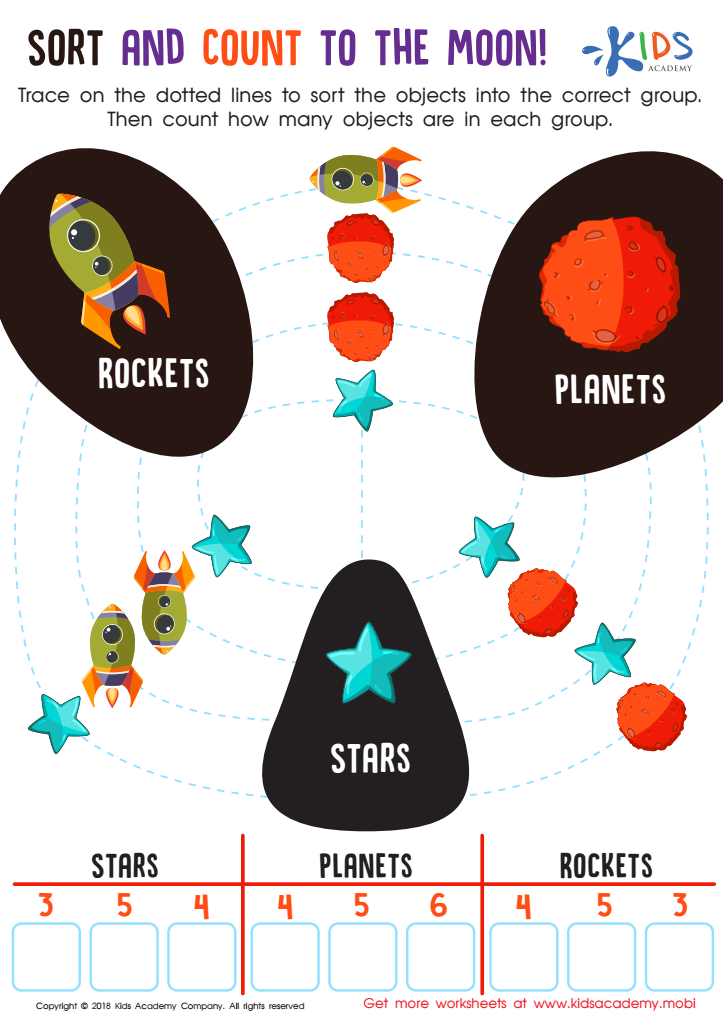
Sort and Count to the Moon Worksheet
 Assign to My Students
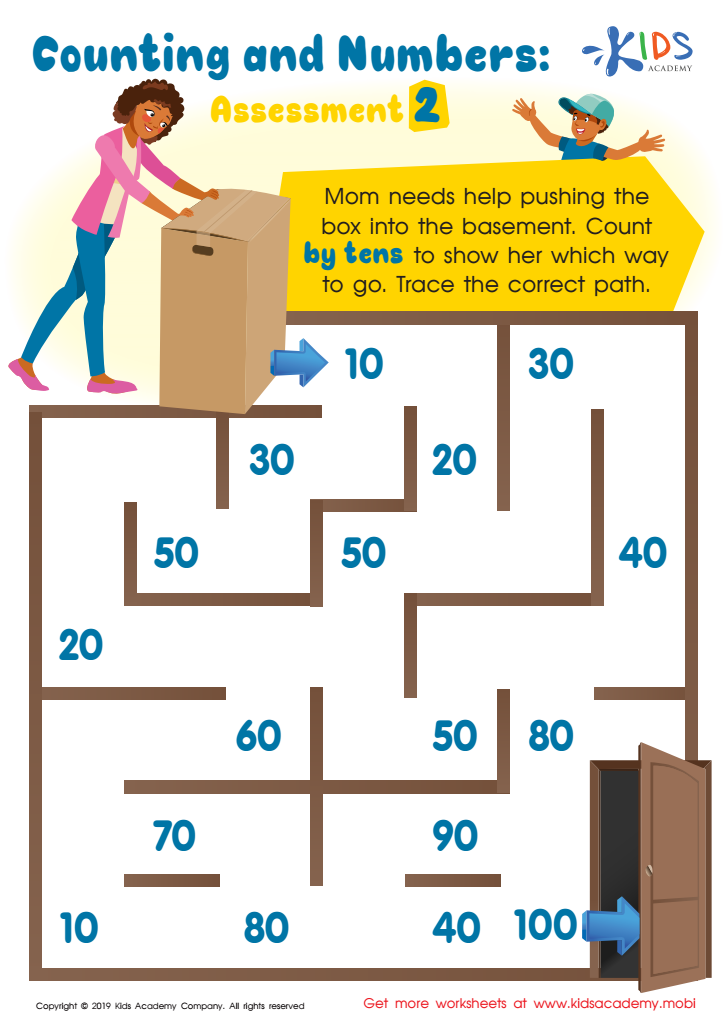
Counting and Numbers: Assessment 2 Worksheet
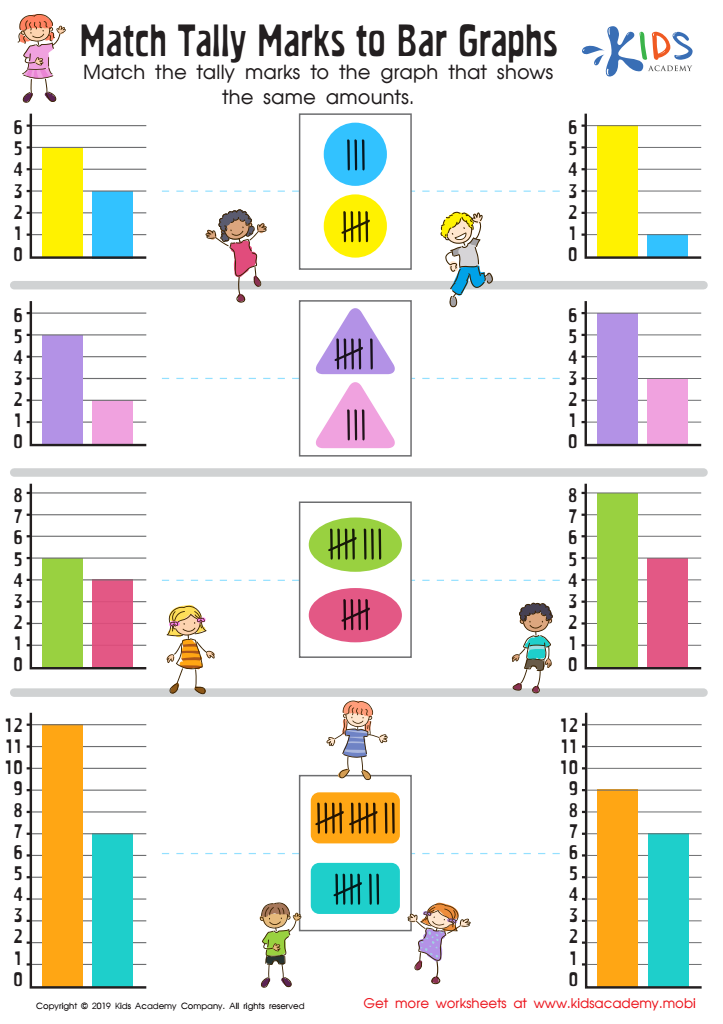
Match Tally Marks to Bar Graphs Worksheet








Recognizing patterns in numbers is crucial for children aged 5-8 as it lays the foundational skills necessary for mathematical understanding and problem-solving. It cultivates logical thinking, enabling children to make connections between concepts, which strengthens overall cognitive development. When children engage in identifying, creating, and extending patterns, they enhance their critical thinking and analytical skills, which are essential beyond mathematics.
Additionally, pattern recognition supports early numeracy by helping children understand sequences and relationships between numbers. This skill sets the stage for more complex mathematical concepts such as addition, subtraction, multiplication, and division. For instance, recognizing a pattern in numbers can lead to an understanding of skip counting, which is vital for grasping multiplication and division later on.
Moreover, engaging in pattern activities encourages creativity and language development as children describe and communicate their thought processes. Parents and teachers can create rich learning environments that weave pattern recognition into everyday activities, making math fun and relevant. By prioritizing this skill, caregivers empower children to build confidence and resilience in numerical problem-solving, ultimately preparing them for future academic success. Investing in pattern recognition today ensures a strong mathematical foundation for learners tomorrow.








