Understanding skip-counting Numbers Worksheets for Ages 5-8
3 filtered results
-
From - To
Discover the fundamentals of skip-counting with our engaging worksheets designed for ages 5-8. Skip-counting lays a strong foundation for advanced math concepts, making it fun and easy for young learners to grasp. Our expertly crafted worksheets guide children through incremental steps, enhancing their ability to understand numerical patterns and sequences. Perfectly aligned with core learning standards, these activities are filled with vibrant visuals and interactive tasks to keep kids motivated. By mastering skip-counting, children will improve their multiplication skills and overall numerical fluency. Make math exciting and accessible with our skip-counting worksheets today!
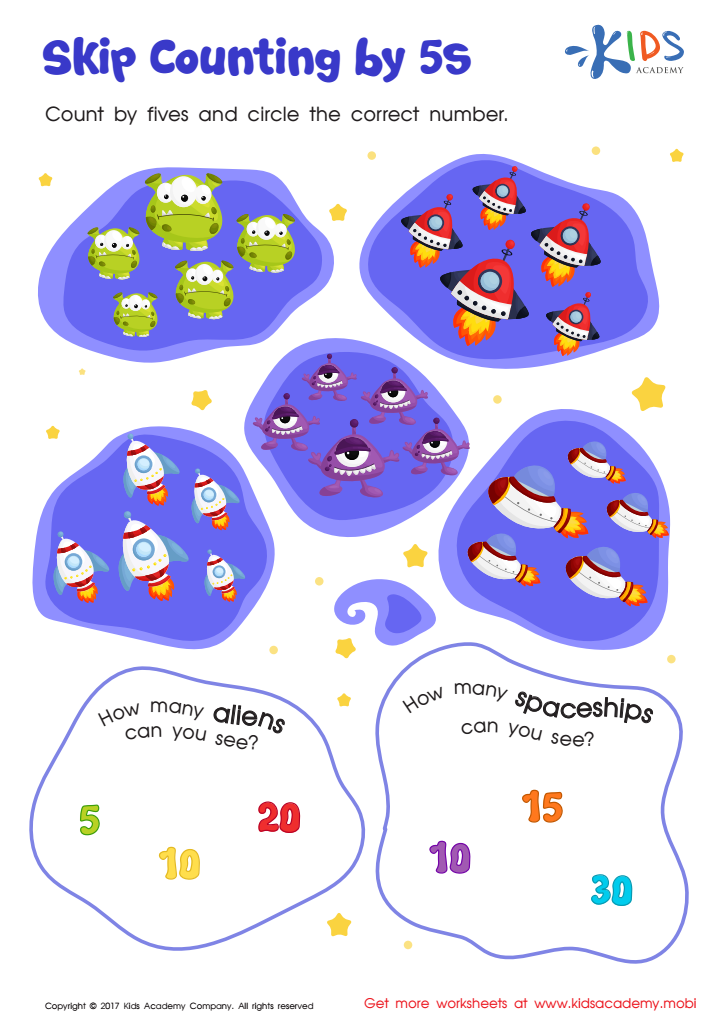
Skip Counting by 5s: Aliens and Spaceships Printable
 Assign to My Students
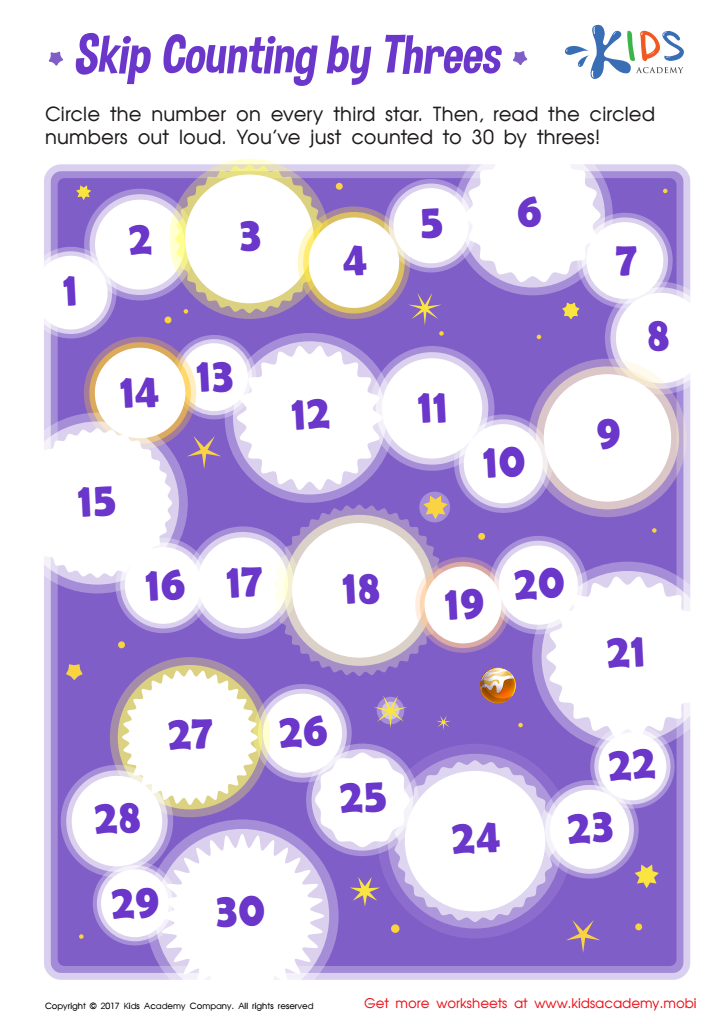
Skip Counting By Three Printable
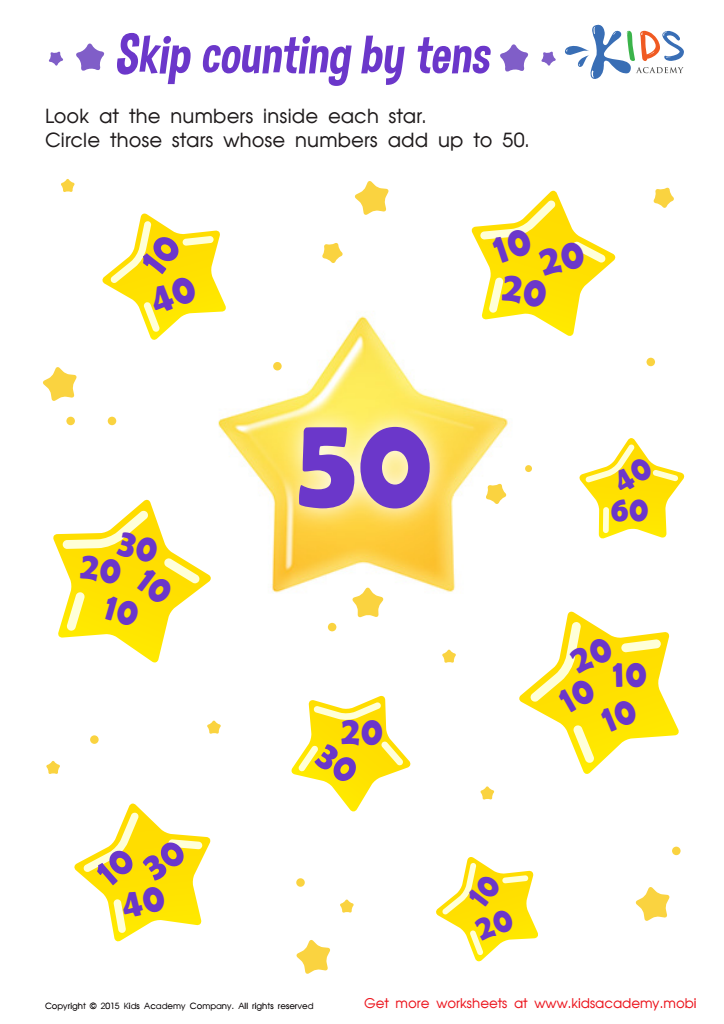
Learn Dozens: Skip Counting by Tens Printable








Skip-counting, or counting by numbers other than one (such as by twos, fives, or tens), is a foundational math skill important for children ages 5-8. Both parents and teachers should care about this because it not only enhances basic arithmetic skills but also lays the groundwork for more advanced mathematical concepts.
First, skip-counting helps children understand the concept of multiplication and division. By repeatedly adding the same number, kids begin to grasp what multiplication really means. For example, counting by twos to reach ten (2, 4, 6, 8, 10) introduces them to what 2 multiplied by 5 equals. This intuitive understanding is crucial for later success in topics like multiplication tables and fraction operations.
Second, skip-counting substantially improves number sense. Children learn to recognize patterns and predict subsequent numbers in a sequence, which helps in estimating and mental calculations. This can be particularly useful in real-life situations such as shopping or time management.
Lastly, this skill can make learning math more engaging and fun. Activities that involve games, songs, or playful exercises in skip-counting can excite young learners about math, fostering a positive attitude toward the subject.
Overall, emphasizing skip-counting develops mathematical confidence and competence early on, setting children on the path to academic success in mathematics.








