
Analog Clock Understanding Math Worksheets for Ages 5-8
3 filtered results
Difficulty Level
Grade
Age
-
From - To
Subject
Activity
Standards
Discover our engaging Analog Clock Understanding Math Worksheets designed specifically for children aged 5-8! These resources help young learners master the essential skills of reading and interpreting analog clocks. Through interactive exercises and colorful designs, students will confidently learn to tell time, understand hours and minutes, and recognize the relationship between the clock's hands. Ideal for classroom use or at-home practice, these worksheets cater to different learning levels, making it fun and easy for kids to enhance their math skills while developing a crucial life lesson. Explore our collection and watch your child shine in their time-telling abilities!
Favorites
With answer key
Interactive
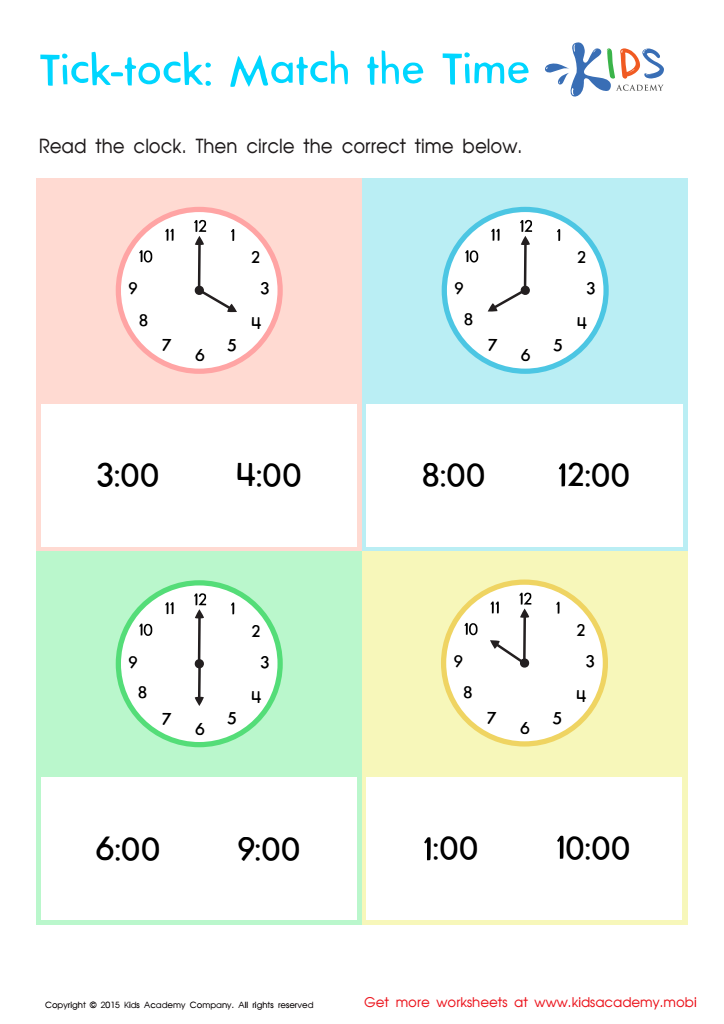
Telling The Time Worksheet: Part 4
Test your skills in telling the time! Circle the right time on 4 analog clock faces.
 Assign to My Students
Telling The Time Worksheet: Part 4
Worksheet
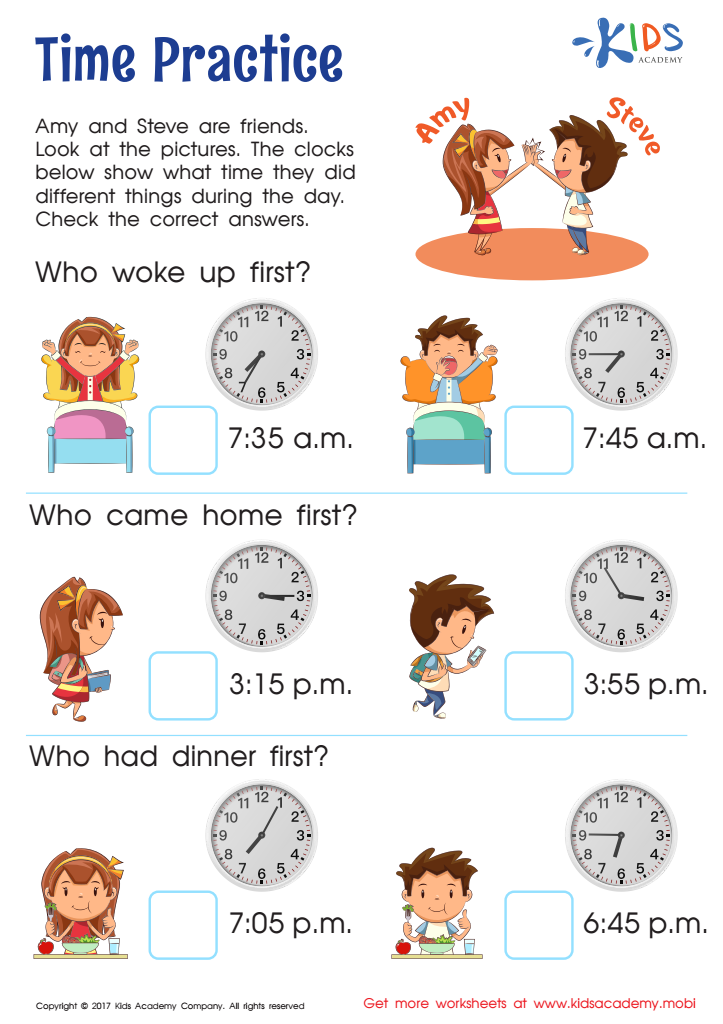
Time Practice Worksheet
It's perfect for 2nd graders as they gain a better understanding of time. Get them to tell the time on analog clocks, improve their math skills, and boost their confidence!
Second graders can brush up on timekeeping with our time practice worksheets. They'll learn to read minutes on analog clocks, honing math and confidence. Perfect for mastering this tricky concept!
Time Practice Worksheet
Worksheet
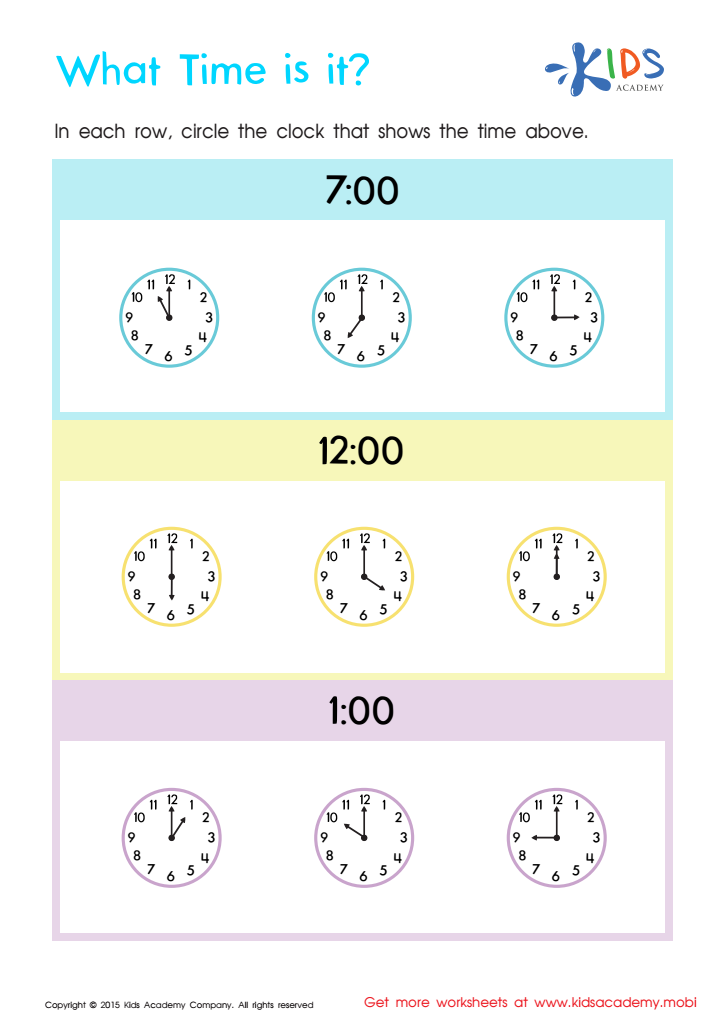
Telling The Time Worksheet: Part 3
Make learning to read clocks fun with our free printable worksheets! Have kids circle the clocks that show the time, remembering that the short hand is for hours and the long one is for minutes. For more worksheets, visit Kids Academy and explore the wonderful world of math with your little learners.
Telling The Time Worksheet: Part 3
Worksheet
Join Kids Academy for Free
Who is primarily going to use this learning content?


%20(1).jpg)





Understanding analog clocks is a crucial aspect of mathematical literacy for children aged 5-8. This early grasp of time-telling fosters vital cognitive skills, including spatial awareness and problem-solving abilities. When children learn to read analog clocks, they engage in essential practice that promotes their ability to visualize and understand numerical relationships.
Learning to decode time on an analog clock also encourages children to grasp the concept of fractions, as they understand that a clock is divided into 12 equal sections, representing hours. Additionally, recognizing the minute hand in relation to the hour hand enhances their counting skills and connection to the number system.
Moreover, incorporating analog clock learning into daily life helps foster routines and time management skills in young learners. When children become adept at reading analog clocks, they cultivate a sense of independence and responsibility regarding their schedules, facilitating smoother transitions in their daily activities.
For parents and teachers, cultivating this foundational skill in young children not only strengthens their mathematical abilities but also paves the way for future learning, instilling curiosity and confidence in their understanding of the world around them and its mathematical intricacies.








