Animal Classification Math Worksheets for Ages 5-8
4 filtered results
-
From - To
Discover an engaging way to teach young learners math and science with our Animal Classification Math Worksheets for ages 5-8. These captivating worksheets integrate essential math skills with animal classification concepts, making learning fun and educational. Children will enjoy activities like sorting, counting, and problem-solving while gaining knowledge about different animal groups. Perfect for classroom use or at-home practice, each worksheet is designed to enhance critical thinking and cognitive development. Our colorful and interactive sheets ensure that kids stay engaged and motivated, making it an excellent resource for parents and teachers aiming to blend math proficiency with natural science.
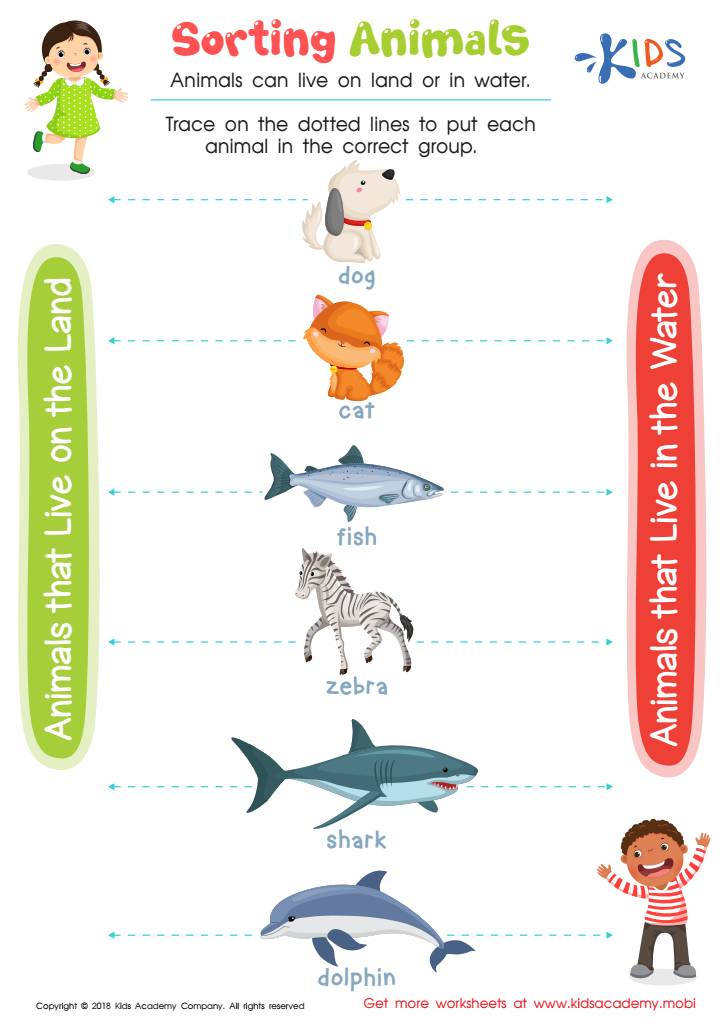
Sorting Animals Worksheet
 Assign to My Students
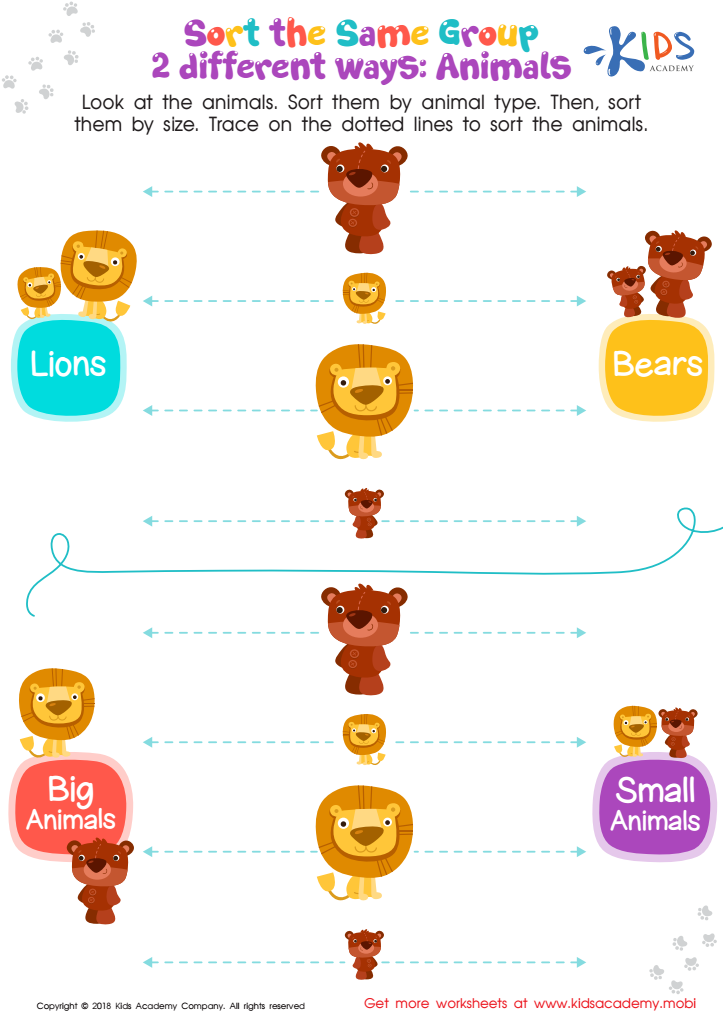
Sort the Same Group 2 Different Ways: Animals Worksheet
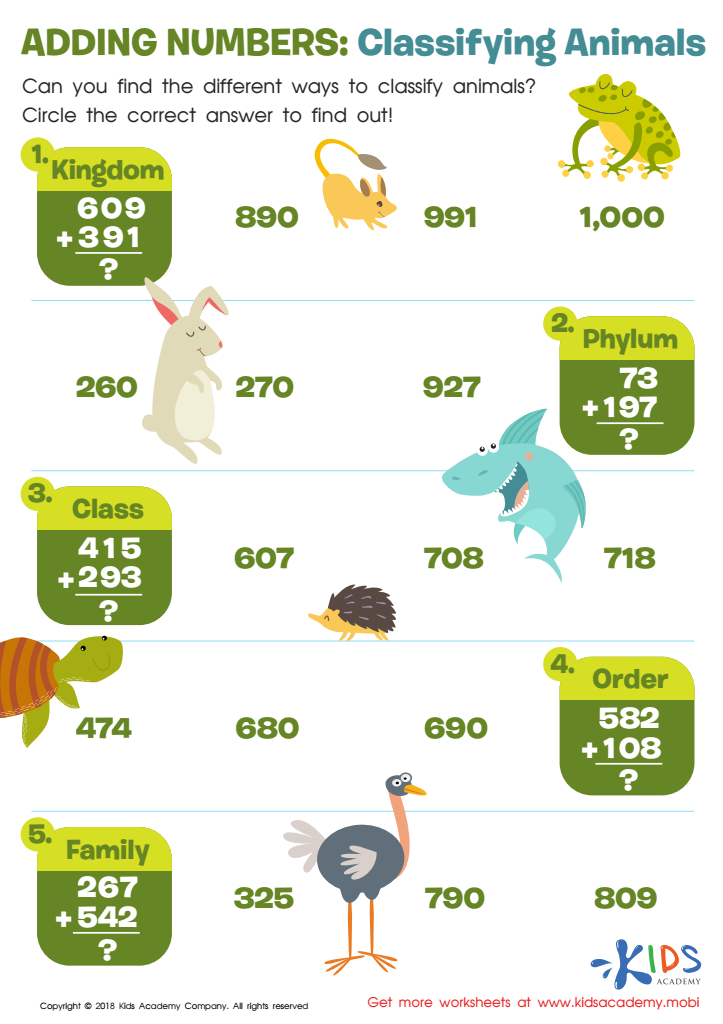
Adding Numbers: Classifying Animals Worksheet
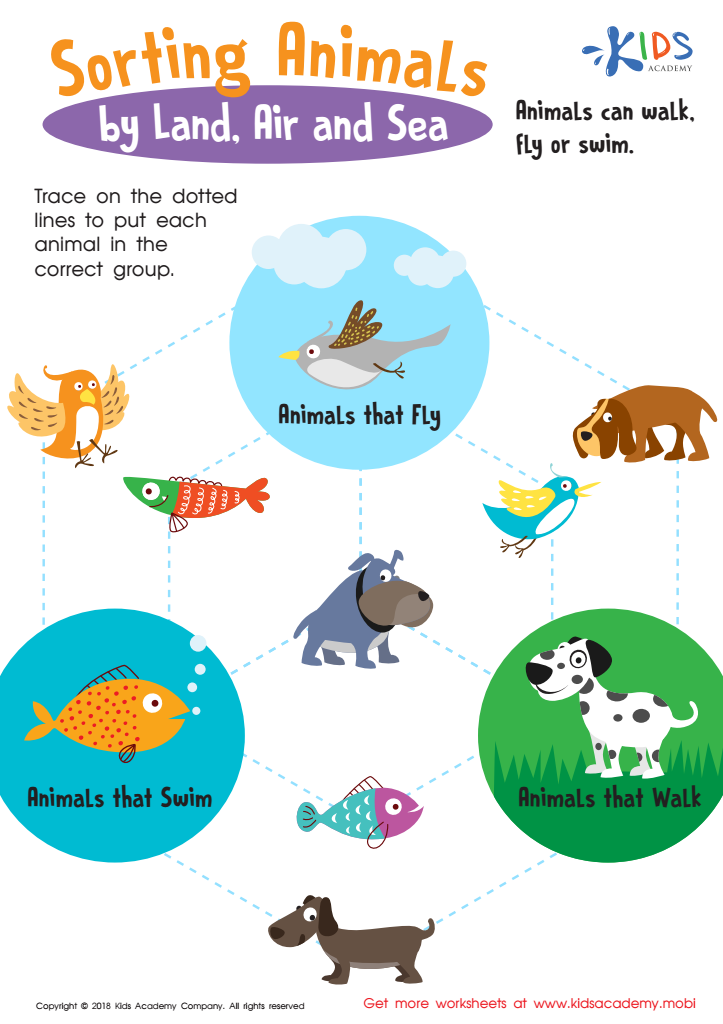
Sorting Animals by Land, Air and Sea Worksheet







Animal Classification Math merges scientific discovery with essential math skills, creating a dynamic educational tool for young learners aged 5-8. This practice aids children in grasping both animal taxonomy and fundamental arithmetic, contributing to an early proficiency in STEM subjects.
From an educational standpoint, animal classification encourages children to notice and categorize patterns, a foundational math skill. By grouping animals based on traits, children learn to count, compare, and contrast—skills that translate to more complex mathematical concepts like sorting, sequencing, and graphing.
This combined approach also fosters critical thinking. As kids classify animals, they use observational skills to identify similarities and differences, enhancing their logical reasoning and problem-solving abilities. These analytical skills are pivotal not just in math, but across all areas of learning.
Additionally, blending math with biology makes learning more engaging and fun, essential for maintaining the attention and interest of 5-8-year-olds. Many children naturally love animals, and using them as examples in math lessons makes abstract concepts more concrete and relatable.
For parents and teachers, Animal Classification Math provides an innovative tool to help children build a solid foundation in both math and science. It's an interdisciplinary method that nurtures curiosity, encourages active learning, and equips young learners with skills necessary for academic success and lifelong inquiry.








