Applying math skills Math Worksheets for Ages 5-8
3 filtered results
-
From - To
Discover the engaging world of math skills with our "Applying Math Skills" worksheets designed specifically for ages 5-8. These printable resources offer captivating, hands-on activities that help young learners reinforce essential mathematical concepts through real-life applications. Children will explore topics such as addition, subtraction, and measurement by solving fun problems, enhancing their critical thinking and problem-solving abilities. Our worksheets promote foundational math skills while encouraging creativity and exploration. Perfect for home or classroom use, these captivating activities will make math enjoyable and accessible, ensuring that children build confidence as they apply their knowledge in imaginative ways. Start their math journey today!
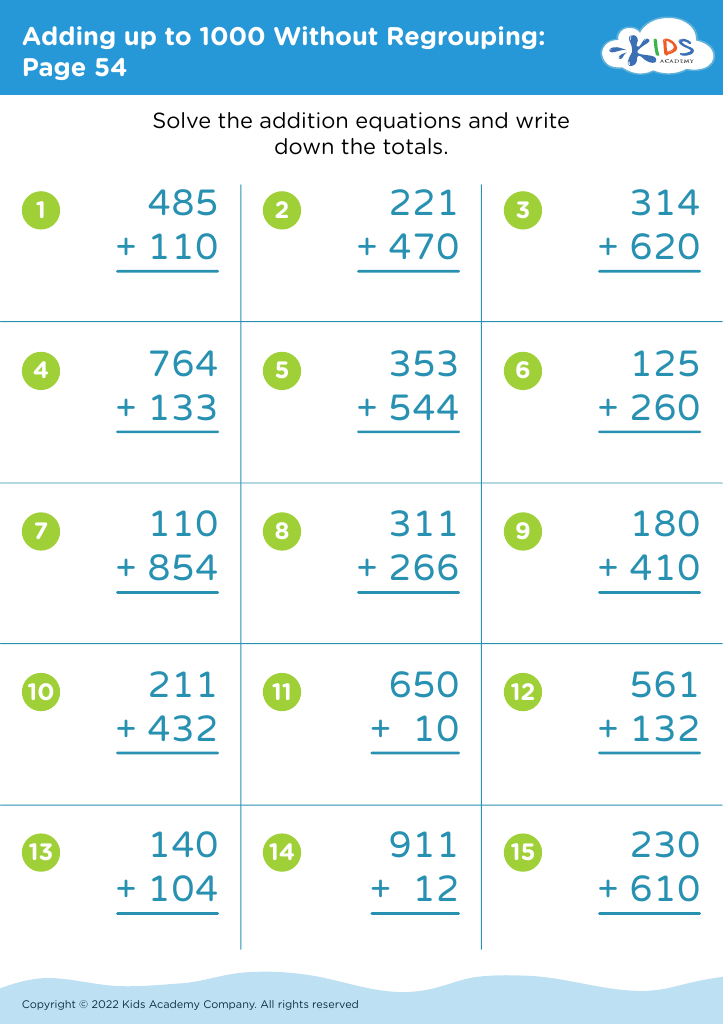
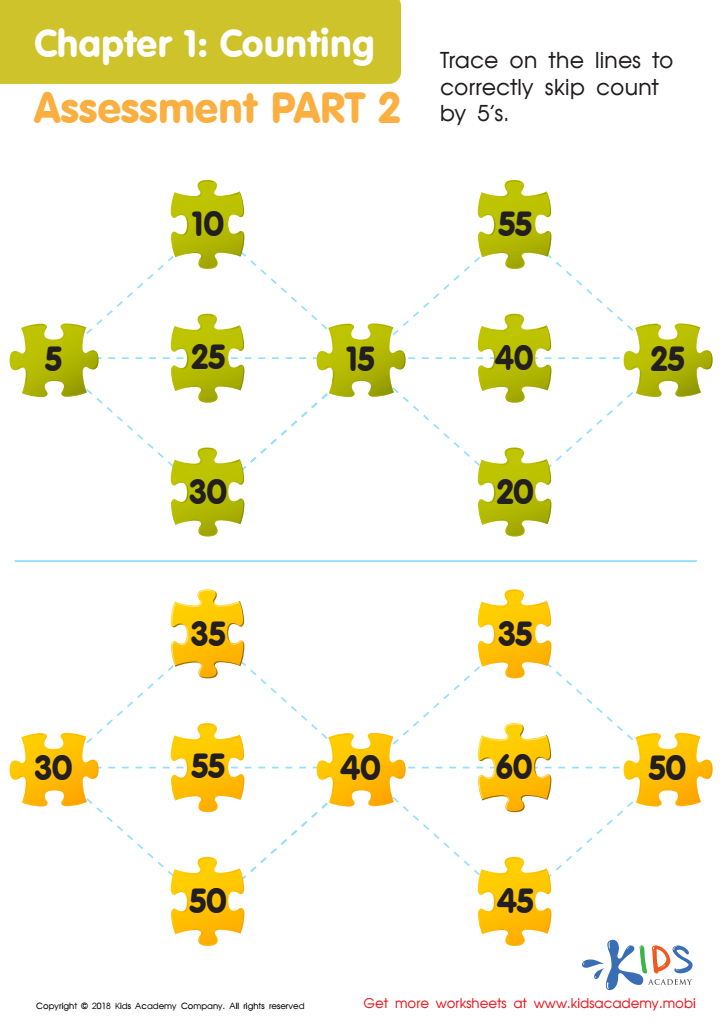
Counting: Assessment 2 Worksheet
 Assign to My Students
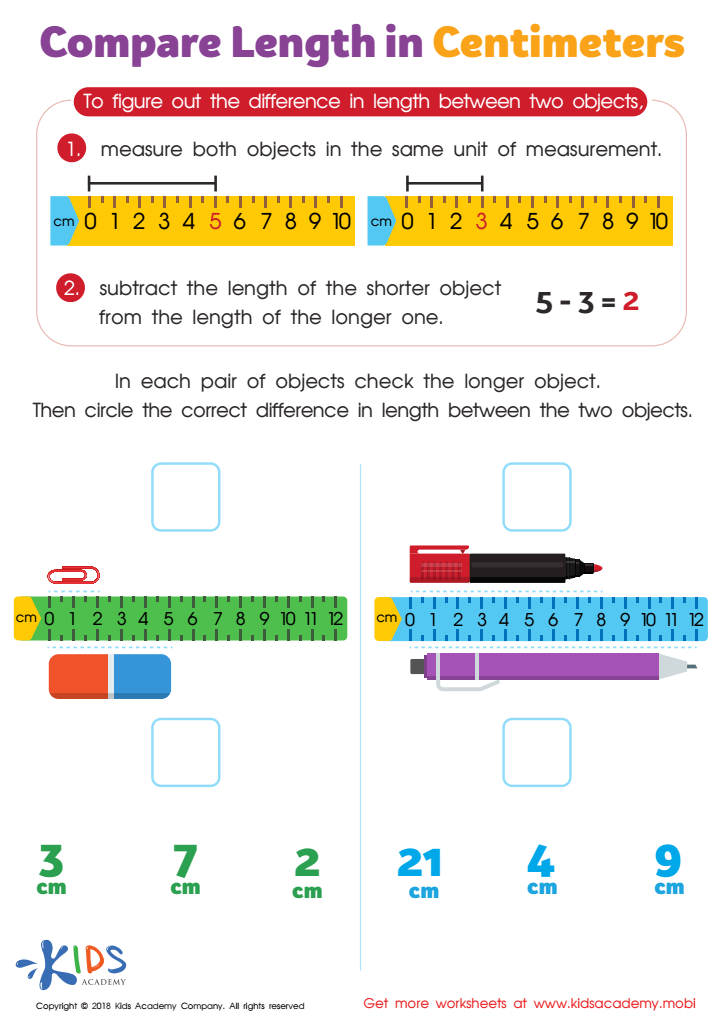
Compare Length in Centimeters Worksheet








Parents and teachers should prioritize applying math skills for children aged 5-8, as this stage is critical for developing a strong mathematical foundation. During these years, kids transition from concrete understanding to more abstract thinking, making early exposure to practical math vital. Engaging them in real-world math applications, such as measuring ingredients in cooking, counting objects while shopping, or analyzing time spent on activities, fosters a deeper comprehension of mathematical concepts.
Developing these skills enhances problem-solving abilities, logical reasoning, and creativity. When children see how math relates to everyday life, they become more motivated and confident learners, reducing math anxiety later on. Furthermore, fostering math skills encourages perseverance, as children learn to tackle challenges and seek solutions collaboratively.
Moreover, strong early math skills can significantly impact academic success and future opportunities. Research consistently shows that children with a solid math foundation are likelier to excel in higher math and STEM-related subjects. By prioritizing the application of math skills, parents and teachers can ensure that children not only grasp the mechanics of math but appreciate its relevance in their lives, ultimately nurturing a generation of curious and capable individuals.








