Comparing object weights Math Worksheets for Ages 5-8
3 filtered results
-
From - To
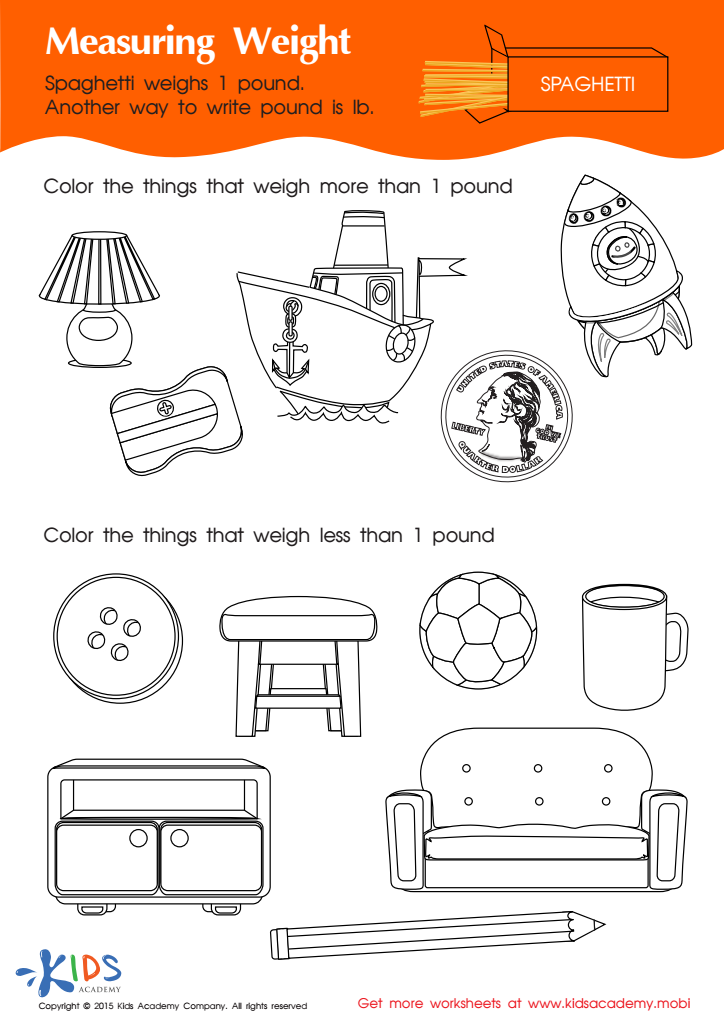
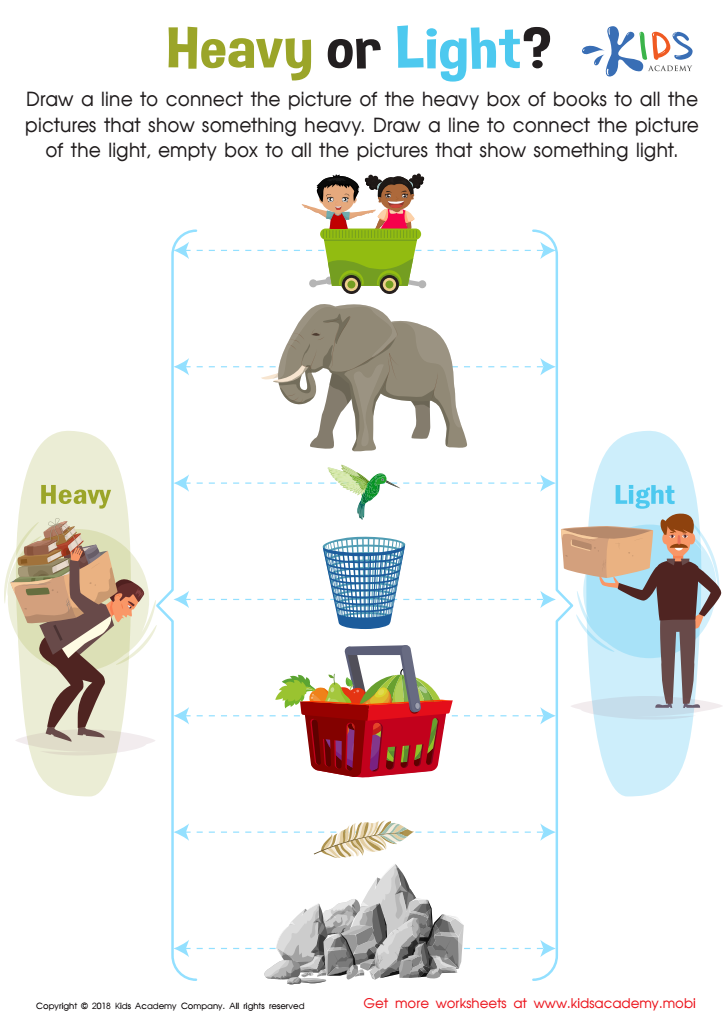
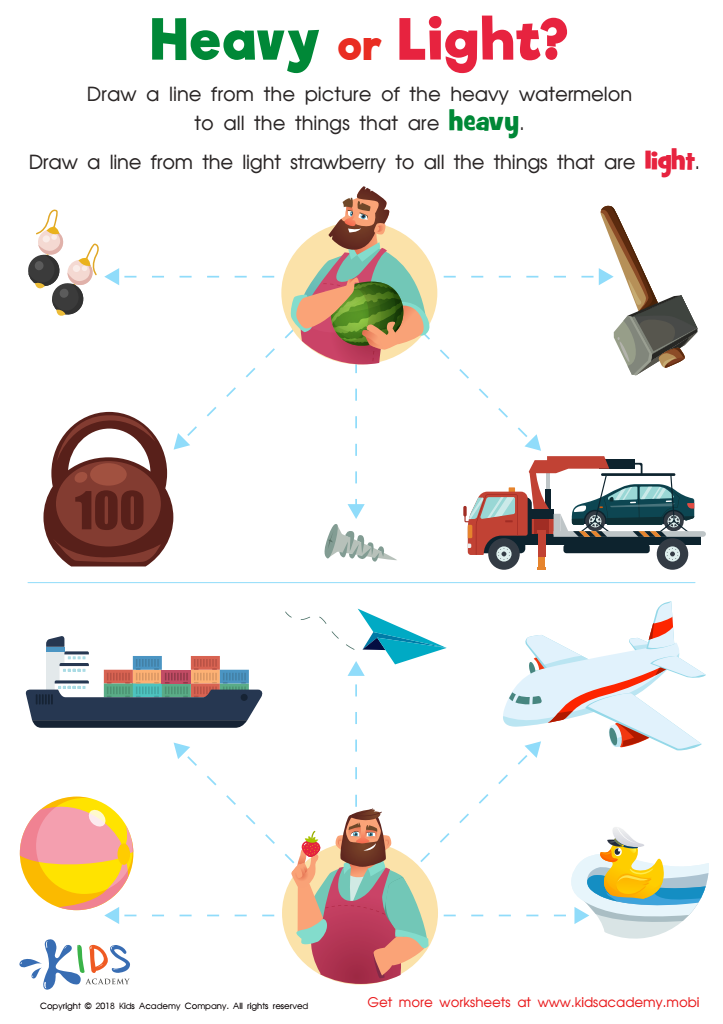
Explore our engaging "Comparing Object Weights" math worksheets designed for children ages 5-8. These worksheets provide a fun and interactive way to help young learners develop their understanding of weight and measurement concepts. Through hands-on activities, kids will compare the weights of various objects using visual aids and guided questions. Our materials support foundational math skills while encouraging critical thinking and problem-solving. Perfect for classroom or at-home learning, these worksheets enhance cognitive development and instill confidence in young mathematicians. Download now and watch your child's knowledge of weights soar!
 Assign to My Students
Heavy or Light? Worksheet
Heavy or Light? Worksheet






Comparing object weights is essential for children aged 5 to 8 as it lays the groundwork for essential mathematical skills and real-world understanding. At this age, children are naturally curious about their surroundings, and weight comparison provides a hands-on opportunity to engage with basic concepts of measurement and quantity.
When children compare weights, they develop critical thinking and reasoning skills. They learn to make predictions, hypothesize outcomes, and draw conclusions based on their observations. This process enhances their ability to analyze information and solve problems, which are fundamental skills not only in math but across all subjects.
Moreover, engaging in weight comparison activities helps foster early scientific thinking. Children experiment by lifting, balancing, or using scales, reinforcing concepts of gravity and mass while developing fine motor skills.
Additionally, understanding weight is invaluable in everyday life. It involves essential tasks like cooking, shopping, or understanding health-related choices, guiding children to make more informed decisions as they grow.
Ultimately, incorporating weight comparison into learning activities promotes a rich, stimulating environment where children thrive both academically and personally, making it a worthy consideration for parents and teachers.








