Developing spatial awareness Math Worksheets for Ages 5-8
3 filtered results
-
From - To
Enhance your child's spatial awareness with our engaging math worksheets designed for ages 5-8! These interactive resources focus on key concepts such as shapes, patterns, and their relationships, helping young learners develop crucial mathematical skills. Our worksheets incorporate fun activities that encourage exploration and creativity, ensuring that children not only grasp spatial reasoning but also enjoy the learning process. With varied exercises tailored for different learning levels, your child will build confidence as they progress. Perfect for home or classroom use, our worksheets offer the ideal platform for fostering essential math skills while keeping learning fun and enjoyable!
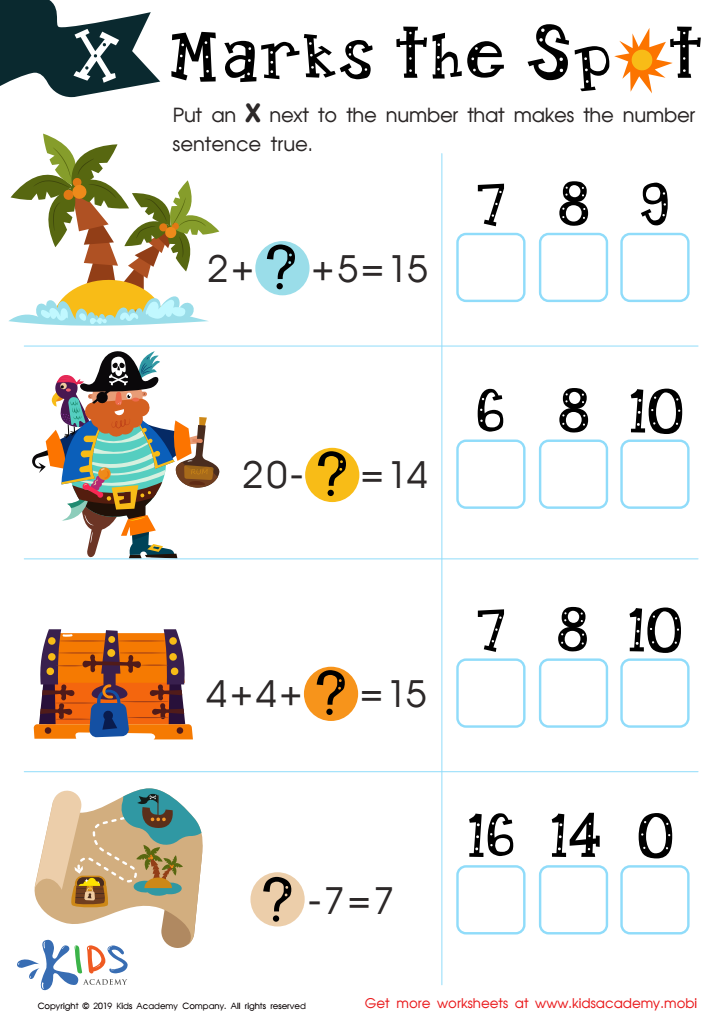
X Marks the Spot Worksheet
 Assign to My Students
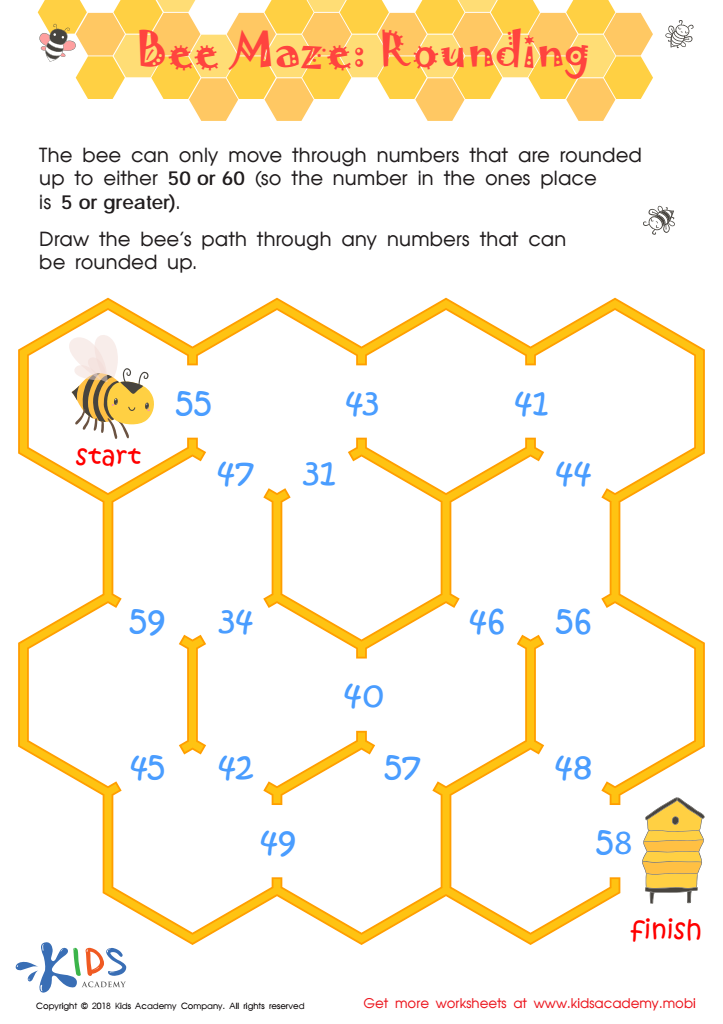
Bee Maze Rounding Worksheet







Developing spatial awareness in young children, particularly in the context of math for ages 5-8, is crucial for their overall cognitive development and future academic success. Spatial awareness involves recognizing and understanding the position of objects, their dimensions, and the relationships between them. These skills are foundational for math, as they underlie key concepts such as geometry, measurement, and problem-solving.
When parents or teachers prioritize spatial awareness development, they empower children to visualize and manipulate objects mentally, fostering innovation and critical thinking. Engaging in spatial activities—such as puzzles, building blocks, or drawing—enhances their manipulation skills, helping them better conceptualize mathematical ideas. Children who possess strong spatial skills are often more proficient in math-related subjects later on, bridging their early years with future learning success.
Moreover, spatial awareness is increasingly recognized as essential in everyday life, influencing fields like engineering, architecture, and the sciences. By nurturing these skills at a young age, caregivers are equipping children with valuable tools for navigating their world. Ultimately, cultivating spatial awareness in math empowers children to approach complex problems with confidence, setting the stage for lifelong learning and achievement.








