
Graph interpretation Math Worksheets for Ages 5-8
4 filtered results
Difficulty Level
Grade
Age
-
From - To
Subject
Activity
Standards
Discover an engaging collection of graph interpretation math worksheets designed specifically for children aged 5-8. These worksheets provide a fun and interactive way for young learners to develop essential skills in reading and interpreting graphs. With vibrant visuals and age-appropriate content, kids will explore various graph types, including bar graphs and picture graphs, while enjoying stimulating exercises that boost their critical thinking and mathematical reasoning. Perfect for classroom or at-home learning, our worksheets support early numeracy skills and foster a solid foundation in graph literacy, making math an enjoyable adventure for your little ones. Explore the world of graphs today!
Favorites
With answer key
Interactive
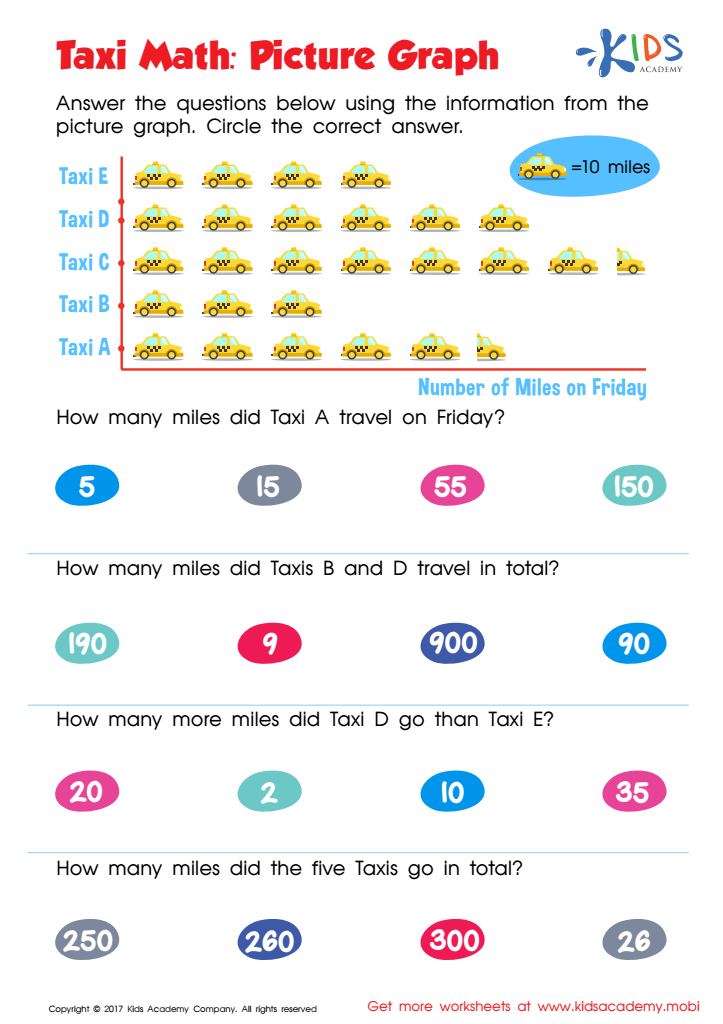
Taxi Math Worksheet
This 3rd grade worksheet helps kids learn data viz with fun taxis and colors to make the graph come alive. Picture graphs are an engaging way to teach data analysis, and this worksheet is the perfect tool!
Kids love picture graphs! This 3rd grade worksheet uses colorful taxis to help them learn to read graphs better. Each image represents a number, teaching data analysis with visuals and fun. An engaging way to learn data viz, this worksheet is perfect for young learners.
 Assign to My Students
Taxi Math Worksheet
Worksheet
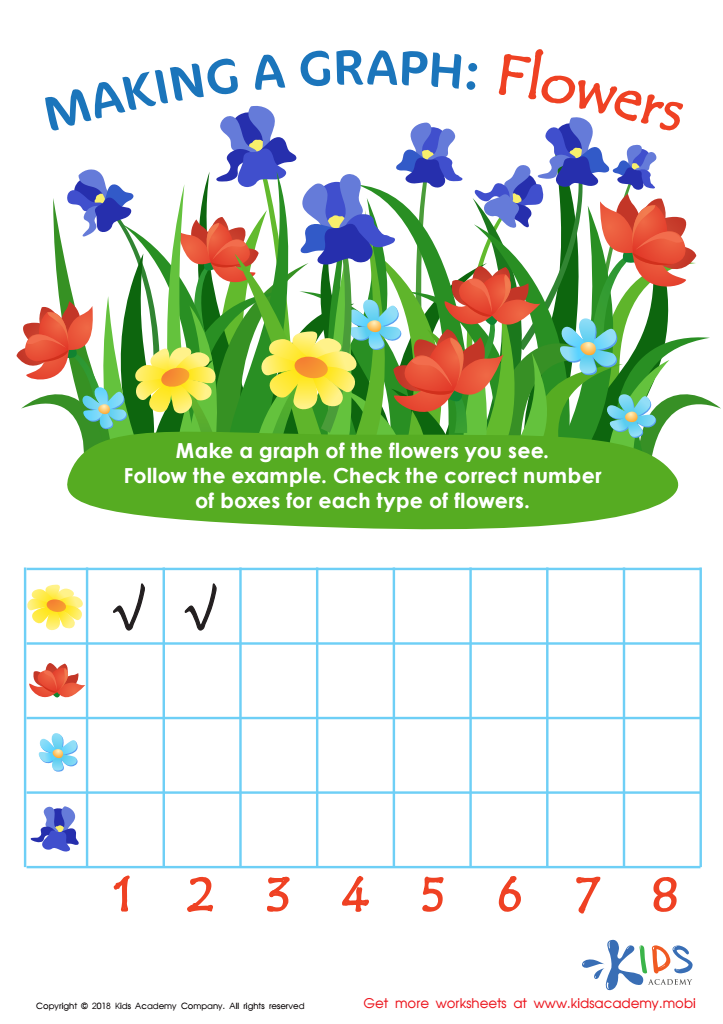
Making a Graph: Flowers Worksheet
Kids will love this engaging PDF graph. They'll count flowers and use checkmarks to represent the number on the graph, tangibly seeing the differences in an organized way they contributed to. All while developing their number representation and concrete number sense skills without even realizing it!
Making a Graph: Flowers Worksheet
Worksheet
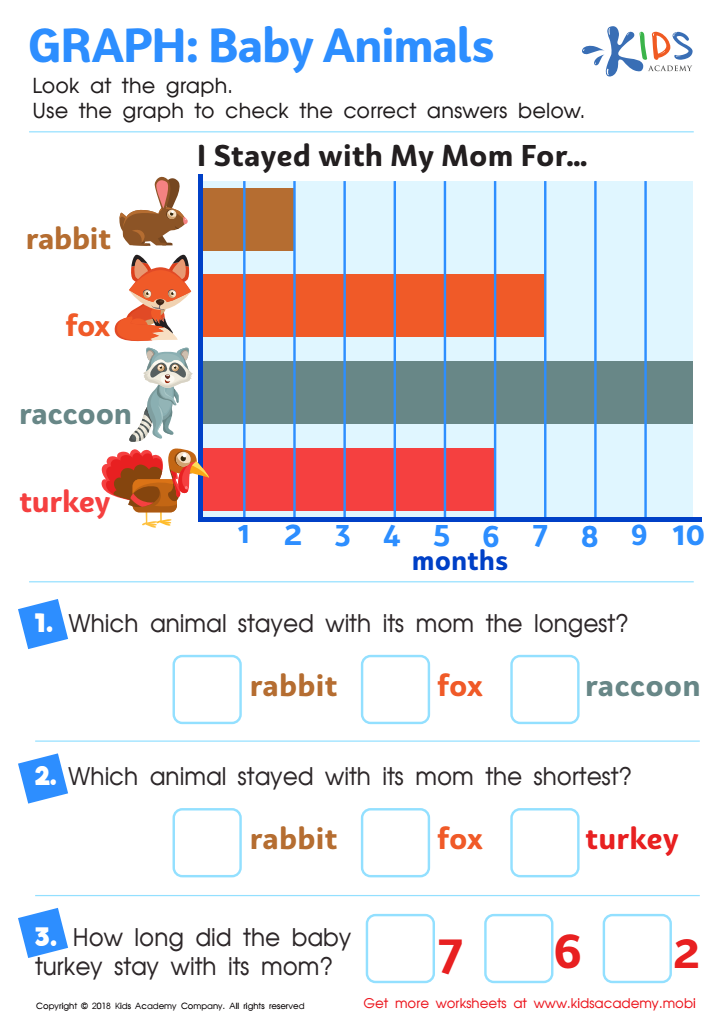
Graph: Baby Animals Worksheet
Graphs are essential for learning in math, science and ELA. This worksheet featuring baby animals is a fun way to practice reading graphs. Look at the graph and answer the questions below it. Check the boxes for the right answers based on the data.
Graph: Baby Animals Worksheet
Worksheet
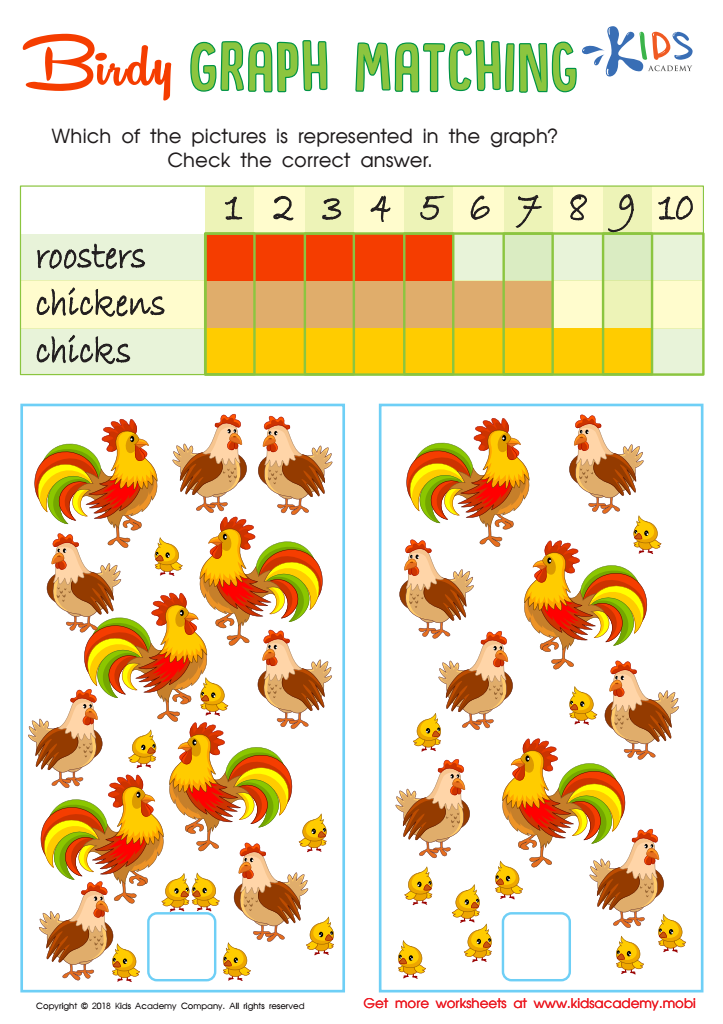
Birdy Graph Matching Worksheet
Treat your little one to a fun worksheet to practice visual discrimination, counting, graphing and tallying! They will sort the birds, count and assign values and use graph reading to answer the questions. They'll be so busy enjoying the counting that they won't even realize they are honing their skills!
Birdy Graph Matching Worksheet
Worksheet
Join Kids Academy for Free
Who is primarily going to use this learning content?








Graph interpretation is a vital skill for children aged 5-8, making it essential for both parents and teachers to prioritize its teaching. At this age, children benefit from developing foundational numeracy skills, and interpreting graphs helps them make sense of data in visual formats. Understanding graphs fosters critical thinking, enabling young learners to analyze information and draw conclusions about their world.
Graphs play a significant role in everyday life, presenting data in a manageable way; this relevance makes learning engaging and practical for children. By familiarizing themselves with different types of graphs—such as bar graphs, pictographs, and line plots—children can analyze trends and relationships, skills that serve as a groundwork for more complex mathematical reasoning in later years.
Furthermore, graph interpretation cultivates communication skills. Children learn to articulate their understanding of data, enhancing their vocabulary and confidence. As parents and teachers encourage discussions around graph-based activities, they create opportunities for collaborative learning.
Ultimately, prioritizing graph interpretation not only builds essential mathematical proficiency but also encourages a love for learning. It empowers children to approach data critically, preparing them for informed decision-making in their future academic and real-world experiences.








