
Graph reading skills Math Worksheets for Ages 5-8
3 filtered results
Difficulty Level
Grade
Age
-
From - To
Subject
Activity
Standards
Unlock the world of data with our engaging Graph Reading Skills Math Worksheets designed for ages 5-8! These fun, educational worksheets help young learners develop essential math and data interpretation skills by exploring bar graphs, pictographs, and more. Perfectly tailored to make learning enjoyable, each worksheet includes colorful visuals and relatable themes that ignite curiosity. Whether it’s spotting patterns or comparing quantities, these activities create a solid foundation for future mathematical success. Boost your child's confidence and analytical abilities with our expertly crafted resources. Visit our webpage and start turning numbers into knowledge today!
Favorites
With answer key
Interactive
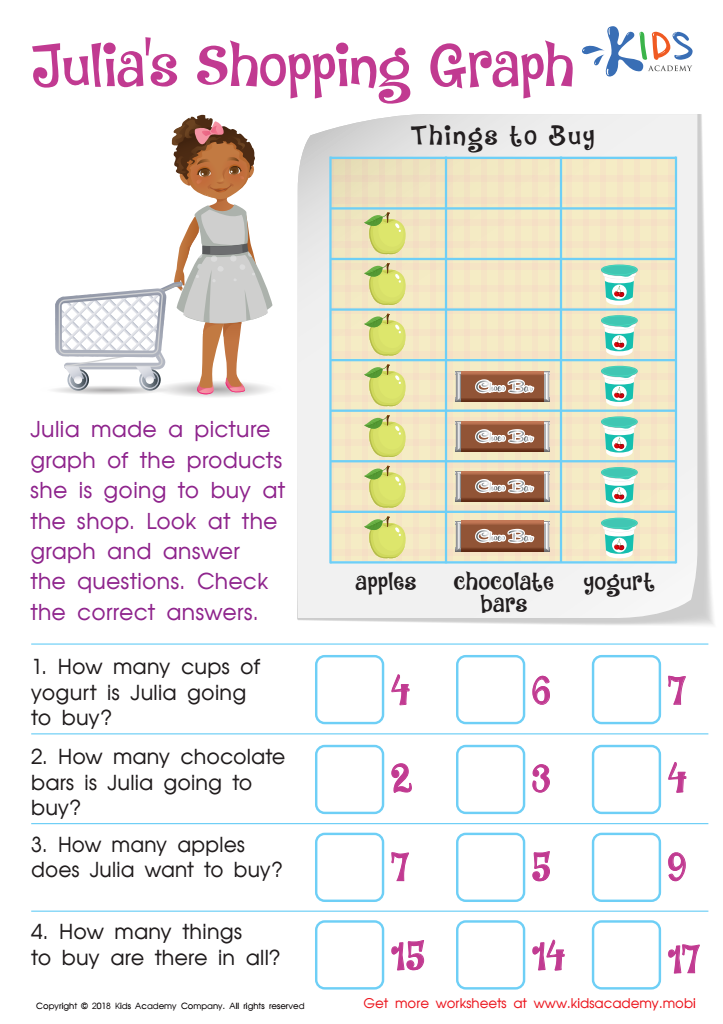
Julia's Shopping Graph Worksheet
This fun PDF worksheet provides little mathematicians with practice using pictographs. They will answer questions about Julia's graph, helping to assess their understanding of reading and interpreting data. Counting and choosing the correct answer is sure to be an enjoyable experience!
 Assign to My Students
Julia's Shopping Graph Worksheet
Worksheet
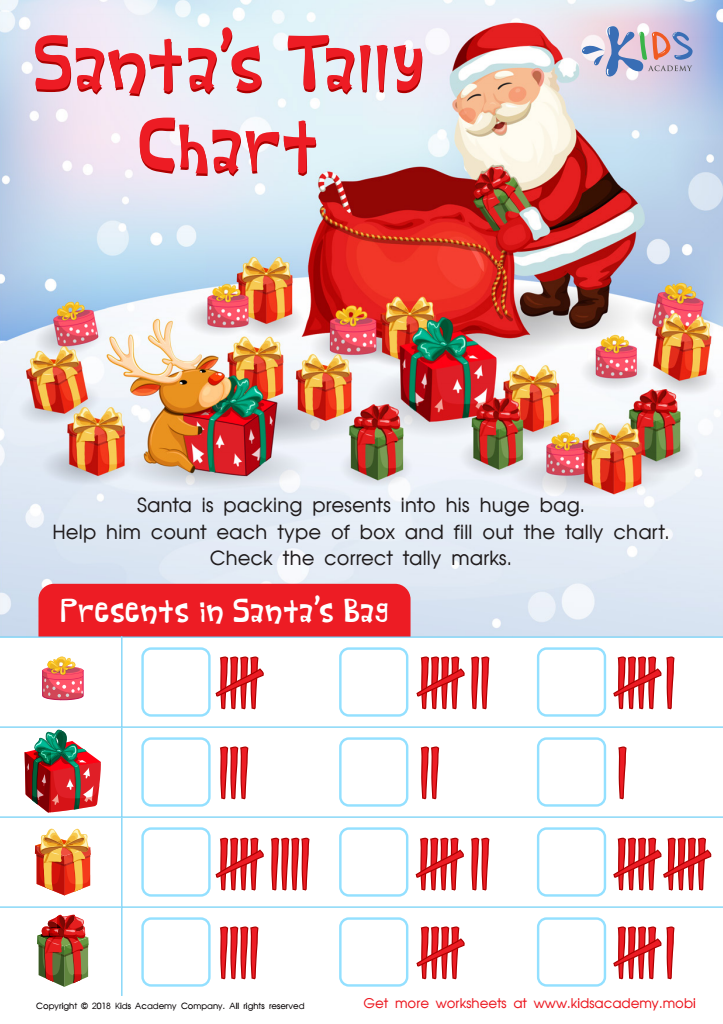
Santa Tally Chart Worksheet
Santa's got a big bag of gifts to count! Kids can help with this fun PDF worksheet, practicing visual recognition and representation skills while they sort and tally the presents. They'll also work on charting as they fill in the tally chart and send Santa off for a happy holiday. Ho, Ho, Ho!
Santa Tally Chart Worksheet
Worksheet
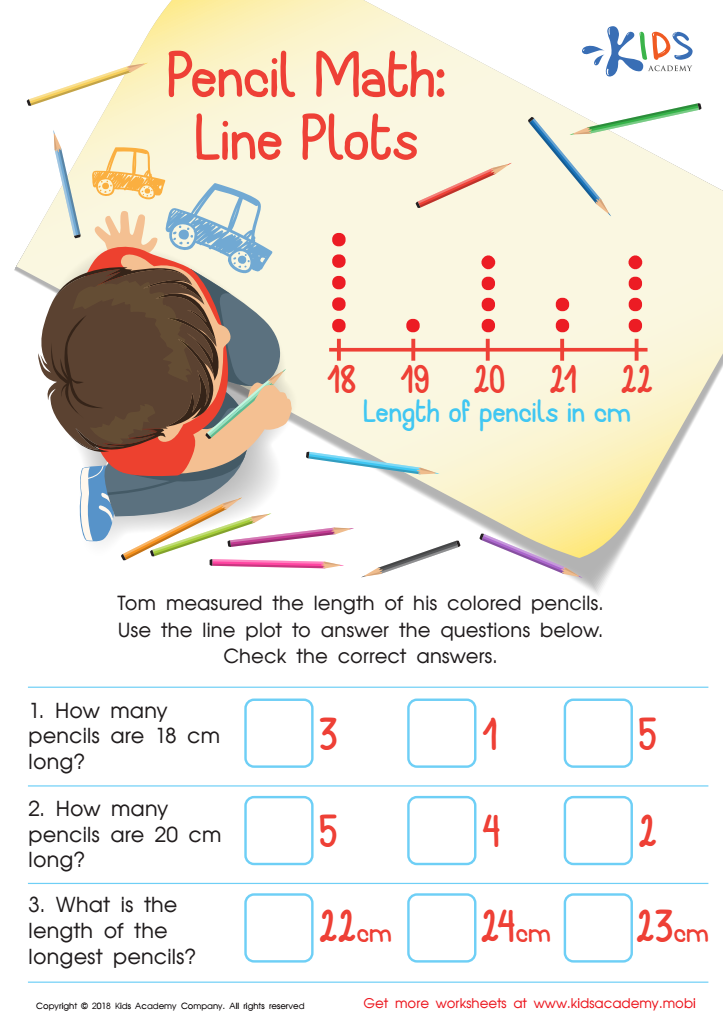
Pencil Math: Line Plots Worksheet
Your child will meet Tom in this worksheet, helping him find the length of his colored pencils. Tom has written the lengths in cm, and the line plot will help your kids answer the questions. Check the correct answers for each, including how many pencils are of a certain length. The line plot makes it easy to find the answers.
Pencil Math: Line Plots Worksheet
Worksheet
Join Kids Academy for Free
Who is primarily going to use this learning content?







Graph reading skills are essential building blocks for young learners, significantly impacting their future academic success and practical life skills. For children ages 5-8, grasping these concepts early lays a robust foundation for more complex mathematical, scientific, and analytical thinking.
First, graph reading enhances critical thinking and problem-solving abilities. Interpreting visual data trains the brain to analyze, compare, and draw conclusions based on the information presented, fostering logical reasoning.
Moreover, these skills support core curricular goals. In subjects like math and science, graphs simplify complex data, making abstract concepts more tangible. Early familiarity with graphs can ease the comprehension of future topics such as statistics, trends, and logical relationships.
Graph skills also empower children with tools for real-life situations. Whether reading weather charts, understanding family budgets, or following sports statistics, the ability to decode graphical information is immensely practical.
In addition, mastering graphs promotes cognitive development by enhancing fine motor and spatial skills. Activities like plotting points or interpreting charts are both educational and engaging, catering to varied learning styles.
Lastly, fostering these skills builds confidence. When children can successfully interpret and present data, it bolsters their self-esteem and encourages a positive attitude towards learning.
In summary, nurturing graph reading skills in young learners makes a significant, positive impact on their academic journey and everyday decision-making capabilities.








