Recognizing equivalent fractions Math Worksheets for Ages 5-8
5 filtered results
-
From - To
Discover our engaging Recognizing Equivalent Fractions Math Worksheets designed specifically for ages 5-8! These fun and interactive worksheets help young learners master the concept of equivalent fractions through a variety of exercises and visual aids. Each activity is crafted to boost understanding and confidence in early math skills, ensuring a solid foundation. Perfect for classroom or home use, these printable resources make learning fractions enjoyable and accessible. Start exploring today and watch your child excel in math while having fun with our expertly developed materials!
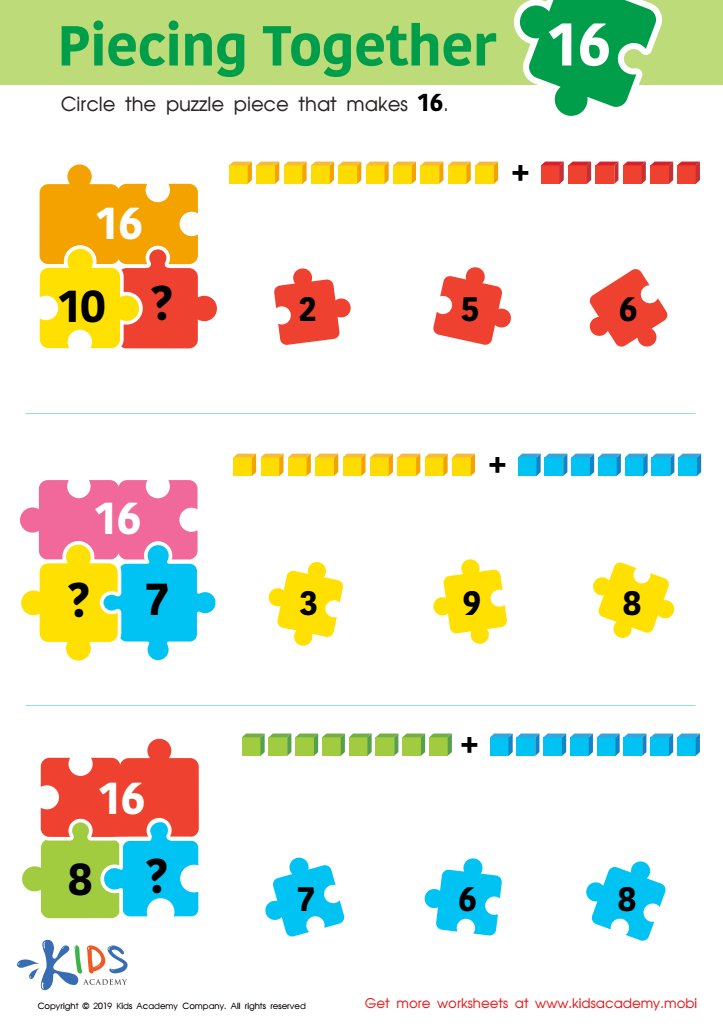
Piecing Together 16 Worksheet
 Assign to My Students







Recognizing equivalent fractions is a foundational math skill that is essential for children aged 5-8 to master. Early understanding of equivalent fractions helps young learners build a solid mathematical foundation, which is crucial for their future academic success. Here’s why parents and teachers should prioritize this:
-
Conceptual Understanding: Understanding equivalent fractions helps children grasp the concept of part-whole relationships and the idea that the same quantity can be represented in different ways. This develops their numerical and proportional reasoning skills.
-
Problem-Solving Skills: Proficiency in equivalent fractions prepares children for more advanced math concepts, such as addition and subtraction of fractions, ratios, and proportions. It enhances their problem-solving and analytical thinking by recognizing patterns and relationships between numbers.
-
Practical Application: Everyday situations such as cooking, sharing, and dividing items involve fractions. Comfortable familiarity with equivalent fractions helps children apply math concepts in real-life scenarios, making the subject relevant and practical.
-
Confidence Building: Mastering equivalent fractions can boost students’ confidence and enthusiasm in math. Positive experiences in math can lead to a lifelong interest and better performance in the subject.
In summary, focusing on equivalent fractions at an early age nurtures critical thinking, practical application, and a deeper understanding of math, all of which are pivotal for academic and personal growth.








