
Time calculation skills Math Worksheets for Ages 5-8
3 filtered results
Difficulty Level
Grade
Age
-
From - To
Subject
Activity
Standards
Discover our engaging Time Calculation Skills Math Worksheets designed specifically for children ages 5-8! These worksheets provide a fun and interactive way for young learners to master essential time concepts, including reading clocks, understanding time units, and solving timely word problems. With illustrations and age-appropriate activities, our worksheets foster a love for learning while building confidence in math. Ideal for classroom use or at-home practice, these resources help children grasp important skills that lay the foundation for future success in mathematics. Explore our collection today to enhance your child's time-telling abilities and spark their enthusiasm for math!
Favorites
With answer key
Interactive
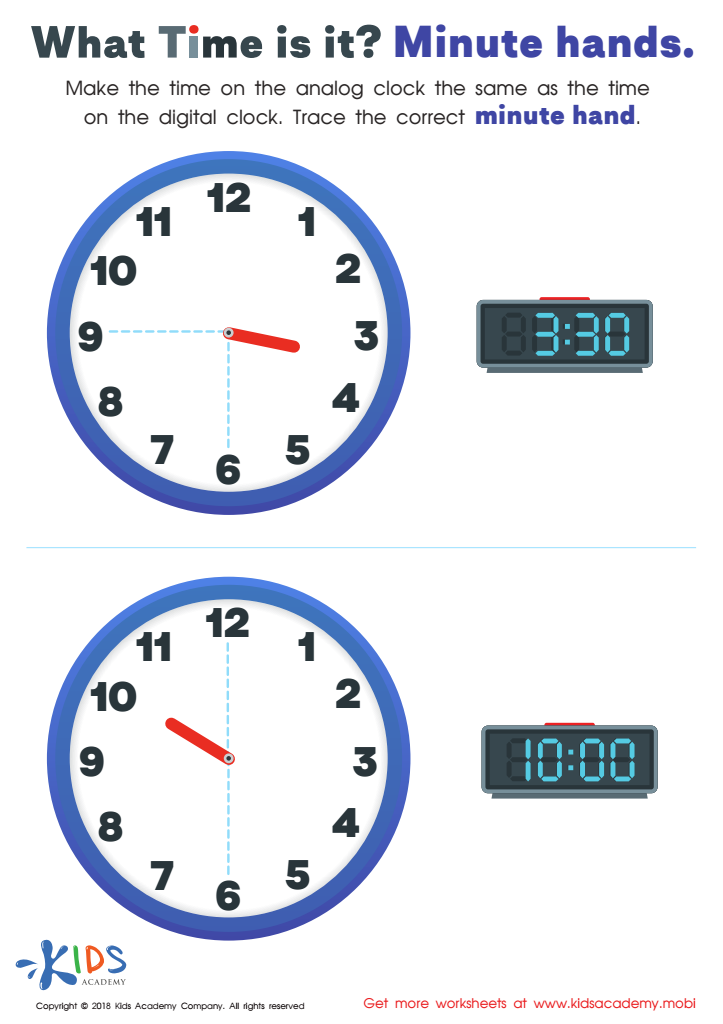
What Time Is it? Minute Hands Worksheet
Help your kids telling time with the minute hand correctly with this tracing sheet. Trace the correct minute hand to make the time on the analog clock the same as the time on the digital clock. Give them a pictured demonstration of how to do it and you'll be all set!
 Assign to My Students
What Time Is it? Minute Hands Worksheet
Worksheet
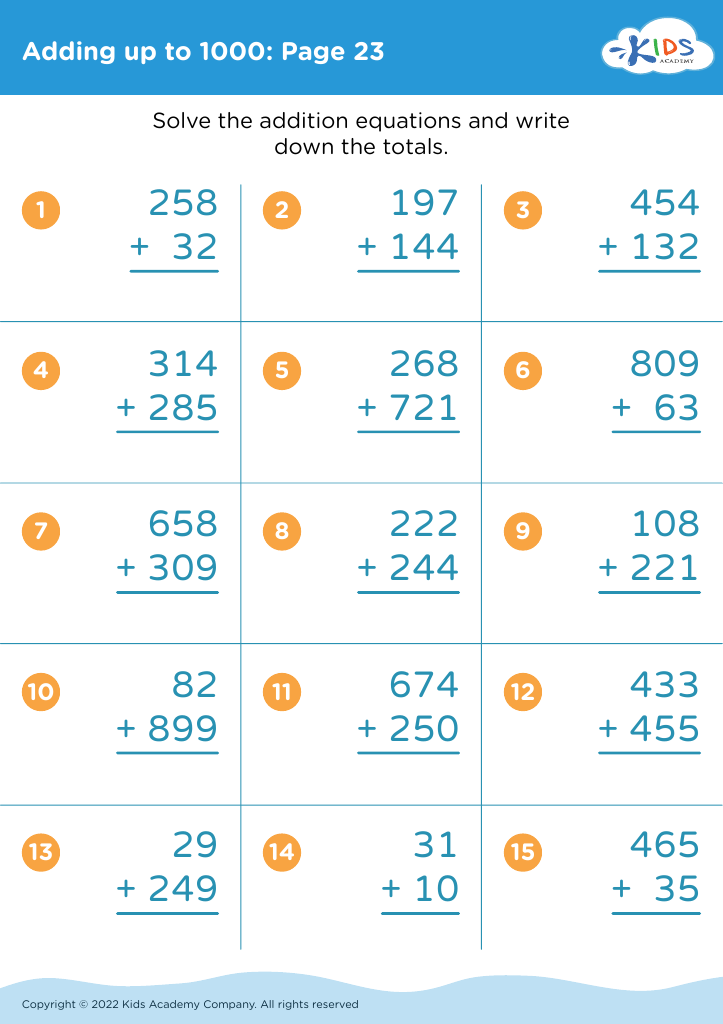
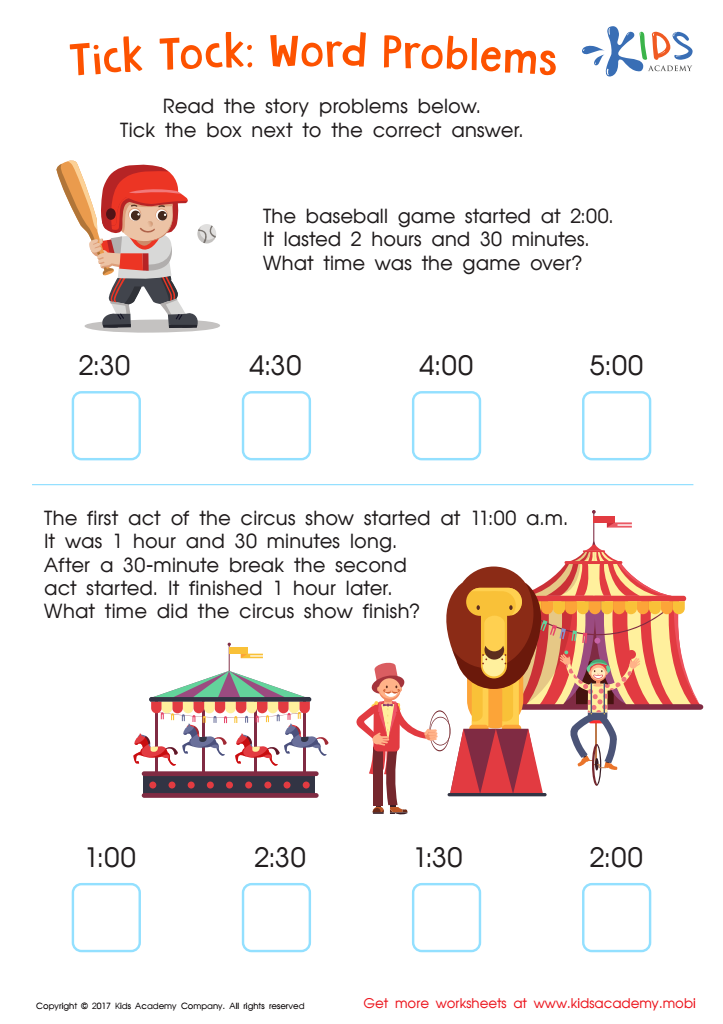
Tick Tock Word Problems Time Worksheet
Mix math and fun with this telling time word problems worksheet! Your child will love solving the events' finishing times using the vivid colors and joyful illustrations. Tick Tock!
Tick Tock Word Problems Time Worksheet
Worksheet
Join Kids Academy for Free
Who is primarily going to use this learning content?




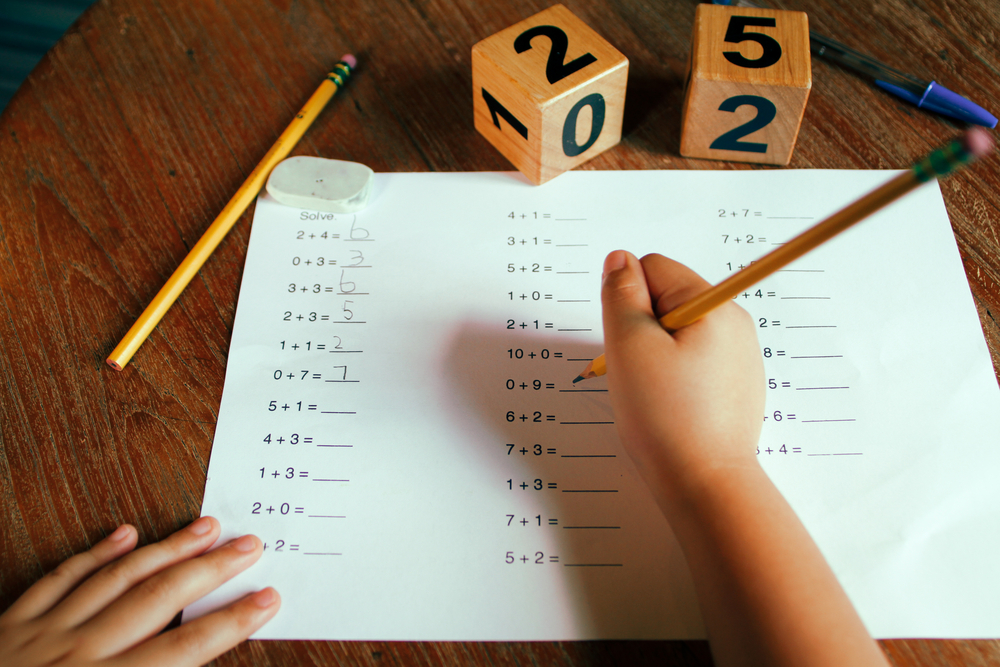


Time calculation skills are crucial for children aged 5-8 as they lay the foundation for essential life skills. At this age, kids are developing their understanding of numbers and how they relate to the world around them. Learning to read clocks, understand time intervals, and grasp basic concepts of time enhances their cognitive development.
Firstly, time management is a vital skill that helps children structure their daily routines, such as school, play, and homework. By learning to tell time, they gain independence and responsibility. Understanding time also fosters critical thinking; for example, calculating how long until an event promotes patience and planning.
Moreover, math skills are interlinked with subjects like science and literacy, as time is a key element in scheduling experiments or understanding story plots. Developing these skills early can lead to positive attitudes towards math, encouraging continuous learning.
Parental and teacher engagement is essential; modeling and practicing time-related activities can cultivate these competencies. It becomes a delightful learning experience, fostering relationships and enriching understanding. Ultimately, strong time calculation skills not only prepare children for future academic success, but also empower them in navigating daily life with confidence and efficiency.








