Understanding symmetry Math Worksheets for Ages 5-8 - Page 2
30 filtered results
-
From - To
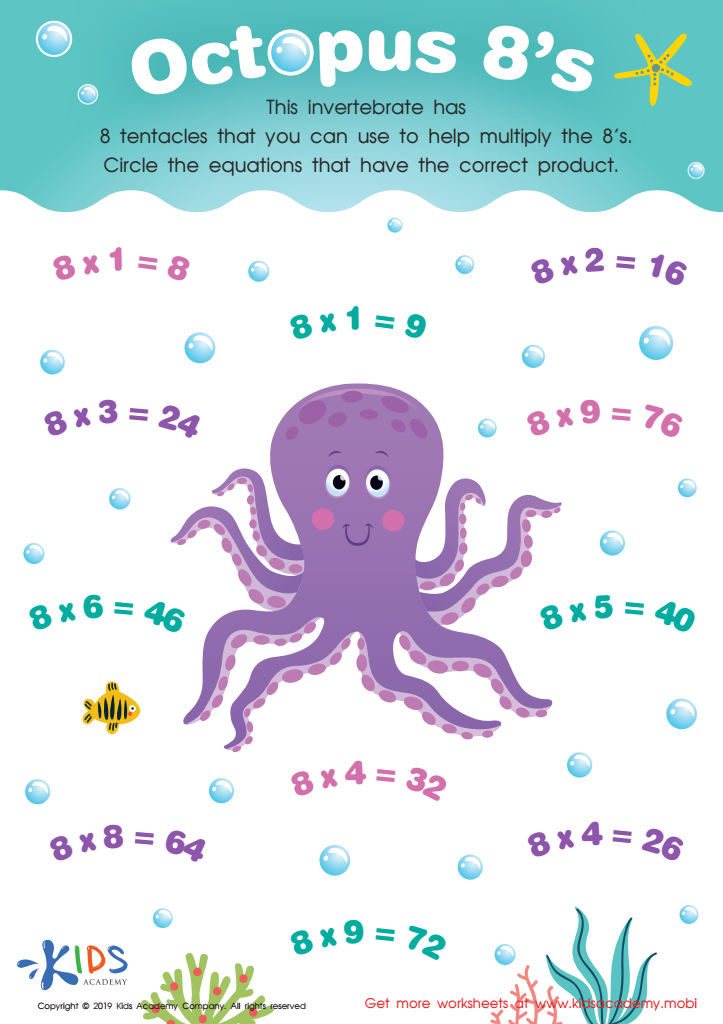
Octopus 8’s Worksheet
 Assign to My Students



.jpg)




Understanding symmetry is fundamental in developing mathematical skills for children aged 5-8, and both parents and teachers play a pivotal role in this learning process. Symmetry is not just a mathematical concept; it fosters critical thinking, spatial awareness, and creativity. Recognizing symmetrical shapes helps children understand patterns, which forms the basis for more complex mathematical concepts in the future.
Moreover, symmetry is ubiquitous in nature and art, from the wings of a butterfly to the design of buildings. Learning about symmetry can encourage children to explore their environment and nurture artistic skills, enhancing their overall educational experience. Through hands-on activities that involve drawing, folding, or using mirrors, teachers can make symmetry engaging and relatable.
Engaging with symmetry also assists children in developing problem-solving skills as they classify shapes and identify similarities and differences. These skills are transferable across subjects, including science and engineering. Parents and teachers who emphasize the importance of symmetry create a rich learning environment, promoting exploration and inquiry. By making symmetry a fun and interactive topic, they equip children with the necessary tools for future academic success while cultivating a love for learning that can last a lifetime.








