Critical Thinking Matching Worksheets for Ages 5-8
4 filtered results
-
From - To
Foster your child's cognitive development with engaging "Critical Thinking Matching Worksheets for Ages 5-8." These expertly designed worksheets are perfect for young learners, helping them build essential critical thinking skills through fun matching activities. Each worksheet is crafted to enhance pattern recognition, logical reasoning, and problem-solving abilities, making learning both interactive and entertaining. Ideal for both classroom and home use, these resources support foundational academic growth and nurture intellectual curiosity. Ignite young minds and set the stage for lifelong learning success with our dynamic collection of critical thinking matching worksheets tailored specifically for children aged 5 to 8.

Find the Pattern Worksheet
 Assign to My Students

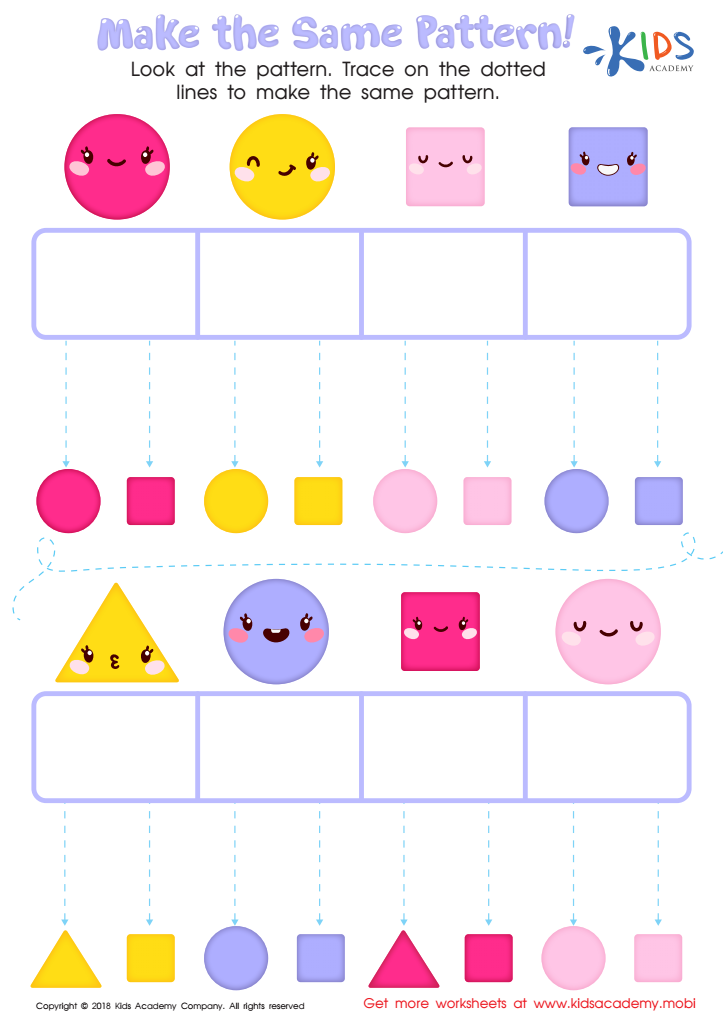
Make the Same Pattern Worksheet

The Four Seasons Worksheet








Critical Thinking Matching for ages 5-8 is essential for young children's cognitive development, and both parents and teachers should prioritize it. At this developmental stage, children's brains are incredibly receptive and adaptable. Introducing critical thinking skills early on sets a strong foundation for future learning. Matching activities enhance children's ability to recognize patterns, draw connections, and make predictions. These are fundamental skills not just for academic success, but for daily problem-solving and decision-making.
Incorporating critical thinking through engaging matching games can also make learning enjoyable. Using fun themes such as animals, colors, or shapes captures children's interest and motivates them to participate actively. This hands-on learning experience fosters curiosity and encourages a love for learning that can last a lifetime.
Furthermore, critical thinking is essential in building emotional and social intelligence. When children are presented with matching tasks, they learn to analyze and reflect on their choices, developing patience and perseverance. They also improve their ability to listen, follow instructions, and articulate their thought processes, enhancing communication skills.
Overall, embedding critical thinking activities into early childhood education helps create a well-rounded, confident, and independent thinker. Parents and teachers play a crucial role in nurturing these skills, setting children up for success in a complex world.








