Interpreting data Measurement Worksheets for Ages 5-8
5 filtered results
-
From - To
Welcome to our “Interpreting Data Measurement Worksheets” designed specifically for children aged 5-8! These engaging and colorful worksheets help young learners develop essential skills in interpreting and analyzing data through fun activities. Our resources include various formats, such as charts, graphs, and pictographs, ensuring a comprehensive understanding of measurement concepts. By working on these worksheets, kids will enhance their critical thinking and problem-solving skills while boosting their confidence in mathematics. Perfect for classroom use or at-home practice, these worksheets provide a solid foundation for future learning. Explore our collection today and make data interpretation exciting and accessible for your child!
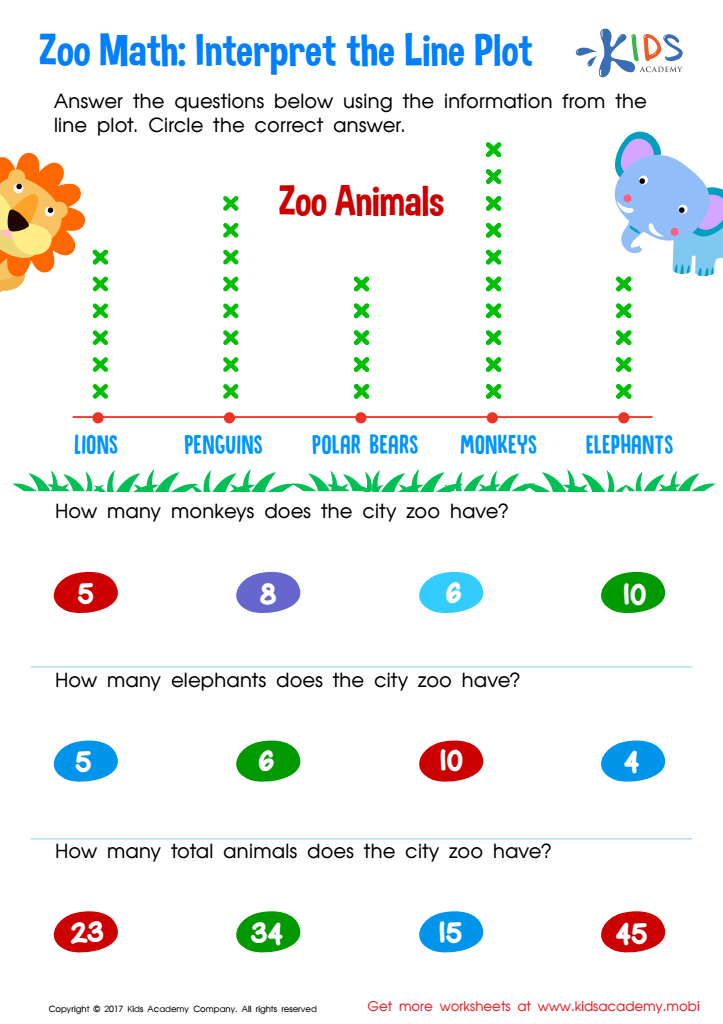
Interpret Line Plot Worksheet
 Assign to My Students
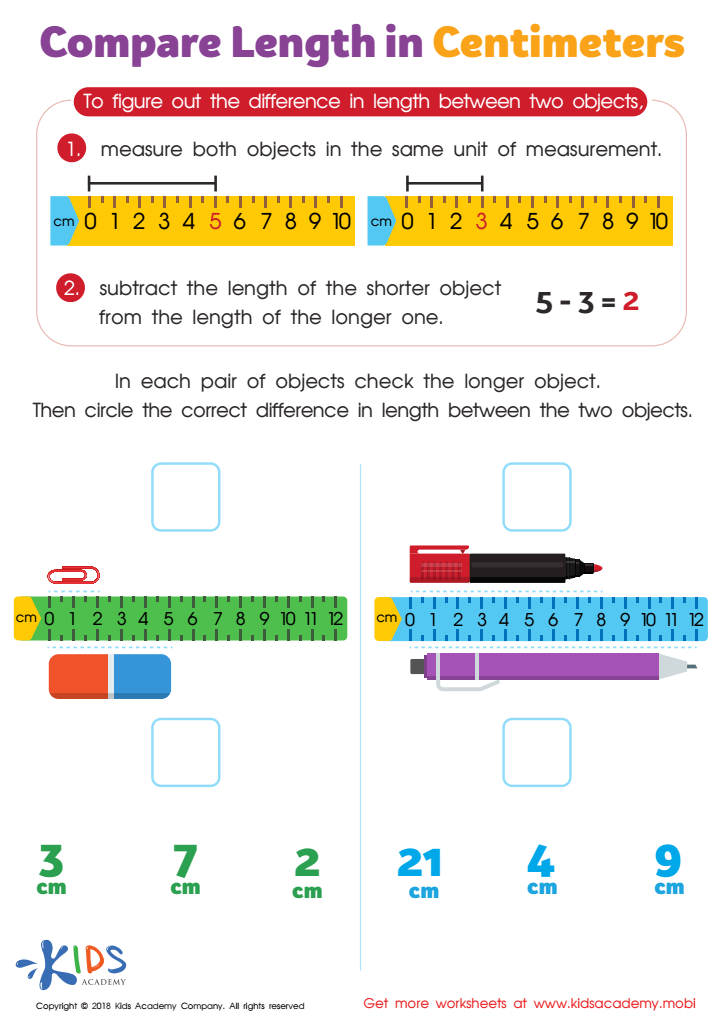
Compare Length in Centimeters Worksheet
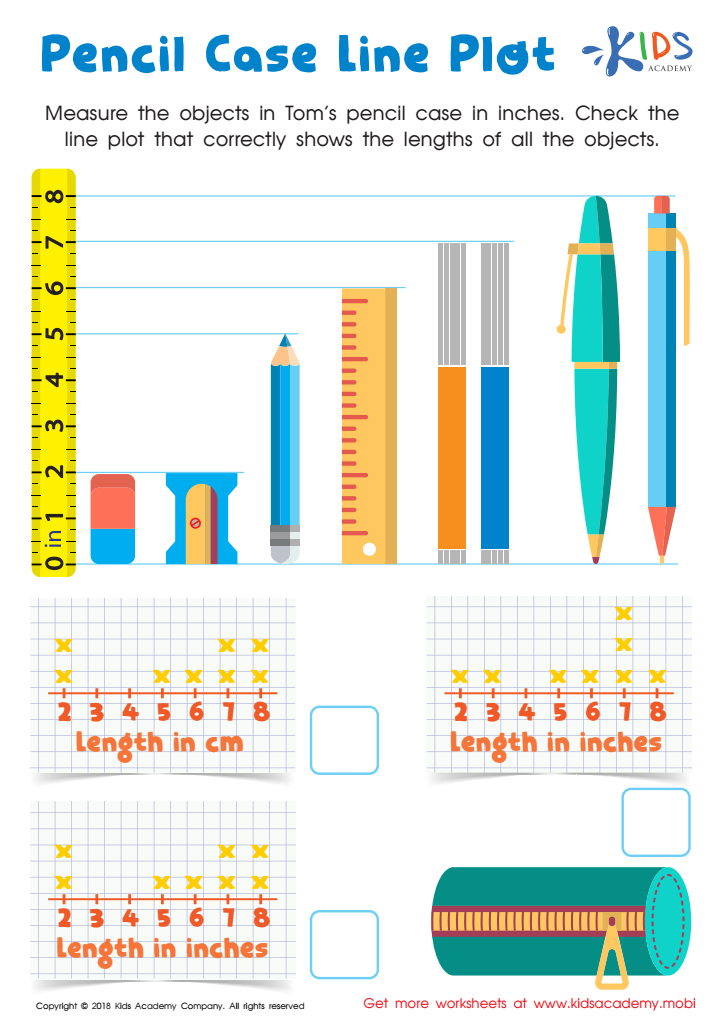
Pencil Case Line Plot Worksheet
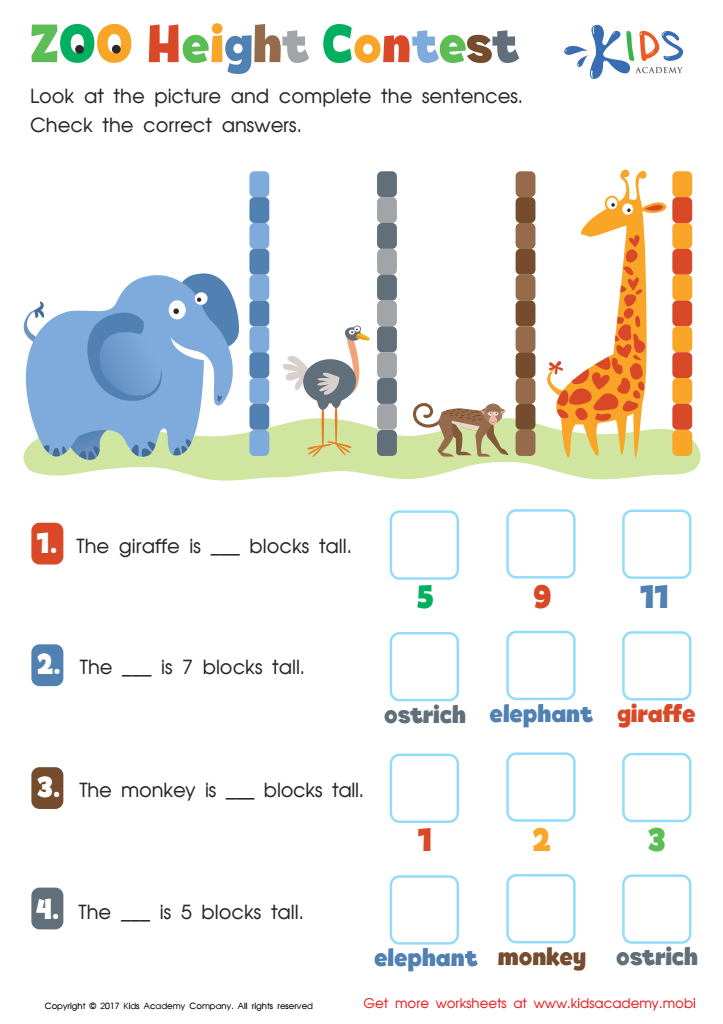
Zoo Height Contest Worksheet
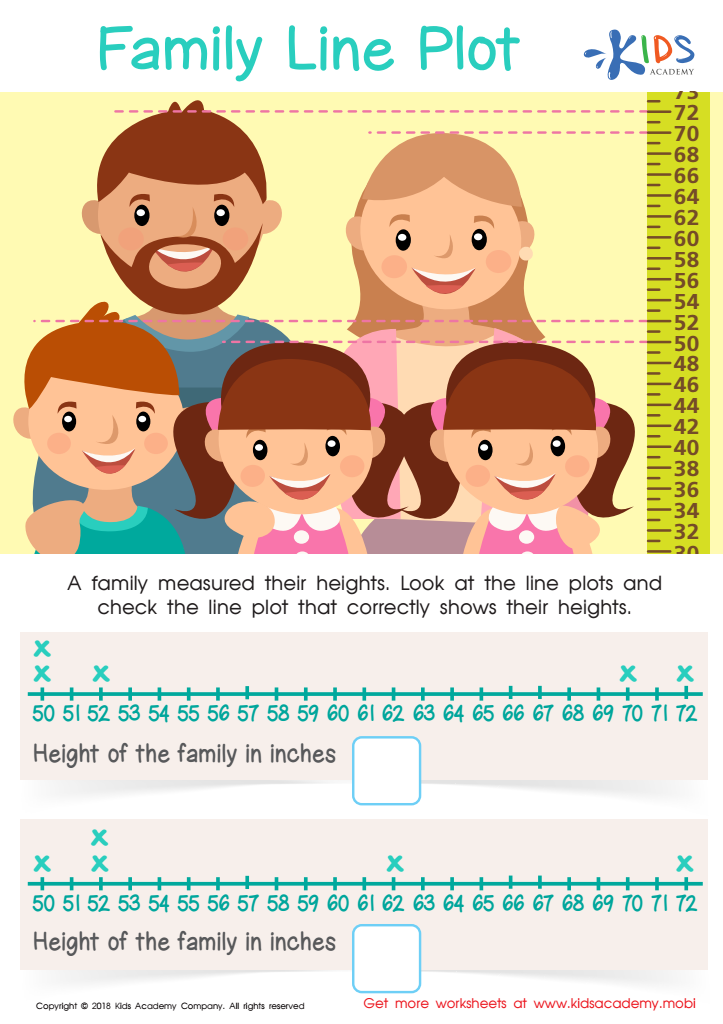
Family Line Plot Worksheet








Understanding data measurement is crucial for parents and teachers of children aged 5-8, as it lays the foundation for critical thinking and problem-solving skills. At this age, children are naturally curious and begin to explore their environment with questions about quantities and comparisons. By interpreting data, children learn to gather information, recognize patterns, and make informed decisions.
Parents and teachers can encourage this skill by teaching children to collect simple data, such as their favorite fruits or colors, and represent it using charts or graphs. This hands-on experience not only cultivates mathematical proficiency but also promotes data literacy, an essential skill in our data-driven world.
Moreover, developing a strong understanding of data measurement can enhance children's confidence in analytical thinking, leading them to become effective communicators. As they grow, these skills become invaluable in educational settings and later in careers. For educators, understanding how to convey data accurately and engagingly can make lessons more impactful, while parents can reinforce these concepts at home through everyday activities and discussions. Emphasizing data measurement early prepares children for future academic success and fosters a lifelong love for learning.








