Number Sequencing Skip Counting Worksheets for Ages 5-8
4 filtered results
-
From - To
Our "Number Sequencing Skip Counting Worksheets for Ages 5-8" are designed to make learning fun and engaging. Perfect for kids in their early elementary stages, these worksheets help children grasp essential math skills, focusing on the concept of skip counting. Whether counting by 2s, 5s, 10s, or other increments, these activities bolster number sequence expertise and critical thinking. Incorporating a variety of exercises, these worksheets offer hands-on practice and interactive tasks. Tailored to meet educational standards, they ensure children enhance their counting skills in an enjoyable manner. Ignite your child's mathematical prowess today with these excellent resources!
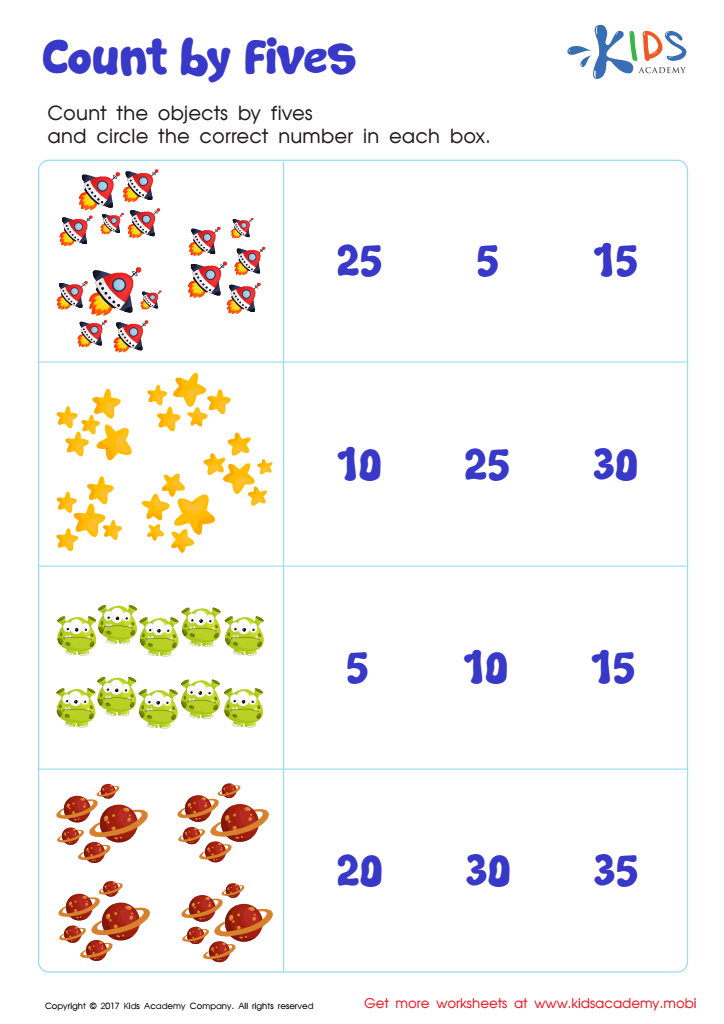
Skip Counting by 5s: Space Math Printable
 Assign to My Students
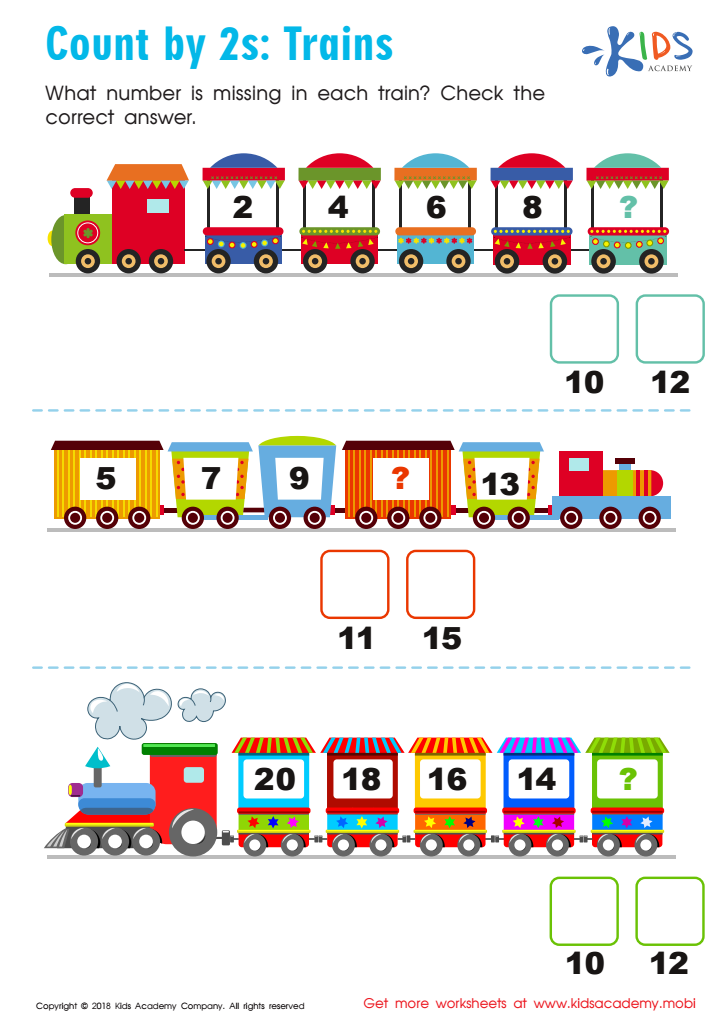
Count by 2's: Trains Worksheet
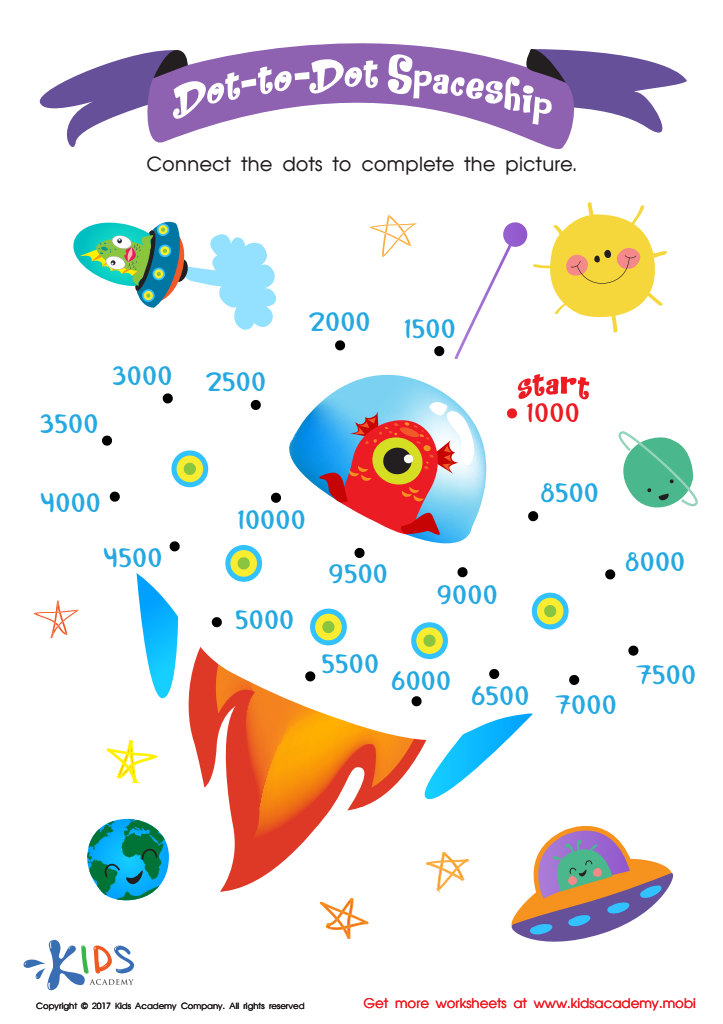
Dot to Dot Worksheet for 3rd Grade
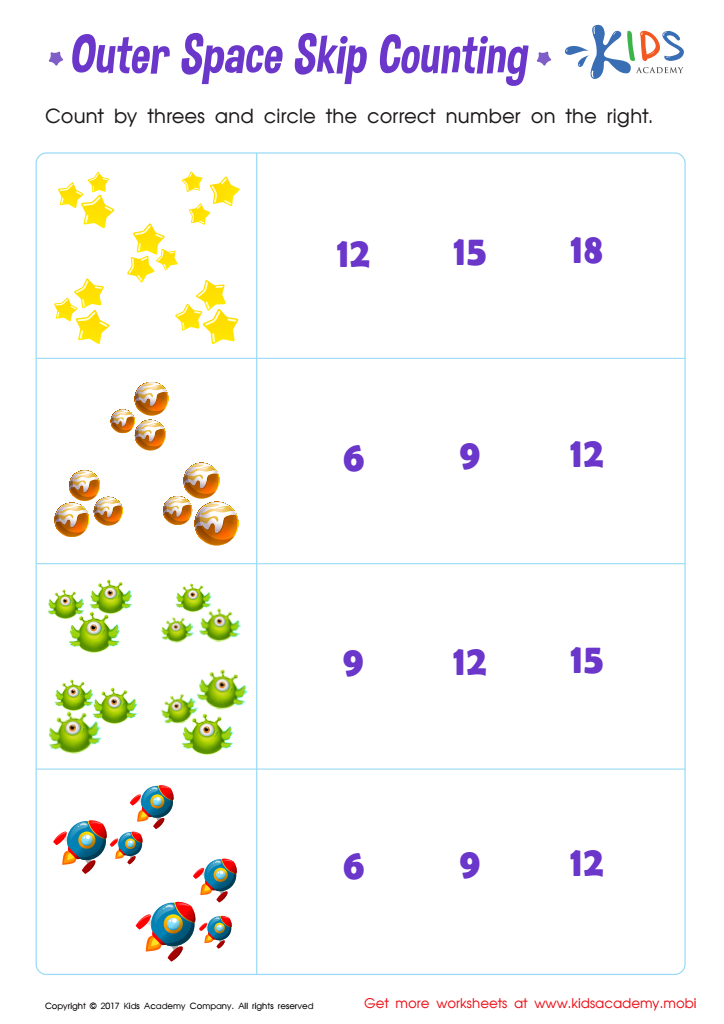
Skip Counting by 3s: Outer Space Skip Counting Printable






%20(1).jpg)

Number sequencing and skip counting are foundational math skills for young children ages 5-8 and are critical for their overall math development. Mastering these concepts helps build a strong understanding of number patterns and relationships, which are essential for more advanced math topics.
When children learn to sequence numbers, they get better at recognizing and predicting numerical order. This skill is important for basic arithmetic operations such as addition and subtraction. Skip counting, or counting by intervals (e.g., by 2s, 5s, or 10s), enhances a child's ability to count larger sets of numbers quickly and accurately. It also lays the groundwork for multiplication and division, making these later concepts easier to grasp.
Moreover, proficiency in number sequencing and skip counting boosts a child's confidence and enthusiasm for learning math, leading to better overall academic performance. These activities can be made fun through games and interactive lessons, helping to sustain a child's interest and motivation. Therefore, both parents and teachers should focus on these skills during the early years, as they are a crucial step in developing logical thinking, problem-solving abilities, and a positive attitude towards learning math. Investing time in teaching number sequencing and skip counting pays off by empowering children with essential numerical literacy that stands as the foundation for future academic success.








