
Hand-eye Coordination Building Vocabulary Worksheets for Ages 5-8
4 filtered results
Difficulty Level
Grade
Age
-
From - To
Subject
Activity
Standards
Enhance your child's learning journey with our "Hand-eye Coordination Building Vocabulary Worksheets" designed specifically for ages 5-8. These engaging worksheets combine the development of essential vocabulary skills with fun hand-eye coordination activities. By completing these exercises, children not only improve their word recognition and comprehension but also strengthen their fine motor skills. Perfect for at-home learning or classroom settings, our worksheets cater to various learning styles, helping little ones grasp new words through interactive play. Foster growth and confidence in reading with our thoughtfully designed activities that make learning enjoyable and effective for young learners. Start their educational adventure today!
Favorites
With answer key
Interactive
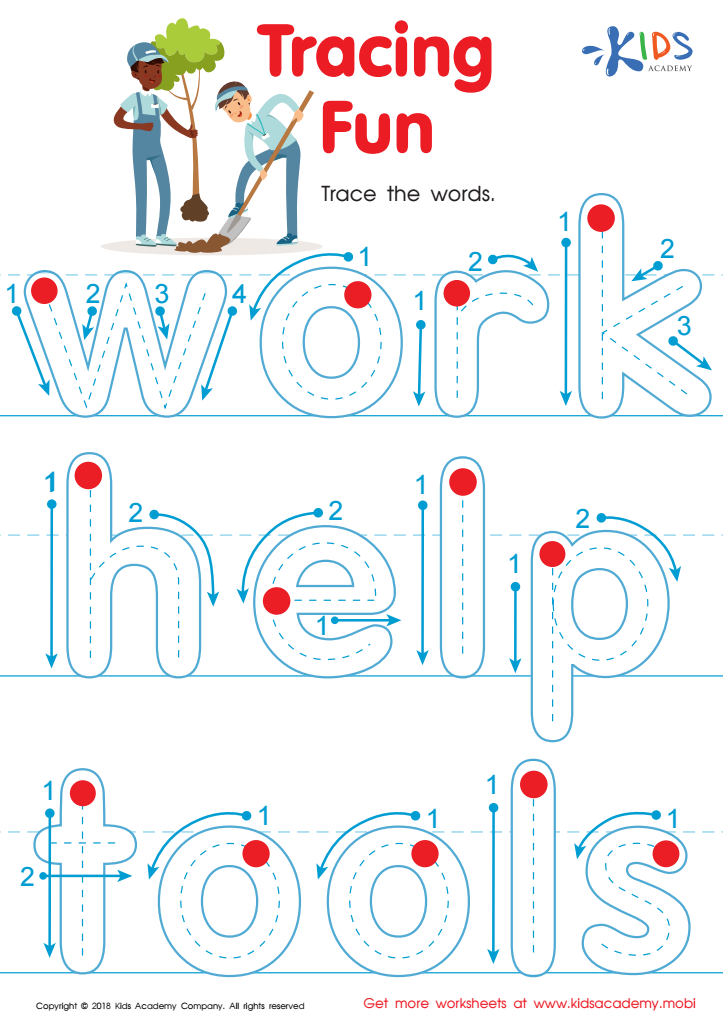
Tracing Fun Worksheet
Believe it or not, good handwriting helps with reading! Starting at the top left and writing legibly builds reading skills. This free worksheet helps little learners practice basic sight words. Red dots show them where to start and the words provide reinforcement without them realising. An enjoyable way to boost their reading and writing.
Tracing Fun Worksheet
Worksheet











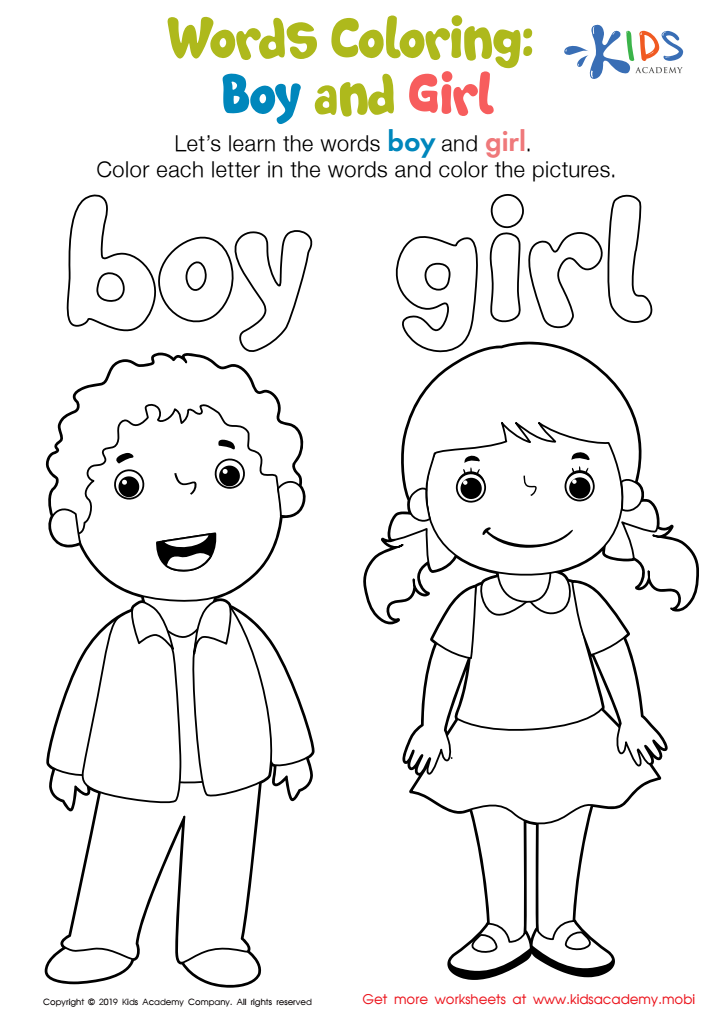
Boy and Girl Words Coloring Worksheet
Help your students build their sight word vocabulary! Early readers may not be able to sound out all words, so this worksheet teaches them to read two important sight words: boy and girl. They will color the letters and a picture of each, making it a fun and educational way to learn. Download the PDF now.
Download (PDF)
 Assign to My Students
Assign to My Students
Boy and Girl Words Coloring Worksheet
Worksheet
Join Kids Academy for Free
Who is primarily going to use this learning content?








Hand-eye coordination and vocabulary building are vital components of early childhood development, particularly for children aged 5 to 8. The relationship between these two skills is significant, as both contribute to overall cognitive and physical development.
Hand-eye coordination involves the ability to coordinate visual input with physical movement. Children develop this skill through various activities, such as drawing, playing sports, and engaging in crafts. By fostering hand-eye coordination, parents and teachers enable children to enhance their motor skills, which are essential for everyday tasks like writing and typing.
Simultaneously, building vocabulary expands children's linguistic capabilities, allowing them to express themselves clearly and understand complex concepts. A robust vocabulary boosts reading comprehension, communication skills, and confidence in social situations.
Encouraging activities that link both skills, such as interactive storytelling with illustrations or hands-on crafts that require verbal instructions, makes learning enjoyable and effective. By prioritizing hand-eye coordination and vocabulary building, parents and teachers can provide children with tools to thrive academically and socially, laying a strong foundation for future learning and personal growth. Ultimately, these skills support children’s overall development, paving the way for well-rounded and successful individuals.








