Improve reading comprehension Building Vocabulary Worksheets for Ages 5-8
6 filtered results
-
From - To
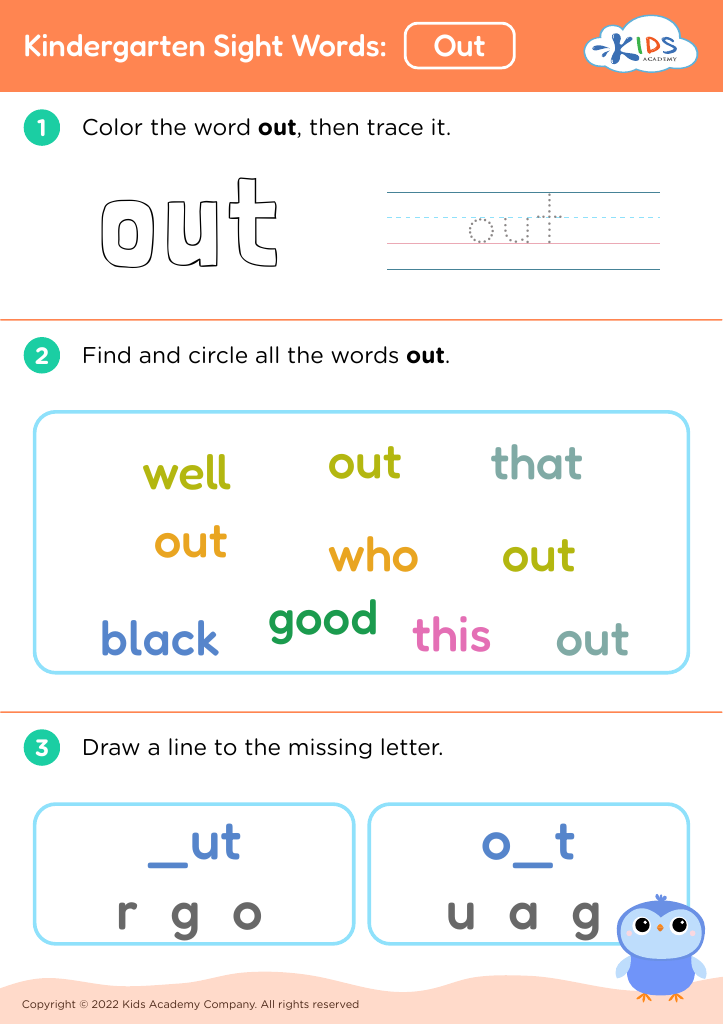
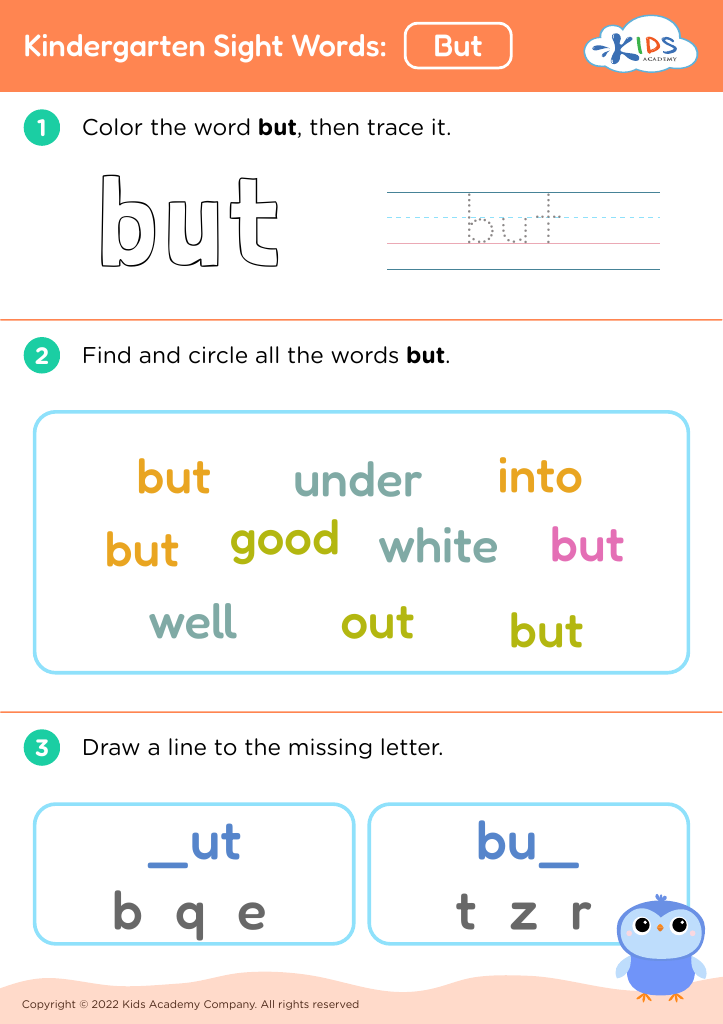
Enhance your child's reading comprehension with our engaging Building Vocabulary Worksheets designed for ages 5-8! These interactive resources help young learners expand their vocabulary while developing essential reading skills. Our worksheets incorporate fun exercises that make learning enjoyable, promoting critical thinking and word recognition. Each activity is tailored to support children in understanding context, making connections, and improving overall comprehension. Ideal for parents, teachers, and homeschooling, these worksheets encourage independent learning and boost confidence in young readers. Discover the joy of reading as your child builds a strong vocabulary foundation that will last a lifetime! Download our worksheets today!
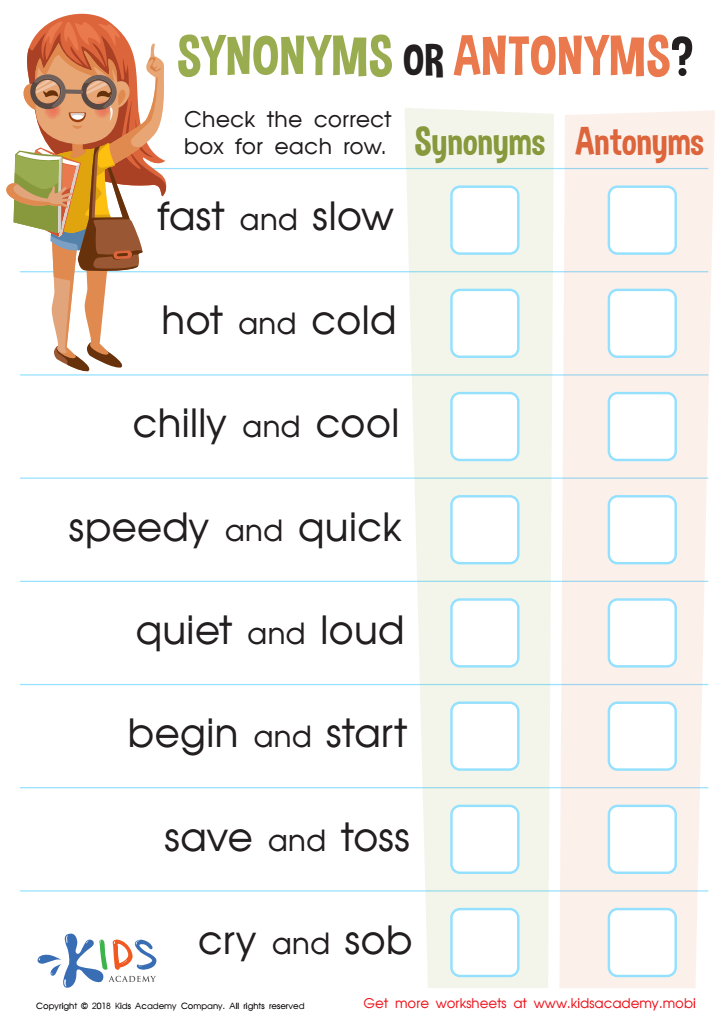
Synonyms or Antonyms: Assessment Worksheet
 Assign to My Students











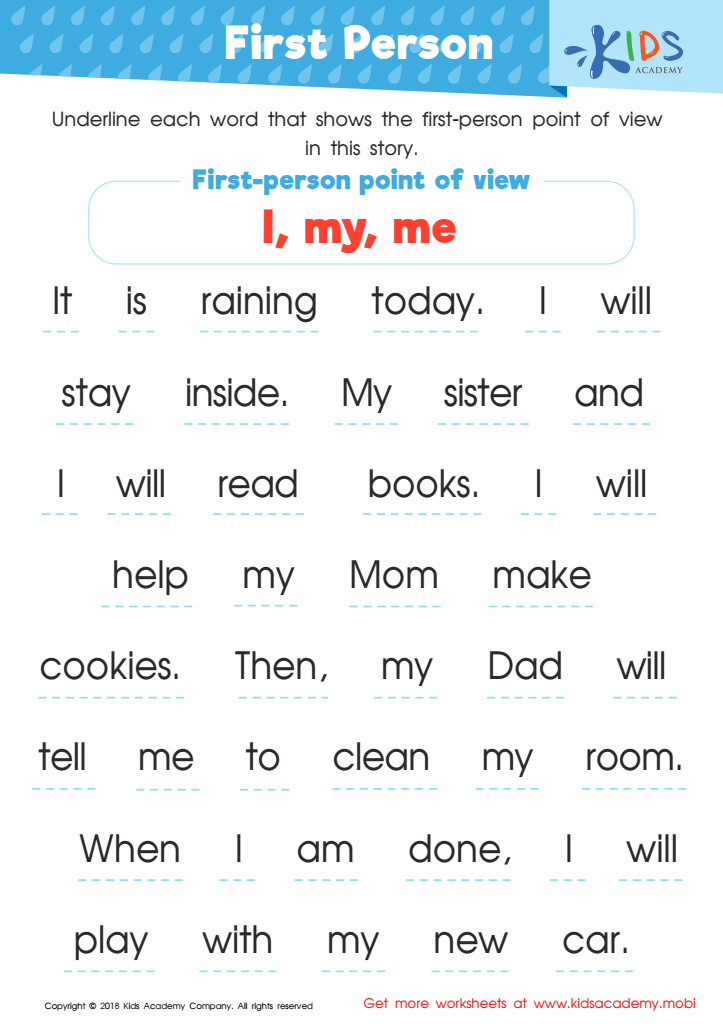
First Person Worksheet
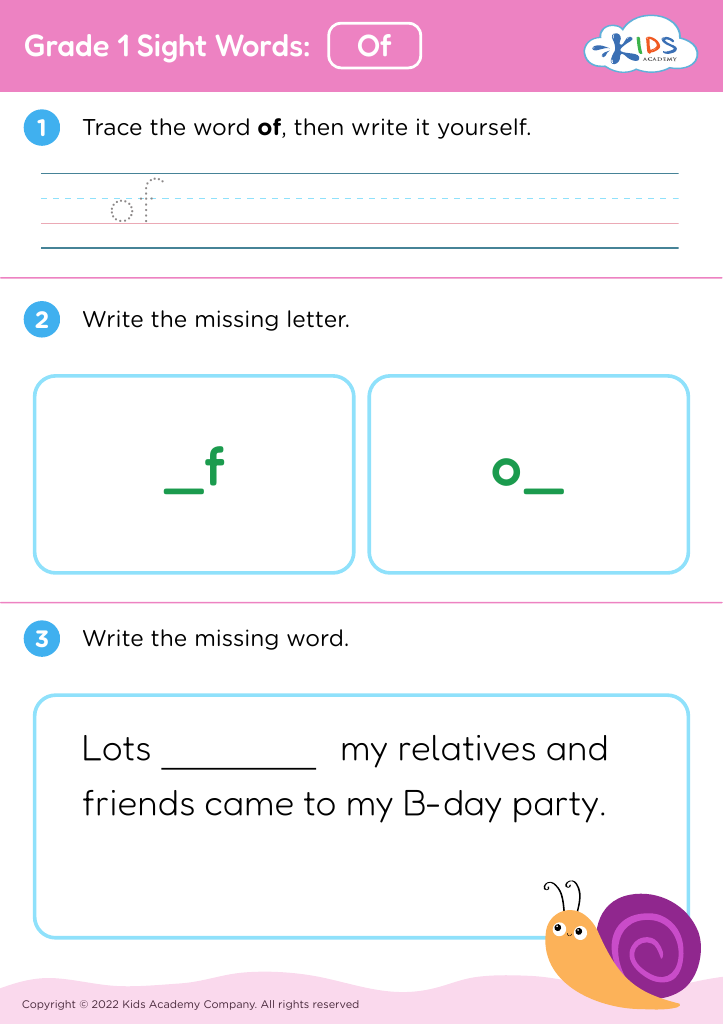
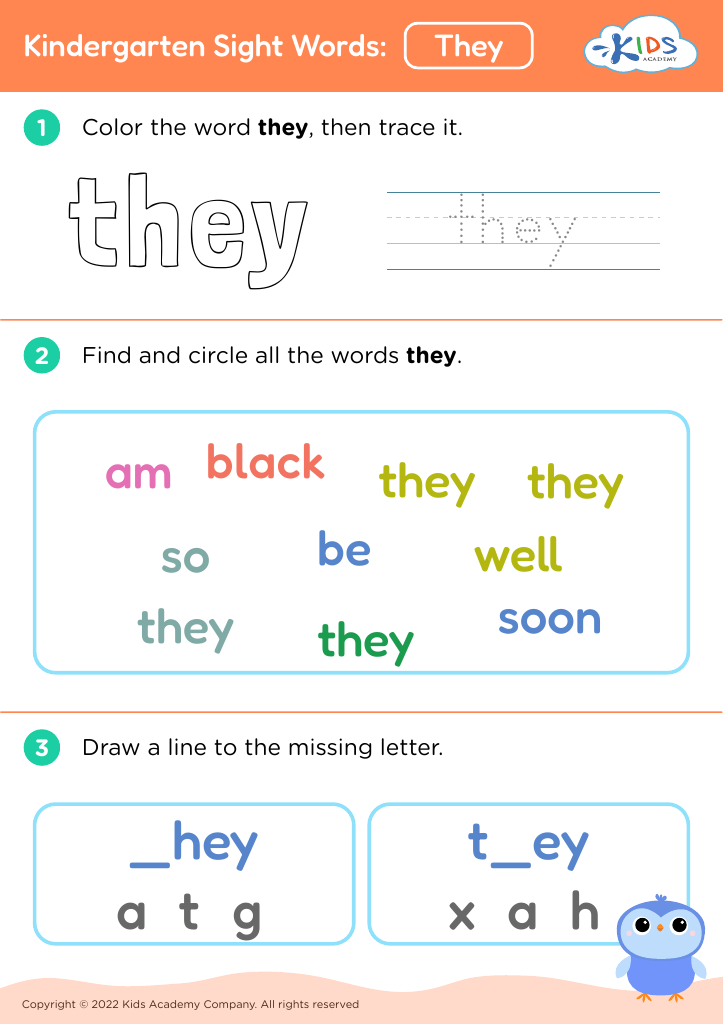





.jpg)


Improving reading comprehension and building vocabulary for children aged 5-8 are essential for several compelling reasons. First and foremost, a strong foundation in reading skills sets the stage for lifelong learning. At this age, children are transitioning from learning to read to reading to learn, making it crucial for them to understand and engage with the text. Comprehensive reading skills enhance their ability to grasp intricate ideas and concepts, facilitating academic success in all subjects.
Furthermore, building vocabulary enriches a child’s language proficiency, helping them express thoughts and feelings more articulately. A robust vocabulary makes reading more enjoyable and less frustrating, leading to increased motivation and enthusiasm for literature. When children encounter new words and learn to use them in context, their overall communication skills improve, fostering better social interactions and relationships.
Additionally, comprehension skills and vocabulary development are correlated with higher performance in standardized tests and assessments later in their educational journey. Parents and teachers play vital roles in this process by providing supportive environments, encouraging reading at home and in the classroom, and selecting age-appropriate and engaging materials. By prioritizing these critical areas, they can empower young learners to become confident, competent readers and critical thinkers ready for future academic challenges.








