Moral lesson understanding Building Vocabulary Worksheets for Ages 5-8
3 filtered results
-
From - To
Our "Moral Lesson Understanding Building Vocabulary Worksheets" for ages 5-8 are designed to enhance young learners' vocabulary while instilling valuable moral lessons. Engaging stories and activities help children grasp essential values like honesty, kindness, and responsibility. These worksheets combine comprehensive reading tasks with practical vocabulary exercises tailored to early readers. Through this enriching learning experience, young minds not only build their language skills but also develop a strong moral foundation. Ideal for parents and educators aiming to foster both language advancement and character growth, this resource ensures children gain essential life skills and a robust vocabulary. Explore today!
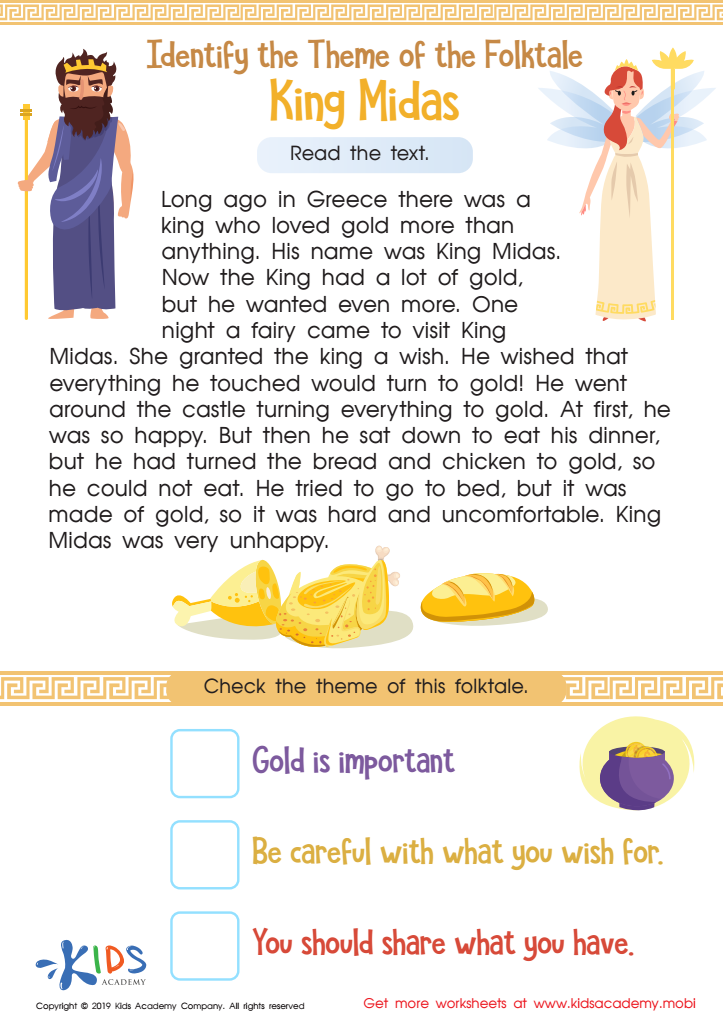
King Midas Worksheet
 Assign to My Students











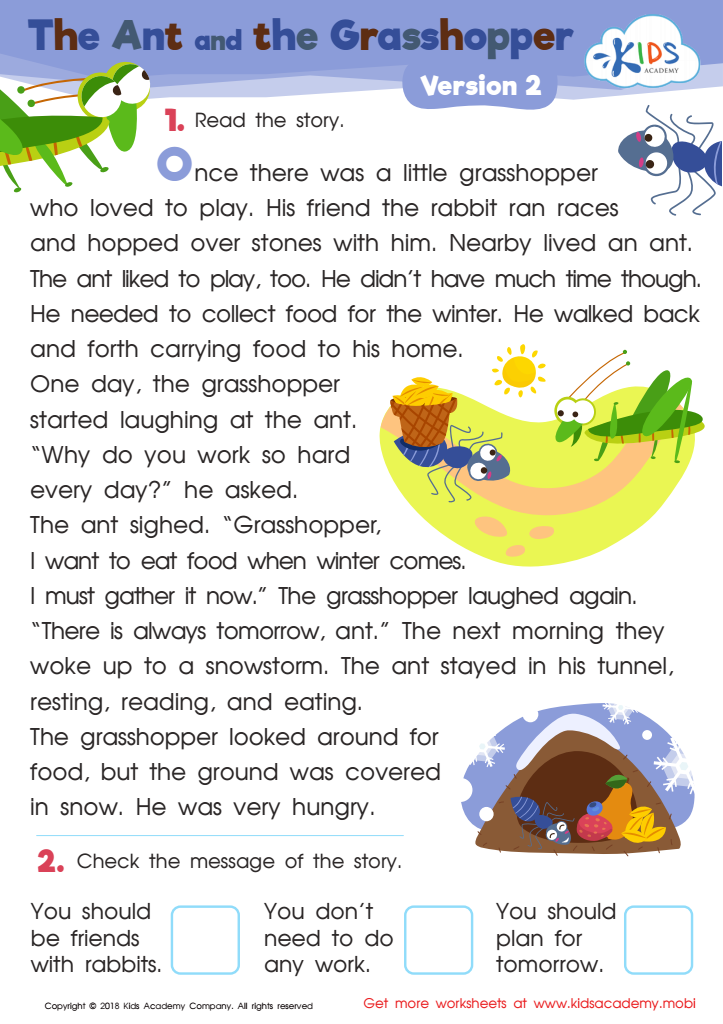
The Ant and The Grasshopper Version 2 Worksheet
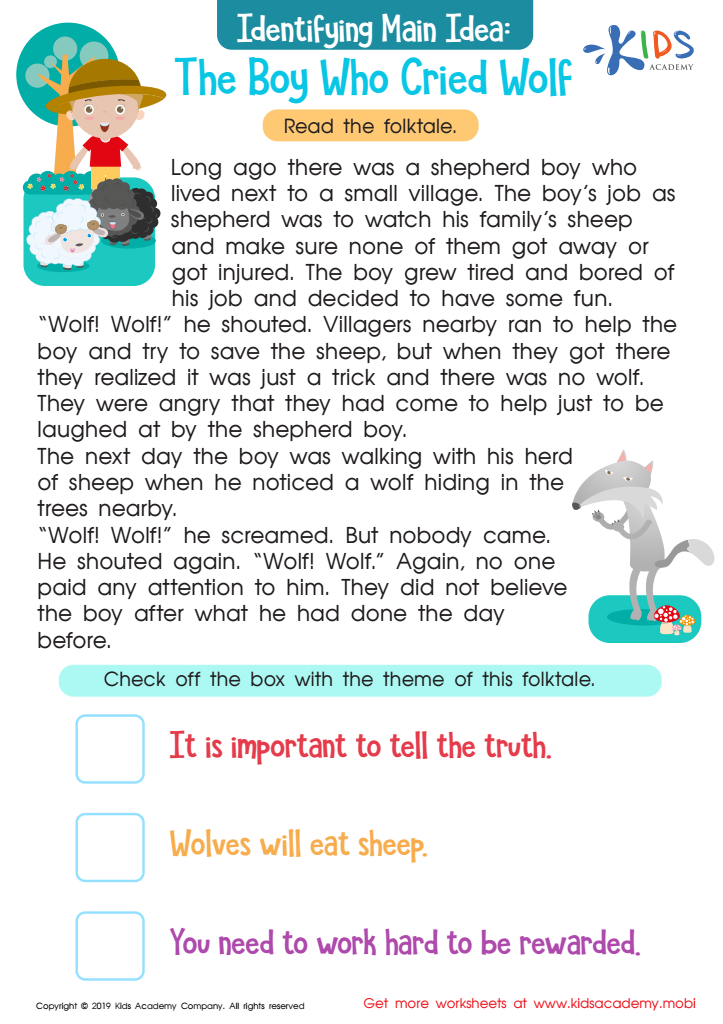
The Boy Who Cried Wolf Part 2 Worksheet








It's crucial for parents and teachers to prioritize moral lesson understanding and vocabulary building in children aged 5-8, as these elements are foundational to their overall development. During this formative stage, children are highly impressionable and eager to learn. Imparting moral lessons helps shape their sense of right and wrong, nurtures empathy, and instills values like honesty, kindness, and fairness. These principles guide their social interactions and decision-making, laying the groundwork for responsible and respectful behavior throughout their lives.
Building vocabulary is equally important as it expands a child's ability to express themselves, understand others, and engage with the world around them. A rich vocabulary fosters better reading comprehension, effective communication skills, and enhanced academic performance. With a strong vocabulary, children can articulate their thoughts, emotions, and needs more clearly, which improves their relationships and self-esteem.
Together, a deep understanding of moral lessons and a robust vocabulary equip children with the tools to navigate social complexities and academic challenges. They become more adept at handling conflicts, understanding diverse perspectives, and positively contributing to their communities. Parents and teachers who focus on these areas help children develop into well-rounded, empathetic, and articulate individuals.








