Phonics practice Building Vocabulary Worksheets for Ages 5-8
6 filtered results
-
From - To
Welcome to our Phonics Practice Building Vocabulary Worksheets for Ages 5-8! Designed to make learning fun, these engaging worksheets help young learners enhance their phonics skills while building a strong vocabulary. With colorful illustrations and relatable contexts, children will enjoy practicing essential sounds and words. These exercises support reading fluency and comprehension through interactive activities tailored for early learners. Ideal for home or classroom use, our carefully crafted worksheets encourage independent practice and provide opportunities for guided learning. Set your child on the path to literacy success with our phonics worksheets that make word mastery exciting and enjoyable!
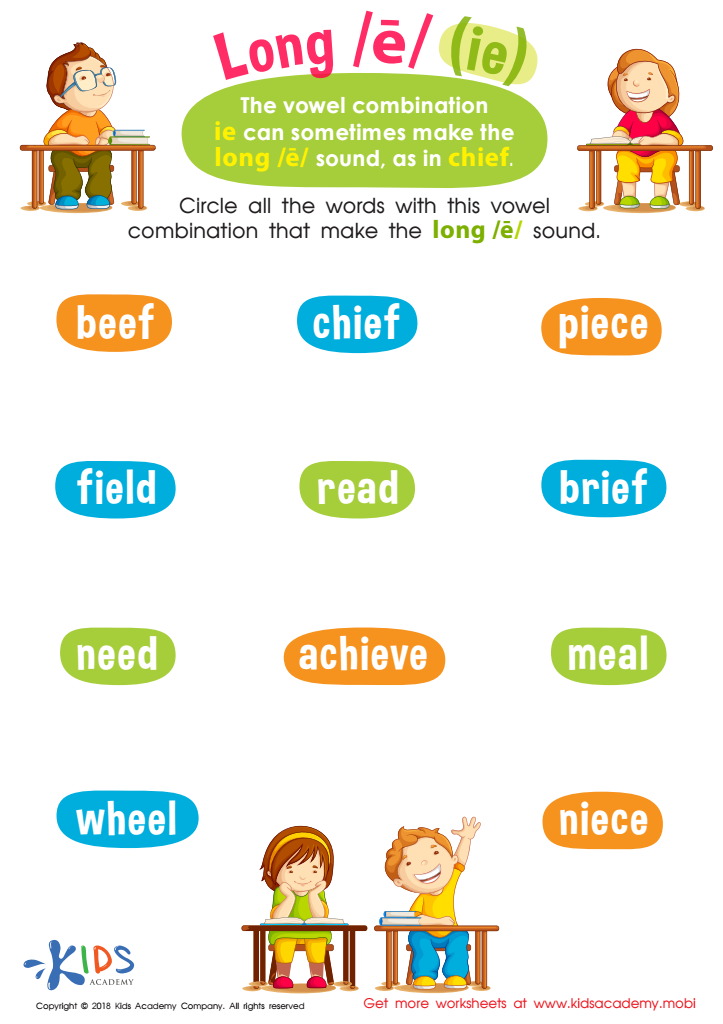
Reading: Long E and IE Worksheet
 Assign to My Students











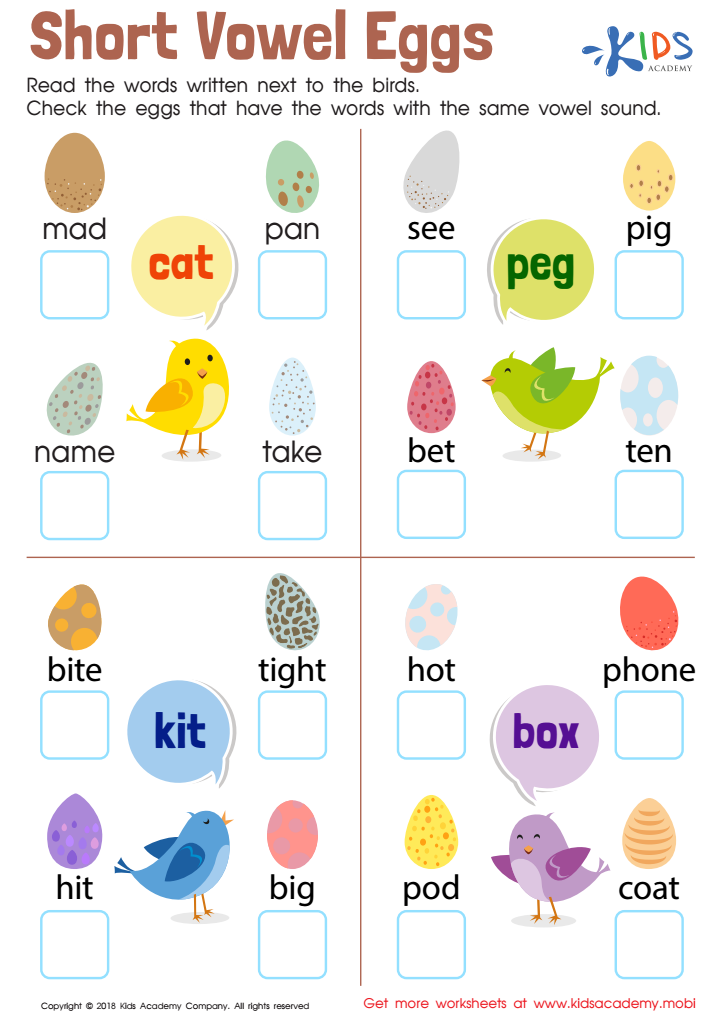
Short Vowel Eggs Worksheet
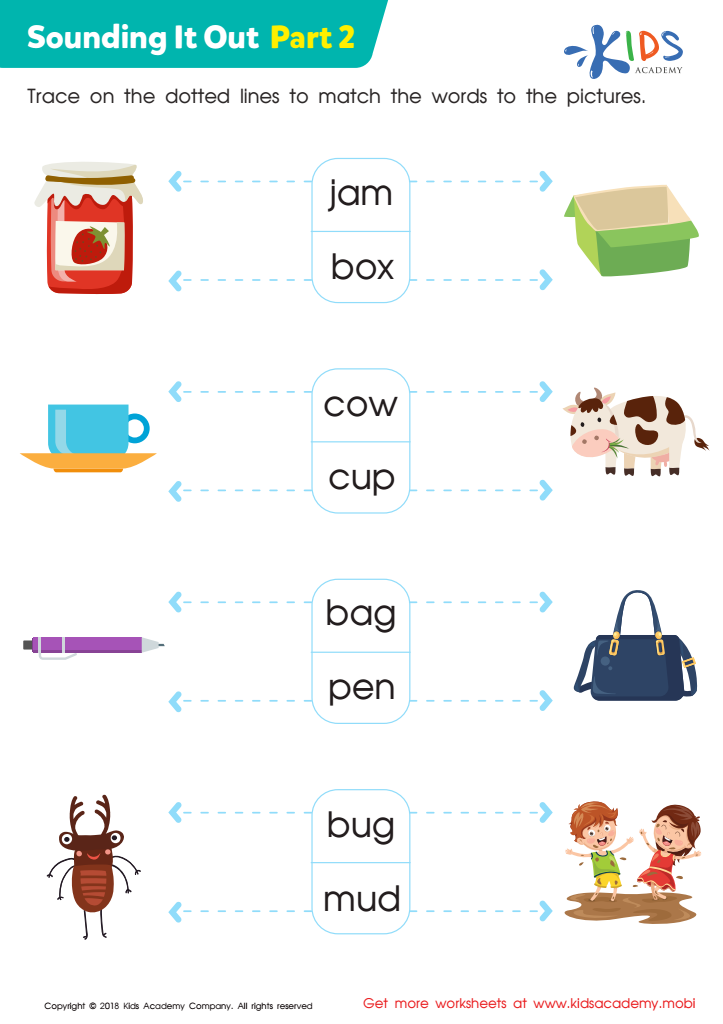
Sounding it Out: Part 2 Worksheet
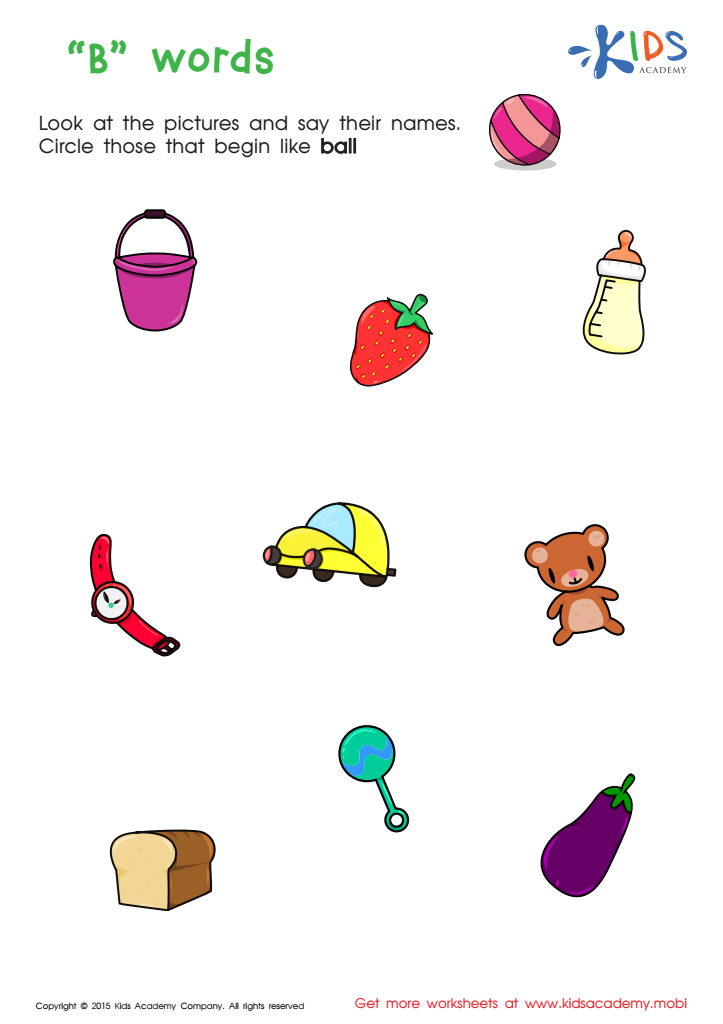
First Words Worksheet
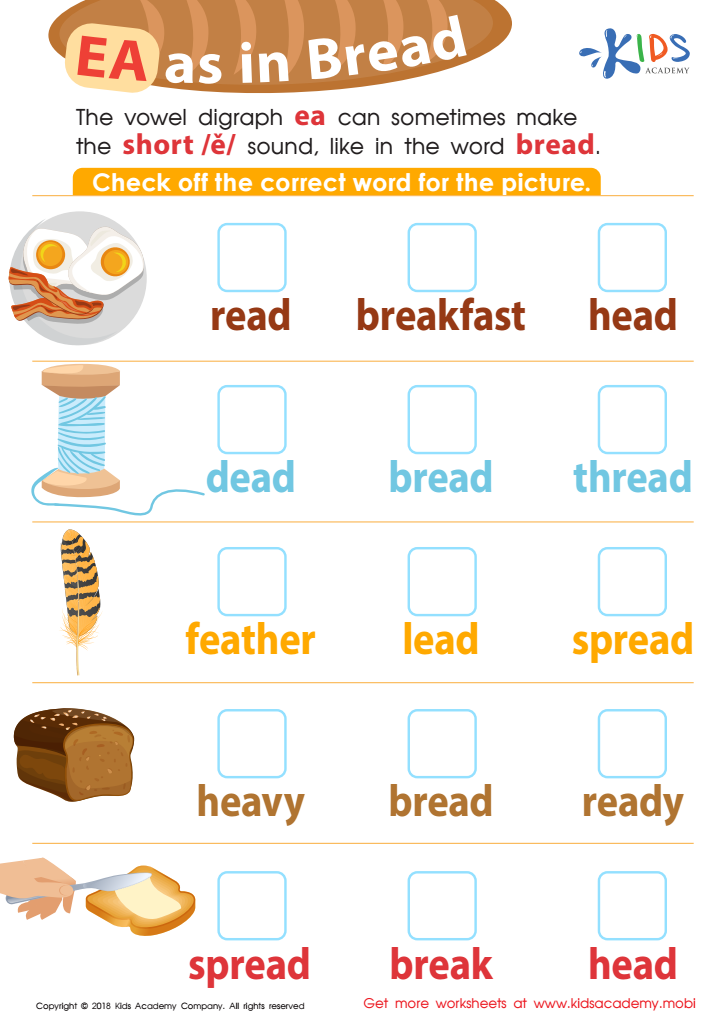
Reading: EA as in Bread Worksheet
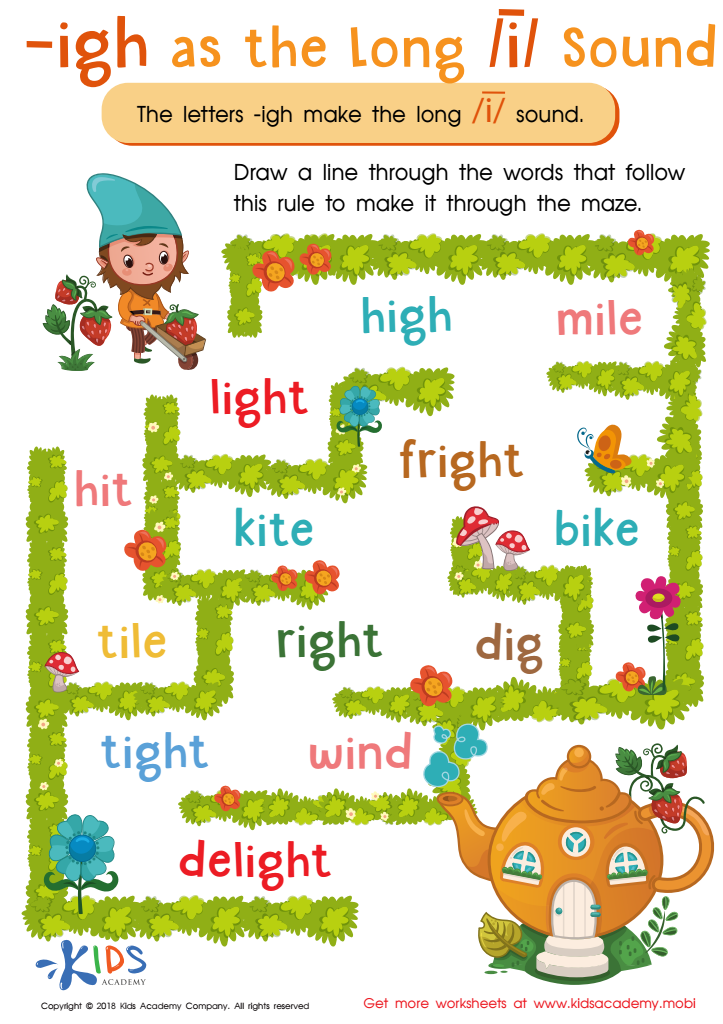
Reading: IGH as Long I Worksheet






.jpg)

Phonics practice and building vocabulary are crucial for children aged 5-8 as they form the foundation for reading and overall literacy development. During these formative years, children are typically learning to decode words and understand their meanings, skills essential for both academic success and lifelong learning.
Effective phonics instruction helps children identify the relationship between letters and sounds, which enhances their decoding skills. As they practice phonics, they become more confident readers, enabling them to tackle increasingly complex texts. This confidence fosters a love for reading, which is vital for personal and cognitive development.
Additionally, building vocabulary during this age is integral to comprehension. Children with a rich vocabulary can express themselves better, understand spoken and written language more easily, and engage in meaningful conversations. This helps them become effective communicators and critical thinkers.
Furthermore, strong reading skills established through phonics and vocabulary building support academic achievements across subjects, particularly in writing and oral presentations. When parents and teachers prioritize these literacy practices, they equip children with the tools needed for successful academic outcomes and encourage a lifelong passion for learning. Ultimately, investing time in phonics and vocabulary development lays the groundwork for a child’s educational journey.








