
Enhancing critical thinking Reading Worksheets for Ages 5-8
3 filtered results
Difficulty Level
Grade
Age
-
From - To
Subject
Activity
Standards
Discover our engaging "Enhancing Critical Thinking Reading Worksheets" designed for children ages 5-8. Tailored to foster creativity and analytical skills, these worksheets encourage young learners to think beyond the text. Each activity promotes interpretation, evaluation, and comprehension through fun exercises that challenge students to ask questions and make inferences. Perfect for educators and parents, these resources not only support reading development but also cultivate essential problem-solving skills. With varied themes and interactive formats, our worksheets make critical thinking enjoyable, helping children build a strong foundation for lifelong learning. Enhance your child's reading journey today with our effective and engaging materials!
Favorites
With answer key
Interactive
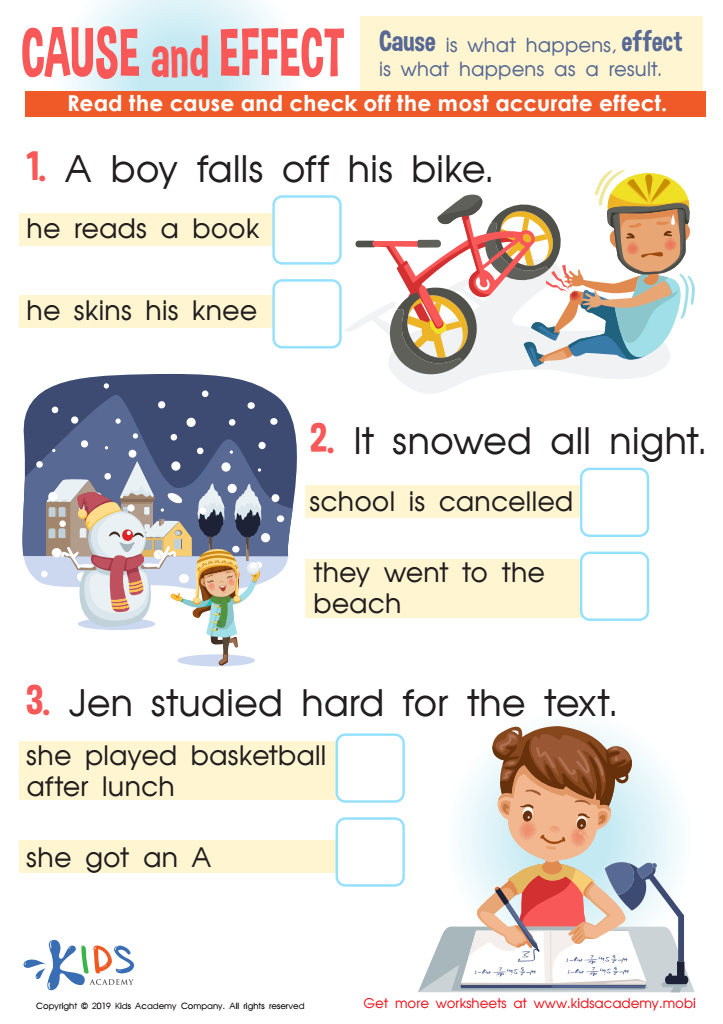
Cause And Effect Worksheet
Help your kids understand cause and effect with this worksheet. Explain that cause is what happens, and effect is the result of an action or event. Ask if they understand, then direct them to read the cause in the pictures and choose the most accurate effect from the options.
 Assign to My Students
Cause And Effect Worksheet
Worksheet
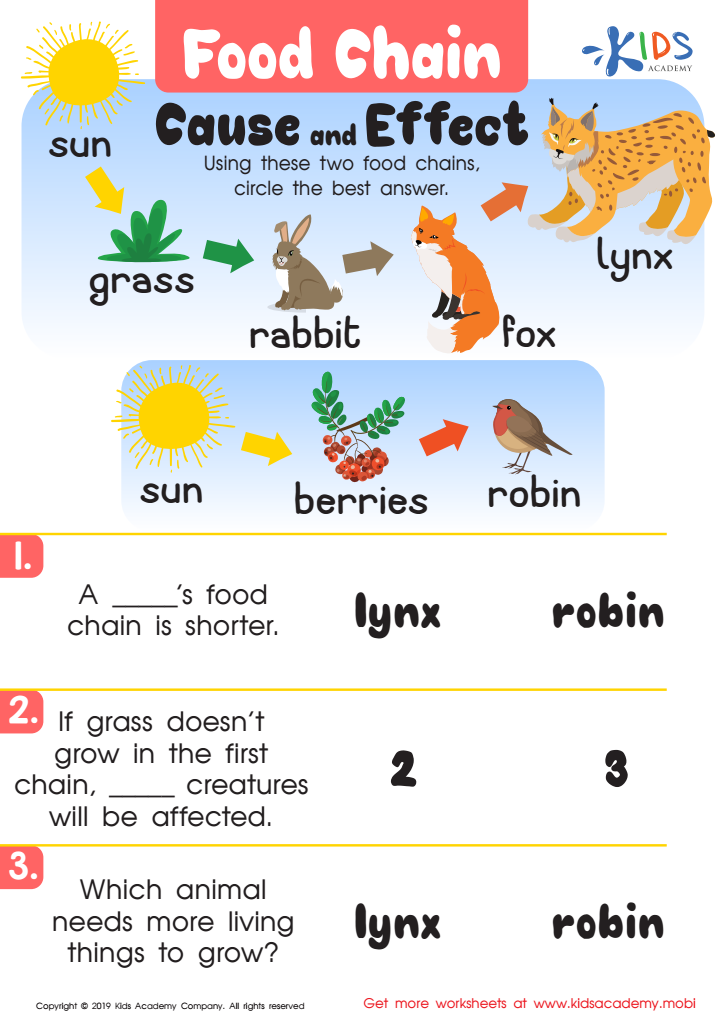
Food Chain Cause Worksheet
Help your little learner analyze ecosystems and compare food chains with this Kids Academy worksheet! Kids will compare a carnivore's and herbivore's food chain; which is longer and why? Questions at the bottom of the page will help them compare and circle the best answers. A great way to understand animal food chains!
Food Chain Cause Worksheet
Worksheet
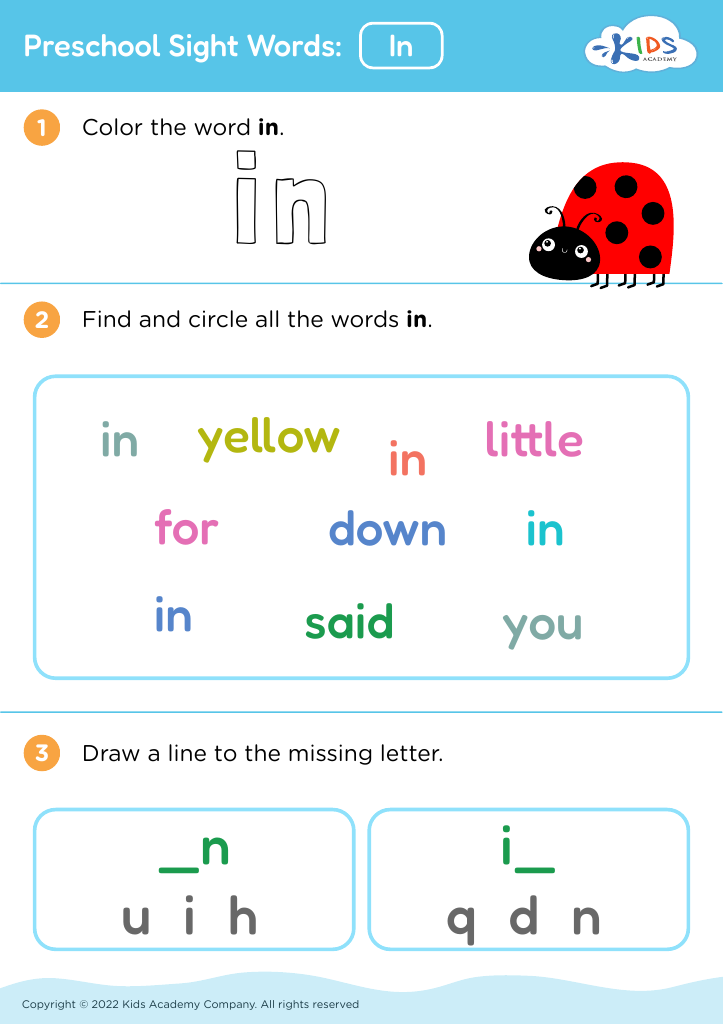
Learning Skills
Join Kids Academy for Free
Who is primarily going to use this learning content?








Enhancing critical thinking in reading for children ages 5-8 is crucial for their overall cognitive development. At this formative stage, children's brains are highly receptive to learning and developing essential skills that will serve them throughout their lives. Critical thinking empowers young readers to analyze, question, and evaluate the information presented in texts, encouraging them to move beyond surface-level understanding.
When parents and teachers prioritize critical thinking in reading, they foster curiosity and a love of learning. Children that engage with texts critically become adept at making connections, recognizing different perspectives, and solving problems creatively. These skills are foundational not only for academic success but also for social-emotional development, as children learn to express opinions, listen to others, and engage in constructive discussions.
Moreover, critical thinking skills can contribute to improved literacy, as children become better equipped to comprehend complex stories, identify main ideas, and infer meaning from context. In an increasingly complex world, these cognitive skills are essential for informed citizenship and adaptability.
By encouraging critical thinking in reading, parents and teachers foster independent thinkers, preparing them not just for school, but for their roles as thoughtful, engaged members of society. Nurturing these skills early lays the groundwork for lifelong learning and informed decision-making.








