Fraction simplification Reading Worksheets for Ages 5-8
16 filtered results
-
From - To
Discover our engaging Fraction Simplification Reading Worksheets designed for ages 5-8! These printable resources guide young learners through the basics of fractions by combining colorful visuals with simple explanations, ensuring a fun and educational experience. Perfect for early grade students, our worksheets help build a strong mathematical foundation. These activities bolsters reading comprehension and numerical skills, enhance problem-solving abilities, and boost confidence. Whether used in the classroom or at home, these resources support independent learning and make mastering fractions a breeze. Make learning enjoyable and effective with our expertly crafted Fraction Simplification Reading Worksheets!
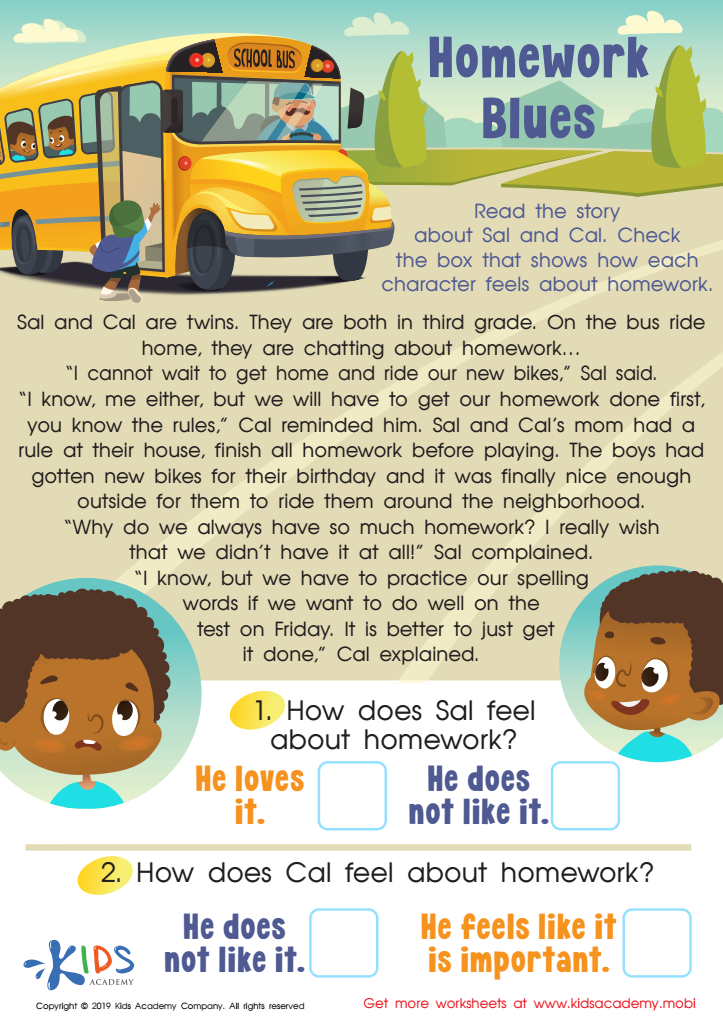
Homework Blues Worksheet
 Assign to My Students
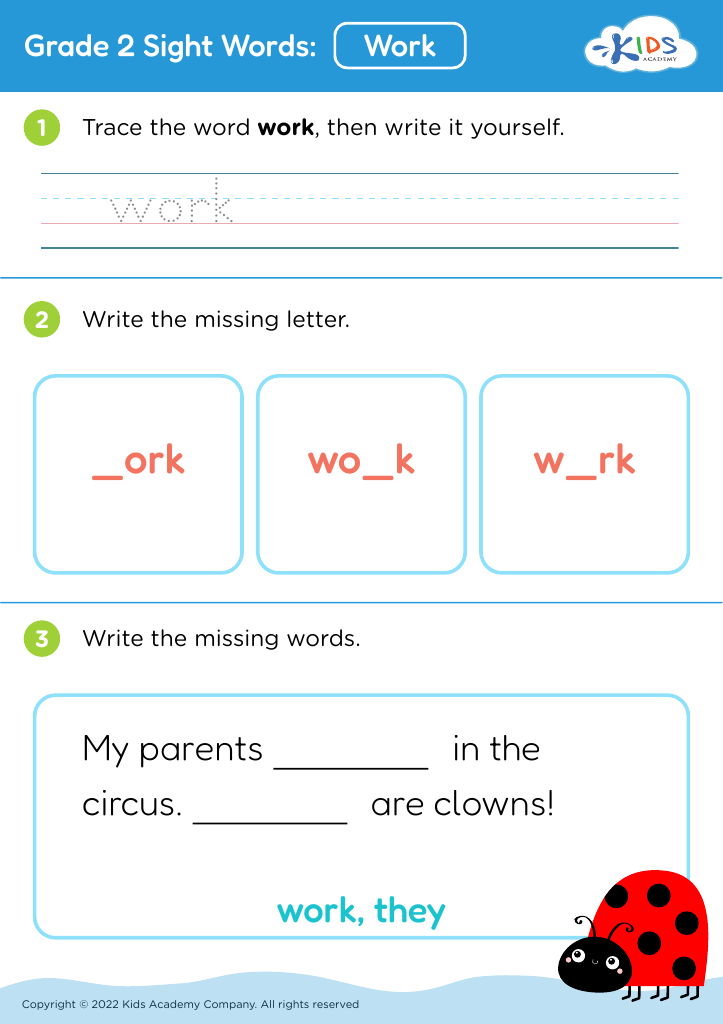
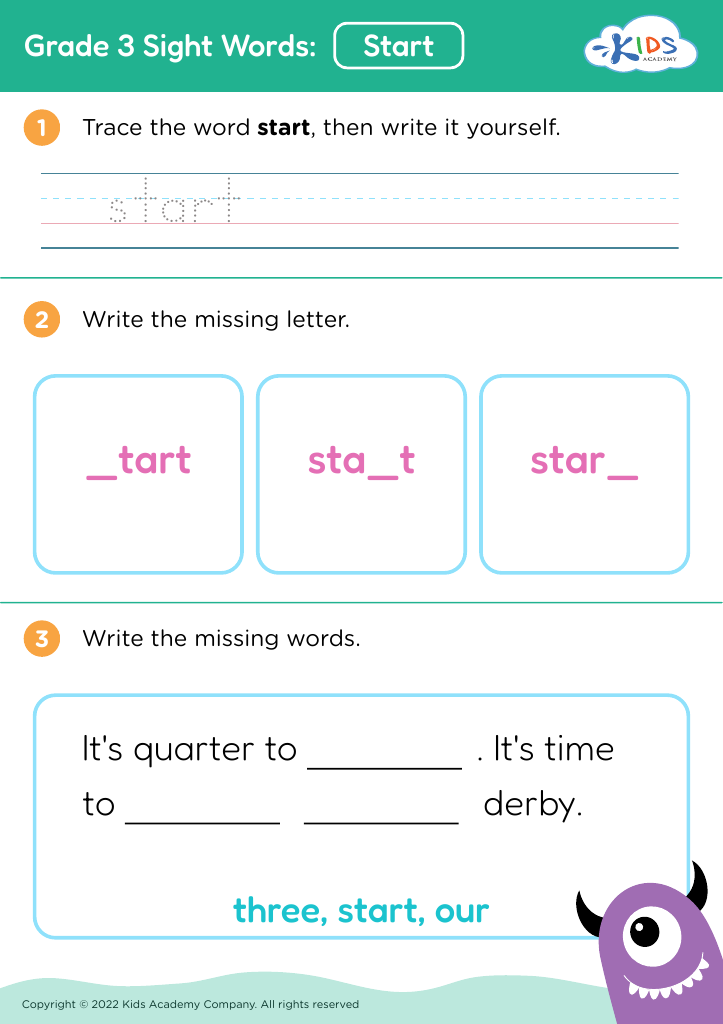
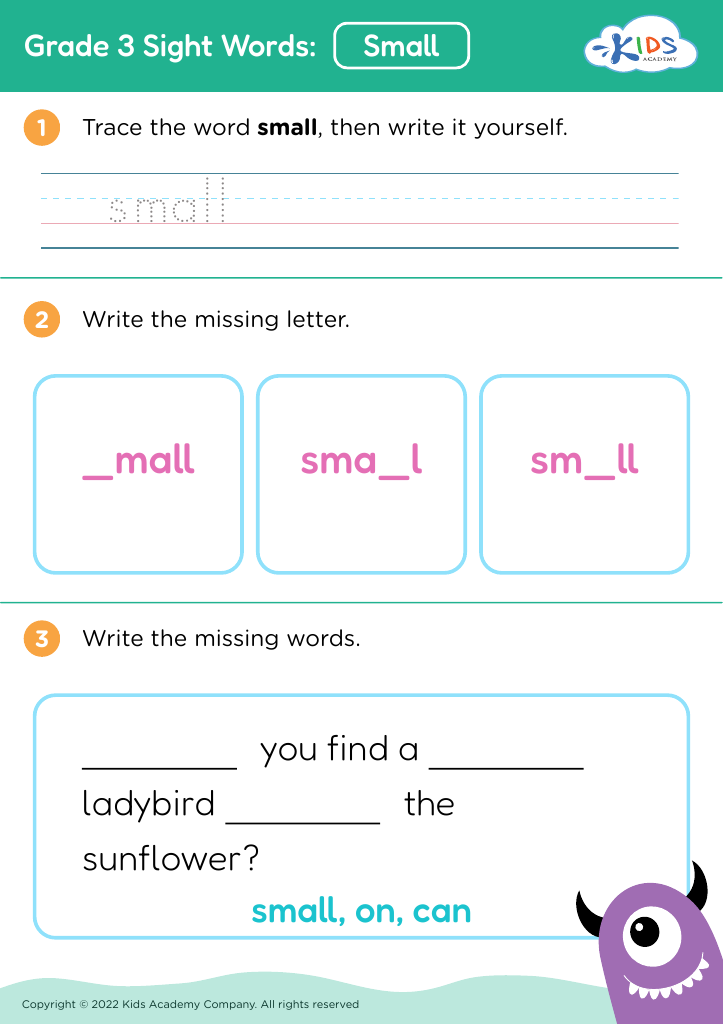







Understanding fraction simplification is crucial for young learners aged 5-8, as it lays the foundation for broader mathematical concepts they'll encounter later. During these formative years, children develop critical thinking and problem-solving skills. Simplifying fractions requires recognizing relationships and patterns, which enhances these cognitive abilities.
Mastering this skill early accelerates their mathematical confidence and diminishes anxiety related to more complex operations they'll face in subsequent grades. Moreover, fractions are pervasive in everyday life—from cooking to playing games—so an early grasp of simplification translates to practical, lifelong skills.
For parents and teachers, creating a supportive and engaging learning environment can cultivate a positive attitude towards math. Using visual aids, relatable examples, and interactive activities not only makes learning fractions fun, but also relevant. Parents and teachers alike can monitor progress and identify any misconceptions early, offering timely support.
Ultimately, focusing on fraction simplification during this crucial developmental stage equips children with foundational knowledge, love for learning, and an eagerness to tackle more advanced math problems, making it a win-win for both educators and parents. Investing in this aspect of their education is an investment in their future academic and real-world success.








