Math problem-solving Reading Worksheets for Ages 5-8
7 filtered results
-
From - To
Enhance your child's learning experience with our engaging Math Problem-Solving Reading Worksheets for ages 5-8. Designed to develop strong mathematical and reading skills, these worksheets combine fun story problems with essential math concepts. Children will explore various scenarios, improving their ability to interpret and solve problems while honing their reading comprehension. Perfect for parents and teachers, our printable worksheets are aligned with educational standards and make learning enjoyable. Empower your young learners with the tools they need to succeed in math and reading, setting a strong foundation for their future education. Start fostering critical thinking and problem-solving skills today!
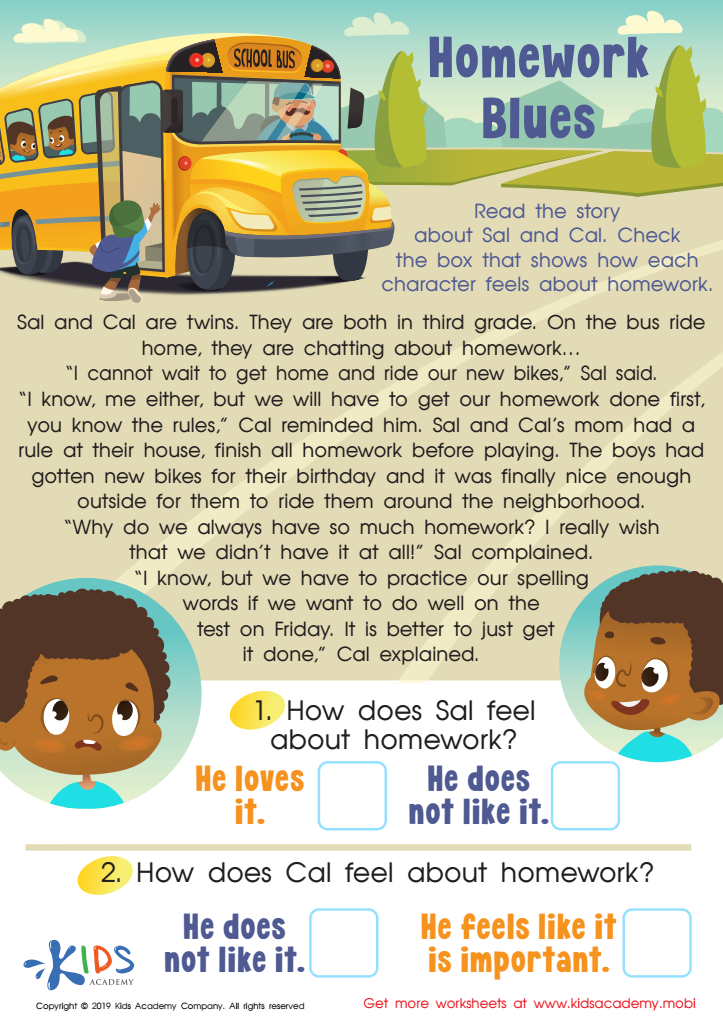
Homework Blues Worksheet
 Assign to My Students
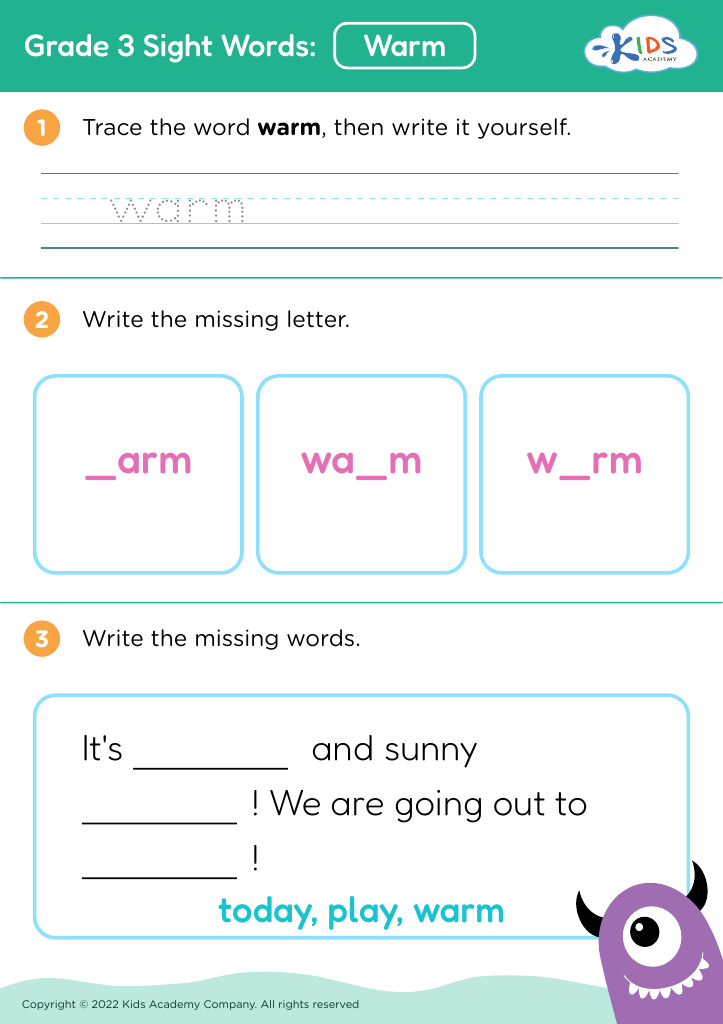
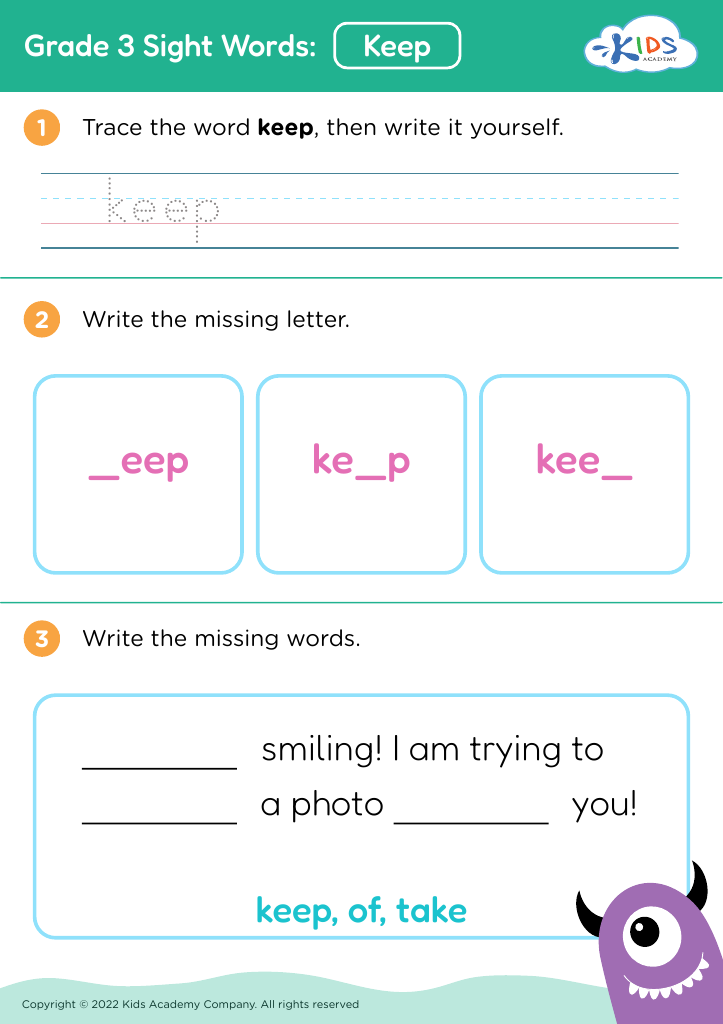
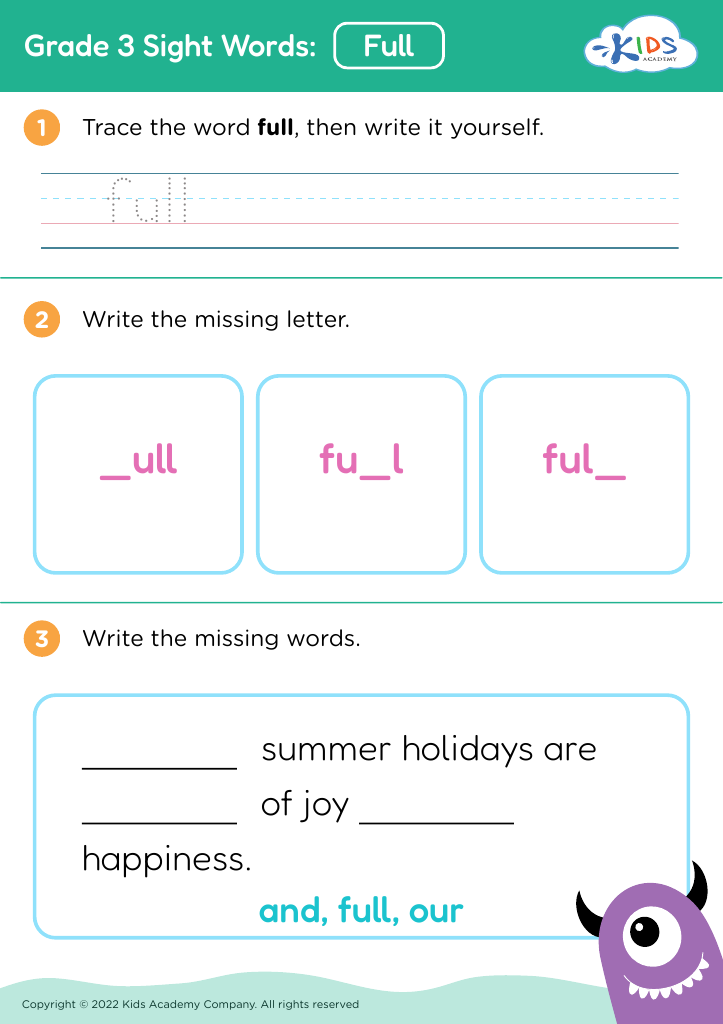




.jpg)
.jpg)


Math problem-solving is crucial for children aged 5-8, as it forms the foundation for their cognitive development and everyday practical skills. Engaging with math problems helps children enhance critical thinking, logical reasoning, and analytical skills. These abilities are essential not just in math, but in various aspects of life, from making informed decisions to solving real-world challenges.
Reading skills are equally important; understanding math word problems requires strong literacy. When children can confidently read and comprehend problems, they are more likely to develop a positive attitude toward math. This age group is particularly receptive to learning, and fostering a love for problem-solving can lead to lifelong skills.
Teachers and parents play a vital role in this journey. By emphasizing the importance of problem-solving and providing supportive environments—both at home and in the classroom—they can encourage children to explore, ask questions, and build resilience in the face of challenges.
Ultimately, helping children master math problem-solving contributes to their overall academic success and prepares them for future learning opportunities. Introducing engaging activities can make math enjoyable, allowing children to view it as a fun and rewarding journey rather than a daunting task.








