Pattern recognition Reading Worksheets for Ages 5-8
4 filtered results
-
From - To
Enhance your child's reading skills with our engaging Pattern Recognition Reading Worksheets designed for ages 5-8. These worksheets focus on helping young learners identify and analyze patterns in letters, words, and sentences, a foundational skill crucial for effective reading. Fun and interactive activities encourage creativity while reinforcing essential language concepts. Each worksheet is thoughtfully crafted to cater to diverse learning styles, keeping children stimulated and motivated. Perfect for both classroom and homeschool environments, our resources aim to make learning enjoyable. Foster a love for reading and support your child's literacy development with these invaluable tools today!
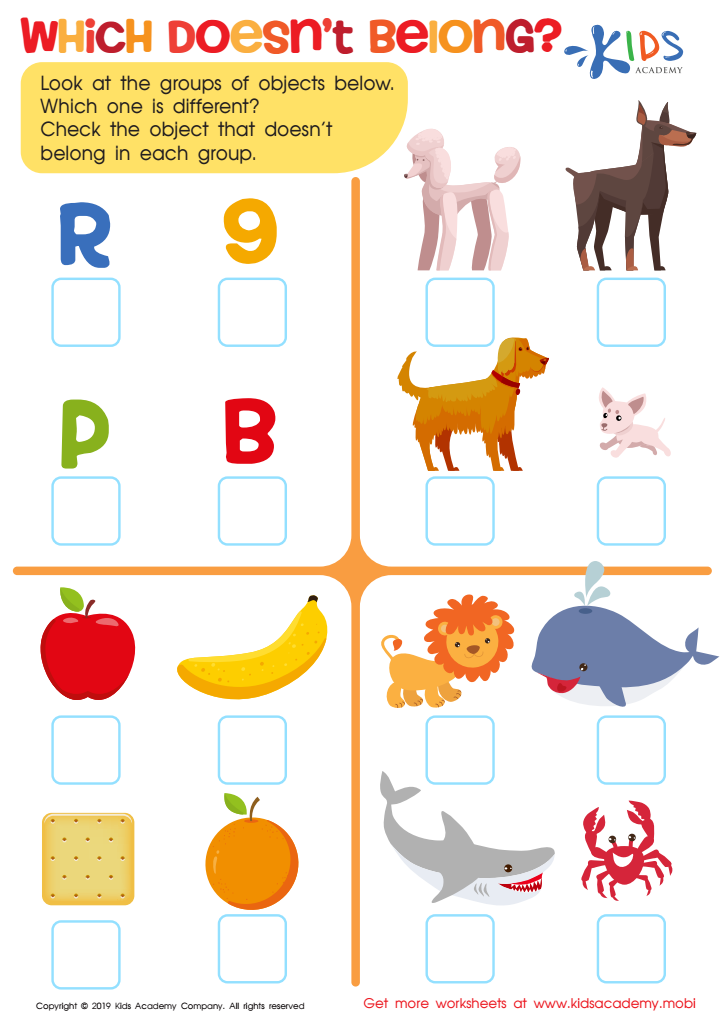
Which Doesn't Belong? Worksheet
 Assign to My Students
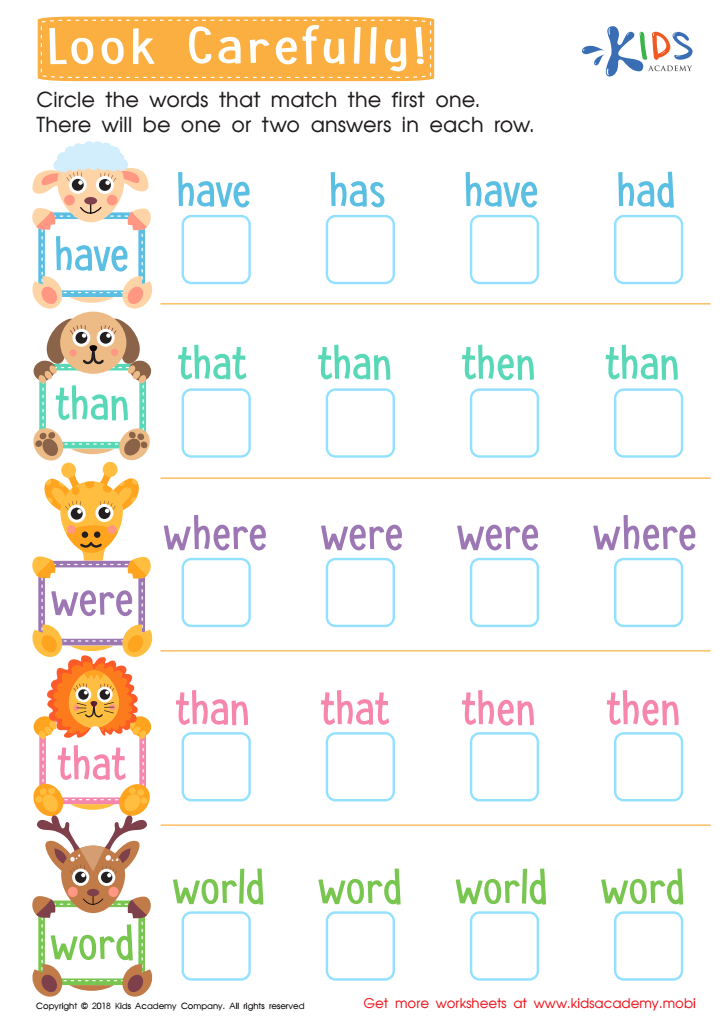
Look Carefully Worksheet
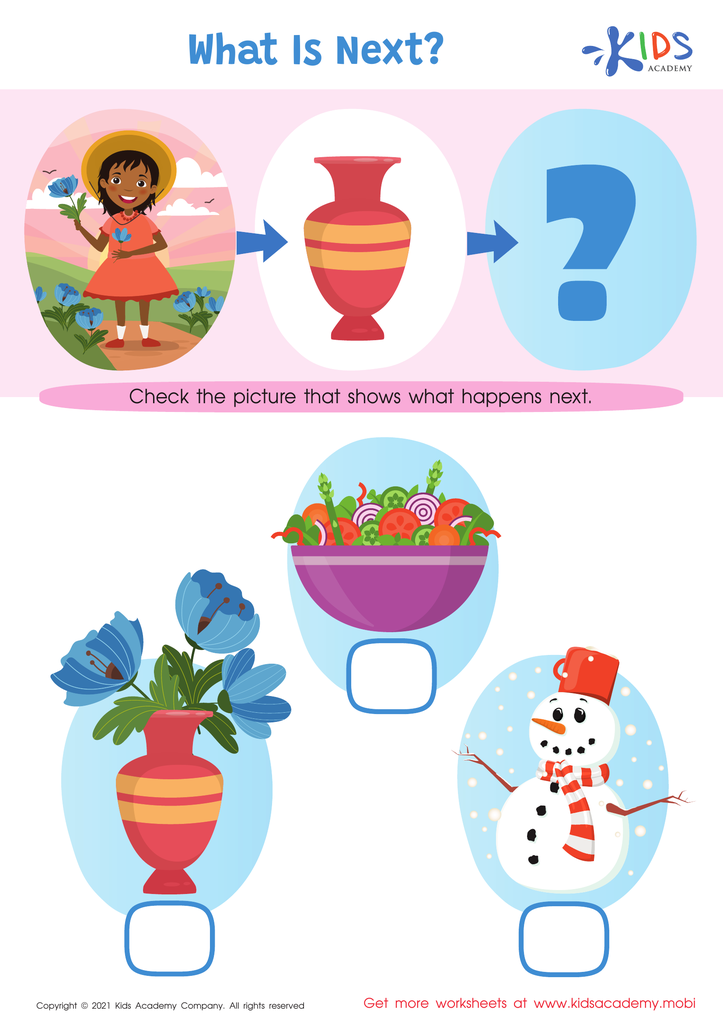
What is Next? Worksheet
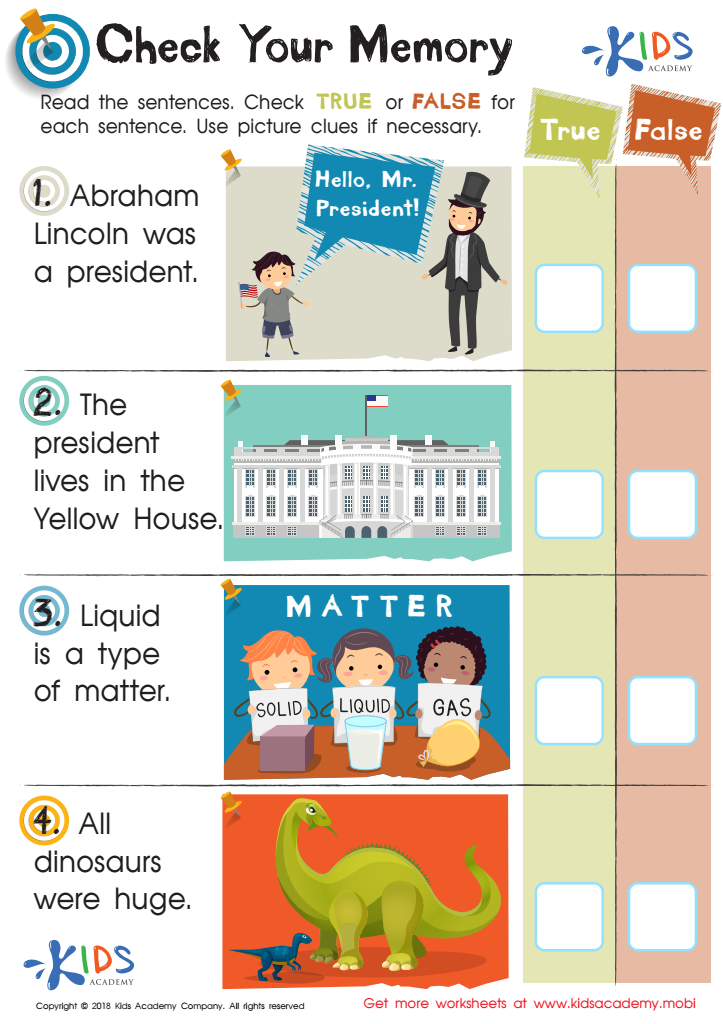
Check Memory Worksheet







Pattern recognition reading is a crucial component of literacy development for children aged 5-8. During these formative years, children are not just learning to read; they are cultivating the foundational cognitive skills necessary for academic success. Understanding patterns helps young readers recognize familiar words, sounds, and sentence structures, ultimately enabling them to decode new vocabulary more effectively.
Parents and teachers should care about this approach because it promotes critical thinking and problem-solving abilities. By identifying patterns in text, children develop predictive skills that enhance comprehension; they learn to anticipate what comes next in a story or text, thus fostering engagement and confidence in their reading abilities. Additionally, recognizing patterns lays the groundwork for more advanced literacy skills, including phonics and fluency.
Moreover, children who master pattern recognition may experience greater enjoyment in reading, motivating them to pursue literacy outside of classroom settings. This passion for reading can lead to improved academic performance across subjects, as literacy is key to all areas of learning. Encouraging pattern recognition not only supports reading skills but also nurtures a child's overall cognitive development, empowering them to become lifelong learners. Therefore, parents and teachers must prioritize and incorporate pattern recognition in their literacy instruction.








