Rhyme recognition Reading Worksheets for Ages 5-8
5 filtered results
-
From - To
Discover our engaging Rhyme Recognition Reading Worksheets designed specifically for children ages 5-8! These printable activities are perfect for enhancing phonemic awareness and helping young learners develop essential reading skills. Each worksheet encourages kids to identify and match rhyming words through fun exercises, making learning enjoyable and interactive. Our carefully crafted content aligns with educational standards, ensuring a comprehensive approach to literacy. Perfect for use at home or in the classroom, these worksheets provide an excellent way to support early readers in building a strong foundation in language and comprehension. Unlock the joy of reading with our rhyme recognition resources today!
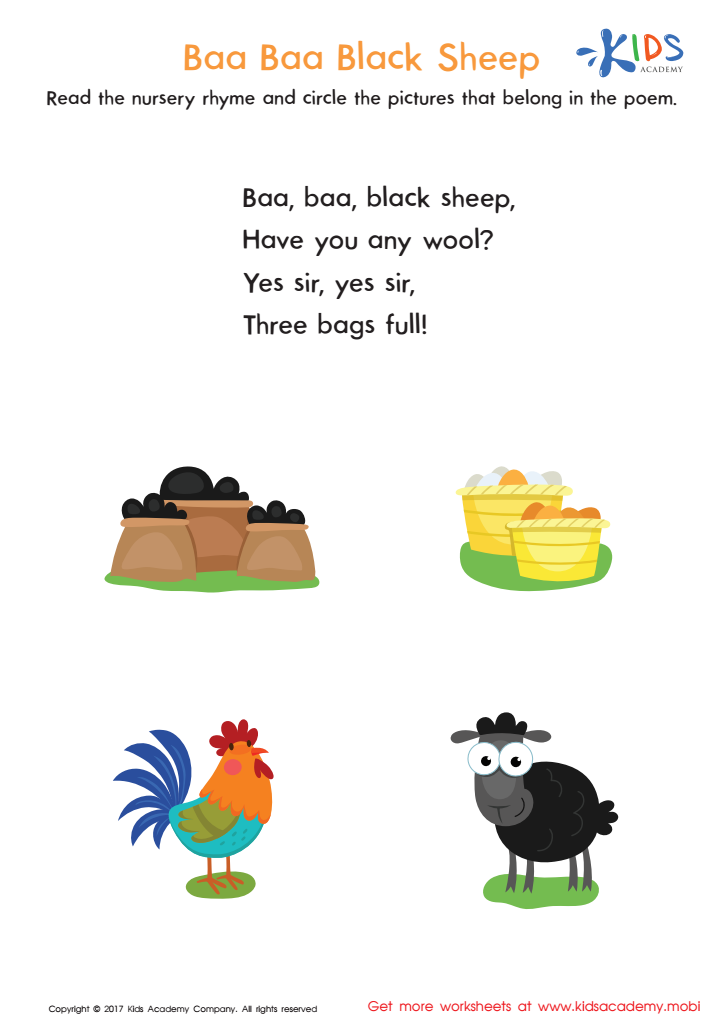
Baa Baa Black Sheep Printable
 Assign to My Students
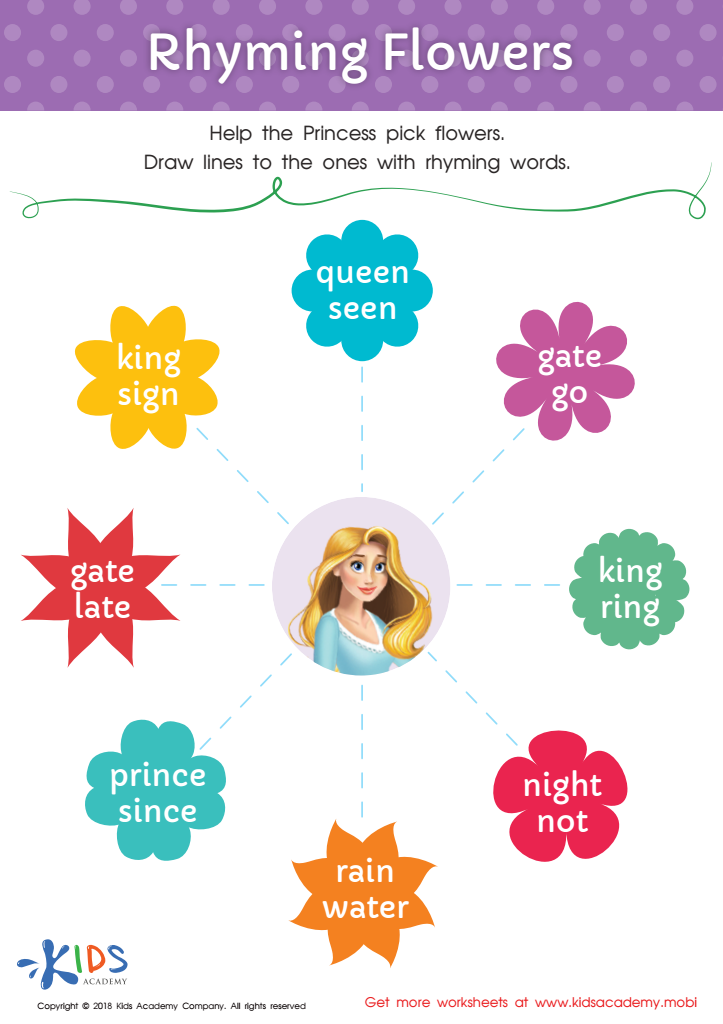
Rhyming Flowers Worksheet
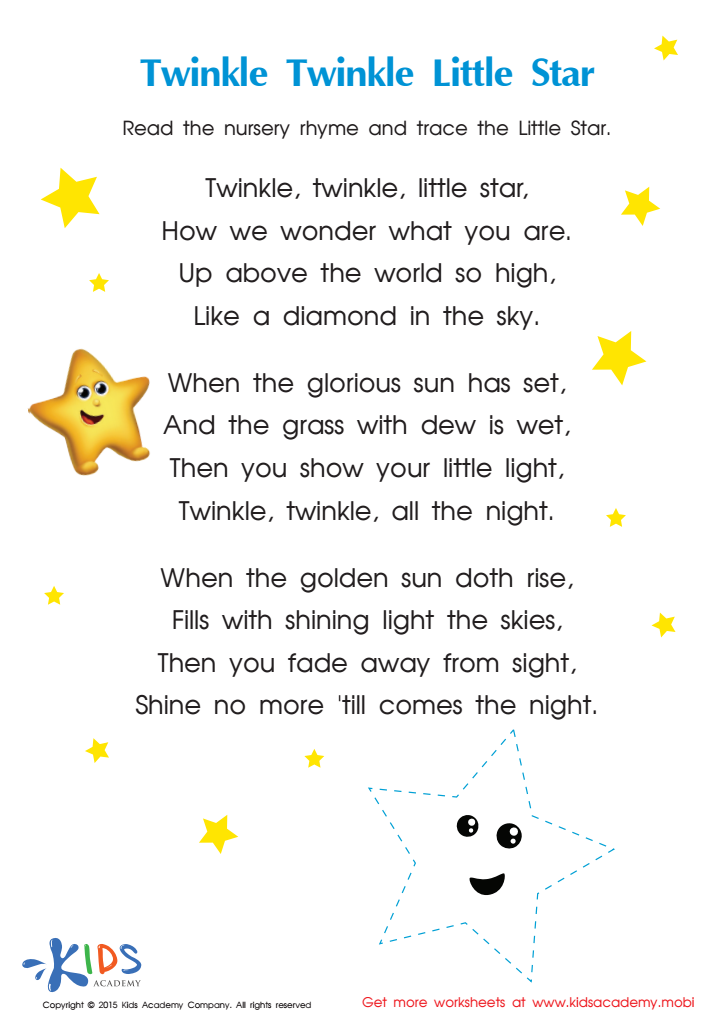
Nursery Rhymes: Twinkle Little Star Worksheet
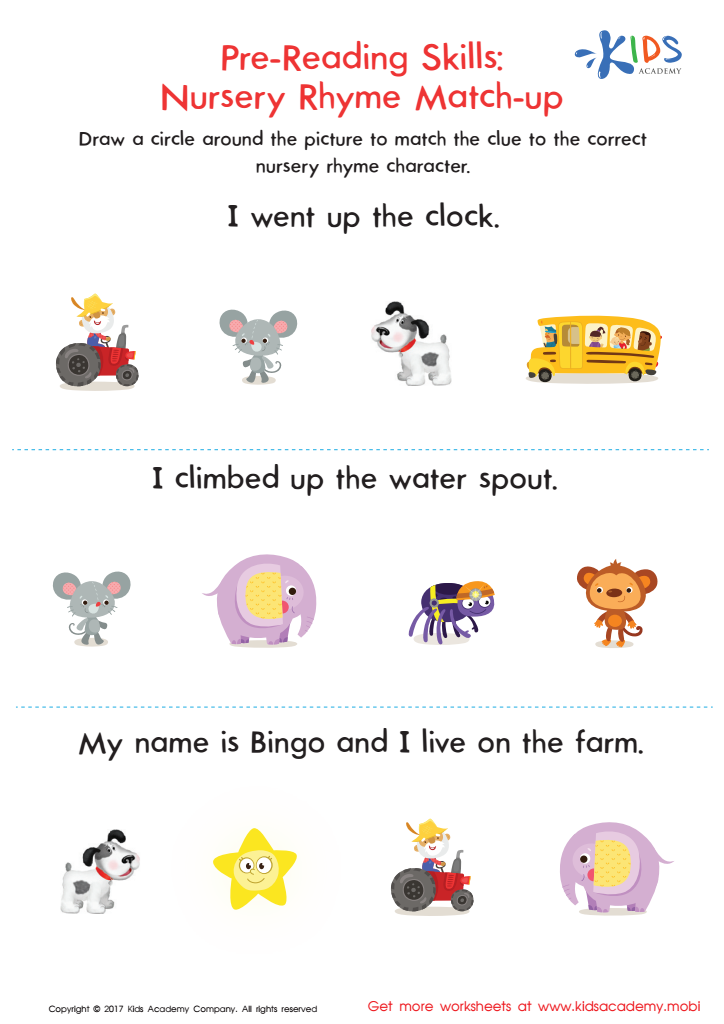
Nursery Rhyme Match–Up Worksheet
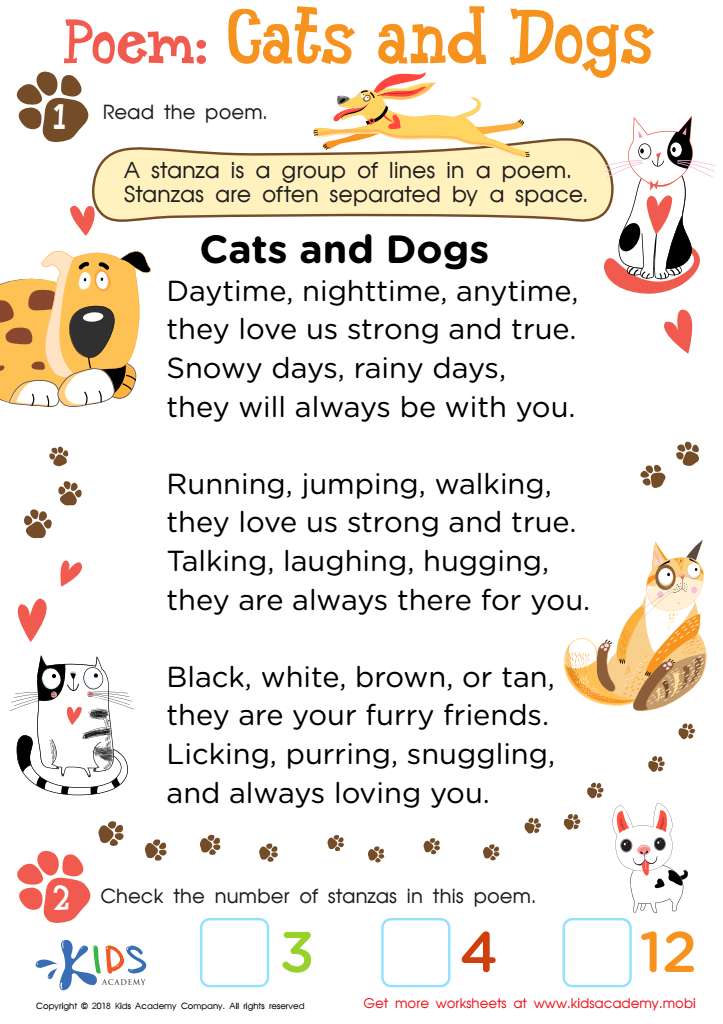
Poem: Cats and Dogs Worksheet



.jpg)



Rhyme recognition plays a critical role in the literacy development of children aged 5 to 8. At this early stage, children are cementing their understanding of sounds, words, and language patterns. When parents and teachers emphasize rhyme recognition, they enhance phonemic awareness, which is essential for reading success. Recognizing rhymes helps children understand how sounds work together to form words, facilitating their ability to decode and spell.
Moreover, rhyming activities make learning fun and interactive. Engaging children through songs, poems, and nursery rhymes fosters a love for language, stimulating curiosity and creativity. This playful exploration of sounds reinforces listening skills and makes it easier for children to grasp more complex phonetic concepts later in their education.
Rhyme recognition also supports vocabulary development as children encounter new words that often come in pairs or connected with a rhythmic pattern. A strong vocabulary helps kids comprehend readings better, resulting in improved written and oral communication skills. Overall, a focus on rhyme recognition not only aids reading proficiency but also lays the groundwork for lifelong literacy. Both parents and teachers play crucial roles in integrating these activities into daily routines, ensuring children become confident and competent readers.








