Understanding perspectives Reading Worksheets for Ages 5-8
3 filtered results
-
From - To
Unlock your child's reading potential with our "Understanding Perspectives" worksheets designed for ages 5-8. These engaging resources help young learners explore different viewpoints through fun activities, encouraging empathy and critical thinking. With colorful illustrations and age-appropriate content, these worksheets aid children in grasping various perspectives in stories and real-life situations. Each exercise promotes comprehension skills, enhancing their ability to connect with characters and understand narrative nuances. Ideal for both classroom and home use, our worksheets create an interactive environment that makes reading enjoyable. Encourage your little one to think deeply and appreciate diversity in perspectives today! Download now and start learning!
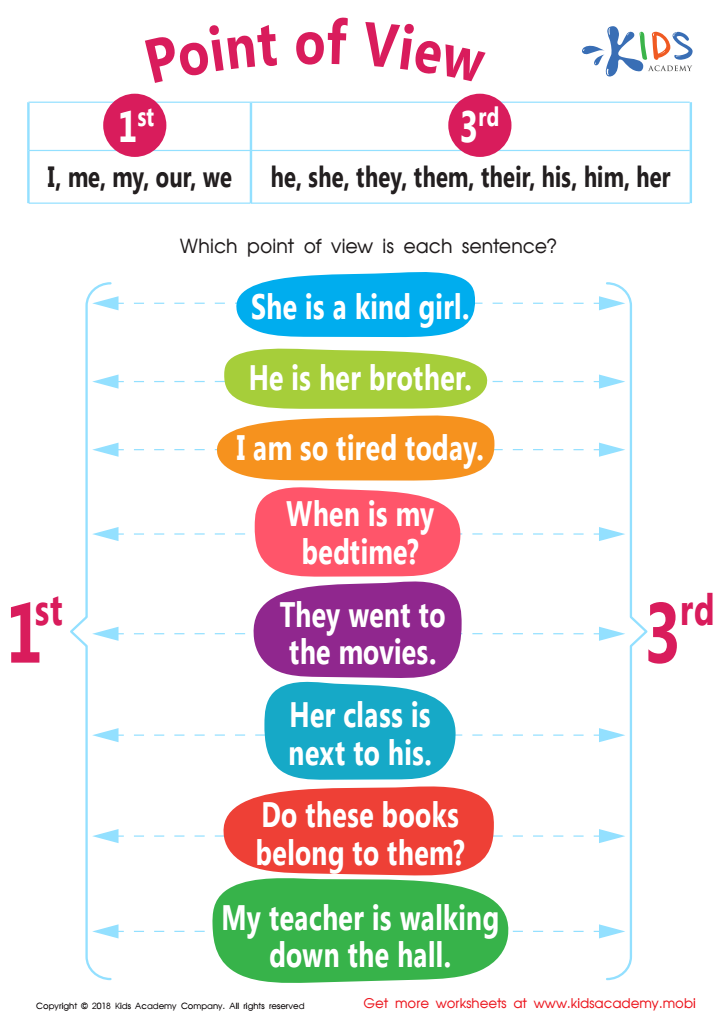
Point of View Worksheet
 Assign to My Students
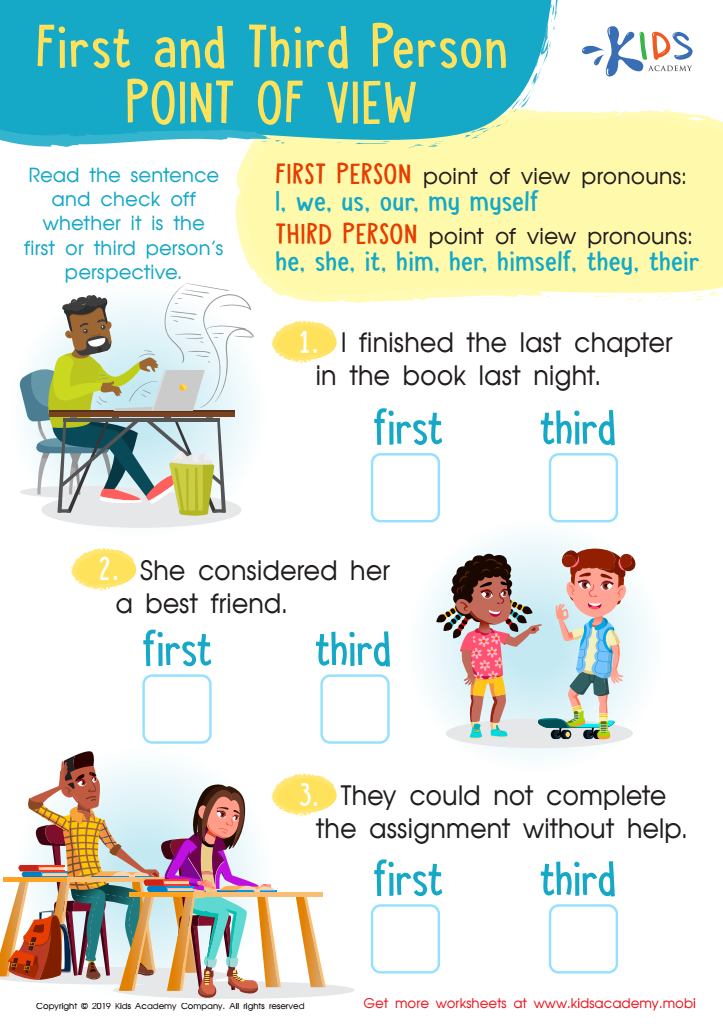
First and Third Person Point of View Worksheet
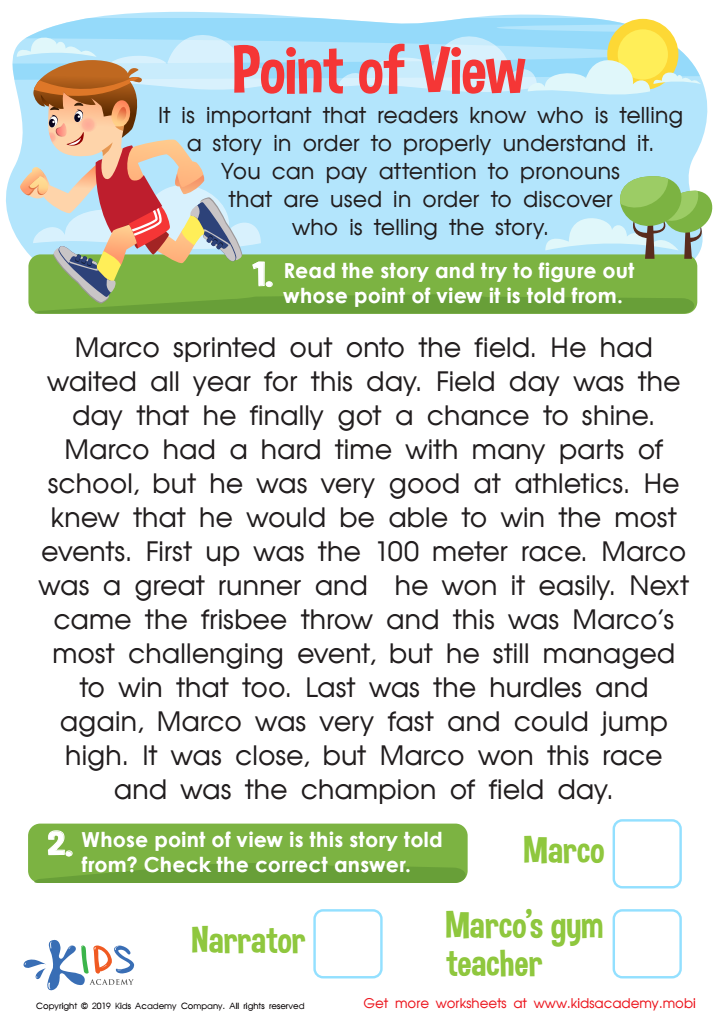
Point of View Worksheet







Understanding perspectives in reading is crucial for children aged 5-8 for several reasons, and both parents and teachers play vital roles in this development. At this stage, children are beginning to comprehend that characters in stories have different thoughts, feelings, and viewpoints. This ability to understand diverse perspectives not only enhances their reading comprehension but also nurtures empathy. As kids learn to see the world through others' eyes, they cultivate social skills that are essential in their interactions.
Moreover, developing this understanding can boost a child's critical thinking abilities. By analyzing characters’ motivations and responses, children learn to evaluate situations more thoughtfully, a skill that extends beyond literature into real-life scenarios.
For parents and teachers, engaging children in discussions about different perspectives can make reading more interactive and enjoyable. Encouraging questions about a character's choices or feelings can spark meaningful dialogue, reinforcing comprehension and communication skills. Ultimately, emphasizing the importance of understanding perspectives helps children become not only better readers but also compassionate individuals, fostering a positive classroom atmosphere and harmonious home life. Thus, supporting this aspect of literacy is foundational for holistic child development.








