Shape Recognition Reading Comprehension Worksheets for Ages 5-8
4 filtered results
-
From - To
Explore our Shape Recognition Reading Comprehension Worksheets designed for children ages 5-8. These engaging activities combine the essential skill of shape recognition with reading comprehension to create a well-rounded learning experience. Each worksheet features fun stories and interactive exercises that challenge kids to identify shapes while improving their reading and understanding skills. Perfect for early grades, these resources enhance cognitive abilities, vocabulary, and pattern recognition. Tailored to meet educational standards, our worksheets provide a foundation for future learning success, ensuring students are prepared for more advanced concepts. Foster creativity and critical thinking with our shape-themed reading comprehension worksheets today!
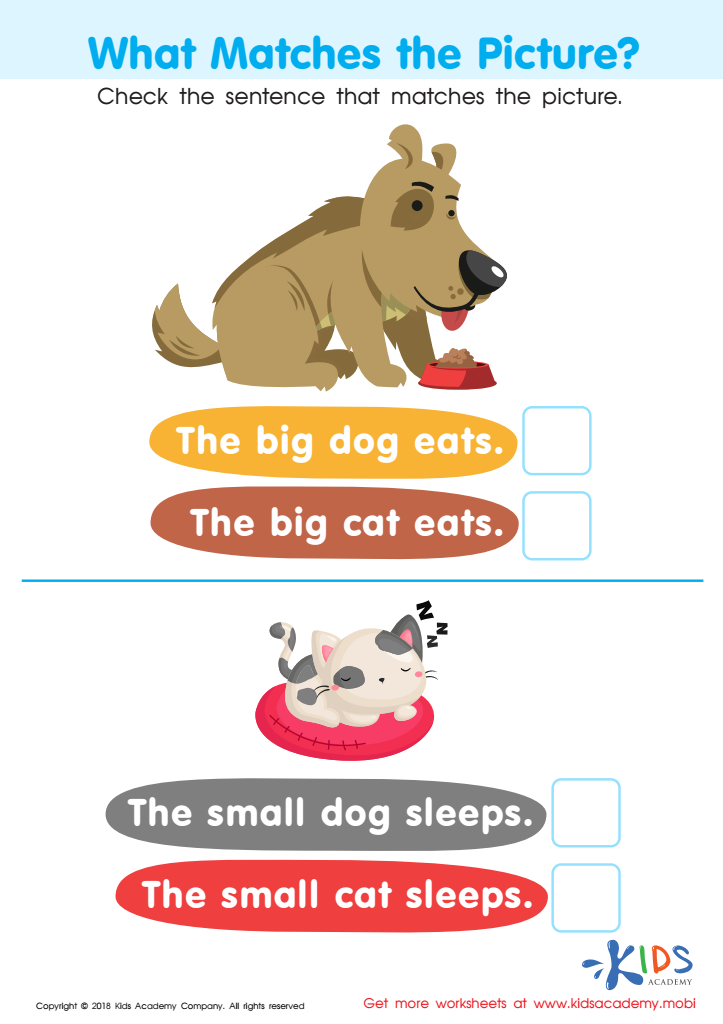
What Matches the Picture? Worksheet
 Assign to My Students
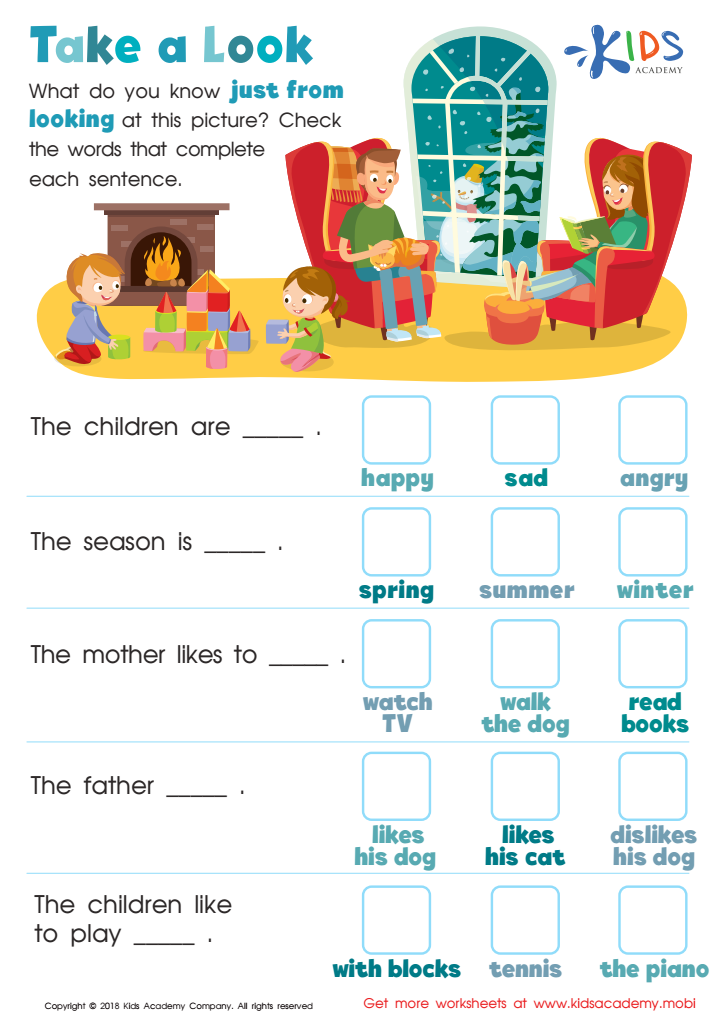
Take a Look - Part 1 Worksheet
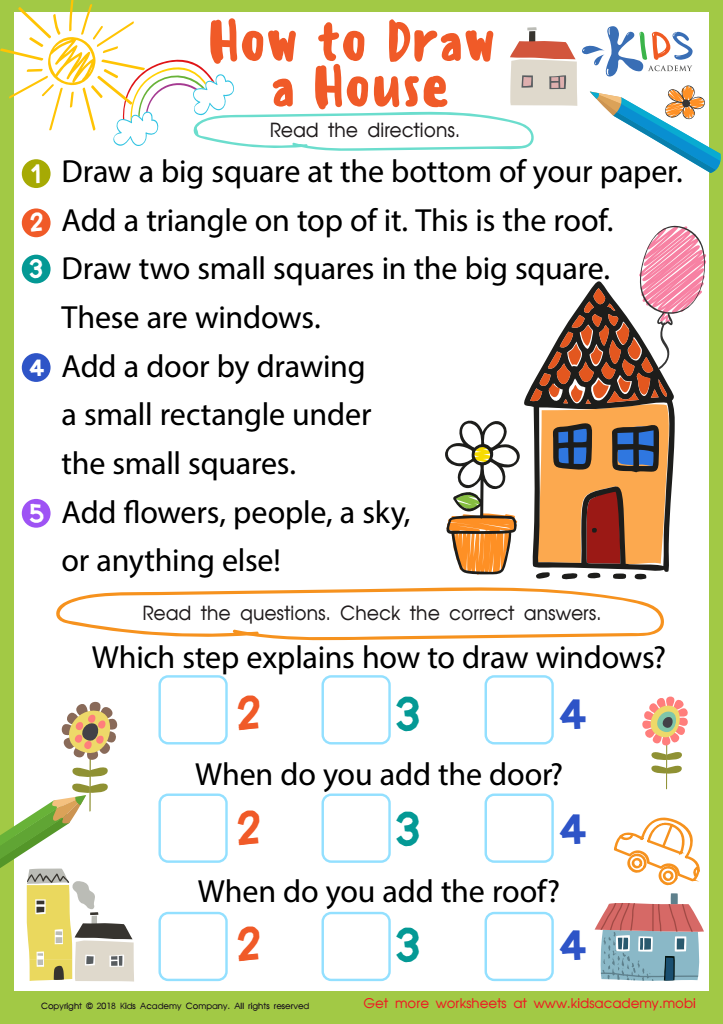
How to Draw House Worksheet
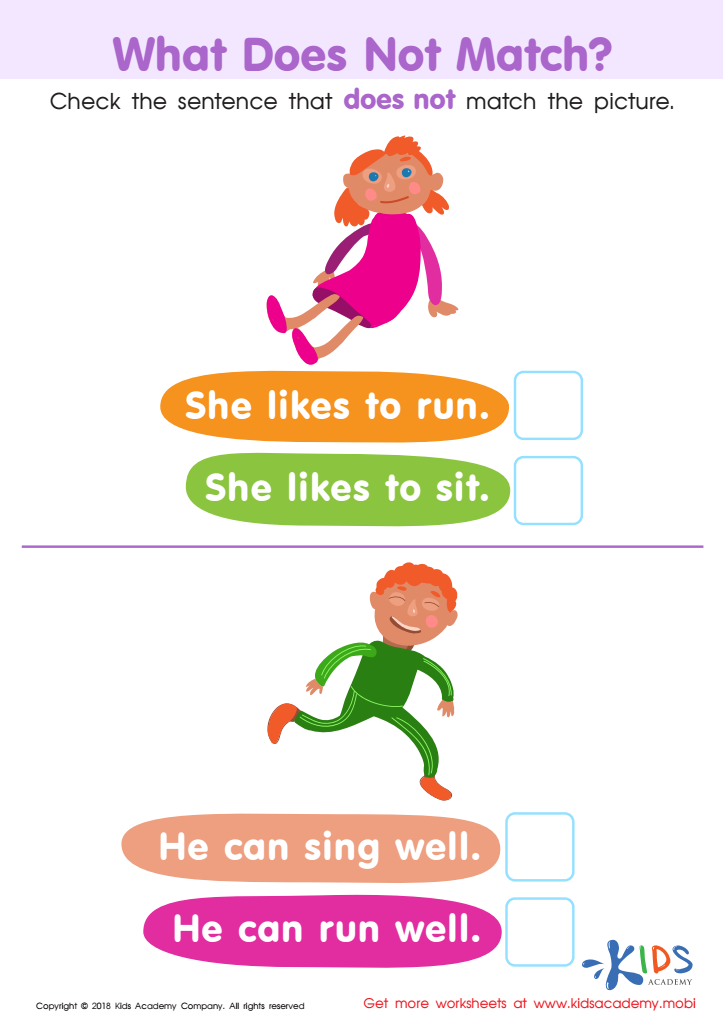
What Does Not Match? Worksheet






.jpg)
Shape recognition and reading comprehension are foundational skills crucial to the cognitive and academic development of children aged 5-8. Parents and teachers should prioritize these areas for several reasons.
First, shape recognition enhances visual discrimination abilities, helping children distinguish between different letters and numbers. This fundamental skill supports early reading development because letters are essentially shapes and differentiating them accurately is key to decoding words.
Second, recognizing shapes aids in developing spatial awareness and mathematical skills. Understanding geometric shapes and their properties lays the groundwork for more complex math concepts encountered in later years, such as geometry and algebra.
Third, reading comprehension involves decoding text and making sense of it, fostering critical thinking and imagination. Strong reading skills are directly linked to academic success across all subjects, as most learning in the classroom requires the ability to read and understand written material.
Engaging young children in shape-based activities and reading exercises stimulates their brains, promotes attention to detail, and encourages problem-solving skills. It's vital for parents and teachers to create a rich learning environment that incorporates these elements through play-based learning, stories, and interactive activities, ensuring a holistic development for the child.
By focusing on shape recognition and reading comprehension, parents and teachers are setting the stage for lifelong learning and academic achievement.








