Identifying story elements Reading Fiction Worksheets for Ages 5-8
4 filtered results
-
From - To
Welcome to our "Identifying Story Elements" worksheets tailored for children ages 5-8! These engaging and interactive resources help young readers recognize key components of fiction, including characters, settings, plots, and themes. Each worksheet is crafted to enrich comprehension, critical thinking, and creativity, encouraging students to explore and analyze stories. Aligned with educational standards, these activities create a fun and supportive atmosphere for developing essential literacy skills. By using vibrant illustrations and simple language, our worksheets are perfect for both classroom settings and at-home learning. Dive into the world of reading and watch your child's understanding of storytelling flourish!
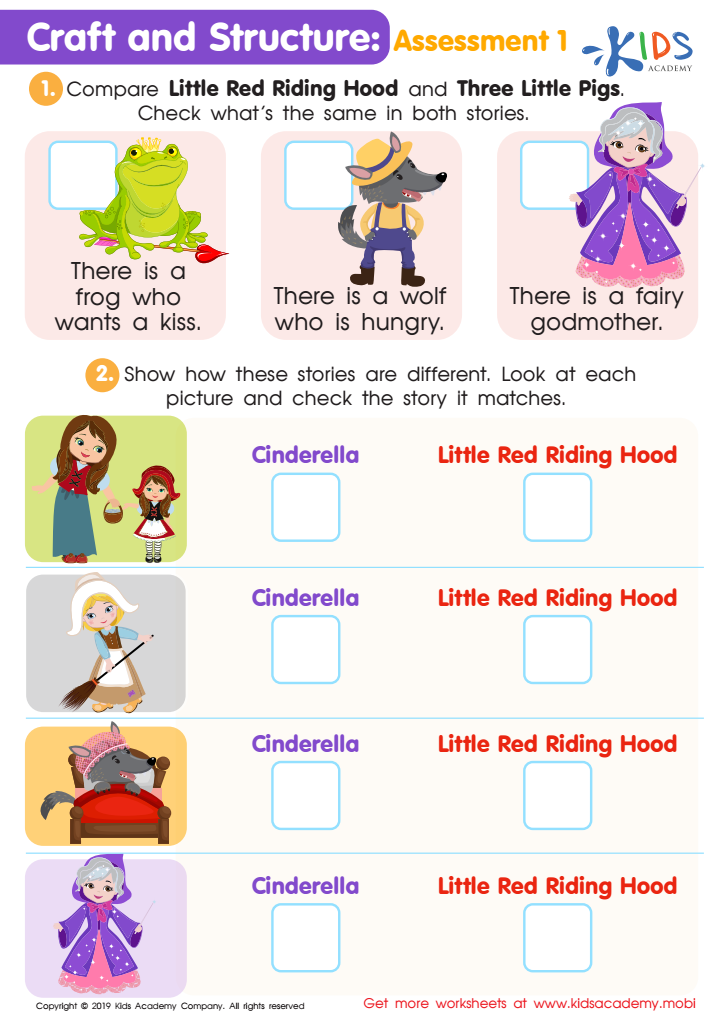
Craft and Structure: Assessment 1 Worksheet
 Assign to My Students
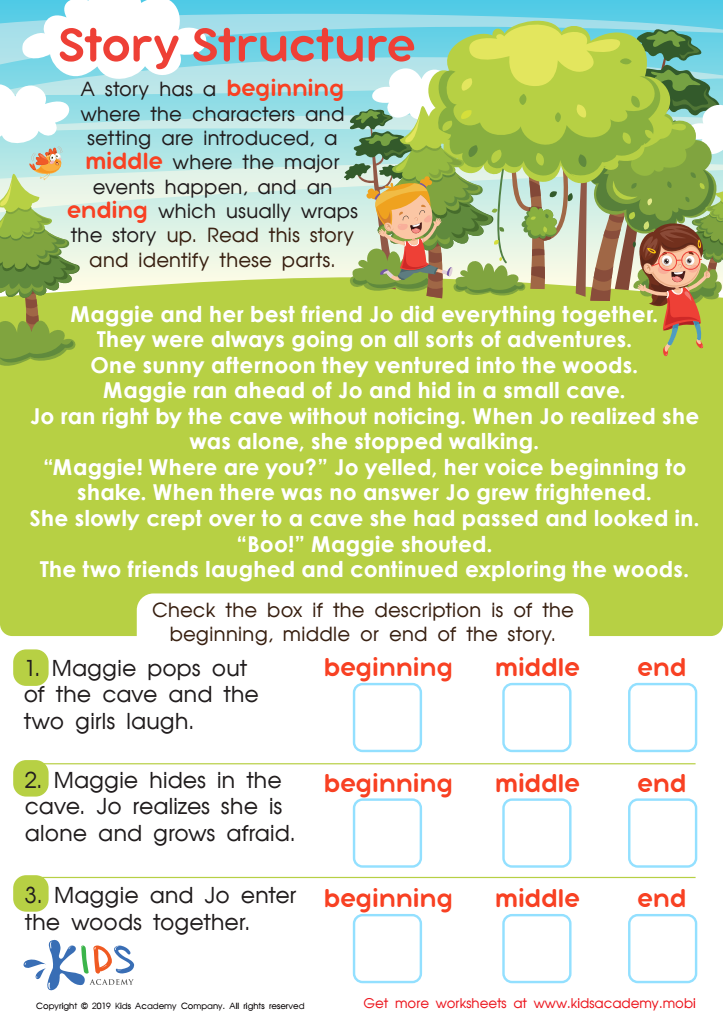
Story Structure Worksheet
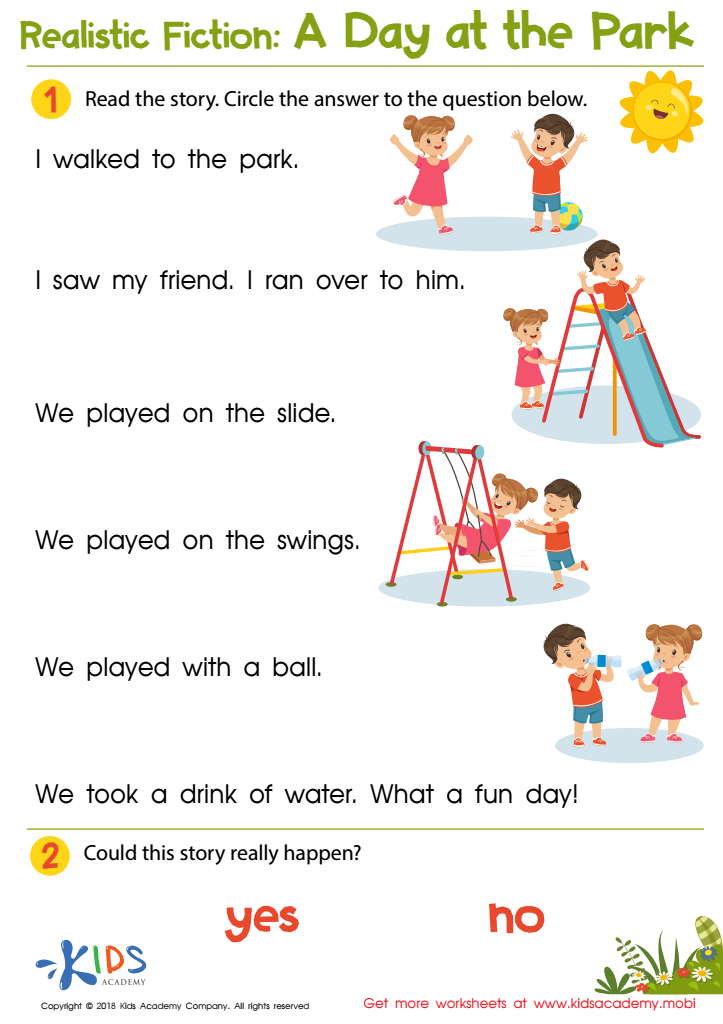
A Day at the Park Worksheet
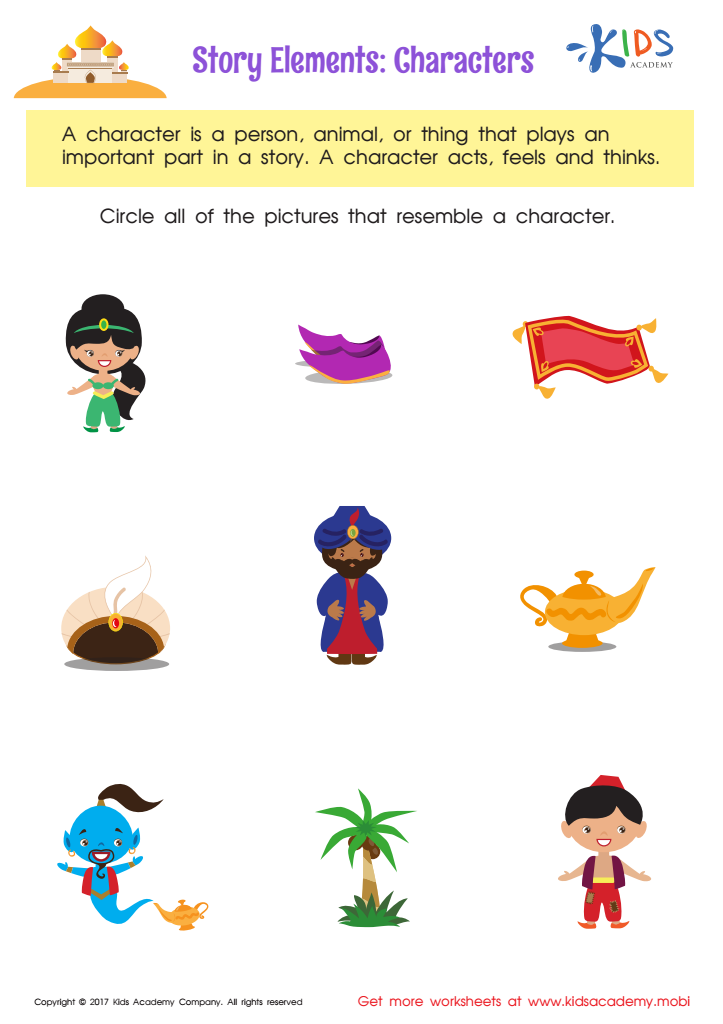
Story Elements Printable








Identifying story elements is crucial for children aged 5-8 as it lays the foundation for reading comprehension and critical thinking skills. For parents and teachers, understanding these elements—characters, setting, plot, conflict, and resolution—enables us to facilitate deeper engagements with texts. Recognizing characters helps children empathize and relate to emotions, crafting their ability to make personal connections with stories. The setting establishes context, fostering an understanding of time and place, which is vital for immersive reading.
Studying the plot offers insight into narrative structure, enhancing anticipation and recall while also promoting sequencing skills. Conflict introduces challenges, teaching resilience and problem-solving, and understanding the resolution encourages evaluation of outcomes. By encouraging children to identify these elements, we aid their ability to predict, infer, and analyze, skills that are essential not only in reading but in life.
Furthermore, bringing story elements into discussions can drive conversations that enhance vocabulary and critical language use. As children dissect stories, they develop a love for reading and improve literacy skills that serve as cornerstones for academic success. In essence, focusing on story elements is a complementary approach that cultivates lifelong learners and compassionate individuals.








