Shape Recognition Reading Fiction Worksheets for Ages 5-8
3 filtered results
-
From - To
Unlock the magic of learning with our "Shape Recognition Reading Fiction Worksheets for Ages 5-8"! These engaging worksheets skillfully combine reading and shape recognition to captivate young minds. Designed for early grade students, each activity encourages critical thinking, creativity, and literacy. By identifying shapes within delightful fiction stories, children will enhance their comprehension and geometric skills simultaneously. Our resources provide a fun and educational path, helping kids develop a solid foundation in both reading and math. Perfect for the classroom or at-home practice, watch your child’s academic confidence soar! Discover the joy of learning with our unique worksheets today!
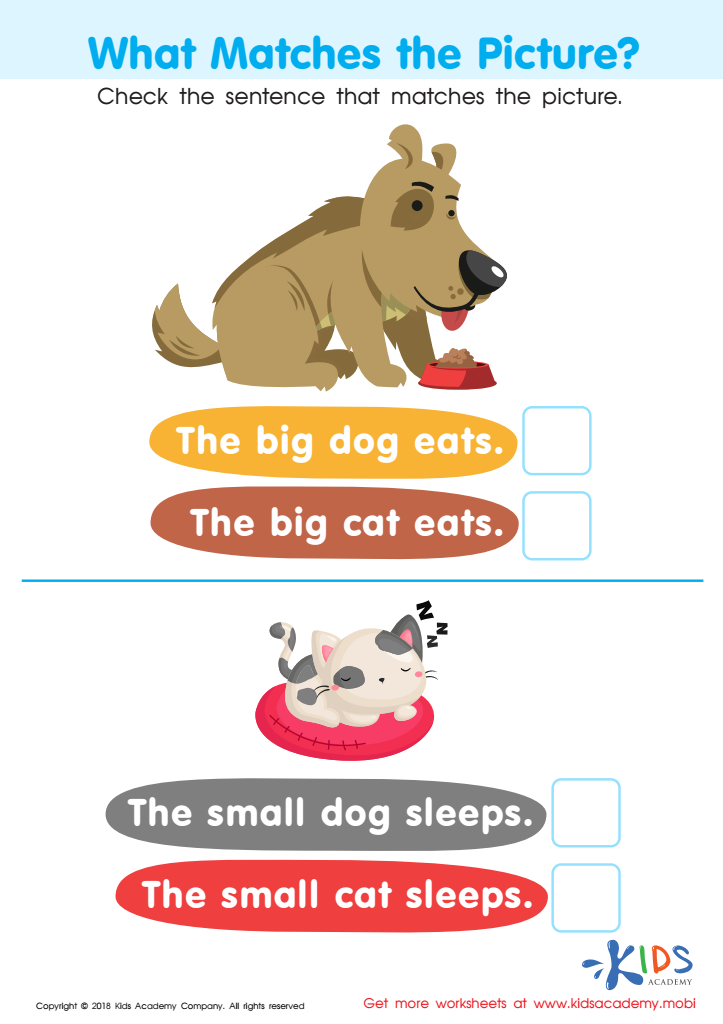
What Matches the Picture? Worksheet
 Assign to My Students
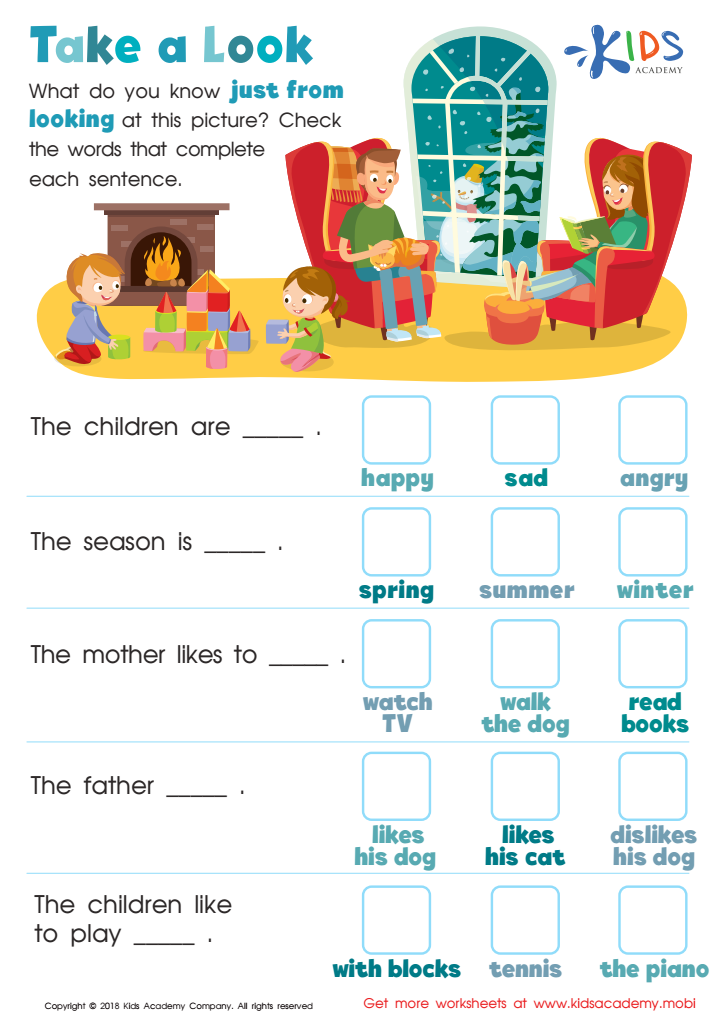
Take a Look - Part 1 Worksheet
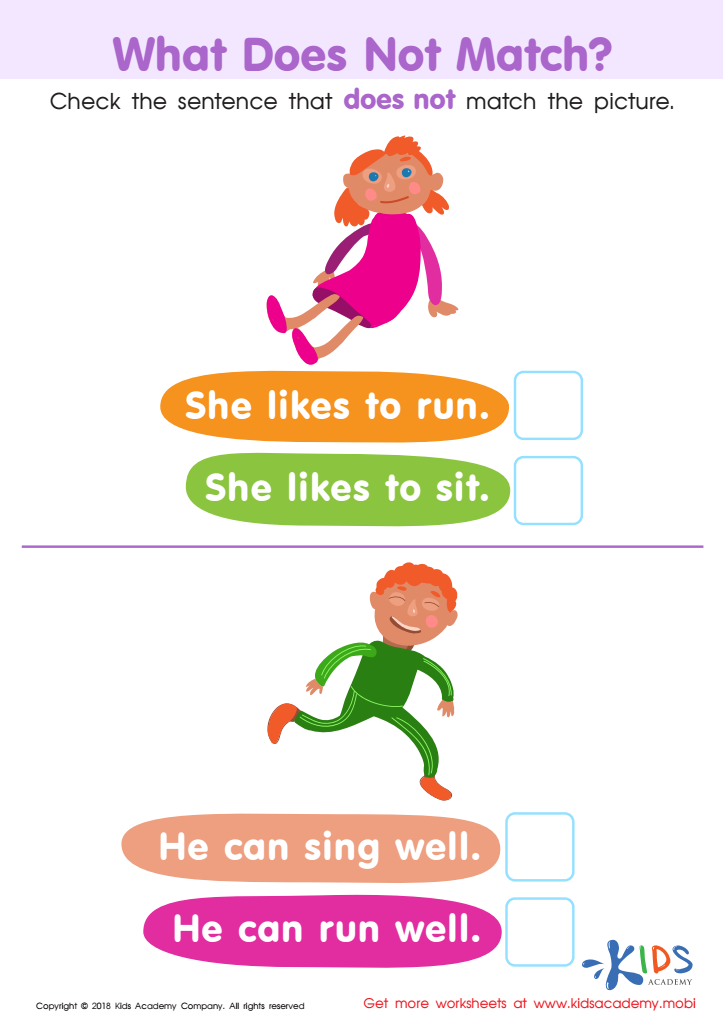
What Does Not Match? Worksheet



.jpg)




Shape recognition and reading fiction are crucial aspects of early childhood development that parents and teachers should prioritize for children aged 5-8. Understanding shapes forms the basis for later mathematical concepts and spatial awareness, which are vital in everyday problem-solving and academic achievements. By learning to identify and differentiate between various shapes, young children enhance their cognitive skills, visual perception, and fine motor coordination. These abilities are not only foundational for more complex mathematical ideas but also enhance a child's ability to analyze and interpret visual information in their environment.
Reading fiction, on the other hand, stimulates imagination, broadens vocabulary, and enhances comprehension skills. Fiction introduces children to narratives that develop their ability to understand different perspectives, fostering empathy and emotional intelligence. Through stories, young readers explore new worlds and ideas, which can inspire creativity and curiosity.
Combining shape recognition activities with reading fiction can create engaging, multi-sensory learning experiences. For example, children can identify various shapes within illustrations in storybooks, connecting the visual and narrative elements. This integrative approach helps in solidifying both symbolic recognition and language development, ensuring a well-rounded growth essential for later academic success and personal development. Thus, emphasizing these skills can lay a strong foundation for a child's future learning journey.








