Reading Non-Fiction Worksheets for Ages 5-8 - Page 5
97 filtered results
-
From - To
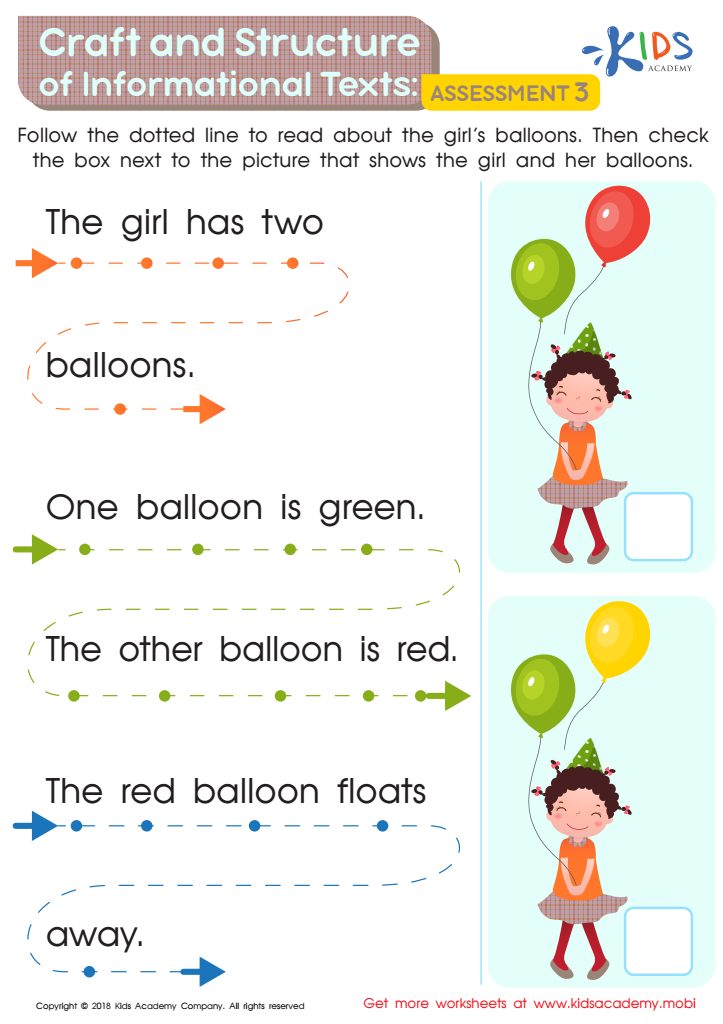
Craft and Structure of Informational Texts: Assessment 3 Worksheet
 Assign to My Students








Parents and teachers should prioritize reading non-fiction for children aged 5-8 because it fosters curiosity and a deeper understanding of the world. Non-fiction books introduce young readers to various subjects such as science, history, geography, and cultures, stimulating their natural desire to learn and discover. This exposure helps build foundational knowledge that makes it easier for children to comprehend more complex concepts as they grow.
Reading non-fiction also enhances critical thinking skills. By engaging with factual information, children learn to ask questions, compare details, and form conclusions based on evidence. It encourages them to think analytically and become discerning consumers of information—an essential skill in today's information-saturated world.
Additionally, non-fiction builds vocabulary and language skills through the introduction of specific terms and concepts that may not be present in fictional stories. It can spark meaningful discussions between parents, teachers, and children, fostering a shared learning experience. Ultimately, incorporating non-fiction into reading routines empowers children, nurturing a lifelong love for learning, while equipping them with the tools needed to understand and navigate an increasingly complex world.








