Understanding ecosystems Animals Worksheets for Ages 5-8
3 filtered results
-
From - To
Explore "Understanding Ecosystems: Animals Worksheets for Ages 5-8" from Kids Academy, designed to foster young learners' curiosity about the natural world. These engaging, printable worksheets introduce students to diverse ecosystems and the animals that inhabit them. Interactive activities and vivid illustrations help children grasp concepts like food chains, animal habitats, and interdependence in nature. Perfect for classroom or home use, these worksheets align with educational standards to build foundational science knowledge, critical thinking, and observational skills. Ignite your child's passion for the environment with these fun and educational resources that make learning about nature a thrilling adventure!
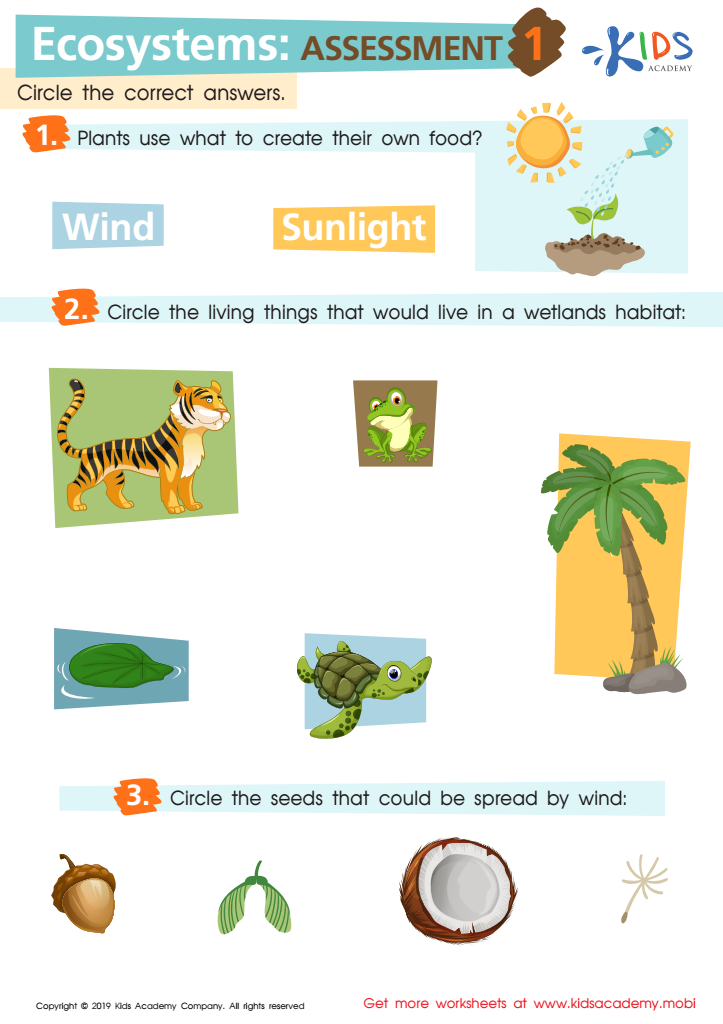
Ecosystems: Assessment 1 Worksheet
 Assign to My Students
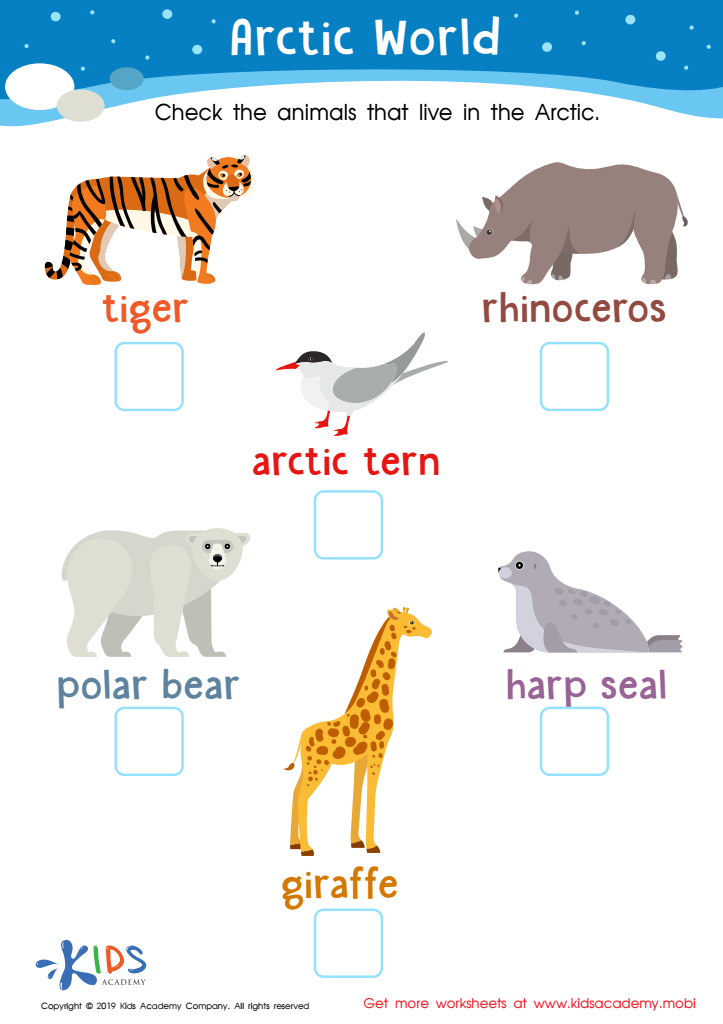
Arctic World Worksheet
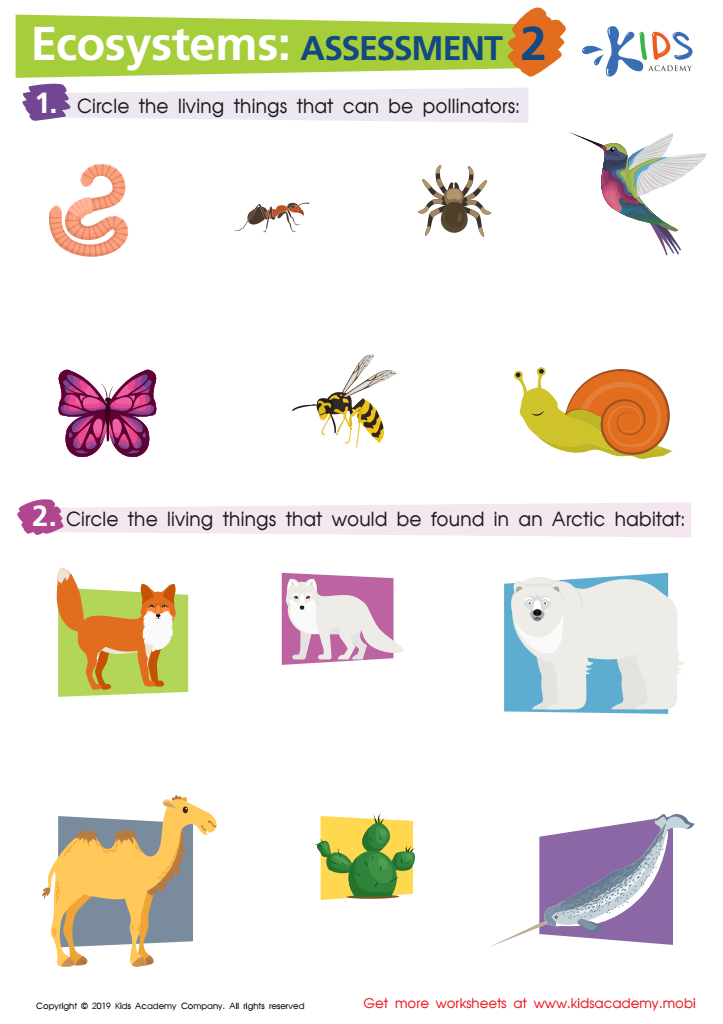
Ecosystems: Assessment 2 Worksheet


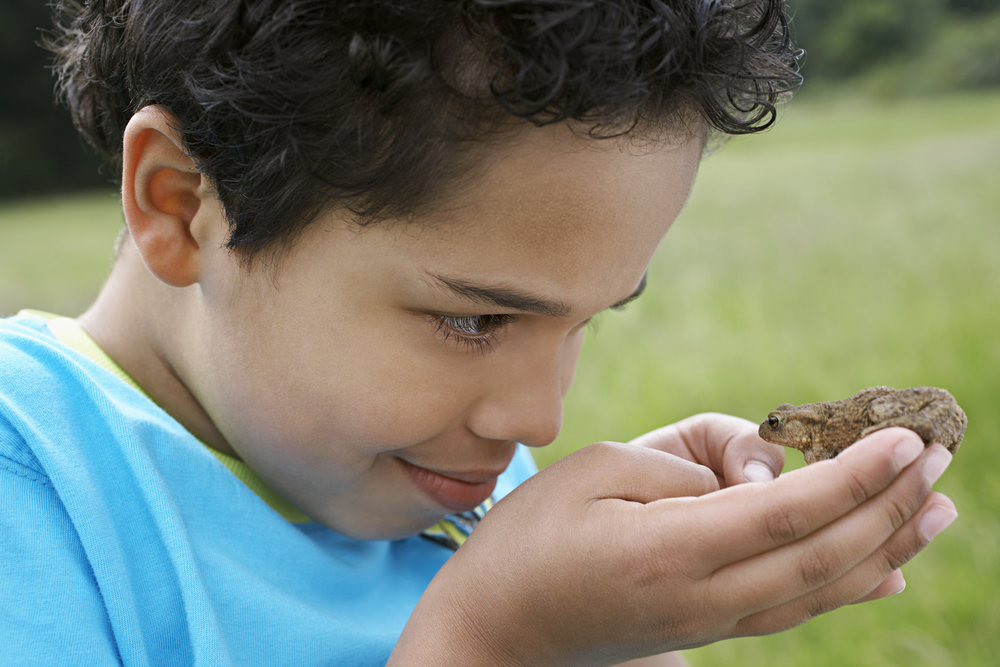





Understanding ecosystems and animals at an early age is crucial for several reasons, both for children's development and for fostering environmental stewardship. For one, young children are naturally curious and impressionable, making it an ideal time to introduce concepts about nature and its intricate relationships. Learning about ecosystems helps cultivate a sense of wonder and respect for the natural world, laying the foundation for responsible environmental behavior later in life.
At ages 5-8, children are developing essential skills such as observation, critical thinking, and empathy. Exploring how animals interact within ecosystems enhances these skills. For example, observing how plants, animals, and their environments are interconnected helps build systems-thinking skills, which are important for problem-solving in all areas of life.
Moreover, understanding ecosystems fosters emotional and cognitive development. When children learn about different animals and their habitats, they practice empathy by recognizing the needs and behaviors of other living beings. This emotional connection to nature can lead to a lifelong commitment to protecting the environment.
Furthermore, knowledge of ecosystems can support academic achievement in science and related subjects by making learning tangible and relevant. Hands-on activities, like nature walks and classroom projects, solidify concepts and engage children in active learning.
Overall, introducing children to ecosystems and animals equips them with the knowledge, values, and skills necessary to contribute positively to the world around them.








