Developing critical thinking Science Worksheets for Ages 5-8
3 filtered results
-
From - To
Discover our engaging Science Worksheets designed for children aged 5-8, aimed at developing critical thinking skills! These interactive resources encourage young learners to explore scientific concepts through fun activities and thought-provoking questions. By challenging students to analyze, question, and understand the world around them, our worksheets promote curiosity and enhance problem-solving abilities. Ideal for homeschooling or classroom use, these worksheets facilitate a hands-on learning experience that goes beyond memorization. Help your child become a confident thinker and communicator with our thoughtfully crafted activities—perfect for sparking a lifelong love for science and critical inquiry. Explore our collection today!
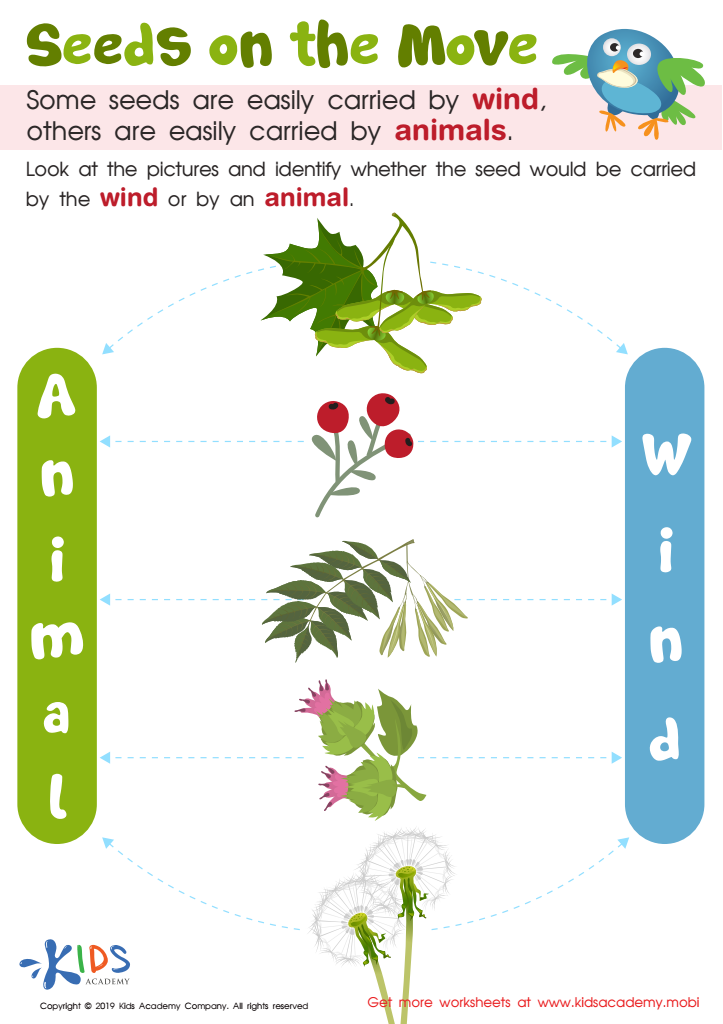
Seeds on the Move Worksheet
 Assign to My Students
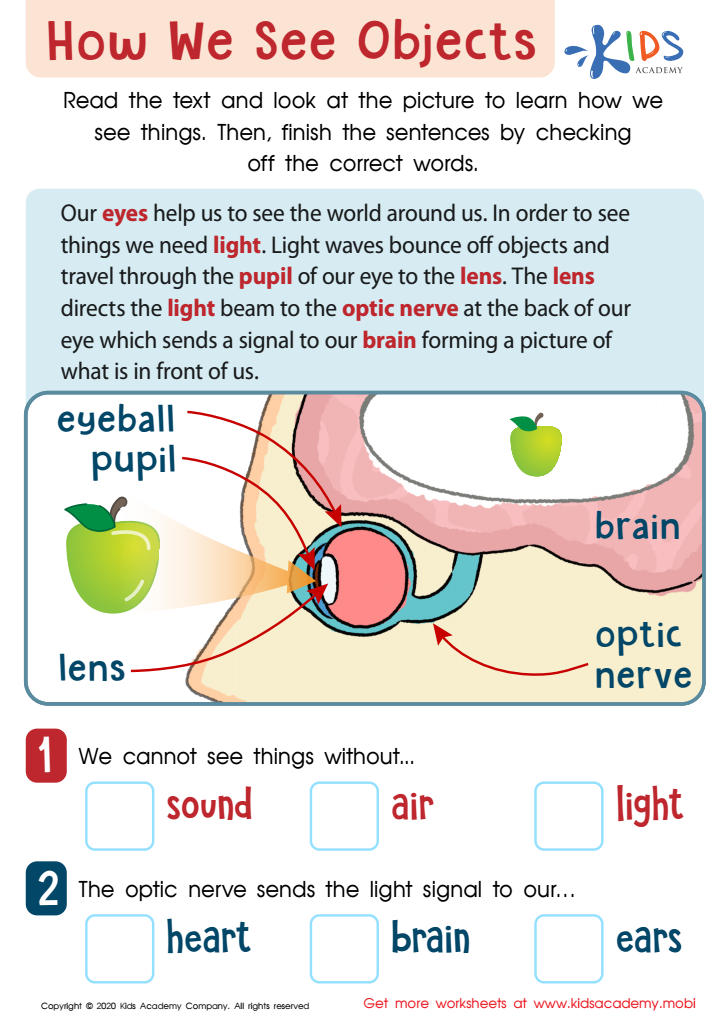
How We See Objects Worksheet
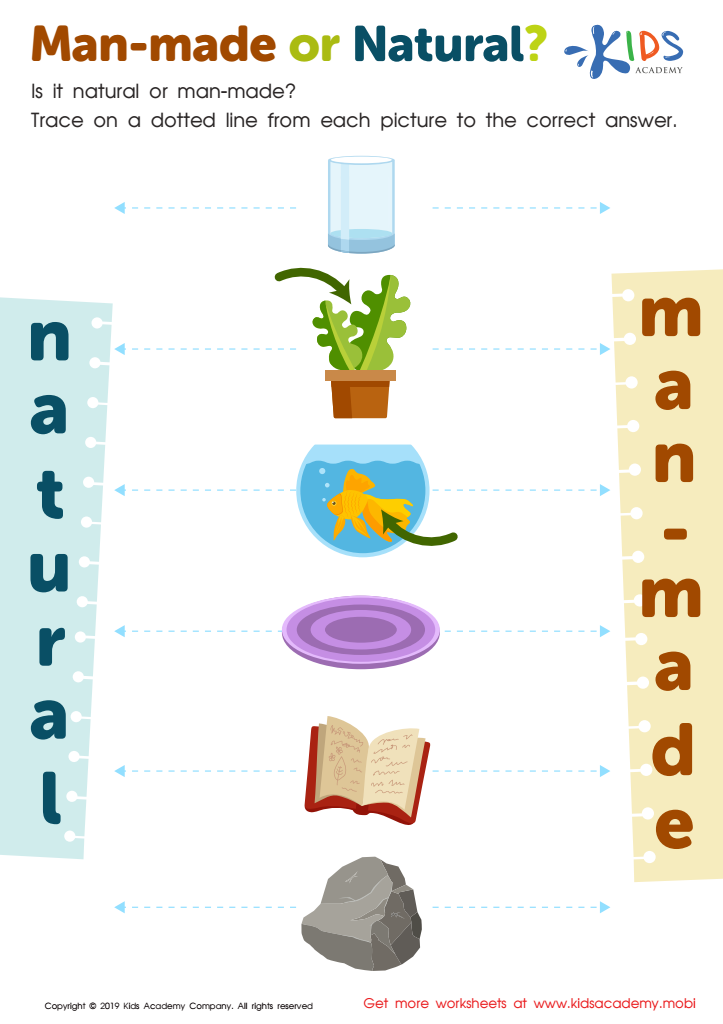
Man-Made or Natural? Worksheet







Developing critical thinking skills in young children, particularly in the realm of science for ages 5-8, is vital for numerous reasons. At this impressionable age, children are naturally curious, eager to explore and make sense of the world around them. Encouraging critical thinking not only fosters their sense of inquiry but also enhances problem-solving abilities that are crucial for future learning and decision-making.
When parents and teachers nurture critical thinking through scientific exploration, they help children learn to ask questions, evaluate information, and form evidence-based conclusions. This active engagement promotes deeper understanding rather than rote memorization of facts, facilitating a love for learning that can last a lifetime.
Moreover, in an era where misinformation is prevalent, fostering critical thinking equips children with the skills to sift through data and develop informed opinions. They learn to recognize patterns, make logical connections, and appreciate the scientific method, thus laying a strong foundation for more complex concepts in later years.
In summary, prioritizing critical thinking in science at this early age not only supports cognitive development but also prepares children to become thoughtful, inquisitive, and proactive learners in an ever-changing world.







