
Understanding directions Science Worksheets for Ages 5-8
4 filtered results
Difficulty Level
Grade
Age
-
From - To
Subject
Activity
Standards
Unlock the wonders of science with our "Understanding Directions" worksheets designed for ages 5-8! These engaging resources help young learners develop crucial skills such as following instructions, recognizing spatial concepts, and enhancing critical thinking. Each worksheet is tailored to cultivate curiosity and make learning fun, featuring vibrant illustrations and relatable activities. Perfect for classroom use or at-home learning, our worksheets are easy to follow and stimulate children’s understanding of science concepts while promoting collaboration and independence. Join us in fostering a love for science as your child navigates through exciting challenges and develops essential life skills!
Favorites
With answer key
Interactive
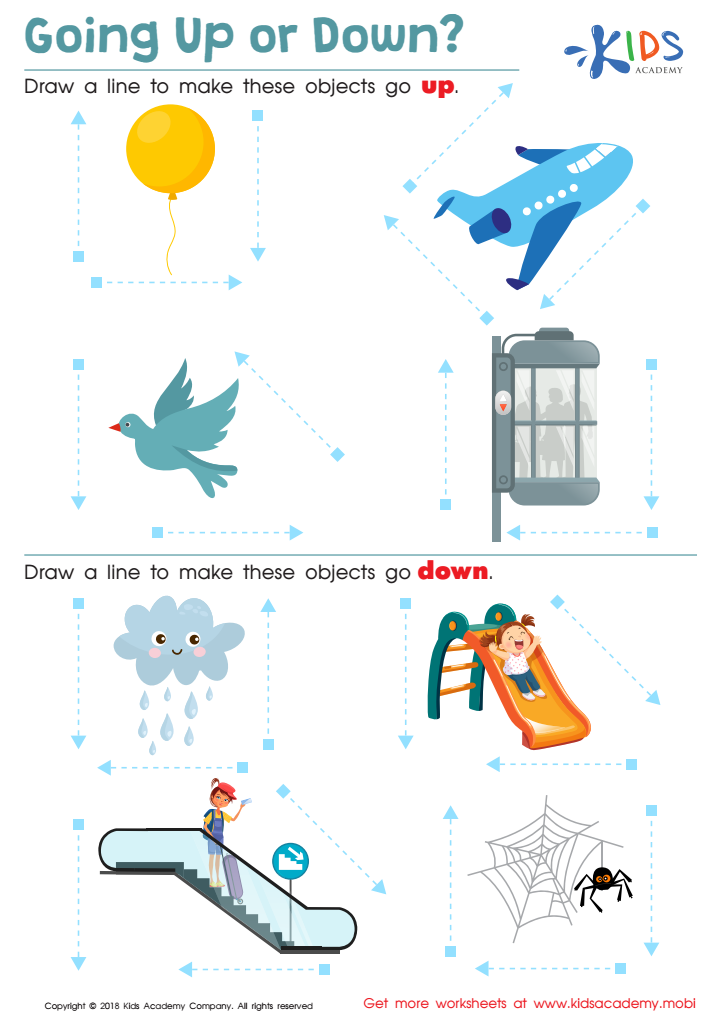
Going up or Down? Worksheet
Young students learn the concept of up and down with this geometry worksheet. They trace lines to identify relative positioning as an object travels. Kids can use position words to describe an object's movement, enhancing their spatial relationship skills - an important geometry foundation.
 Assign to My Students
Going up or Down? Worksheet
Worksheet
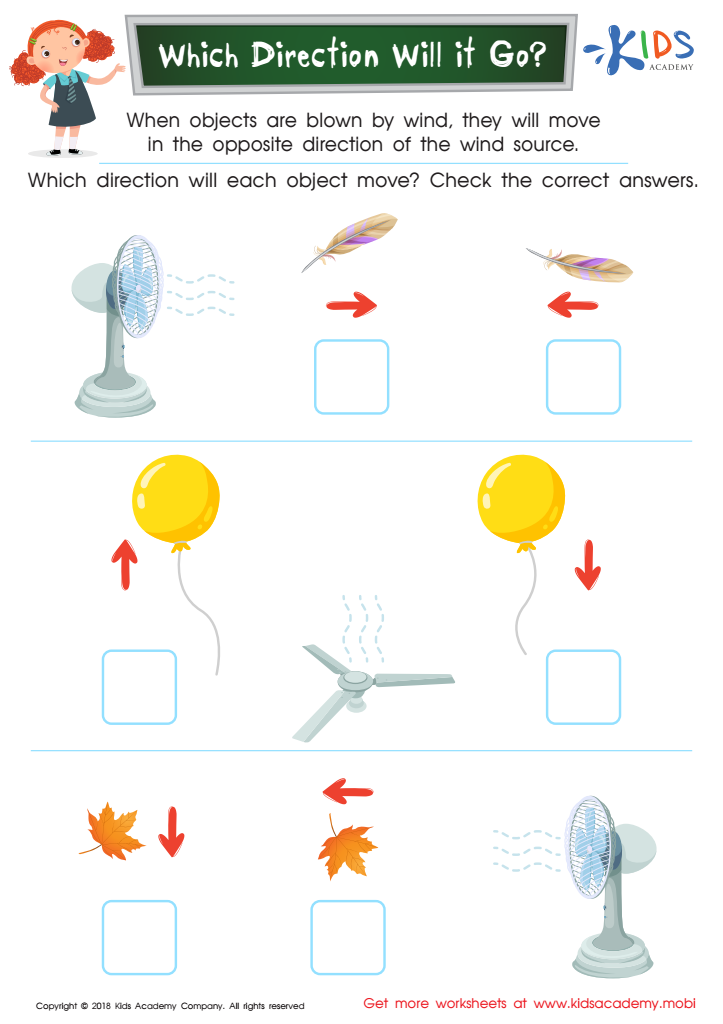
Which Direction Will it Go? Worksheet
Explain to your students: when objects are blown by wind, they will move in the opposite direction. In the worksheet, there are pictures of wind sources and objects being blown by the wind. Ask your child to identify and check the direction each object will move.
Which Direction Will it Go? Worksheet
Worksheet
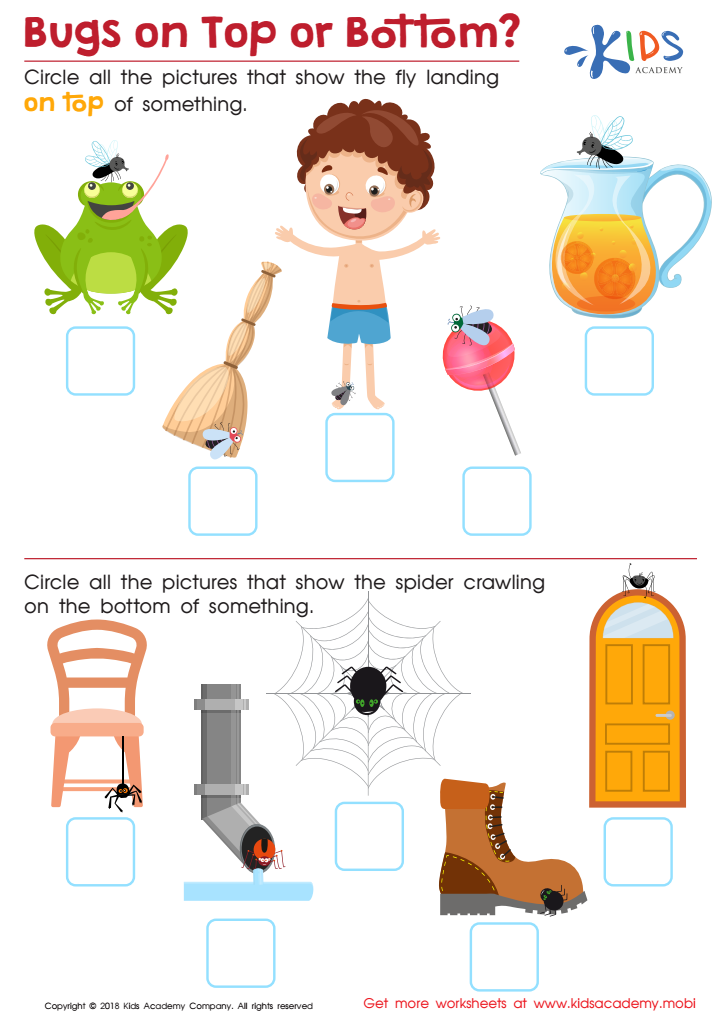
Bugs on Top or Bottom? Worksheet
Preschoolers need to learn directional skills such as top and bottom. This PDF worksheet helps them recognize bugs on the top or bottom using fun visuals. It builds their spatial reasoning while teaching prepositional words in an engaging way.
Bugs on Top or Bottom? Worksheet
Worksheet
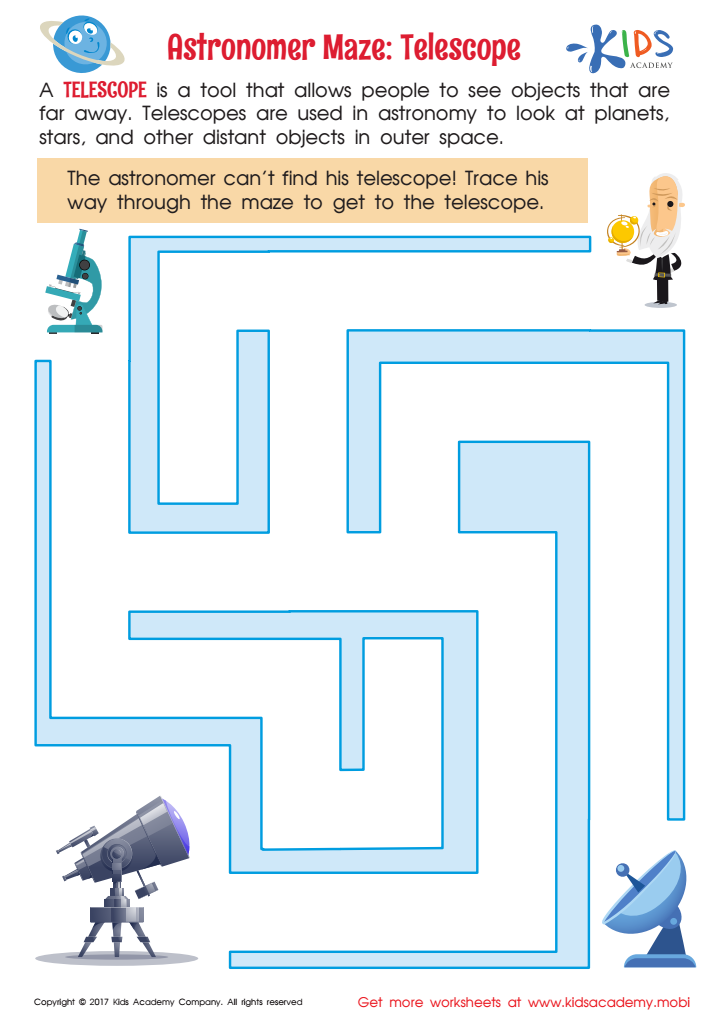
Astronomer Maze: Telescope Worksheet
Let your mini astronomer explore the galaxy with this fun and puzzling space maze worksheet – Telescope! Your child will have a great time navigating the maze, while learning how telescopes help scientists study the stars.
Astronomer Maze: Telescope Worksheet
Worksheet
Join Kids Academy for Free
Who is primarily going to use this learning content?





Understanding directions is a fundamental skill that enhances children's learning and cognitive development, particularly in science for ages 5-8. At this stage, children are naturally curious, and fostering their ability to follow and comprehend directions can significantly impact their understanding of scientific concepts. When parents and teachers emphasize the importance of following directions in science experiments or activities, they are not only teaching children how to conduct experiments safely but also encouraging critical thinking and problem-solving skills.
Furthermore, clear understanding and execution of directions build confidence in children. When they can follow steps to complete a project or experiment, it reinforces their ability to process information logically and execute plans. This ability is essential in the modern world, enhancing academic performance and instilling a love for exploration and inquiry.
Moreover, science often requires collaboration and communication with peers. Learning to interpret and constructively share directions promotes teamwork and social skills. Lastly, when parents and teachers prioritize understanding directions, they are nurturing a foundational skill that will benefit children across all areas of learning and personal growth, setting them up for future successes both in and out of the classroom.







