Enhancing observation skills Physical Science Worksheets for Ages 5-8
3 filtered results
-
From - To
Boost your child’s observation skills with our engaging Physical Science Worksheets designed for ages 5-8. These interactive worksheets prompt young learners to explore, observe, and document their findings, enhancing their ability to notice details and recognize patterns. From exploring everyday objects to conducting simple experiments, each activity fosters critical thinking and scientific inquiry. Ideal for parents and educators, these printable resources from Kids Academy turn learning into an exciting adventure, cultivating a love for science and discovery in your child from an early age. Elevate their curiosity and analytical skills with our trusted worksheets today!
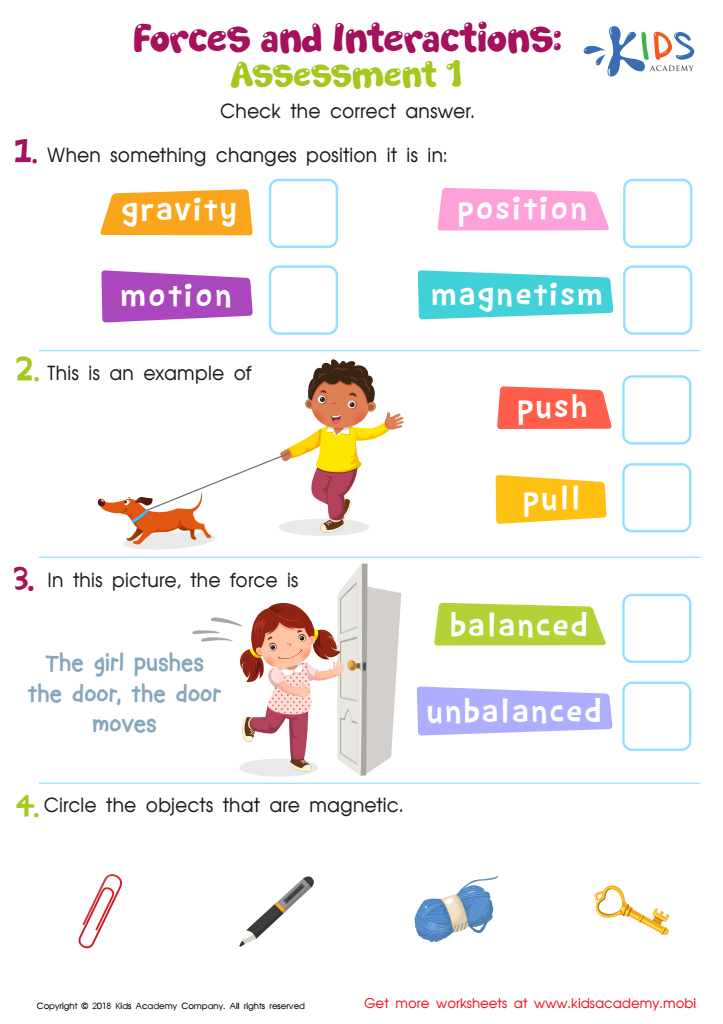
Forces and Interactions Printable
 Assign to My Students
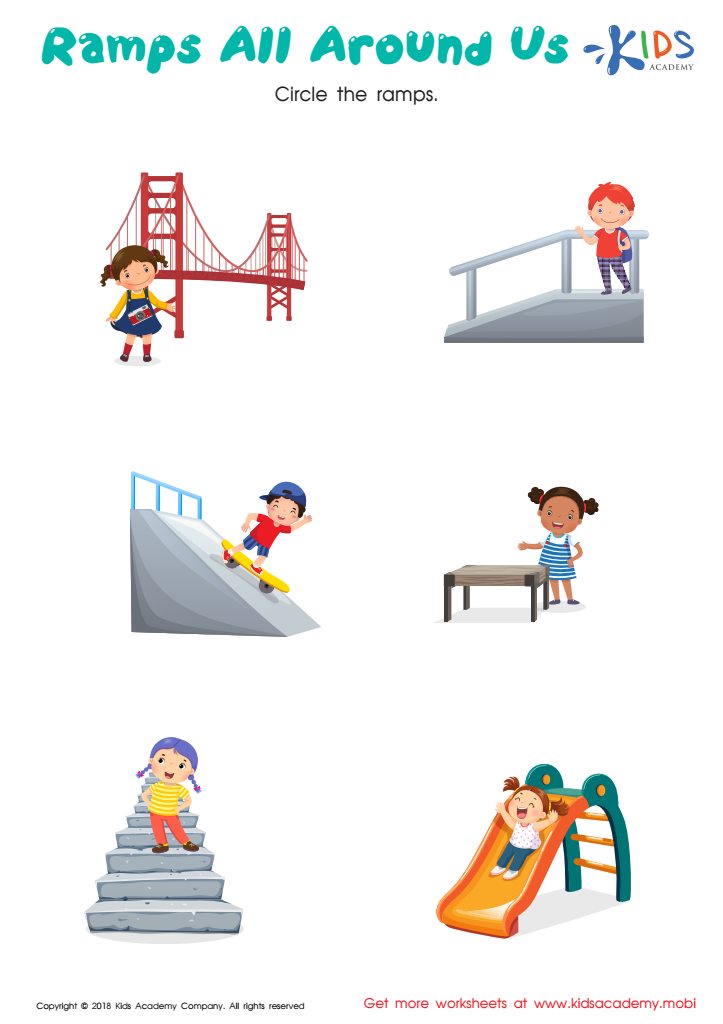
Ramps All Around us Worksheet
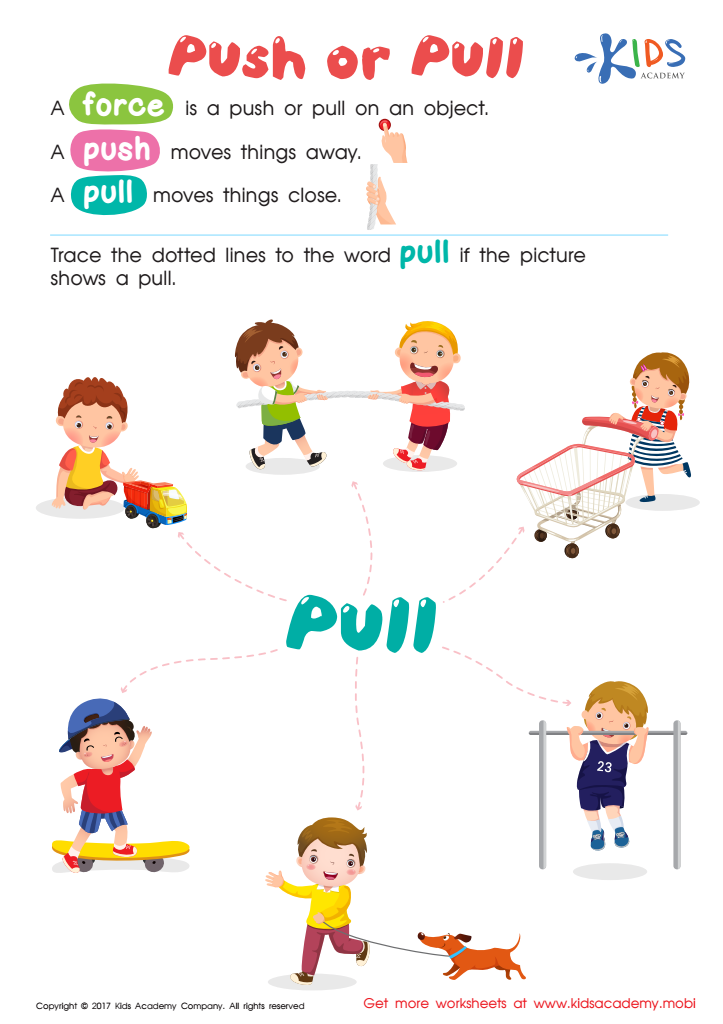
Pull or Push Worksheet


.jpg)





Enhancing observation skills in physical science for children aged 5-8 is important because these skills form the foundation for scientific learning and critical thinking. At this young age, children are naturally curious, consistently questioning the world around them. By fostering observation skills, parents and teachers can help channel this curiosity into structured learning experiences, engaging children in hands-on activities that are both educational and fun.
Observational skills allow children to notice details, patterns, and differences in their environment. This early practice in keen observation builds a basis for skills in other areas, such as mathematics, literacy, and problem-solving. For instance, when children observe the physical properties of various materials or the effects of different forces on objects, they begin to understand fundamental concepts of physical science.
Furthermore, strong observational skills help children better articulate their thoughts and questions, improving their communication abilities. They learn to document their findings, compare results, and draw conclusions, which are essential components of the scientific method. Encouraging these skills early on paves the way for a lifelong interest in science, promoting a deeper understanding of how the world works and fostering critical thinking skills that are invaluable across all areas of learning and daily life.
Investing time in developing these skills enriches a child's overall educational experience, laying a strong groundwork for future academic success and nurturing a natural love for discovery and learning.







