Knowledge application Physical Science Worksheets for Ages 5-8
4 filtered results
-
From - To
Discover engaging "Knowledge Application Physical Science Worksheets for Ages 5-8" designed to bring science to life for young learners. These expertly crafted resources by Kids Academy enable children to apply foundational physical science concepts through fun, hands-on activities and exercises. Each worksheet nurtures curiosity and enhances critical thinking skills, covering topics like force, motion, energy, and matter. Perfect for classroom or at-home learning, these captivating worksheets foster a deeper understanding and appreciation of physical science in young minds. Help your children or students excel in science with our high-quality, educational worksheets tailored specifically for ages 5-8!
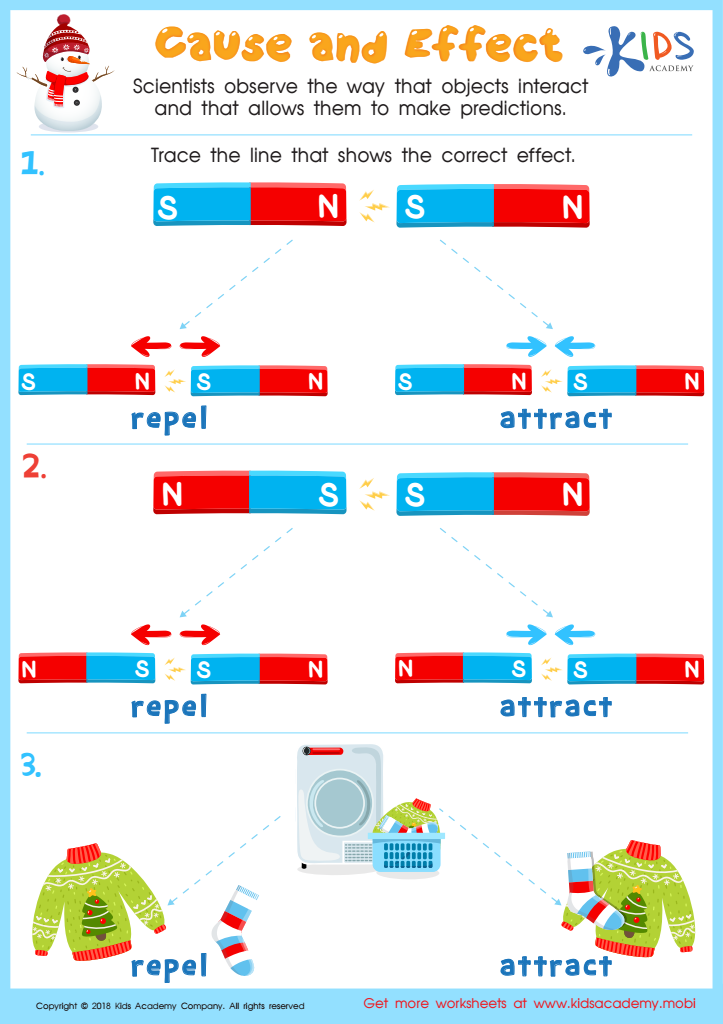
Repel and Attract Magnet Worksheet
 Assign to My Students
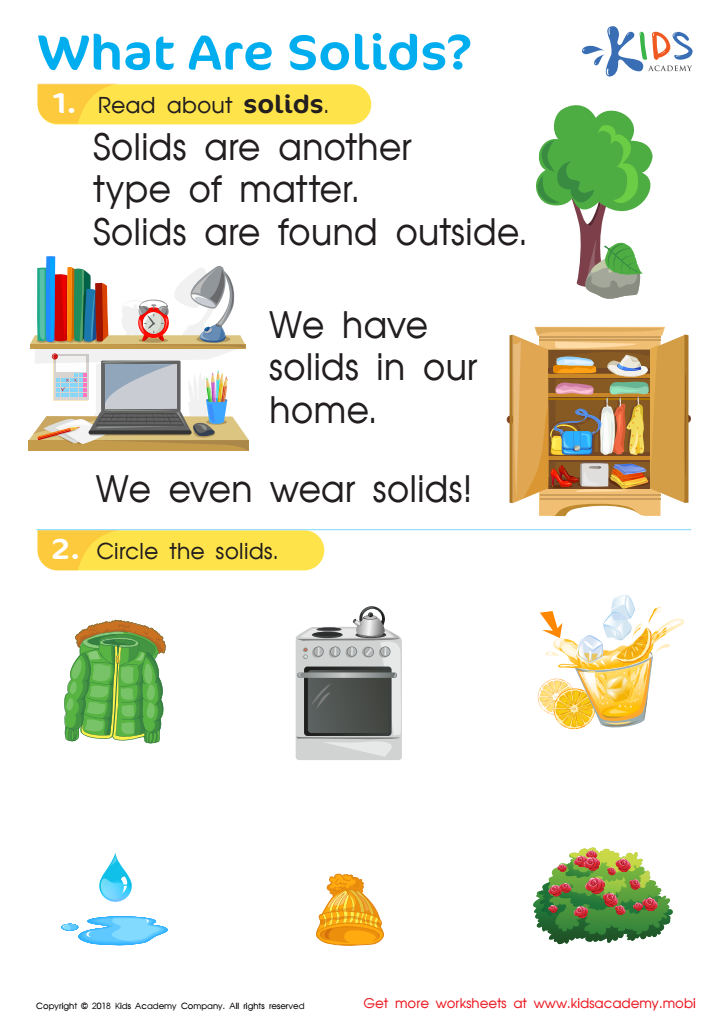
What Are Solids? Worksheet
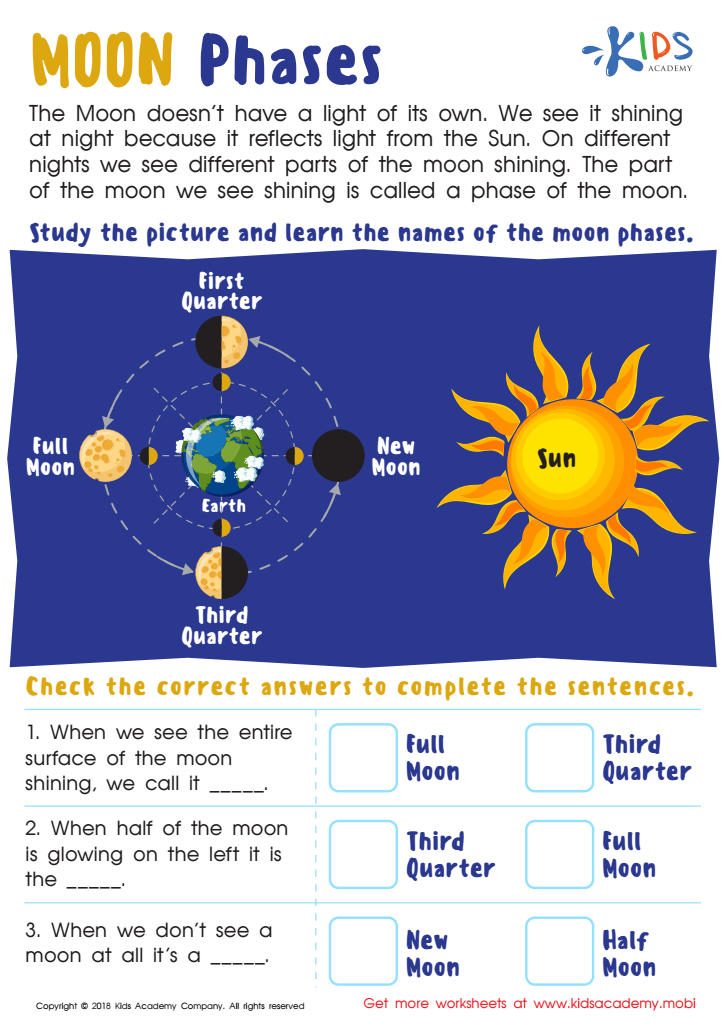
Moon Phases Worksheet
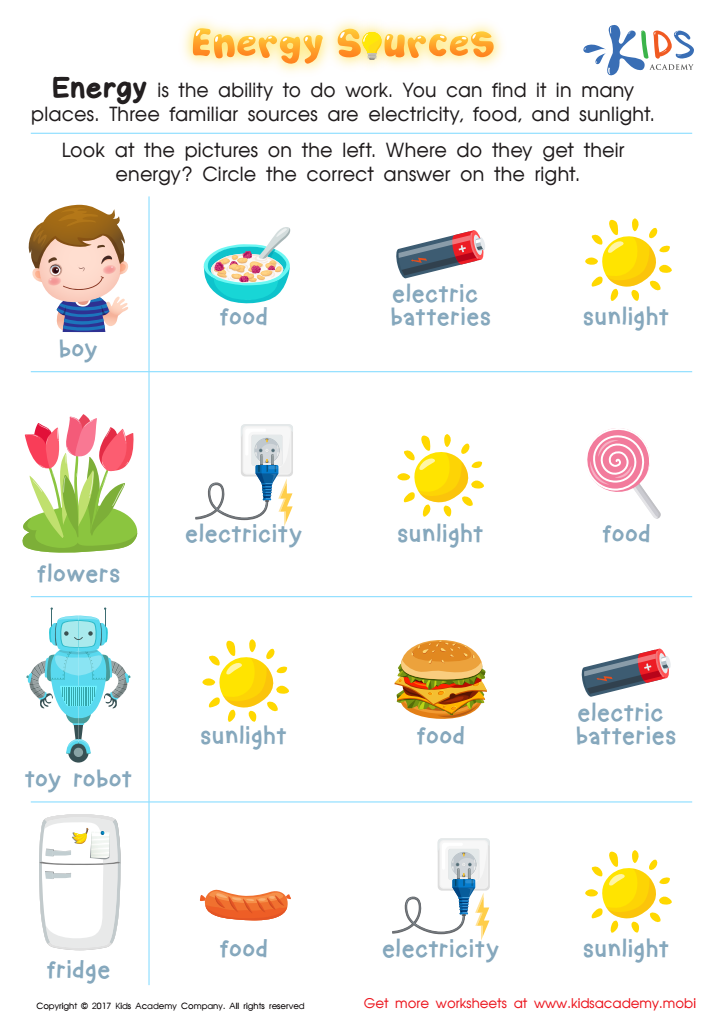
Energy Sources Printable








Parents and teachers should care about the application of knowledge in physical science for children aged 5-8 because it is foundational for their cognitive and intellectual development. During these crucial early years, children's brains are highly receptive and curious, making it an ideal time to introduce scientific concepts in a fun and engaging manner. Understanding physical science principles helps youngsters make sense of the world around them, nurturing their innate wonder and curiosity about natural phenomena such as gravity, motion, and changes in matter.
Physical science activities, like simple experiments and hands-on projects, encourage kids to develop critical thinking, problem-solving skills, and scientific reasoning. For example, by exploring why ice melts or how magnets attract objects, children learn to observe, hypothesize, and reason, which are essential skills not only for science but for their overall academic growth.
Furthermore, fostering an early interest in science can ignite a lifelong passion for learning and potentially steer children toward STEM (Science, Technology, Engineering, Mathematics) careers later in life. This early foundation helps them build confidence in their abilities to explore and understand complex concepts as they grow. Parents and teachers play a key role in making these experiences meaningful and enjoyable, ensuring that young students are empowered and encouraged to question, explore, and learn.







