Multiplication practice Physical Science Worksheets for Ages 5-8
3 filtered results
-
From - To
Discover engaging Multiplication Practice Physical Science Worksheets designed for children ages 5-8! Our worksheets seamlessly blend essential math skills with exciting science concepts, making learning both fun and effective. These resources help young learners practice multiplication through hands-on activities that promote critical thinking and problem-solving. Each worksheet features colorful illustrations and interactive tasks catered to early learners, ensuring that students remain engaged while they strengthen their mathematical foundation. Ideal for use at home or in the classroom, these worksheets support skill development in a playful atmosphere. Start your child’s journey toward mastering multiplication and exploring the wonders of physical science today!
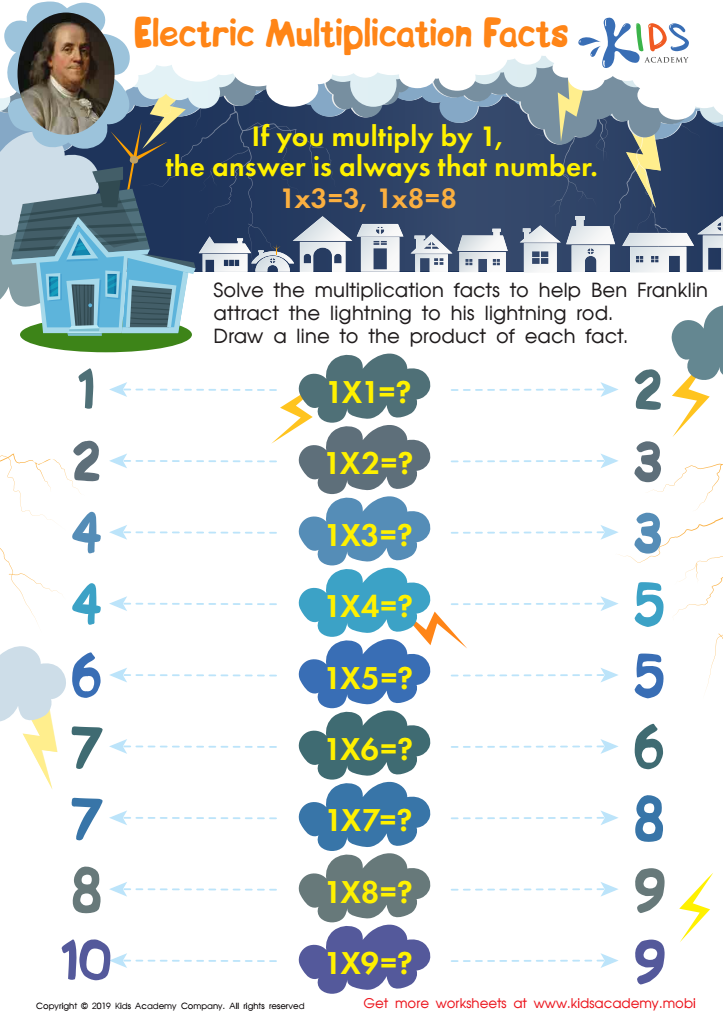
Electric Multiplication Facts Worksheet
 Assign to My Students
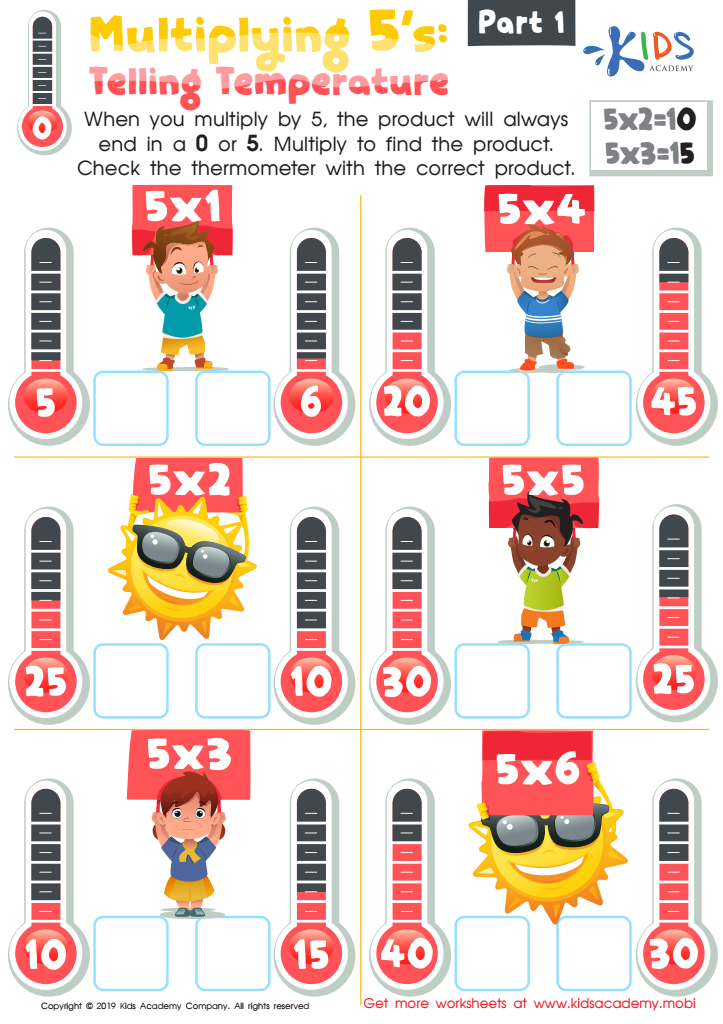
Multiplying 5’s: Telling Temperature Worksheet
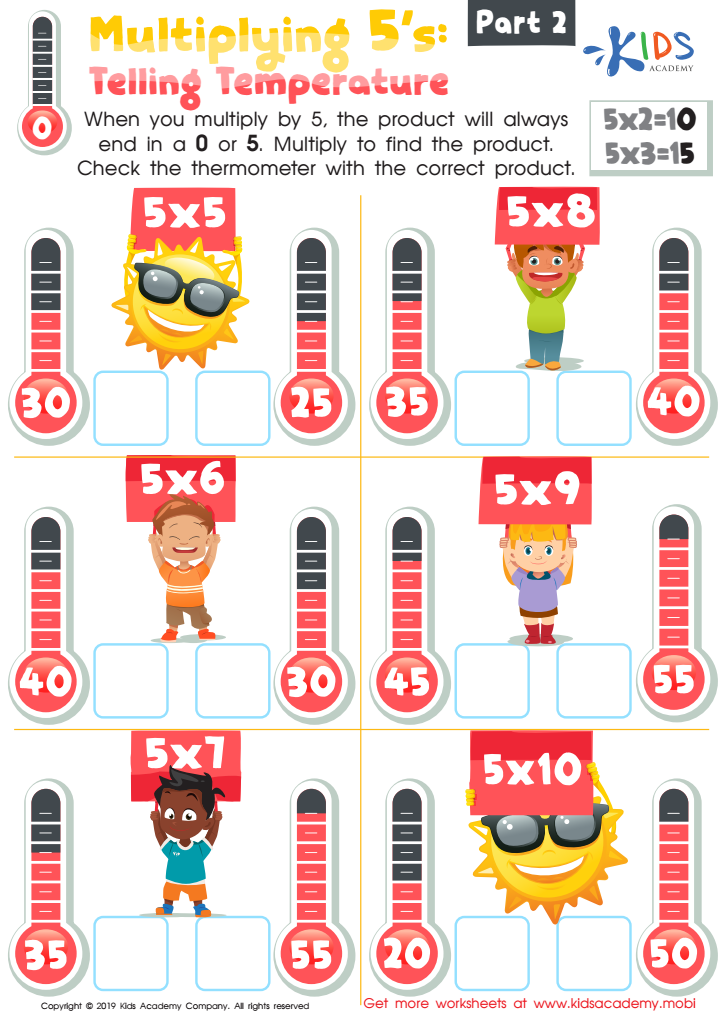
Multiplying 5’s: Telling Temperature Part 2 Worksheet




.jpg)

Parents and teachers should care about multiplication practice in the context of physical science for ages 5-8 because it helps build critical foundational skills in both math and scientific inquiry. At this age, children are developing their cognitive abilities and understanding of basic concepts, making it crucial to integrate multiplication with practical applications.
Multiplication isn’t just a math exercise; it plays a key role in understanding various science topics. For example, when experimenting with volume, mass, or measurements in physical science, children need to multiply to achieve accurate calculations. Engaging in active learning through multiplication can make scientific concepts more tangible, enhancing problem-solving skills and critical thinking.
Moreover, incorporating multiplication practice into physical sciences aligns with STEM (Science, Technology, Engineering, and Mathematics) curriculum goals. It enables children to grasp how math is used in everyday life and various professions, thus making learning more relevant and enjoyable.
Additionally, practicing multiplication through hands-on experiments can foster curiosity and a love for science, setting the stage for lifelong learning. By emphasizing this connection, parents and teachers can inspire confidence in students, develop perseverance, and promote the exciting overlap between math and science from an early age.







