Shape Recognition Physical Science Worksheets for Ages 5-8
3 filtered results
-
From - To
Discover our engaging Shape Recognition Physical Science Worksheets designed for children ages 5-8! These fun and interactive activities help young learners identify, compare, and classify shapes while developing their scientific understanding. The worksheets feature colorful visuals and hands-on exercises that capture children's attention, making learning enjoyable. Perfect for classrooms or at-home educational activities, our resources reinforce essential skills through play-based learning. Foster critical thinking and creativity as your child explores geometric shapes and their properties in a supportive and vibrant environment. Join us today in nurturing a love for science and shapes—you'll be amazed at the knowledge they can gain!
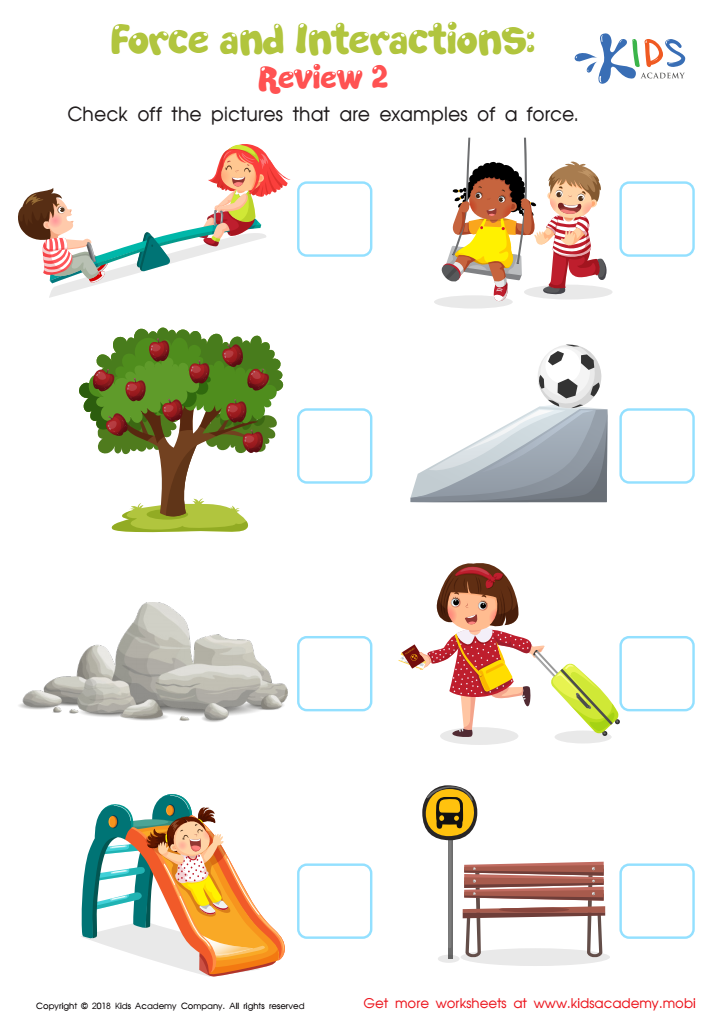
Force and Interactions: Review 2 Worksheet
 Assign to My Students
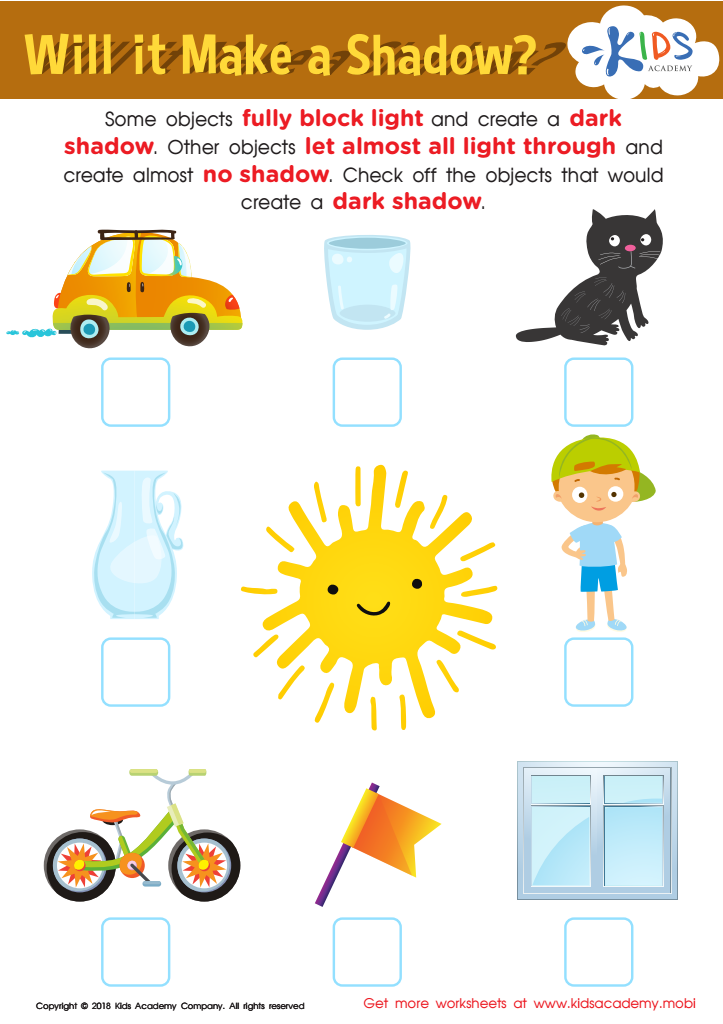
Will It Make a Shadow? Worksheet
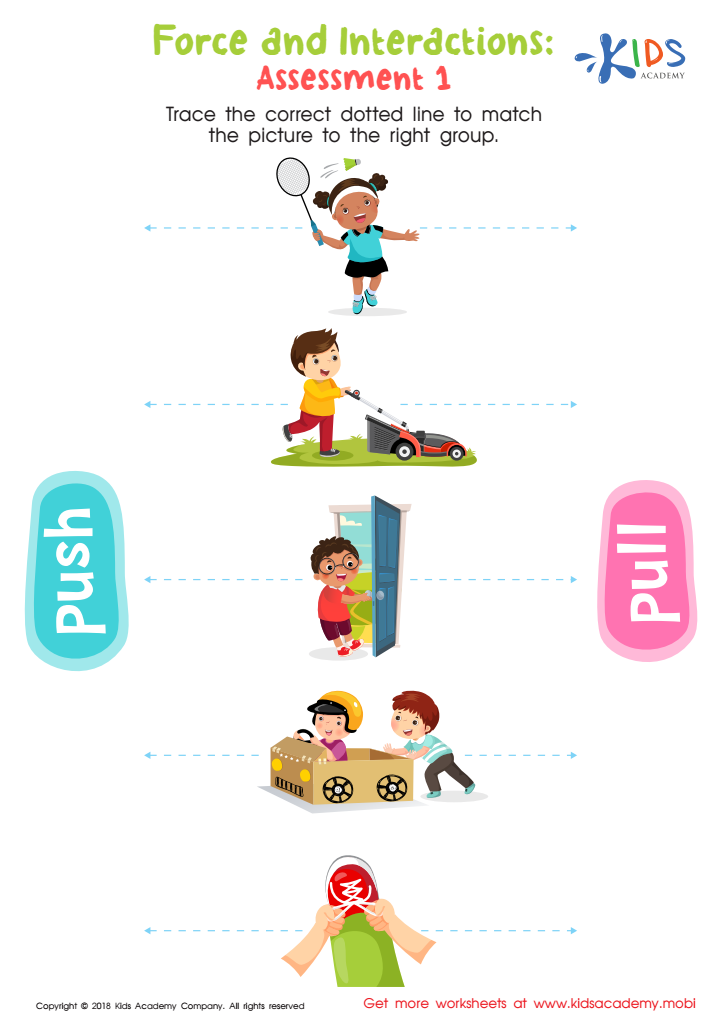
Force and Interactions: Assessment 2 Worksheet






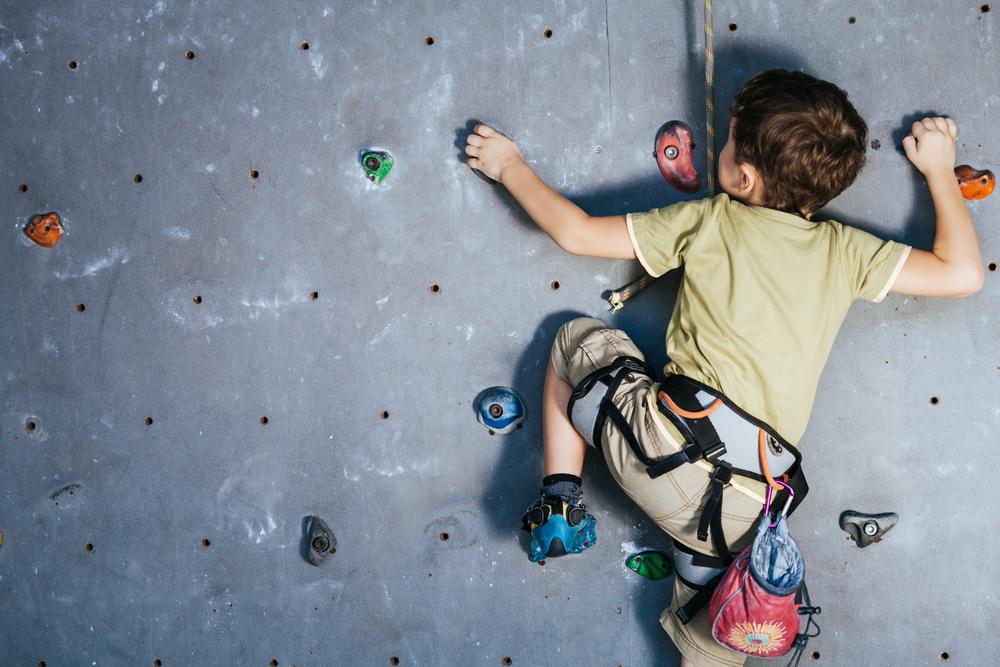

Shape recognition is a fundamental aspect of early childhood development, particularly within the framework of Physical Science for children ages 5-8. Understanding shapes not only supports mathematical skills, but it also fosters critical thinking and problem-solving abilities. Parents and teachers should care about this area of learning because it lays the groundwork for spatial awareness and geometry, vital components of a child’s academic journey.
By recognizing shapes, children learn to categorize objects and understand their characteristics, which can enhance their observational skills and promote cognitive development. Activities focused on shape recognition often integrate hands-on learning, allowing children to experience concepts in a concrete manner. These playful interactions with shapes can improve fine motor skills through constructive play, such as building blocks or art projects.
Moreover, knowledge of shapes is essential for real-life applications, from identifying traffic signs to improving navigation skills in different environments. Encouraging shape recognition can boost a child's confidence, as they succeed in identifying and manipulating their surroundings. Overall, emphasizing shape recognition in early education promotes holistic development, preparing young learners for future academic success and everyday problem-solving. Engaging with shapes is not just about shapes but building a foundation for a lifetime of learning.







