Decision making skills Community Worksheets for Ages 5-8
3 filtered results
-
From - To
Empower young learners with our Decision-Making Skills Community Worksheets, designed specifically for ages 5-8. These engaging, educational activities improve critical thinking, problem-solving, and social skills by guiding children through real-life scenarios. Kids practice making informed decisions in age-appropriate contexts, fostering independence and responsibility. Each worksheet combines fun graphics and interactive tasks, making learning enjoyable and effective. Ideal for home or classroom use, our expertly crafted resources ensure that kids develop essential decision-making abilities that will benefit them throughout their lives. Explore our collection and help your child become a confident, thoughtful decision-maker today!
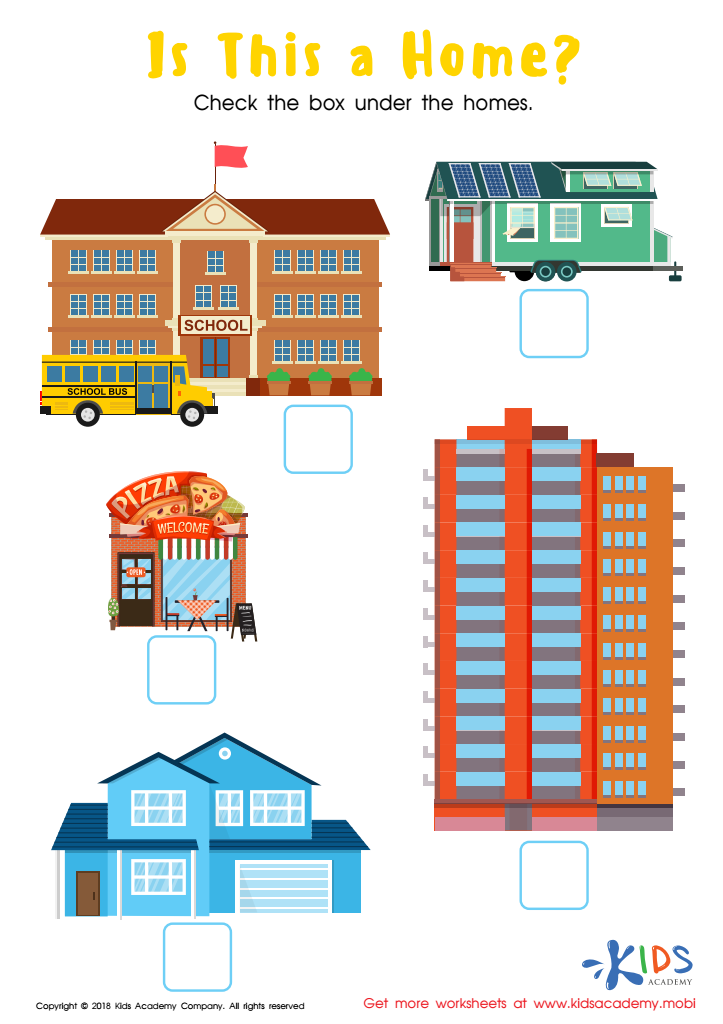
Is this a Home? Worksheet
 Assign to My Students
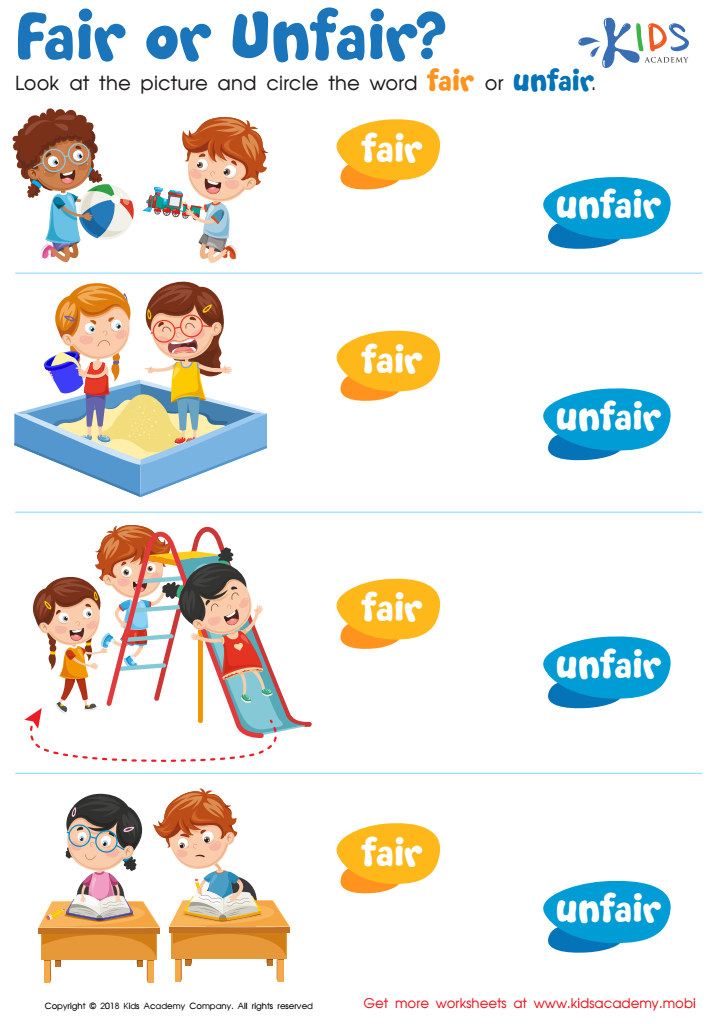
Fair or Unfair Worksheet

Towns Worksheet








Decision making skills are crucial for young children, and parents and teachers play a vital role in their development, particularly for ages 5-8. This period is critical as children's brains are exceptionally receptive to learning new concepts and behaviors, laying the foundation for lifelong habits.
For parents and teachers, fostering decision-making skills in young children means helping them understand the consequences of their choices, both positive and negative. A child who can weigh options and foresee outcomes becomes more self-reliant and confident. This early skill set not only aids in academic achievement but also in social interactions; it encourages children to think before they act, promoting better peer relationships and reducing impulsive behavior.
Moreover, decision-making skills empower children to handle everyday challenges, thereby boosting their problem-solving abilities. For example, deciding how to resolve a disagreement with a friend or choosing between two activities fosters critical thinking.
In a community context, children who have been taught effective decision-making tend to exhibit empathy and consideration for others' perspectives and needs. This can lead to a more harmonious and supportive environment at school and home.
Overall, parents and teachers who prioritize teaching decision-making skills equip children with essential tools for personal growth, mental well-being, and future success in diverse life areas.








