Enhancing observation skills Community Worksheets for Ages 5-8
3 filtered results
-
From - To
Enhancing Observation Skills Community Worksheets for Ages 5-8 are designed to engage young learners in exploring their environment. These worksheets, offered by Kids Academy, encourage children to sharpen their observational abilities through community-themed activities. Students can enjoy spotting differences, exploring neighborhood maps, and identifying various community helpers. Perfect for classroom or home use, these fun, interactive printables help kids develop critical thinking and attention to detail. By focusing on real-world settings, the worksheets make learning relatable and enjoyable, laying a strong foundation for lifelong skills. Give your child the tools to notice and appreciate the world around them!
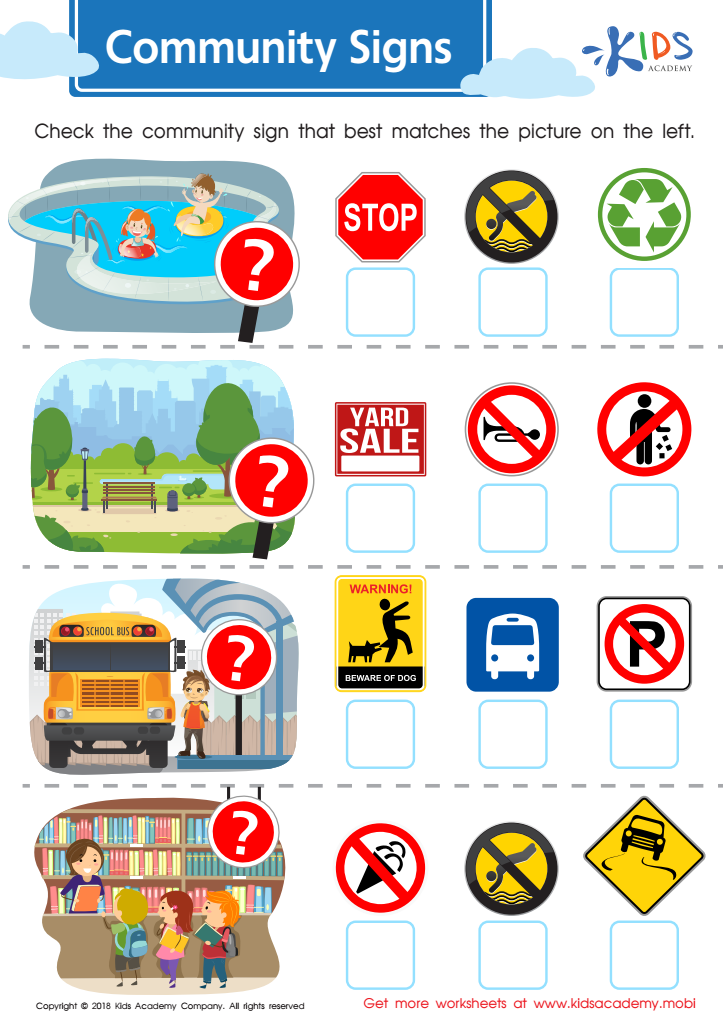
Community Signs Worksheet
 Assign to My Students
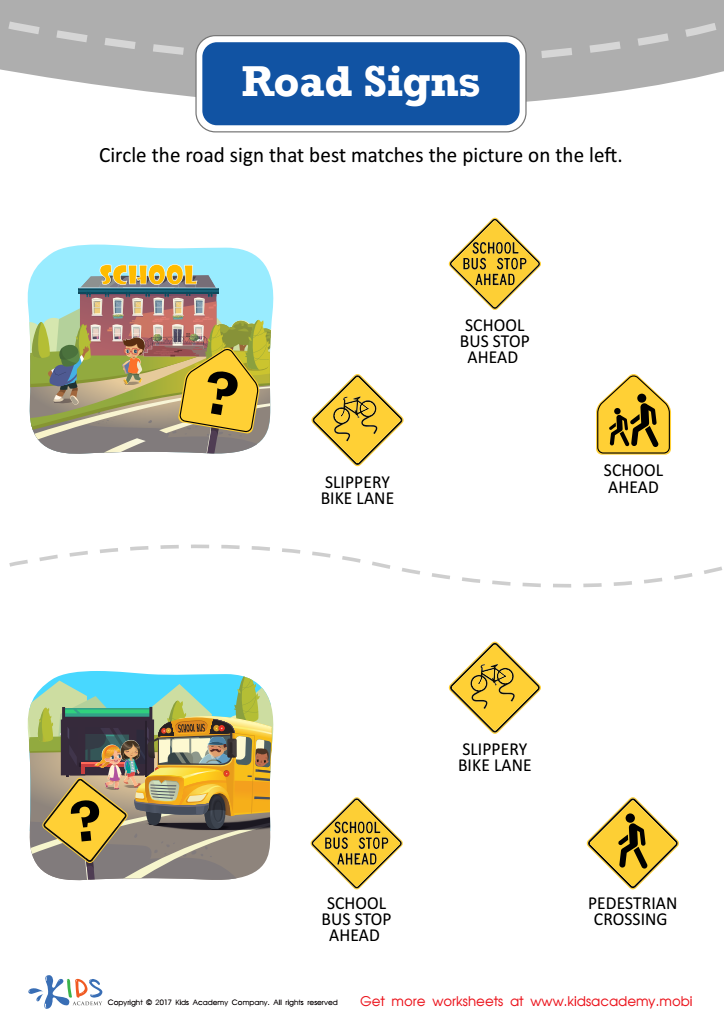
Road Signs (Part 1) Worksheet
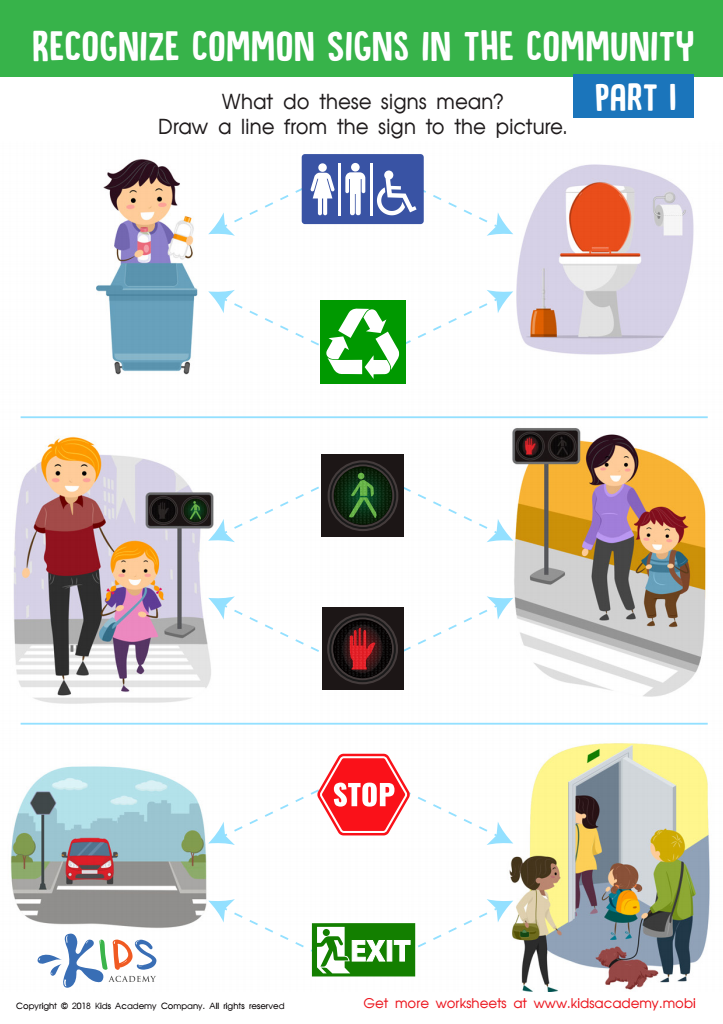
Recognize Common Signs: Part 1 Worksheet








Enhancing observation skills in children aged 5-8 is crucial for their cognitive and social development. Parents and teachers who cultivate these skills help children become more aware of their surroundings and improve their learning abilities. Observant children tend to be better problem solvers because they notice details, patterns, and relationships that others might overlook. This bolsters their critical thinking and enhances academic performance across subjects like science, math, and language arts.
Moreover, observation skills are fundamental for emotional and social growth. When children are attentive, they pick up on social cues more effectively, which aids in developing empathy and understanding the emotions of others. This can lead to improved classroom dynamics and healthier peer interactions.
Investing in a community that prioritizes observation skills promotes curiosity and lifelong learning. Teachers and parents can offer engaging, hands-on activities that encourage mindfulness and attentiveness, like nature walks, scavenger hunts, and interactive storytime. These activities make learning fun and spark a genuine interest in the world around them.
Overall, nurturing observation skills fosters a holistic development that benefits children academically, emotionally, and socially. Creating a supportive environment for these skills will set young learners on a path to becoming thoughtful, attentive, and empathetic individuals.