Visual recognition Community Worksheets for Ages 5-8
4 filtered results
-
From - To
Welcome to our Visual Recognition Community Worksheets for Ages 5-8! Designed to foster essential learning skills, these engaging worksheets focus on enhancing young learners' ability to identify and understand their surroundings. Kids will explore various community themes, learn to recognize familiar places, roles, and symbols while developing their visual perception skills. Each activity promotes critical thinking and encourages creativity, making learning both fun and effective. Teachers and parents can easily download and print worksheets to support their child's learning journey. Start nurturing your child’s visual recognition skills today and help them build a strong foundation for future learning experiences!

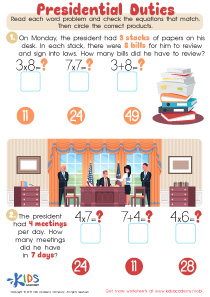
Let's Look! Assessment Worksheet
 Assign to My Students
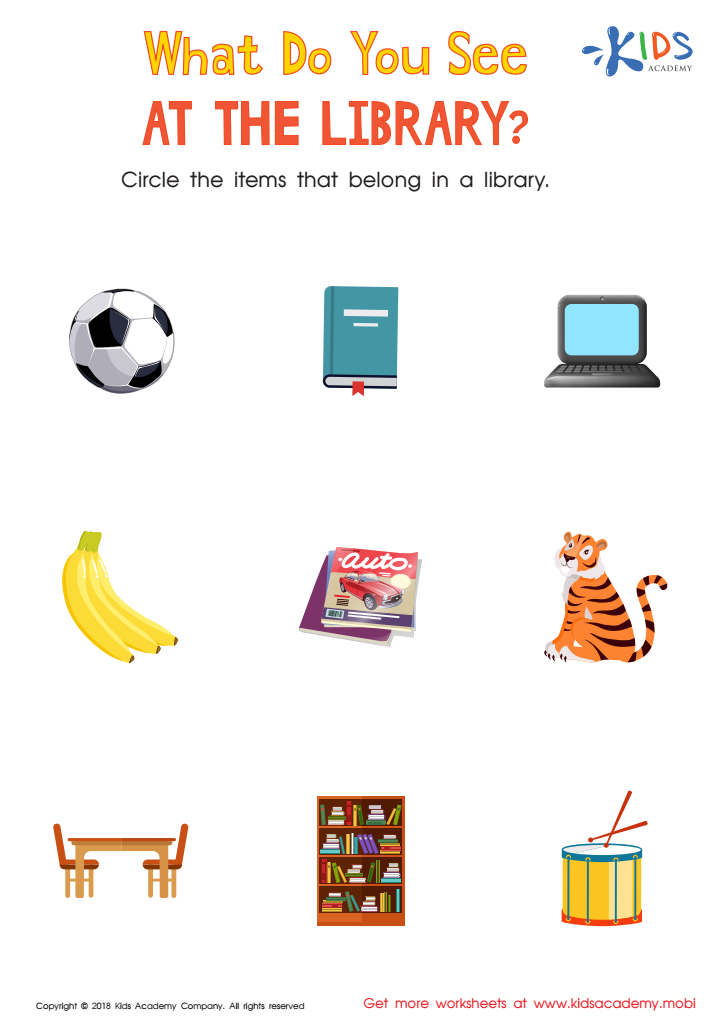
What Do you See at the Library? Worksheet
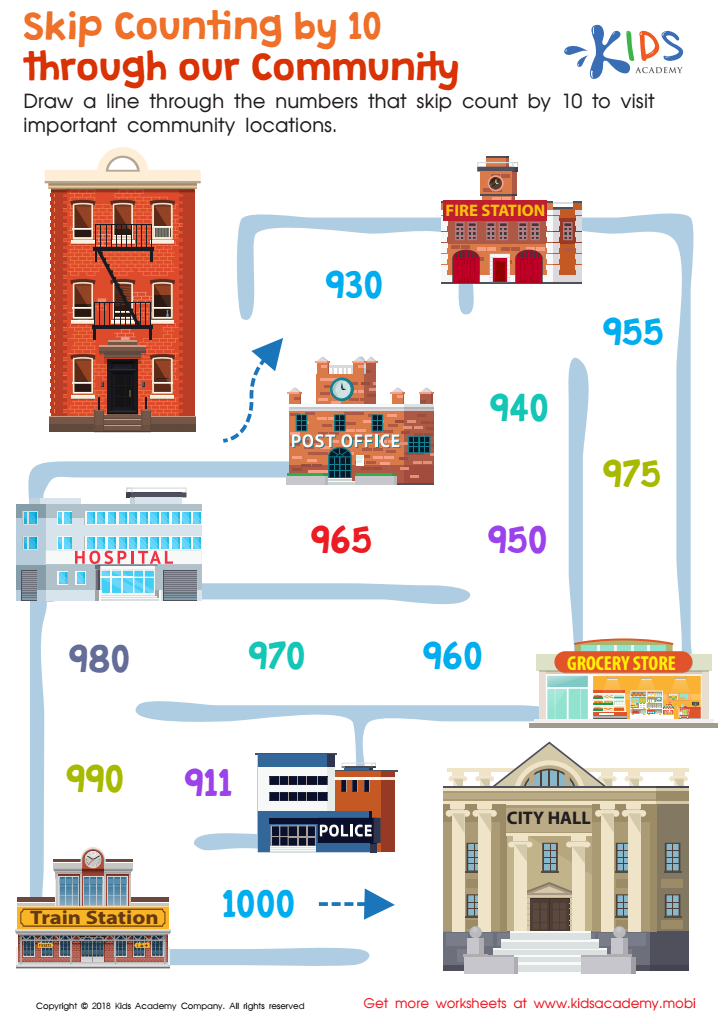
Skip Counting by 10 Through Our Community Worksheet
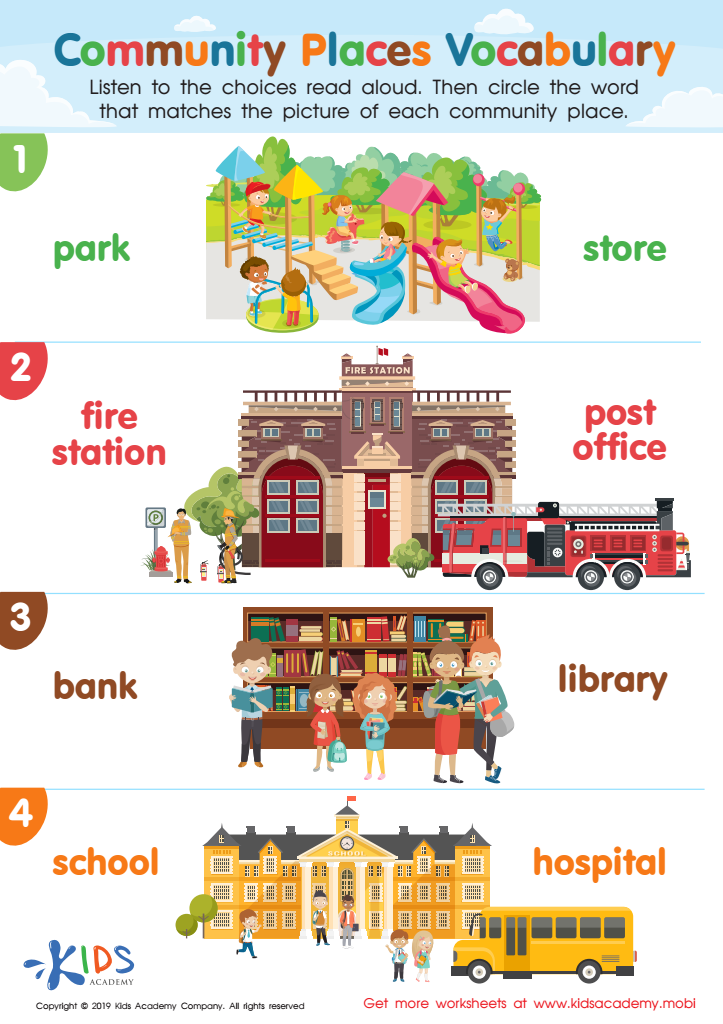
Community Places Vocabulary Worksheet








Visual recognition is crucial for children aged 5-8 as it enhances various cognitive, social, and academic skills. At this developmental stage, children explore the world around them and begin to build foundational skills necessary for lifelong learning. Understanding the significance of visual recognition is essential for parents and teachers alike.
Firstly, visual recognition aids in literacy development; recognizing letters, words, and symbols helps children to read and write effectively. Furthermore, it supports math skills through the identification of shapes, patterns, and numbers. Engaging in activities that promote visual recognition can also cultivate critical thinking and problem-solving abilities.
Socially, strong visual recognition allows children to navigate their environment and understand non-verbal cues, facilitating communication with peers. This improves interaction skills and boosts their confidence in social situations.
Moreover, being part of a Visual Recognition Community can provide support, resources, and shared activities for both parents and educators. Collaborative engagement encourages a deeper understanding of strategies that enhance visual recognition, ensuring children are met with diverse learning experiences.
In summary, fostering visual recognition benefits not only academic performance but also emotional and social development, making it imperative for parents and educators to invest in this essential skill.