Vocabulary Building Community Worksheets for Ages 5-8
4 filtered results
-
From - To
Welcome to our Vocabulary Building Community Worksheets designed specifically for children ages 5-8! These engaging and interactive resources promote language development while helping young learners connect with their surrounding community. Through themed activities, children will expand their vocabulary, enhance comprehension skills, and foster a deeper understanding of social concepts. Our worksheets include colorful images and relatable examples, making learning fun and efficient. Ideal for classroom use or at-home practice, these worksheets support diverse learning styles and promote effective communication. Empower young minds today and lay the foundation for a lifetime of language proficiency with our carefully crafted vocabulary building resources!
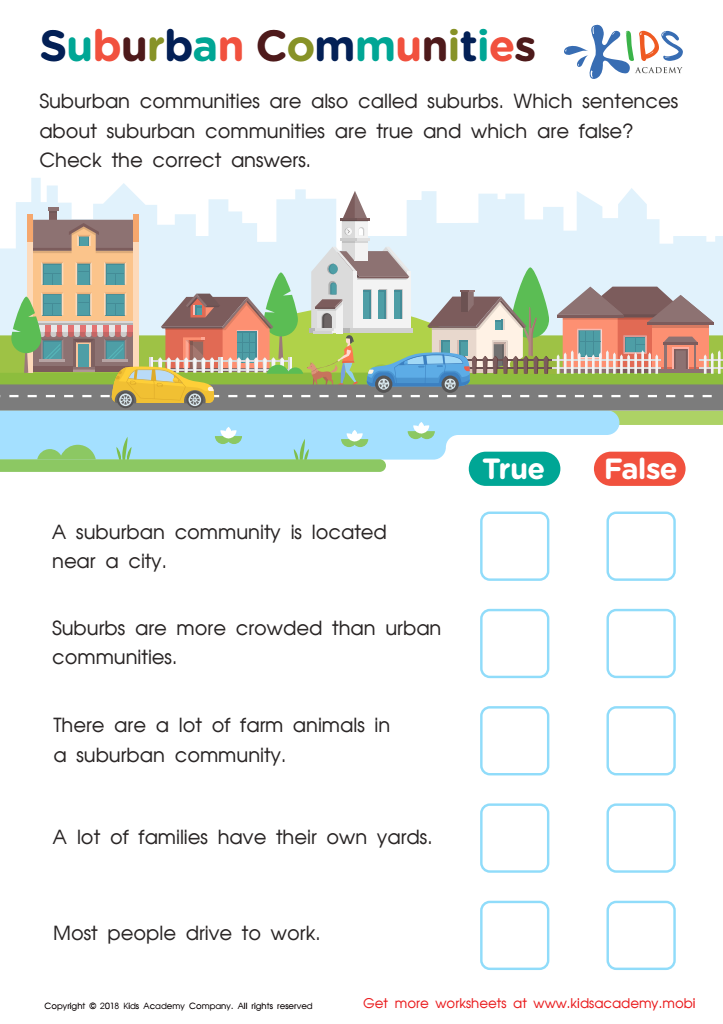
Suburban Communities Worksheet
 Assign to My Students
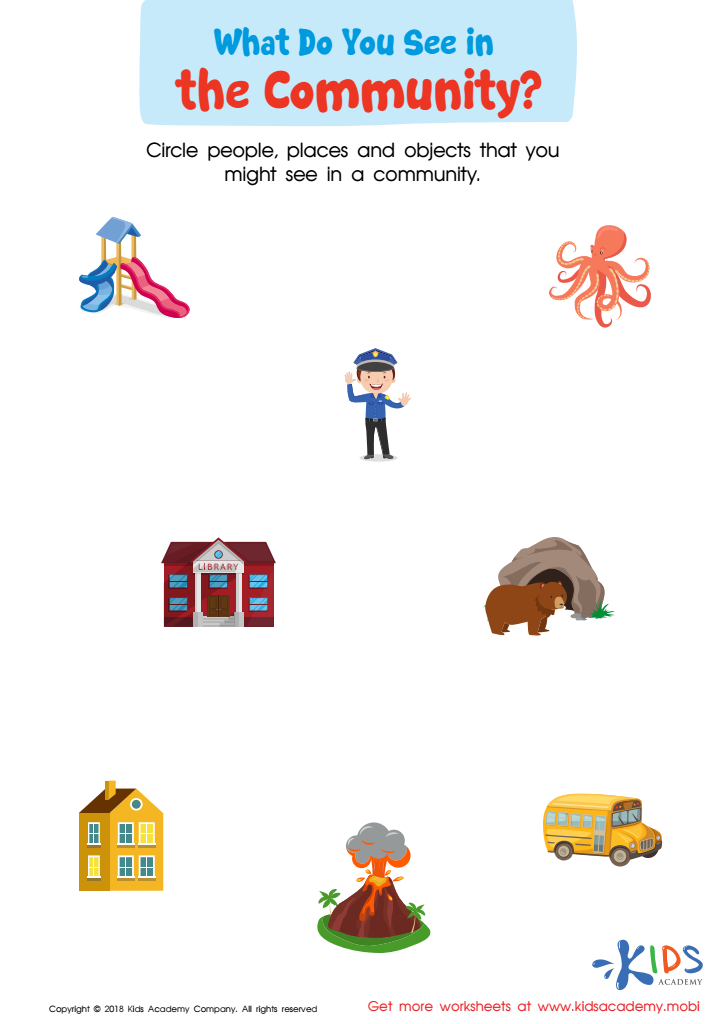
What Do You See in the Community Worksheet

What Do you See at the Library? Worksheet
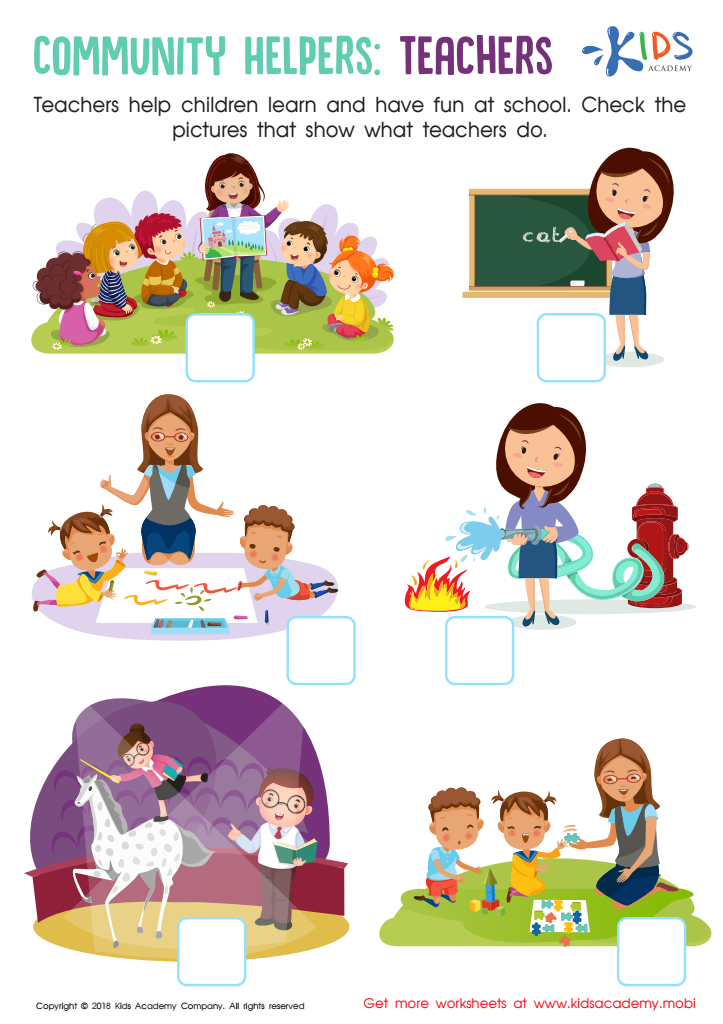
Teachers Community Helpers Worksheet








Vocabulary building is foundational in early childhood education and critical for children aged 5-8, as this is a period of rapid language acquisition and cognitive development. A robust vocabulary not only enhances communication skills but also boosts reading comprehension, academic performance, and self-confidence. By fostering a Vocabulary Building Community, parents and teachers can work together to create an enriching environment that emphasizes the importance of words.
Engaging in vocabulary-rich activities, such as storytelling, word games, and interactive discussions, encourages children to explore language in fun and meaningful ways. This collaborative approach helps bridge the gap between home and school culture while supporting diverse learning styles. Moreover, it's essential for parents and educators to model a love for language through reading aloud and introducing new words in everyday conversations.
By supporting a Vocabulary Building Community, parents and teachers ensure that children develop a strong linguistic foundation that prepares them for future academic challenges. This collective investment not only cultivates a lifelong love for reading and learning but also empowers kids to express themselves clearly and assertively, making it a valuable initiative in their overall development. Emphasizing vocabulary now lays the groundwork for future success in learning and communication.








