Geography skills Geography Worksheets for Ages 5-8
3 filtered results
-
From - To
Discover a world of geography fun with our engaging worksheets designed for kids ages 5-8! These interactive printables help little learners develop essential geography skills, including map reading, understanding directions, and recognizing landforms. Our age-appropriate activities, featuring colorful illustrations, captivate young minds and make learning about the world exciting. Perfect for both classroom and home use, these worksheets support critical thinking, enhance spatial awareness, and encourage a love for social studies. Equip your child with the tools they need to explore our planet with confidence and curiosity. Start your geography adventure with us today!
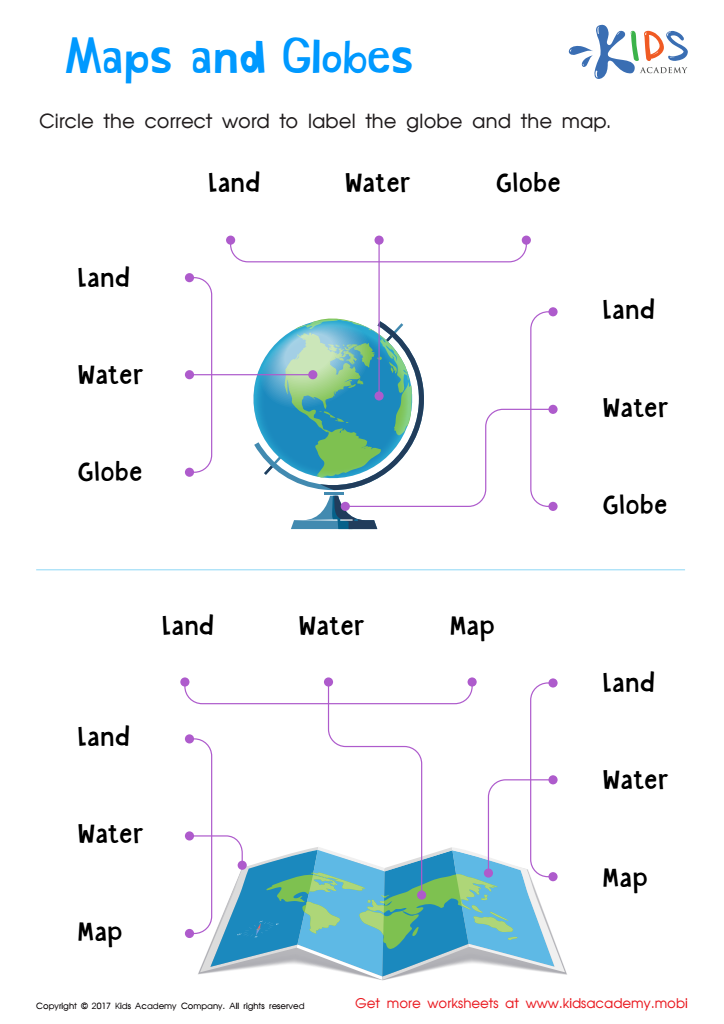
 Assign to My Students
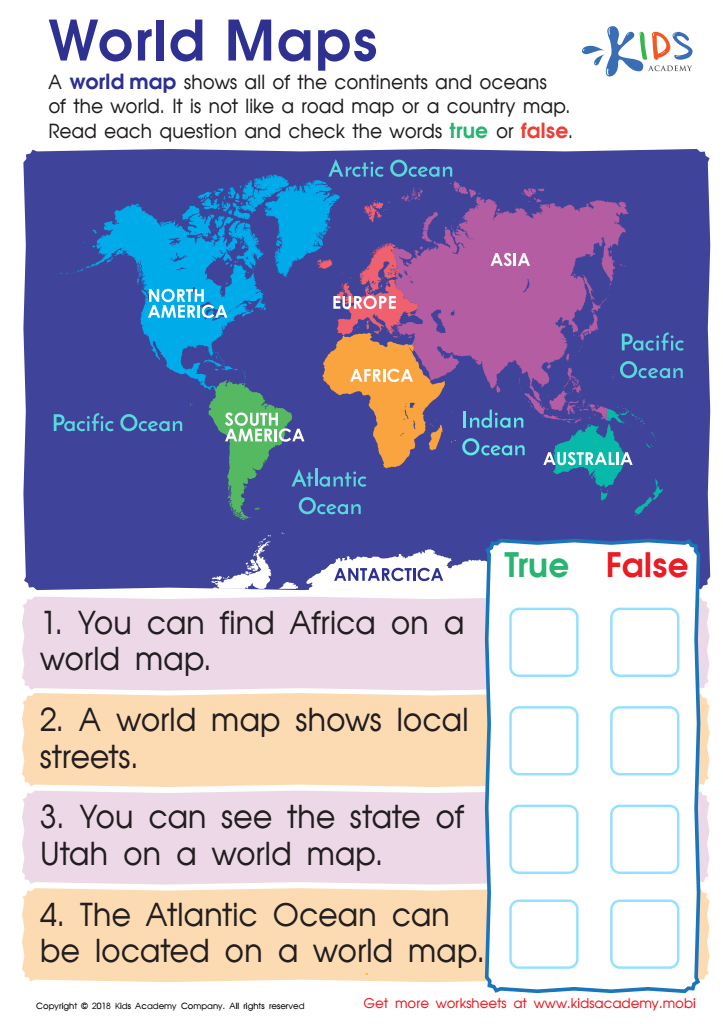
World Maps Worksheet
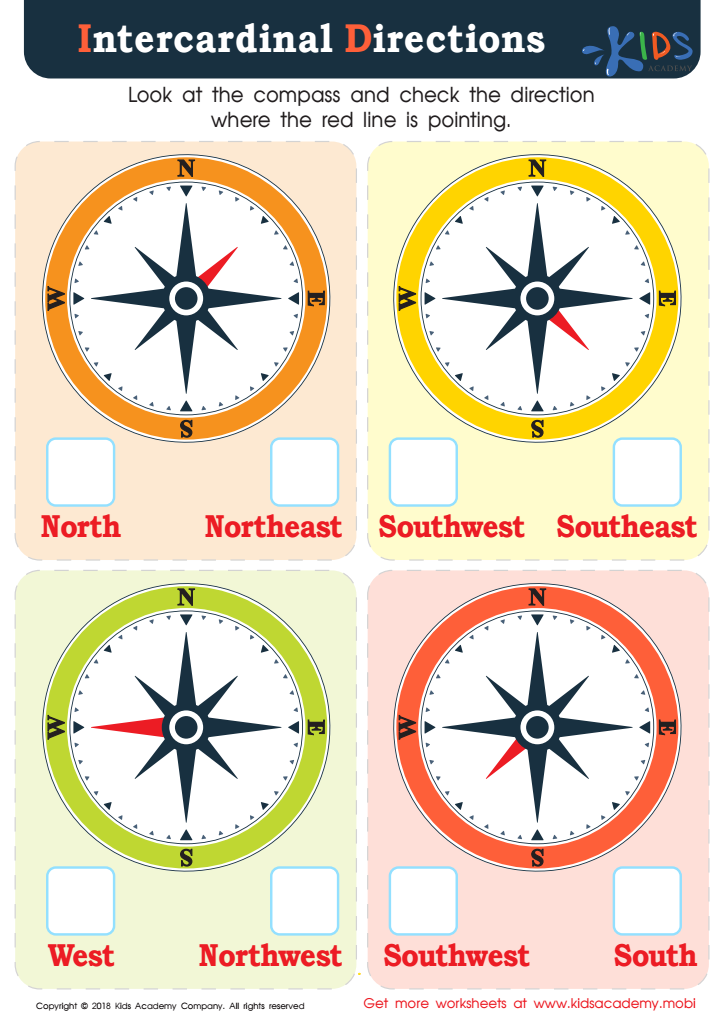
Intercardinal Directions Worksheet






Geography skills are crucial for children ages 5-8 because they lay the foundation for understanding the world and fostering curiosity. At this developmental stage, children have a natural curiosity about their surroundings, and introducing geography helps satiate this curiosity while establishing essential knowledge. Through geography, children learn about different countries, cultures, and natural landscapes, fostering a sense of wonder and respect for diversity.
Developing geography skills at an early age also enhances spatial thinking, which is critical for problem-solving and understanding the relationships between different locations. These skills are inherently linked with other subjects like history, science, and even mathematics, enabling a cohesive learning experience.
From a social perspective, geography education helps children appreciate environmental stewardship and the interconnectedness of global communities. Understanding where resources come from and the impact of various activities on the environment cultivates responsible and informed future citizens.
Furthermore, parents and teachers nurturing these skills enhance language development and literacy. Children learn new vocabulary, improve comprehension, and develop communication skills through storytelling about different places.
Thus, investing in geography skills for young children is not just about knowing maps but building a well-rounded, globally aware, and thoughtful individual. It is a vital step towards developing skilled, knowledgeable, and empathetic future leaders.








